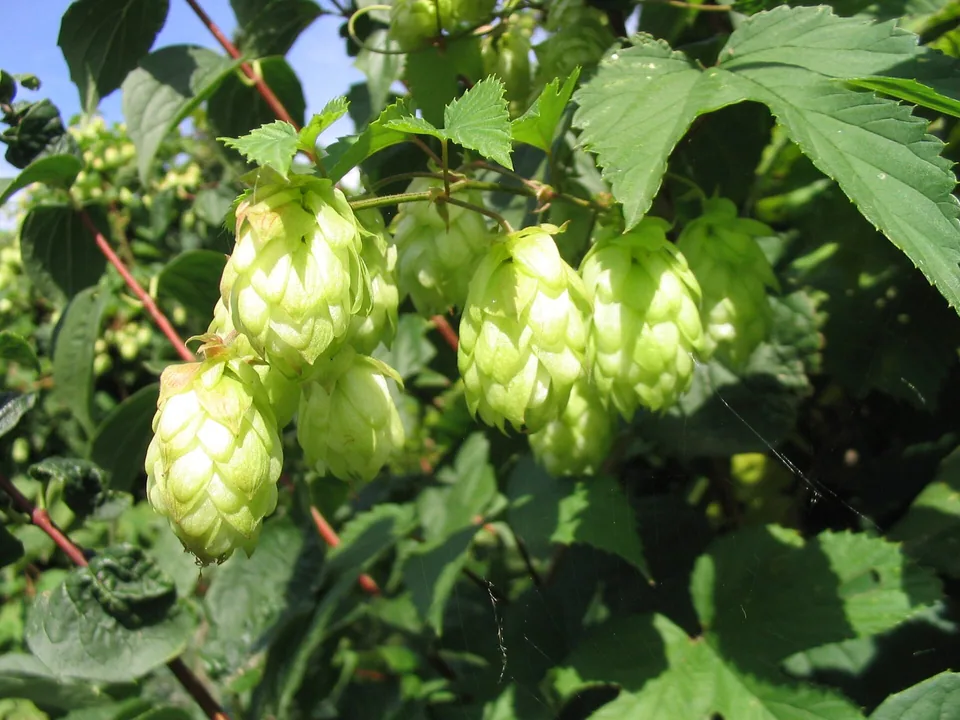


Cómo cultivar y cuidar Lúpulo
Humulus lupulus
Escrito por Emilio Marruso · última revisión
Tóxica para: Perros, Personas · Por qué
De un vistazo
El lúpulo es una trepadora perenne que alcanza 4,6–6,1 m y llena tu espaldera de conos aromáticos que se usan para elaborar cerveza. Dale sol pleno o semisombra, humedad constante y un suelo de ligeramente ácido a neutro. De mediados de agosto a mediados de septiembre, cosecha los conos cuando estén secos, como de papel y elásticos, con un polvo dorado, pegajoso y fragante dentro.
- Sol
Sol pleno o semisombra
Qué dicen las fuentes (2)
Luz: Pleno sol a semisombra
Full sun to partial shade; moist, well drained soil is best but the plant will tolerate some dryness.
— Hops, Common (Humulus lupulus)-Hort Answers - University of Illinois Extension [2] They prefer well-drained, slightly acidic soil in full sun to partial shade.
— Growing Hops at Home [5] - Riego
4 cm de agua a la semana, con constancia y sin encharcar; riega la tierra, no las hojas
Qué dicen las fuentes (4)
Riego: Humedad constante durante toda la temporada de crecimiento; 1.5 pulgadas [3,8 cm] de agua equivalente por semana una vez establecido
Hop plants require consistent moisture throughout the growing season.
— Growing hops in the home garden | OSU Extension Service [4] Once the plants are established, hops will require approximately 1.5" of water equivalent per week.
— Growing Hops in the Backyard | Rutgers Cooperative Extension [6] Notas sobre el riego: No riegues en exceso (al lúpulo no le gustan los pies mojados); las raíces no toleran el agua estancada; se prefiere el riego por goteo o la manguera de remojo porque el follaje mojado favorece las enfermedades
Initially, provide consistent watering while being careful to not overwater because hops do not like to have “wet feet
— Growing hops in the home garden | OSU Extension Service [4] A drip irrigation system or soaker hose is preferred to a sprinkler system. This is because wet foliage can encourage disease formation.
— Growing Hops in the Backyard | Rutgers Cooperative Extension [6] - Frío
Aguanta inviernos de hasta −28,9 °C (−20 °F)
Muy rústica · USDA 5a · RHS H7 · Z5
Qué dicen las fuentes (2)
Rusticidad, zona más fría: 5a [mínima invernal de −28,9 a −26,1 °C (de −20 a −15 °F)]
NC Region: Coastal Piedmont USDA Plant Hardiness Zone: 5a, 5b, 6a, 6b, 7a, 7b, 8a, 8b
— Humulus lupulus (Common Hops, European Hops, Hops) | North Carolina Extension Gardener Plant Toolbox [1] Rusticidad, zona más cálida: 8b [mínima invernal de −9,4 a −6,7 °C (de 15 a 20 °F)]
NC Region: Coastal Piedmont USDA Plant Hardiness Zone: 5a, 5b, 6a, 6b, 7a, 7b, 8a, 8b
— Humulus lupulus (Common Hops, European Hops, Hops) | North Carolina Extension Gardener Plant Toolbox [1] - Suelo
Suelo de ligeramente ácido a neutro, pH 6,0–7,0
Qué dicen las fuentes (2)
pH del suelo, mínimo: 6.0
Soils with a pH of 6.0 to 7.0 are best for hop production.
— Growing Hops in the Backyard | Rutgers Cooperative Extension [6] pH del suelo, máximo: 7.0
Soils with a pH of 6.0 to 7.0 are best for hop production.
— Growing Hops in the Backyard | Rutgers Cooperative Extension [6] - Distancia
61–91 cm entre plantas
Qué dicen las fuentes (2)
Distancia de plantación: 61.0-91.4 cm (24-36 pulgadas)
If planting two or more hop plants side by side, allow 24 to 36 inches of spacing between plants.
— Growing hops in the home garden | OSU Extension Service [4] Within each row plants are planted in hills spaced 2 to 3 feet apart.
— Growing Hops in the Backyard | Rutgers Cooperative Extension [6] - Plantación
Planta en primavera, cuando ya no haya riesgo de heladas
Qué dicen las fuentes (4)
Plantación: Primavera, una vez que haya pasado la amenaza de una helada mortal
Según Oregon State University Extension: Once the threat of a killing frost has passed in the spring, transplant the hops into the desired outdoor site.
— Growing hops in the home garden | OSU Extension Service [4] Según Rutgers NJAES: Hops can be planted in the spring as early as the ground can be worked, and the danger of frost has passed.
— Growing Hops in the Backyard | Rutgers Cooperative Extension [6] Once the threat of a killing frost has passed in the spring, transplant the hops into the desired outdoor site.
— Growing hops in the home garden | OSU Extension Service [4] Hops can be planted in the spring as early as the ground can be worked, and the danger of frost has passed.
— Growing Hops in the Backyard | Rutgers Cooperative Extension [6] - Abonado
Abona cada dos semanas de abril a mediados de julio; sin pasarte con el nitrógeno
Qué dicen las fuentes (6)
Cuándo: Primavera y principios del verano, de abril a mediados de julio; no es necesario después de mediados de julio
Plants may be fertilized during spring and early summer, but fertilizer is not typically required after mid-July.
— Growing hops in the home garden | OSU Extension Service [4] An easy way to fertilize individual hop plants is to sprinkle a tablespoon of either 46-0-0 or 16-16-16 fertilizer near the plant every two weeks from April through mid-July.
— Growing hops in the home garden | OSU Extension Service [4] Frecuencia: Cada dos semanas, de abril a mediados de julio
An easy way to fertilize individual hop plants is to sprinkle a tablespoon of either 46-0-0 or 16-16-16 fertilizer near the plant every two weeks from April through mid-July.
— Growing hops in the home garden | OSU Extension Service [4] Water deeply twice a week if the weather is dry, especially when establishing the plants. Fertilize hops several times during the growing season.
— Growing Hops at Home [5] Evitar: Exceso de nitrógeno (parte del control de pulgones del lúpulo); no es necesario abonar después de mediados de julio
Promoting and releasing beneficial insects, avoiding excessive nitrogen application, and using insecticide soaps or other aphicides are all effective forms of integrated pest management.
— Growing hops in the home garden | OSU Extension Service [4] Plants may be fertilized during spring and early summer, but fertilizer is not typically required after mid-July.
— Growing hops in the home garden | OSU Extension Service [4] - Poda
Corta los tallos a ras de suelo al final de la temporada, en otoño
Qué dicen las fuentes (10)
Poda: Fin de la temporada de crecimiento (otoño), corta al ras del suelo; en el oeste de Oregón también las dos primeras semanas de abril
Según Illinois Extension: This vine can be pruned to the ground in fall.
— Hops, Common (Humulus lupulus)-Hort Answers - University of Illinois Extension [2] Según Rutgers NJAES: the hops should be pruned back at the end of the season.
— Growing Hops in the Backyard | Rutgers Cooperative Extension [6] Oeste de Oregón: In Western Oregon, hop growth can be pruned back to the soil surface during the first two weeks of April.
— Growing hops in the home garden | OSU Extension Service [4] This vine can be pruned to the ground in fall.
— Hops, Common (Humulus lupulus)-Hort Answers - University of Illinois Extension [2] the hops should be pruned back at the end of the season.
— Growing Hops in the Backyard | Rutgers Cooperative Extension [6] In Western Oregon, hop growth can be pruned back to the soil surface during the first two weeks of April.
— Growing hops in the home garden | OSU Extension Service [4] Cuándo podar: Al final de la temporada (otoño), cuando las guías se pueden cortar hasta el suelo.
Oregón occidental, control del mildiu velloso: In Western Oregon, hop growth can be pruned back to the soil surface during the first two weeks of April.
— Growing hops in the home garden | OSU Extension Service [4] This vine can be pruned to the ground in fall.
— Hops, Common (Humulus lupulus)-Hort Answers - University of Illinois Extension [2] No matter which method you use, the hops should be pruned back at the end of the season.
— Growing Hops in the Backyard | Rutgers Cooperative Extension [6] Poda drástica: Tolera que la corten hasta el suelo.
This vine can be pruned to the ground in fall.
— Hops, Common (Humulus lupulus)-Hort Answers - University of Illinois Extension [2] - Cosecha
De mediados de agosto a mediados de septiembre, con los conos secos; el primer año no da
Qué dicen las fuentes (9)
Cosecha: Mediados de agosto a mediados de septiembre (los conos están secos y papiráceos); no se cosechan conos en la primera temporada de crecimiento
Según University of Wisconsin Extension: Hop is harvested from mid-August to mid-September depending on the variety.
— Hops – Crops and Soils [3] Oeste y centro de Oregón: In both Western and Central Oregon, hops typically mature between August 15 and September 15
— Growing hops in the home garden | OSU Extension Service [4] Hop is harvested from mid-August to mid-September depending on the variety.
— Hops – Crops and Soils [3] In both Western and Central Oregon, hops typically mature between August 15 and September 15
— Growing hops in the home garden | OSU Extension Service [4] Wait until the cones are dry and papery to harvest.
— Growing Hops at Home [5] Cómo cosechar: Cosecha cuando los conos estén secos, papiráceos y elásticos, con lupulina dorada, pegajosa y fragante. Corta las guías del enrejado cuando la mayoría de los conos estén maduros (cortando el extremo inferior de la guía a 3 pies / 91 cm del suelo para proteger las raíces y la corona), o recoge los conos individualmente a medida que maduren.
Mature cones will have a dry, papery feel, and the lupulin inside of the cone will be golden yellow and have a pleasant “hoppy” aroma (Figure 5).
— Growing hops in the home garden | OSU Extension Service [4] Wait until the cones are dry and papery to harvest. At this point, you should be able to smell and feel the sticky, yellow lupulin when you squeeze the cones.
— Growing Hops at Home [5] Two methods you can follow to harvest your hops are: to cut the bines from their trellis when most of the cones are mature. When cutting bines to pick first, cut the lower end of the bine three feet from the ground.
— Growing Hops in the Backyard | Rutgers Cooperative Extension [6] The second method is to pick the cones from the bine as they reach maturity.
— Growing Hops in the Backyard | Rutgers Cooperative Extension [6] - Polinización
Solo las plantas hembra dan conos, y no necesitan una planta macho
Qué dicen las fuentes (4)
Cuajado: Dioicas: flores masculinas y femeninas en plantas separadas.
Hop plants are dioecious—meaning male and female flowers are produced on separate plants.
— Growing hops in the home garden | OSU Extension Service [4] Having male and female flowers on separate plants, this plant is dioecious.
— Humulus lupulus (Common Hops, European Hops, Hops) | North Carolina Extension Gardener Plant Toolbox [1] Qué necesita: Solo las plantas femeninas producen conos, y no se necesita una planta masculina para que los conos produzcan lupulina; las semillas solo se forman cuando las plantas masculinas y femeninas crecen juntas.
Only the female plant produces the cones used in brewing. The male plant is not necessary for the female plant to produce lupulin.
— Growing Hops in the Backyard | Rutgers Cooperative Extension [6] In order to produce seeds, both male and female plants are required. Flowers are wind pollinated.
— Humulus lupulus (Common Hops, European Hops, Hops) | North Carolina Extension Gardener Plant Toolbox [1] - Plagas
Araña roja, pulgón y escarabajo japonés; mildiu y oídio
Qué dicen las fuentes (6)
Plagas: ácaros araña (ácaro araña de dos manchas), pulgones (pulgón del lúpulo), escarabajos japoneses, chicharritas de la papa, chicharritas, barrenador europeo del maíz, mercader del lúpulo, luciérnaga manchada
Aphids, Japanese beetles, potato leaf hoppers, and spider mites are the most damaging insects, while the most common pathogens are downy mildew and powdery mildew.
— Hops – Crops and Soils [3] Spider mites, leaf hoppers, aphids, Japanese beetles, European corn borer, and hop merchant are pests that have been encountered in New Jersey.
— Growing Hops in the Backyard | Rutgers Cooperative Extension [6] In Oregon, the two predominant arthropod pests affecting hop are the two-spotted spider mite ( Tetranychus urticae ) and the hop aphid ( Phorodon humuli ).
— Growing hops in the home garden | OSU Extension Service [4] But other Pennsylvania growers report enough problems with spotted lanternflies to motivate them to remove the hop plants.
— Growing Hops at Home [5] Enfermedades: mildiú velloso, mildiú polvoriento, marchitez por verticillium, virus y viroides
Diseases to which hops are susceptible include downy mildew, powdery mildew, and verticillium wilt.
— Growing Hops in the Backyard | Rutgers Cooperative Extension [6] A number of viruses and viroids (virus-like particles) also may infect hop.
— Growing hops in the home garden | OSU Extension Service [4] - Atención
Los tallos trepan por plantas y estructuras cercanas: recórtalos
- Tamaño
De 4,6 a 6,1 m de alto y de 0,9 a 1,8 m de ancho
Qué dicen las fuentes (4)
Altura adulta: 457-610 cm (15 a 20 pies)
Dimensions: Height: 15 ft. 0 in. - 20 ft. 0 in. Width: 3 ft. 0 in. - 6 ft. 0 in.
— Humulus lupulus (Common Hops, European Hops, Hops) | North Carolina Extension Gardener Plant Toolbox [1] Hop plants normally grow 15 to 20 feet high but may grow higher, depending on the climate and available climbing support.
— Growing hops in the home garden | OSU Extension Service [4] Keep in mind that hop plants will grow 15 to 20 feet high.
— Growing Hops in the Backyard | Rutgers Cooperative Extension [6] Anchura adulta: 91.4-182.9 cm (3 a 6 pies)
Dimensions: Height: 15 ft. 0 in. - 20 ft. 0 in. Width: 3 ft. 0 in. - 6 ft. 0 in.
— Humulus lupulus (Common Hops, European Hops, Hops) | North Carolina Extension Gardener Plant Toolbox [1] - Multiplicación
Por rizomas, esquejes de tallo o semillas
Qué dicen las fuentes (2)
Propagación: Rizomas; esquejes de tallo; semilla
A hop cultivar is propagated either by rhizomes or by stem cuttings
— Growing hops in the home garden | OSU Extension Service [4] Life Cycle: Perennial Recommended Propagation Strategy: Seed Stem Cutting
— Humulus lupulus (Common Hops, European Hops, Hops) | North Carolina Extension Gardener Plant Toolbox [1] - Maceta
Crece también en maceta
Qué dicen las fuentes (1)
En maceta: Sí
Some gardeners grow hops in containers—5-gallon plastic buckets are a practical choice.
— Growing Hops at Home [5] - Seguridad
Peligroso para los perros; tocarlo puede irritar la piel
Resumen
El lúpulo es una vid perenne, herbácea y trepadora originaria de Europa que se cultiva comercialmente para dar sabor a la cerveza. [1] Prefiere pleno sol a semisombra y suelo bien drenado, y necesita una estructura de soporte para trepar. [2][1] Las plantas son dioicas y solo la planta femenina produce los conos utilizados en la elaboración de cerveza. [6]
Citado en inglés, como en la fuente.
Cuidados
Las medidas entre corchetes son nuestra conversión al otro sistema de unidades; el texto citado no cambia.
Riego
Riego
Humedad constante durante toda la temporada de crecimiento; 1.5 pulgadas [3,8 cm] de agua equivalente por semana una vez establecido
Qué dicen las fuentes (2)
Hop plants require consistent moisture throughout the growing season.Once the plants are established, hops will require approximately 1.5" of water equivalent per week.Notas sobre el riego
No riegues en exceso (al lúpulo no le gustan los pies mojados); las raíces no toleran el agua estancada; se prefiere el riego por goteo o la manguera de remojo porque el follaje mojado favorece las enfermedades
Qué dicen las fuentes (2)
Initially, provide consistent watering while being careful to not overwater because hops do not like to have “wet feetA drip irrigation system or soaker hose is preferred to a sprinkler system. This is because wet foliage can encourage disease formation.Luz
Pleno sol a semisombra
Qué dicen las fuentes (2)
Full sun to partial shade; moist, well drained soil is best but the plant will tolerate some dryness.They prefer well-drained, slightly acidic soil in full sun to partial shade.Clima y frío
Rusticidad, zona más fría
5a [mínima invernal de −28,9 a −26,1 °C (de −20 a −15 °F)]
Qué dicen las fuentes (1)
NC Region:
Coastal
Piedmont
USDA Plant Hardiness Zone:
5a, 5b, 6a, 6b, 7a, 7b, 8a, 8bRusticidad, zona más cálida
8b [mínima invernal de −9,4 a −6,7 °C (de 15 a 20 °F)]
Qué dicen las fuentes (1)
NC Region:
Coastal
Piedmont
USDA Plant Hardiness Zone:
5a, 5b, 6a, 6b, 7a, 7b, 8a, 8bSuelo
pH del suelo, mínimo
6.0
Qué dicen las fuentes (1)
Soils with a pH of 6.0 to 7.0 are best for hop production.pH del suelo, máximo
7.0
Qué dicen las fuentes (1)
Soils with a pH of 6.0 to 7.0 are best for hop production.Dónde cultivarla
En maceta
Sí
Qué dicen las fuentes (1)
Some gardeners grow hops in containers—5-gallon plastic buckets are a practical choice.Distancia de plantación
61.0-91.4 cm (24-36 pulgadas)
Qué dicen las fuentes (2)
If planting two or more hop plants side by side, allow 24 to 36 inches of spacing between plants.Within each row plants are planted in hills spaced 2 to 3 feet apart.Propagación
Rizomas; esquejes de tallo; semilla
Qué dicen las fuentes (2)
A hop cultivar is propagated either by rhizomes or by stem cuttingsLife Cycle:
Perennial
Recommended Propagation Strategy:
Seed
Stem CuttingCultivo
La planta
Ciclo de vida
perenne (herbácea)
Qué dicen las fuentes (2)
The Common Hop is a perennial, herbaceous, twining vine native to Europe.Hop ( Humulus lupulus L. ) is a hardy, climbing, herbaceous perennial that is used principally as a bittering and flavoring agent in beer.Familia
Cannabaceae
Qué dicen las fuentes (1)
Genus: Humulus Species: lupulus Family: Cannabaceae Uses (Ethnobotany): Extract from the fruit bracts are used as a flavoring in the production of beer.Altura adulta
457-610 cm (15 a 20 pies)
Qué dicen las fuentes (3)
Dimensions: Height: 15 ft. 0 in. - 20 ft. 0 in. Width: 3 ft. 0 in. - 6 ft. 0 in.Hop plants normally grow 15 to 20 feet high but may grow higher, depending on the climate and available climbing support.Keep in mind that hop plants will grow 15 to 20 feet high.Anchura adulta
91.4-182.9 cm (3 a 6 pies)
Qué dicen las fuentes (1)
Dimensions: Height: 15 ft. 0 in. - 20 ft. 0 in. Width: 3 ft. 0 in. - 6 ft. 0 in.Siembra y crecimiento
Cosecha y conservación
Cómo cosechar
Cosecha cuando los conos estén secos, papiráceos y elásticos, con lupulina dorada, pegajosa y fragante. Corta las guías del enrejado cuando la mayoría de los conos estén maduros (cortando el extremo inferior de la guía a 3 pies / 91 cm del suelo para proteger las raíces y la corona), o recoge los conos individualmente a medida que maduren.
Qué dicen las fuentes (4)
Mature cones will have a dry, papery feel, and the lupulin inside of the cone will be golden yellow and have a pleasant “hoppy” aroma (Figure 5).Wait until the cones are dry and papery to harvest. At this point, you should be able to smell and feel the sticky, yellow lupulin when you squeeze the cones.Two methods you can follow to harvest your hops are: to cut the bines from their trellis when most of the cones are mature. When cutting bines to pick first, cut the lower end of the bine three feet from the ground.The second method is to pick the cones from the bine as they reach maturity.Conservación
Seca primero los conos (no excedas los 60 °C / 140 °F), luego guárdalos en una bolsa de plástico sellada con el aire extraído, en un lugar fresco, seco y oscuro como un refrigerador o congelador.
Qué dicen las fuentes (3)
Hops should be stored in a cool, dry, and dark place such as a freezer or refrigerator. Place hop cones in a sealable plastic bag with air squeezed out.If you choose to use heat for drying your hops do not let the temperature exceed 140 degrees F.Once the cones are dry, seal them in plastic bags and remove as much air as possible to minimize chemical degradation.Plagas y enfermedades
Plagas
ácaros araña (ácaro araña de dos manchas), pulgones (pulgón del lúpulo), escarabajos japoneses, chicharritas de la papa, chicharritas, barrenador europeo del maíz, mercader del lúpulo, luciérnaga manchada
Qué dicen las fuentes (4)
Aphids, Japanese beetles, potato leaf hoppers, and spider mites are the most damaging insects, while the most common pathogens are downy mildew and powdery mildew.Spider mites, leaf hoppers, aphids, Japanese beetles, European corn borer, and hop merchant are pests that have been encountered in New Jersey.In Oregon, the two predominant arthropod pests affecting hop are the two-spotted spider mite ( Tetranychus urticae ) and the hop aphid ( Phorodon humuli ).But other Pennsylvania growers report enough problems with spotted lanternflies to motivate them to remove the hop plants.Enfermedades
mildiú velloso, mildiú polvoriento, marchitez por verticillium, virus y viroides
Qué dicen las fuentes (2)
Diseases to which hops are susceptible include downy mildew, powdery mildew, and verticillium wilt.A number of viruses and viroids (virus-like particles) also may infect hop.Abonado
Cuándo
Primavera y principios del verano, de abril a mediados de julio; no es necesario después de mediados de julio
Qué dicen las fuentes (2)
Plants may be fertilized during spring and early summer, but fertilizer is not typically required after mid-July.An easy way to fertilize individual hop plants is to sprinkle a tablespoon of either 46-0-0 or 16-16-16 fertilizer near the plant every two weeks from April through mid-July.Frecuencia
Cada dos semanas, de abril a mediados de julio
Qué dicen las fuentes (2)
An easy way to fertilize individual hop plants is to sprinkle a tablespoon of either 46-0-0 or 16-16-16 fertilizer near the plant every two weeks from April through mid-July.Water deeply twice a week if the weather is dry, especially when establishing the plants. Fertilize hops several times during the growing season.Abonos minerales
Nitrógeno primero: urea (46-0-0) o 16-16-16, 14.8 mL por planta; mezclas con más nitrógeno y potasio que fósforo, como 10-5-10 o 12-4-8
Lo que dice cada fuente
tasa de nitrógeno por área: 14.6 g/m²
tasa de potasio por área: 14.6 g/m²
Qué dicen las fuentes (5)
tasa de nitrógeno por área: Nitrogen is required at a rate of approximately 150 lbs. per acre (3-lbs/ 1000 sq. ft.).tasa de potasio por área: Potassium is required at a rate of approximately 150 lbs. per acre (3-lbs/1000 sq. ft.).An easy way to fertilize individual hop plants is to sprinkle a tablespoon of either 46-0-0 or 16-16-16 fertilizer near the plant every two weeks from April through mid-July.Nitrogen is usually the limiting nutrient for adequate hop growth. You can apply nitrogen as urea (46-0-0) or in combination with other nutrients such as a 16-16-16 fertilizer.Information for commercial hop growers suggests that the fertilizer should be higher in nitrogen (N) and potassium (K) than in phosphorus (P). For example, 10-5-10 or 12-4-8 are appropriate fertilizer blends.Evitar
Exceso de nitrógeno (parte del control de pulgones del lúpulo); no es necesario abonar después de mediados de julio
Qué dicen las fuentes (2)
Promoting and releasing beneficial insects, avoiding excessive nitrogen application, and using insecticide soaps or other aphicides are all effective forms of integrated pest management.Plants may be fertilized during spring and early summer, but fertilizer is not typically required after mid-July.Polinización
Cuajado
Dioicas: flores masculinas y femeninas en plantas separadas.
Qué dicen las fuentes (2)
Hop plants are dioecious—meaning male and female flowers are produced on separate plants.Having male and female flowers on separate plants, this plant is dioecious.Qué necesita
Solo las plantas femeninas producen conos, y no se necesita una planta masculina para que los conos produzcan lupulina; las semillas solo se forman cuando las plantas masculinas y femeninas crecen juntas.
Qué dicen las fuentes (2)
Only the female plant produces the cones used in brewing. The male plant is not necessary for the female plant to produce lupulin.In order to produce seeds, both male and female plants are required. Flowers are wind pollinated.Lo transportan
Viento
Qué dicen las fuentes (1)
In order to produce seeds, both male and female plants are required. Flowers are wind pollinated.Poda
Cuándo podar
Al final de la temporada (otoño), cuando las guías se pueden cortar hasta el suelo.
Lo que dice cada fuente
Oregón occidental, control del mildiu velloso: El crecimiento de primavera se corta hasta la superficie del suelo durante las dos primeras semanas de abril.
Qué dicen las fuentes (3)
Oregón occidental, control del mildiu velloso: In Western Oregon, hop growth can be pruned back to the soil surface during the first two weeks of April.This vine can be pruned to the ground in fall.No matter which method you use, the hops should be pruned back at the end of the season.Poda drástica
Tolera que la corten hasta el suelo.
Qué dicen las fuentes (1)
This vine can be pruned to the ground in fall.Problemas
Mildiú velloso
Síntoma: Enfermedad común en climas más húmedos, un problema en abril y mayo
Qué hacer: Poda a principios de abril, prácticas culturales y fungicidas como el cobre
Qué dicen las fuentes (1)
Downy mildew (caused by the fungus-like organism Pseudoperonospora humuli ) is common in wetter climates, such as in Western Oregon, and poses a significant problem in April and May.
— Growing hops in the home garden | OSU Extension Service [4] Mildiu polvoriento
Síntoma: Ataca el follaje y los conos en desarrollo; el tejido del cono se vuelve necrótico y deforme
Qué hacer: Poda de primavera, azufre, variedades resistentes como Cascade y Crystal
Qué dicen las fuentes (1)
Powdery mildew (caused by the fungus Podosphaera macularis ) lesions may appear on hop plant foliage any time during the spring and summer.
— Growing hops in the home garden | OSU Extension Service [4] Arañitas rojas y pulgones del lúpulo
Síntoma: Daño al follaje, reducción del rendimiento y calidad de los conos
Qué hacer: Insectos benéficos, agua y fertilizante adecuados pero no excesivos, jabones insecticidas
Qué dicen las fuentes (1)
In Oregon, the two predominant arthropod pests affecting hop are the two-spotted spider mite ( Tetranychus urticae ) and the hop aphid ( Phorodon humuli ).
— Growing hops in the home garden | OSU Extension Service [4] Escarabajos japoneses
Síntoma: Se alimentan de hojas y conos
Qué hacer: Recoge a mano y sumerge en agua jabonosa; poda el material dañado
Qué dicen las fuentes (1)
Japanese beetles also seem to have a strong affinity for hops, feeding on both leaves and cones.
— Growing Hops at Home [5] Propagación excesiva
Síntoma: Los tallos trepan por plantas y estructuras cercanas
Qué hacer: Poda los tallos o cultívalos en contenedores
Qué dicen las fuentes (1)
Excessive spreading is the most common problem cited by hop growers.
— Growing Hops at Home [5]
Remedios
Cada remedio indica qué dicen las fuentes oficiales; los remedios tradicionales sin fuente oficial aparecen marcados. Los perjudiciales están para que sepas evitarlos.
Cuidar la planta
pulgones
jabón insecticida Funciona
When “oils and soaps” are mentioned in UC IPM publications, we are referring to commercially available oils and soaps that are formulated specifically for use as pesticides- not household oils and soaps meant for cooking, cleaning, or other purposes.
— ucanr.edu [9] For example, spraying home remedies that contain dish detergent on plants on a sunny day can injure the plant, essentially burning it.
— extension.psu.edu [10] Cómo: Combate los pulgones con jabón insecticida
Treating this hops plant problem means tackling the aphids with insecticidal soap.
— gardeningknowhow.com [7] Qué dicen las pruebas For example, insecticidal soap is a safe, effective organic insecticide with minimal environmental impact.
— extension.psu.edu [8]
escarabajos japoneses
Recoge a mano en agua jabonosa Funciona
Cómo: Recoge los escarabajos a mano, golpeándolos para que caigan en un frasco con agua jabonosa para matarlos; poda el material vegetal dañado, ya que los escarabajos atraen a sus parientes a las áreas de alimentación.
Control measures for Japanese beetles on hops are the same as controlling them on other plants: if possible, site them in morning rather than afternoon sun; prune off plant material they have already damaged, since Japanese beetles secrete pheromones to attract their kin to feeding areas; and handpick Japanese beetles, knocking them into a jar of soapy water to kill them.
— Growing Hops at Home [5] Qué dicen las pruebas Many insect and disease issues can be solved in the home garden by hand-picking insects or clipping and disposing of diseased plant parts.
— extension.unh.edu [11]
mildiú velloso
eliminando los brotes enfermos Funciona
Cómo: Retira los brotes enfermos que aparezcan más tarde con la mano y deséchalos en cuanto aparezcan.
Diseased shoots that emerge later can be removed by hand and discarded as they appear.
— Growing hops in the home garden | OSU Extension Service [4] Qué dicen las pruebas Many insect and disease issues can be solved in the home garden by hand-picking insects or clipping and disposing of diseased plant parts.
— extension.unh.edu [11] despojando las hojas inferiores Fuente oficial, sin prueba independiente
Cómo: quita los 2 a 3 pies (61-91 cm) inferiores del follaje una vez que las guías alcancen la parte superior del enrejado, con cuidado para no dañar el tallo principal
Once the bines reach the top of the trellis and begin producing side branches, the lower 2 to 3 feet of foliage can be stripped. Removal of the lower foliage aids in air circulation and reduces the possibility of disease.
— Growing Hops in the Backyard | Rutgers Cooperative Extension [6]
propagación excesiva
podando las guías trepadoras Fuente oficial, sin prueba independiente
Cómo: Poda las guías que trepan por plantas, arbustos y estructuras cercanas; al cultivar en contenedores evitas la propagación no deseada de raíces.
The bines, however, do tend to climb on nearby plants, shrubs, and garden structures. Simply cut them back.
— Growing Hops at Home [5]
Venenosa para los animales
Según la fuente, citada textualmente. No es un consejo médico ni veterinario: si una persona o un animal pudo haber ingerido esta planta, contacta con un centro de toxicología o con un veterinario.
Animales
Dogs: panting, high body temperature, seizures, death.
[1]
Personas
Calendario
Plantación
Primavera, una vez que haya pasado la amenaza de una helada mortal
Lo que dice cada fuente
Según Oregon State University Extension: Primavera, una vez que haya pasado la amenaza de una helada mortal
Según Rutgers NJAES: Primavera, tan pronto como se pueda trabajar el suelo y haya pasado el peligro de heladas
Qué dicen las fuentes (4)
Según Oregon State University Extension: Once the threat of a killing frost has passed in the spring, transplant the hops into the desired outdoor site.Según Rutgers NJAES: Hops can be planted in the spring as early as the ground can be worked, and the danger of frost has passed.Once the threat of a killing frost has passed in the spring, transplant the hops into the desired outdoor site.Hops can be planted in the spring as early as the ground can be worked, and the danger of frost has passed.Cosecha
Mediados de agosto a mediados de septiembre (los conos están secos y papiráceos); no se cosechan conos en la primera temporada de crecimiento
Lo que dice cada fuente
Según University of Wisconsin Extension: Mediados de agosto a mediados de septiembre, según la variedad
Oeste y centro de Oregón: Maduran entre el 15 de agosto y el 15 de septiembre
Qué dicen las fuentes (5)
Según University of Wisconsin Extension: Hop is harvested from mid-August to mid-September depending on the variety.Oeste y centro de Oregón: In both Western and Central Oregon, hops typically mature between August 15 and September 15Hop is harvested from mid-August to mid-September depending on the variety.In both Western and Central Oregon, hops typically mature between August 15 and September 15Wait until the cones are dry and papery to harvest.Poda
Fin de la temporada de crecimiento (otoño), corta al ras del suelo; en el oeste de Oregón también las dos primeras semanas de abril
Lo que dice cada fuente
Según Illinois Extension: Podado al ras del suelo en otoño
Según Rutgers NJAES: Podada al final de la temporada
Oeste de Oregón: Primeras dos semanas de abril (poda hasta la superficie del suelo)
Qué dicen las fuentes (6)
Según Illinois Extension: This vine can be pruned to the ground in fall.Según Rutgers NJAES: the hops should be pruned back at the end of the season.Oeste de Oregón: In Western Oregon, hop growth can be pruned back to the soil surface during the first two weeks of April.This vine can be pruned to the ground in fall.the hops should be pruned back at the end of the season.In Western Oregon, hop growth can be pruned back to the soil surface during the first two weeks of April.Meses tal como los dan las fuentes, en su mayoría de Estados Unidos (hemisferio norte). En el hemisferio sur se desplazan unos seis meses.
Respecto a las heladas
Estimación menos precisa: no hay ninguna estación meteorológica a menos de 300 km.
Busca las fechas de heladas por código postal o ciudad
Trasplante: hacia la última helada
Once the threat of a killing frost has passed in the spring, transplant the hops into the desired outdoor site.
— Growing hops in the home garden | OSU Extension Service [4] Plantación: hacia la última helada
Hops can be planted in the spring as early as the ground can be worked, and the danger of frost has passed.
— Growing Hops in the Backyard | Rutgers Cooperative Extension [6]
Cuenta desde las fechas medias de las heladas de tu zona.
Comestibilidad
Según la fuente, citada textualmente. No comas una planta basándote solo en esta página: los errores de identificación pueden ser peligrosos.
Valores orientativos
Valores de una fuente secundaria, no comprobados palabra por palabra como el resto de esta página. Úselos como punto de partida.
- Horas de sol
- 6-8 horasValor orientativo, adáptalo a tu clima · Fuente secundaria
- Resiste la sequía
- SíValor orientativo, adáptalo a tu clima · Fuente secundaria
- Suelo
- Rico en humus, Bien drenadoValor orientativo, adáptalo a tu clima · Fuente secundaria
- Nivel de cuidado
- MedioValor orientativo, adáptalo a tu clima · Fuente secundaria
- Crecimiento
- AltaValor orientativo, adáptalo a tu clima · Fuente secundaria
Plantas similares
- Lúpulo japonés Humulus scandens
- Blue Sandalwood Pteroceltis tatarinowii
- Almez chino Celtis sinensis
- Almez americano Celtis occidentalis
- Hackberry Celtis tenuifolia
- Almez del Mississippi Celtis laevigata
- Abeto de Vancuver Abies grandis
- Abraham Trachystemon orientalis
Fuentes
Cada valor anterior se cita de estos documentos. Los enlaces llevan al editor original.
- Humulus lupulus (Common Hops, European Hops, Hops) | North Carolina Extension Gardener Plant Toolbox · plants.ces.ncsu.edu, consultado
- Hops, Common (Humulus lupulus)-Hort Answers - University of Illinois Extension · web.extension.illinois.edu, consultado
- Hops – Crops and Soils · cropsandsoils.extension.wisc.edu, consultado
- Growing hops in the home garden | OSU Extension Service · extension.oregonstate.edu, consultado
- Growing Hops at Home · extension.psu.edu, consultado
- Growing Hops in the Backyard | Rutgers Cooperative Extension · njaes.rutgers.edu, consultado
- gardeningknowhow.com · gardeningknowhow.com
- extension.psu.edu · extension.psu.edu
- ucanr.edu · ucanr.edu
- extension.psu.edu · extension.psu.edu
- extension.unh.edu · extension.unh.edu
Escrito por Emilio Marruso · última revisión