

How to Grow and Care for Pawpaw
Asimina triloba
Written by Emilio Marruso · last checked
Toxic to: People · Why
At a glance
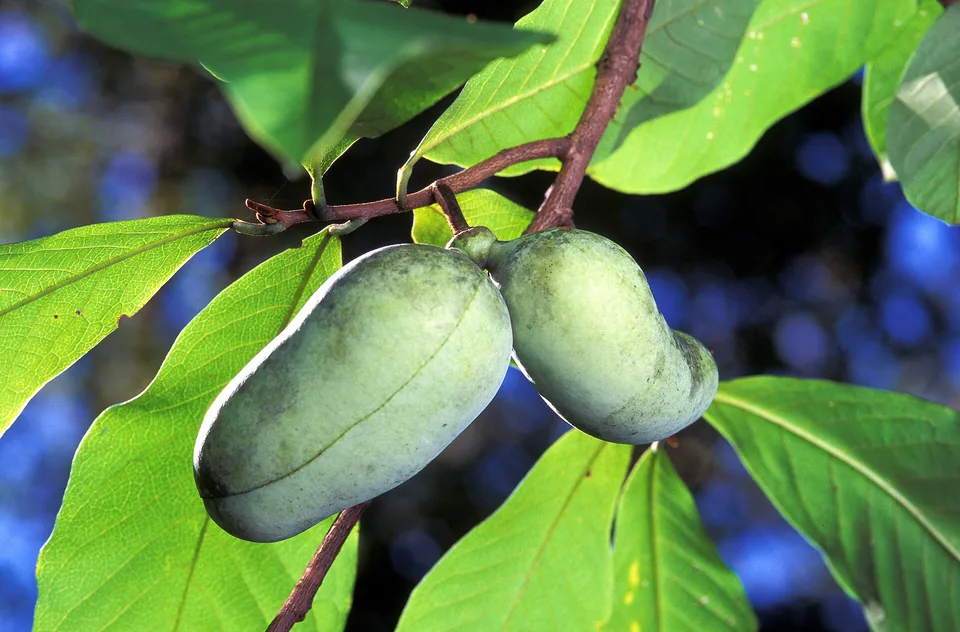
Pawpaw gives you a sweet, custard-like fruit that tastes like banana, perfect eaten fresh or made into desserts. This tree fruits best in full sun but also grows in partial shade, and it loves regular water and moist soil. Pick the fruit from August to October, when the skin gives slightly to a gentle squeeze.
- Sun
Full sun for the most fruit; also grows in partial shade. Shade it the first year
What the sources say (2)
Light: Full sun for best fruiting; also grows in partial shade, dappled sun or deep shade; shade the first year after planting
Pawpaws are most fruitful in full sun, although they will also grow in dappled sun or partial shade.
— Asimina triloba (Common Pawpaw, Pawpaw) | North Carolina Extension Gardener Plant Toolbox [1] Pawpaws need full sun for best production, though they should be partially shaded for the first year after planting.
— Pawpaw Production Guide - Alabama Cooperative Extension System [5] - Water
1–2 inches of water a week; it can't handle drought, so mulch to keep the soil moist
What the sources say (4)
Watering: 1 to 2 inches (2.5-5.1 cm) of water per week; not drought tolerant
Pawpaws are not drought tolerant: 1 to 2 inches of water per week will lead to the best growth.
— Pawpaw Production Guide - Alabama Cooperative Extension System [5] Watering notes: Ample water in the first few years after planting; moisture-retentive soil but not permanently wet; adequate moisture needed as fruit develops in late summer; mulch retains moisture
In the first few years after planting, the trees will need an ample amount of water.
— Establishing a Pawpaw Tree in Your Backyard - Wilkes County Center | N.C. Cooperative Extension [4] They like moisture-retentive soils but not permanently wet soil.
— Asimina triloba (Common Pawpaw, Pawpaw) | North Carolina Extension Gardener Plant Toolbox [1] As fruit develops in the heat of the late summer, adequate moisture is necessary for high-quality fruit.
— Pawpaw Production Guide - Alabama Cooperative Extension System [5] - Cold
Survives winters down to −20 °F (−28.9 °C)
Very hardy · USDA 5a · RHS H7 · Z5
What the sources say (10)
Hardiness, coldest zone: 5a [winter low −28.9 to −26.1 °C (−20 to −15 °F)]
According to NC State Extension Plant Toolbox: 5a, 5b, 6a, 6b, 7a, 7b, 8a, 8b, 9a, 9b
— Asimina triloba (Common Pawpaw, Pawpaw) | North Carolina Extension Gardener Plant Toolbox [1] According to NC Cooperative Extension (Wilkes County): Plants can be grown in USDA hardiness zones 5a through 9b.
— Establishing a Pawpaw Tree in Your Backyard - Wilkes County Center | N.C. Cooperative Extension [4] Alabama: Common pawpaw grows well in USDA hardiness zones 5b through 8 (nearly all of Alabama).
— Pawpaw Production Guide - Alabama Cooperative Extension System [5] According to Clemson HGIC: and are hardy in USDA Zones 5 to 8.
— Pawpaw | Home & Garden Information Center [7] 5a, 5b, 6a, 6b, 7a, 7b, 8a, 8b, 9a, 9b
— Asimina triloba (Common Pawpaw, Pawpaw) | North Carolina Extension Gardener Plant Toolbox [1] Hardiness, warmest zone: 9b [winter low −3.9 to −1.1 °C (25 to 30 °F)]
According to NC State Extension Plant Toolbox: 5a, 5b, 6a, 6b, 7a, 7b, 8a, 8b, 9a, 9b
— Asimina triloba (Common Pawpaw, Pawpaw) | North Carolina Extension Gardener Plant Toolbox [1] According to NC Cooperative Extension (Wilkes County): Plants can be grown in USDA hardiness zones 5a through 9b.
— Establishing a Pawpaw Tree in Your Backyard - Wilkes County Center | N.C. Cooperative Extension [4] Alabama: Common pawpaw grows well in USDA hardiness zones 5b through 8 (nearly all of Alabama).
— Pawpaw Production Guide - Alabama Cooperative Extension System [5] According to Clemson HGIC: and are hardy in USDA Zones 5 to 8.
— Pawpaw | Home & Garden Information Center [7] 5a, 5b, 6a, 6b, 7a, 7b, 8a, 8b, 9a, 9b
— Asimina triloba (Common Pawpaw, Pawpaw) | North Carolina Extension Gardener Plant Toolbox [1] - Soil
Moist but not soggy soil, slightly acidic, pH 5.5–6.5
What the sources say (9)
Soil pH, minimum: 5.5
annual applications of nitrogen will be beneficial at 100 pounds per acre per year. The ideal pH is 5.5 to 6.5.
— Pawpaw Production Guide - Alabama Cooperative Extension System [5] Soil pH, maximum: 6.5
According to NC State Extension Plant Toolbox: Soil pH: Acid (<6.0) Soil Drainage:
— Asimina triloba (Common Pawpaw, Pawpaw) | North Carolina Extension Gardener Plant Toolbox [1] According to NC Cooperative Extension (Wilkes County): It prefers moist and well-drained soils with a slightly acidic pH (5.5 - 5.7).
— Establishing a Pawpaw Tree in Your Backyard - Wilkes County Center | N.C. Cooperative Extension [4] According to Alabama Cooperative Extension System: The ideal pH is 5.5 to 6.5.
— Pawpaw Production Guide - Alabama Cooperative Extension System [5] According to Clemson HGIC: Soil that is well-drained, deep, fertile, and slightly acidic (pH 5.5 to 7.0) is ideal
— Pawpaw | Home & Garden Information Center [7] annual applications of nitrogen will be beneficial at 100 pounds per acre per year. The ideal pH is 5.5 to 6.5.
— Pawpaw Production Guide - Alabama Cooperative Extension System [5] Watering notes: Ample water in the first few years after planting; moisture-retentive soil but not permanently wet; adequate moisture needed as fruit develops in late summer; mulch retains moisture
In the first few years after planting, the trees will need an ample amount of water.
— Establishing a Pawpaw Tree in Your Backyard - Wilkes County Center | N.C. Cooperative Extension [4] They like moisture-retentive soils but not permanently wet soil.
— Asimina triloba (Common Pawpaw, Pawpaw) | North Carolina Extension Gardener Plant Toolbox [1] As fruit develops in the heat of the late summer, adequate moisture is necessary for high-quality fruit.
— Pawpaw Production Guide - Alabama Cooperative Extension System [5] - Spacing
8–15 ft between trees
What the sources say (4)
Spacing: 243.8-457.2 cm (8-15 ft) apart; commercial plantings 182.9-304.8 cm (6-10 ft) within a row, rows 457.2-609.6 cm (15-20 ft) apart
backyard planting: The trees should be spaced 8-15 ft apart.
— Establishing a Pawpaw Tree in Your Backyard - Wilkes County Center | N.C. Cooperative Extension [4] commercial planting: For commercial planting, place trees 6 to 10 feet apart within a row, with rows 15 to 20 feet apart.
— Pawpaw Production Guide - Alabama Cooperative Extension System [5] The trees should be spaced 8-15 ft apart.
— Establishing a Pawpaw Tree in Your Backyard - Wilkes County Center | N.C. Cooperative Extension [4] For commercial planting, place trees 6 to 10 feet apart within a row, with rows 15 to 20 feet apart.
— Pawpaw Production Guide - Alabama Cooperative Extension System [5] - Planting
Plant while the tree is dormant, in fall or, better, early spring
What the sources say (2)
Planting: Fall or early spring while the tree is dormant; early spring preferred
Pawpaw trees should be planted when the tree is dormant, either in the fall or early spring.
— Establishing a Pawpaw Tree in Your Backyard - Wilkes County Center | N.C. Cooperative Extension [4] Early spring is the best time to plant pawpaws.
— Pawpaw Production Guide - Alabama Cooperative Extension System [5] - Feeding
Once a year in spring with a balanced fertilizer; don't feed after midsummer
What the sources say (7)
When: In spring as growth begins, once trees are established
One of two approaches can be used for nutrient application: the entire set of nutrients in spring as growth begins or half at that time and half 1 month later.
— Pawpaw Production Guide - Alabama Cooperative Extension System [5] Once the trees are established, an annual spring broadcast of a balanced granular fertilizer, such as 10-10-10, from the trunk to the outermost branches is often adequate
— Pawpaw | Home & Garden Information Center [7] How often: Once a year in spring, or split in two halves one month apart
One of two approaches can be used for nutrient application: the entire set of nutrients in spring as growth begins or half at that time and half 1 month later.
— Pawpaw Production Guide - Alabama Cooperative Extension System [5] Once the trees are established, an annual spring broadcast of a balanced granular fertilizer, such as 10-10-10, from the trunk to the outermost branches is often adequate
— Pawpaw | Home & Garden Information Center [7] Mineral fertilizers: Balanced granular fertilizer such as 10-10-10, broadcast from the trunk to the outermost branches
orchards: After that, annual applications of nitrogen will be beneficial at 100 pounds per acre per year.
— Pawpaw Production Guide - Alabama Cooperative Extension System [5] Once the trees are established, an annual spring broadcast of a balanced granular fertilizer, such as 10-10-10, from the trunk to the outermost branches is often adequate
— Pawpaw | Home & Garden Information Center [7] Avoid: Fertilizing after midsummer
arbuscular mycorrhizae, which will increase nutrient uptake. Avoid fertilizing after midsummer.
— Pawpaw Production Guide - Alabama Cooperative Extension System [5] - Harvest
August to October; pick when the skin gives slightly to a gentle squeeze
What the sources say (11)
Harvest: Late summer to early fall: August to October depending on variety; Iowa generally September (late August to early October); Alabama July to late September
According to NC Cooperative Extension (Wilkes County): Depending on the variety, the fruit can ripen from August until October.
— Establishing a Pawpaw Tree in Your Backyard - Wilkes County Center | N.C. Cooperative Extension [4] Iowa: In Iowa, the fruit generally ripen in September, although it can range from late August to early October.
— Growing Pawpaw in Iowa | Yard and Garden [3] Alabama: In Alabama, fruit may be ready between July and late September.
— Pawpaw Production Guide - Alabama Cooperative Extension System [5] Depending on the variety, the fruit can ripen from August until October.
— Establishing a Pawpaw Tree in Your Backyard - Wilkes County Center | N.C. Cooperative Extension [4] In Iowa, the fruit generally ripen in September, although it can range from late August to early October.
— Growing Pawpaw in Iowa | Yard and Garden [3] In Alabama, fruit may be ready between July and late September.
— Pawpaw Production Guide - Alabama Cooperative Extension System [5] How to harvest: Harvest when the skin gives slightly to a finger squeeze and the flesh first starts to soften; fruit picked very firm do not ripen properly; skin turns light green to yellowish at peak ripeness (black when over-ripe); check trees and harvest daily during the season; wear gloves because contact dermatitis has been reported
The fruit should not be harvested until the skin gives (indents) slightly with a finger squeeze as fruit do not ripen properly if picked when very firm.
— Pawpaw | Home & Garden Information Center [7] The skin of ripening fruit turns light green to yellowish (peak ripeness) to black (over-ripe), which mimics the stages of a ripening banana in look, texture, and somewhat in flavor.
— Pawpaw | Home & Garden Information Center [7] Pick pawpaws off the tree when flesh first starts to soften, since they quickly deteriorate.
— Pawpaw Production Guide - Alabama Cooperative Extension System [5] Trees should be checked and harvested every day during the harvest period for the best fruit quality.
— Pawpaw Production Guide - Alabama Cooperative Extension System [5] It is recommended to wear gloves when harvesting as contact dermatitis has been known to occur.
— Asimina triloba (Common Pawpaw, Pawpaw) | North Carolina Extension Gardener Plant Toolbox [1] - Pests
Flower-stalk borers, webworms, Japanese beetles and stink bugs; also leaf spot
What the sources say (11)
Pests: pawpaw peduncle borer, Asimina webworm moth, pawpaw leafroller, Japanese beetles, ambrosia beetles, stinging rose caterpillar, pawpaw sphinx moth, brown marmorated stink bug, spotted wing drosophila, thrips (in greenhouses), zebra swallowtail larvae (minor damage)
The pawpaw peduncle borer ( Talponia plummeriana ) is a small moth whose larvae burrow into flower stalks.
— Asimina triloba (Common Pawpaw, Pawpaw) | North Carolina Extension Gardener Plant Toolbox [1] The zebra swallowtail butterfly larvae feed on young leaves, but they seldom do permanent damage, nor do they affect fruit yield.
— Asimina triloba (Common Pawpaw, Pawpaw) | North Carolina Extension Gardener Plant Toolbox [1] Asimina webworm moth ( Omphalocera munroei ) is another important pest of pawpaw.
— Pawpaw Production Guide - Alabama Cooperative Extension System [5] The larvae of the pawpaw leafroller ( Choristoneura parallela ), sometimes called spotted fireworm, also tie leaves together and feed inside.
— Pawpaw Production Guide - Alabama Cooperative Extension System [5] Other pawpaw pests may include stinging rose caterpillar ( Parasa indetermina ), pawpaw sphinx moth ( Dolba hyloeus ), granulate ambrosia beetle
— Pawpaw Production Guide - Alabama Cooperative Extension System [5] brown marmorated stink bug ( Halyomorpha halys ), and spotted wing drosophila ( Drosophila suzukii ).
— Pawpaw Production Guide - Alabama Cooperative Extension System [5] Japanese beetles occasionally damage leaves, and thrips can be a problem in greenhouse conditions. Ambrosia beetles sometimes kill stressed trees.
— Pawpaw | Home & Garden Information Center [7] Diseases: leaf spot (bordered leaf spot, Phyllosticta), sooty blotch, Armillaria root rot, flyspeck
The disease sooty blotch, caused by several fungi, appears as surface blemishes on the fruit.
— Pawpaw Production Guide - Alabama Cooperative Extension System [5] Armillaria root rot ( Armillaria mellea ), also called oak root rot, has been reported in north Alabama as a devastating disease of mature pawpaw plantings.
— Pawpaw Production Guide - Alabama Cooperative Extension System [5] A severe fungal disease, bordered leaf spot ( Phyllosticta asiminae ), occurs in humid climates and infects leaves and fruit.
— Pawpaw | Home & Garden Information Center [7] A cosmetic fungal disease known as flyspeck ( Zygophiala jamaicensis ), has been reported on pawpaw.
— Pawpaw | Home & Garden Information Center [7] - Watch out
It sends up root suckers that form thickets: remove them to keep one trunk
- Size
15–30 ft tall
What the sources say (3)
Mature height: 457-914 cm (15-30 ft)
Height: 15 ft. 0 in. - 30 ft. 0 in. Width: 15 ft. 0 in. - 30 ft. 0 in.
— Asimina triloba (Common Pawpaw, Pawpaw) | North Carolina Extension Gardener Plant Toolbox [1] Common pawpaw can reach 15 to 30 feet in height.
— Pawpaw Production Guide - Alabama Cooperative Extension System [5] Pawpaw is a small, deciduous tree that may attain 15 to 30 feet in height.
— Pawpaw | Home & Garden Information Center [7] - Propagation
From fresh seeds cleaned of pulp; never let them dry, chill them in moist sand
What the sources say (2)
Saving seeds: Take seeds from fresh fruit and remove all the pulp; never let them dry out (dried seeds will not germinate); give them a cold, moist stratification in slightly moist sand or similar medium in the refrigerator
When collecting seed for stratification, remove seeds from the fruit and wash off the pulp before bagging in slightly moist refrigerated media such as sand.
— Pawpaw Production Guide - Alabama Cooperative Extension System [5] Collect seeds from fresh fruit, remove all the pulp, and immediately provide a cold, moist treatment for 90 to 120 days. Seeds that dry out will NOT germinate.
— Pawpaw | Home & Garden Information Center [7] - Sowing
Sow 1 inch deep after a cold, moist period
What the sources say (1)
Sowing depth: 2.5 cm (1 in), after cold stratification
After stratification, plant seeds 1 inch deep in tree pots at temperatures of 70 to 85 degrees F.
— Pawpaw Production Guide - Alabama Cooperative Extension System [5] - Safety
Eat only the ripe flesh: skin and seeds cause vomiting; wear gloves to pick
Overview
Pawpaw is a deciduous understory tree native to eastern North America that bears an edible, custard-like fruit. [1] It fruits best in full sun and needs a genetically different pollen donor to set fruit. [1] Sources report that the seeds and skin of the fruit can cause stomach upset and should not be eaten. [7]
Pawpaw care
How to water Pawpaw
Watering
1 to 2 inches (2.5-5.1 cm) of water per week; not drought tolerant
What the sources say (1)
Pawpaws are not drought tolerant: 1 to 2 inches of water per week will lead to the best growth.Watering notes
Ample water in the first few years after planting; moisture-retentive soil but not permanently wet; adequate moisture needed as fruit develops in late summer; mulch retains moisture
What the sources say (3)
In the first few years after planting, the trees will need an ample amount of water.They like moisture-retentive soils but not permanently wet soil.As fruit develops in the heat of the late summer, adequate moisture is necessary for high-quality fruit.How much light Pawpaw needs
Full sun for best fruiting; also grows in partial shade, dappled sun or deep shade; shade the first year after planting
What the sources say (2)
Pawpaws are most fruitful in full sun, although they will also grow in dappled sun or partial shade.Pawpaws need full sun for best production, though they should be partially shaded for the first year after planting.How much cold Pawpaw can take
Hardiness, coldest zone
5a [winter low −28.9 to −26.1 °C (−20 to −15 °F)]
What each source says
According to NC State Extension Plant Toolbox: 5a [winter low −28.9 to −26.1 °C (−20 to −15 °F)]
According to NC Cooperative Extension (Wilkes County): 5a [winter low −28.9 to −26.1 °C (−20 to −15 °F)]
Alabama: 5b [winter low −26.1 to −23.3 °C (−15 to −10 °F)]
According to Clemson HGIC: 5 [winter low −28.9 to −23.3 °C (−20 to −10 °F)]
What the sources say (5)
According to NC State Extension Plant Toolbox: 5a, 5b, 6a, 6b, 7a, 7b, 8a, 8b, 9a, 9bAccording to NC Cooperative Extension (Wilkes County): Plants can be grown in USDA hardiness zones 5a through 9b.Alabama: Common pawpaw grows well in USDA hardiness zones 5b through 8 (nearly all of Alabama).According to Clemson HGIC: and are hardy in USDA Zones 5 to 8.5a, 5b, 6a, 6b, 7a, 7b, 8a, 8b, 9a, 9bHardiness, warmest zone
9b [winter low −3.9 to −1.1 °C (25 to 30 °F)]
What each source says
According to NC State Extension Plant Toolbox: 9b [winter low −3.9 to −1.1 °C (25 to 30 °F)]
According to NC Cooperative Extension (Wilkes County): 9b [winter low −3.9 to −1.1 °C (25 to 30 °F)]
Alabama: 8 [winter low −12.2 to −6.7 °C (10 to 20 °F)]
According to Clemson HGIC: 8 [winter low −12.2 to −6.7 °C (10 to 20 °F)]
What the sources say (5)
According to NC State Extension Plant Toolbox: 5a, 5b, 6a, 6b, 7a, 7b, 8a, 8b, 9a, 9bAccording to NC Cooperative Extension (Wilkes County): Plants can be grown in USDA hardiness zones 5a through 9b.Alabama: Common pawpaw grows well in USDA hardiness zones 5b through 8 (nearly all of Alabama).According to Clemson HGIC: and are hardy in USDA Zones 5 to 8.5a, 5b, 6a, 6b, 7a, 7b, 8a, 8b, 9a, 9bBest soil for Pawpaw
Soil pH, minimum
5.5
What the sources say (1)
annual applications of nitrogen will be beneficial at 100 pounds per acre per year. The ideal pH is 5.5 to 6.5.Soil pH, maximum
6.5
What each source says
According to NC State Extension Plant Toolbox: 6.0
According to NC Cooperative Extension (Wilkes County): 5.7
According to Alabama Cooperative Extension System: 6.5
According to Clemson HGIC: 7.0
What the sources say (5)
According to NC State Extension Plant Toolbox: Soil pH: Acid (<6.0) Soil Drainage:According to NC Cooperative Extension (Wilkes County): It prefers moist and well-drained soils with a slightly acidic pH (5.5 - 5.7).According to Alabama Cooperative Extension System: The ideal pH is 5.5 to 6.5.According to Clemson HGIC: Soil that is well-drained, deep, fertile, and slightly acidic (pH 5.5 to 7.0) is idealannual applications of nitrogen will be beneficial at 100 pounds per acre per year. The ideal pH is 5.5 to 6.5.Where to grow Pawpaw
243.8-457.2 cm (8-15 ft) apart; commercial plantings 182.9-304.8 cm (6-10 ft) within a row, rows 457.2-609.6 cm (15-20 ft) apart
What each source says
backyard planting: 243.8-457.2 cm (8-15 ft) apart
commercial planting: 182.9-304.8 cm (6-10 ft) within a row, rows 457.2-609.6 cm (15-20 ft) apart
What the sources say (4)
backyard planting: The trees should be spaced 8-15 ft apart.commercial planting: For commercial planting, place trees 6 to 10 feet apart within a row, with rows 15 to 20 feet apart.The trees should be spaced 8-15 ft apart.For commercial planting, place trees 6 to 10 feet apart within a row, with rows 15 to 20 feet apart.How to propagate Pawpaw
The sources disagree:
What the sources say (2)
Pawpaw can be propagated by seed or grafting.Pawpaws are easily propagated by several grafting and budding techniques, including whip-and-tongue, cleft, bark inlay, and chip budding.How to grow Pawpaw
The plant
Life cycle
perennial (woody)
What the sources say (1)
Life Cycle: Perennial Woody Country Or Region Of Origin: Canada and U.S.A., NCFamily
Annonaceae
What the sources say (1)
Pawpaw is a deciduous, native, understory tree in the pawpaw family (Annonaceae).Mature height
457-914 cm (15-30 ft)
What the sources say (3)
Height: 15 ft. 0 in. - 30 ft. 0 in. Width: 15 ft. 0 in. - 30 ft. 0 in.Common pawpaw can reach 15 to 30 feet in height.Pawpaw is a small, deciduous tree that may attain 15 to 30 feet in height.Mature width
Years to first fruit
The sources disagree:
Pawpaw trees will produce fruit 4-8 years after planting.
[4]Grafted trees produce fruit in two to three years, while seedling trees may take up to 10 years to bear fruit.
[6]Trees started from seed usually produce fruit in 5 to 8 years after planting, while grafted trees may bear fruit in 3 to 4 years.
[7]
Sowing and growth
Sowing depth
2.5 cm (1 in), after cold stratification
What the sources say (1)
After stratification, plant seeds 1 inch deep in tree pots at temperatures of 70 to 85 degrees F.Row spacing
457-610 cm (15-20 ft) between rows, for commercial planting
What the sources say (1)
For commercial planting, place trees 6 to 10 feet apart within a row, with rows 15 to 20 feet apart.Harvest and storage
How to harvest
Harvest when the skin gives slightly to a finger squeeze and the flesh first starts to soften; fruit picked very firm do not ripen properly; skin turns light green to yellowish at peak ripeness (black when over-ripe); check trees and harvest daily during the season; wear gloves because contact dermatitis has been reported
What the sources say (5)
The fruit should not be harvested until the skin gives (indents) slightly with a finger squeeze as fruit do not ripen properly if picked when very firm.The skin of ripening fruit turns light green to yellowish (peak ripeness) to black (over-ripe), which mimics the stages of a ripening banana in look, texture, and somewhat in flavor.Pick pawpaws off the tree when flesh first starts to soften, since they quickly deteriorate.Trees should be checked and harvested every day during the harvest period for the best fruit quality.It is recommended to wear gloves when harvesting as contact dermatitis has been known to occur.Storage
Refrigerate soon after harvest at 0-4 °C (32-40 °F) and 90-95% relative humidity; ripe fruit lasts only a few days at room temperature; quality declines after a few weeks of refrigeration; pulp freezes well
What the sources say (3)
Harvested fruit should be refrigerated at 32 to 40 degrees F and 90 to 95 percent relative humidity as soon as possible after harvest to avoid fermentation and browning.Pawpaws are highly perishable at room temperature, only lasting a few days. Under refrigeration, quality will decline after a few weeks.The pulp can be used immediately or frozen for later use.Saving seeds
Take seeds from fresh fruit and remove all the pulp; never let them dry out (dried seeds will not germinate); give them a cold, moist stratification in slightly moist sand or similar medium in the refrigerator
What the sources say (2)
When collecting seed for stratification, remove seeds from the fruit and wash off the pulp before bagging in slightly moist refrigerated media such as sand.Collect seeds from fresh fruit, remove all the pulp, and immediately provide a cold, moist treatment for 90 to 120 days. Seeds that dry out will NOT germinate.Pests and diseases
Pests
pawpaw peduncle borer, Asimina webworm moth, pawpaw leafroller, Japanese beetles, ambrosia beetles, stinging rose caterpillar, pawpaw sphinx moth, brown marmorated stink bug, spotted wing drosophila, thrips (in greenhouses), zebra swallowtail larvae (minor damage)
What the sources say (7)
The pawpaw peduncle borer ( Talponia plummeriana ) is a small moth whose larvae burrow into flower stalks.The zebra swallowtail butterfly larvae feed on young leaves, but they seldom do permanent damage, nor do they affect fruit yield.Asimina webworm moth ( Omphalocera munroei ) is another important pest of pawpaw.The larvae of the pawpaw leafroller ( Choristoneura parallela ), sometimes called spotted fireworm, also tie leaves together and feed inside.Other pawpaw pests may include stinging rose caterpillar ( Parasa indetermina ), pawpaw sphinx moth ( Dolba hyloeus ), granulate ambrosia beetlebrown marmorated stink bug ( Halyomorpha halys ), and spotted wing drosophila ( Drosophila suzukii ).Japanese beetles occasionally damage leaves, and thrips can be a problem in greenhouse conditions. Ambrosia beetles sometimes kill stressed trees.Diseases
leaf spot (bordered leaf spot, Phyllosticta), sooty blotch, Armillaria root rot, flyspeck
What the sources say (4)
The disease sooty blotch, caused by several fungi, appears as surface blemishes on the fruit.Armillaria root rot ( Armillaria mellea ), also called oak root rot, has been reported in north Alabama as a devastating disease of mature pawpaw plantings.A severe fungal disease, bordered leaf spot ( Phyllosticta asiminae ), occurs in humid climates and infects leaves and fruit.A cosmetic fungal disease known as flyspeck ( Zygophiala jamaicensis ), has been reported on pawpaw.Fertilizing
When
In spring as growth begins, once trees are established
What the sources say (2)
One of two approaches can be used for nutrient application: the entire set of nutrients in spring as growth begins or half at that time and half 1 month later.Once the trees are established, an annual spring broadcast of a balanced granular fertilizer, such as 10-10-10, from the trunk to the outermost branches is often adequateHow often
Once a year in spring, or split in two halves one month apart
What the sources say (2)
One of two approaches can be used for nutrient application: the entire set of nutrients in spring as growth begins or half at that time and half 1 month later.Once the trees are established, an annual spring broadcast of a balanced granular fertilizer, such as 10-10-10, from the trunk to the outermost branches is often adequateNatural fertilizers
Soil organic matter increased at planting, to encourage mycorrhizae and nutrient uptake
What the sources say (1)
Growers should also consider increasing soil organic matter at the time of planting to encourage associations with arbuscular mycorrhizae, which will increase nutrient uptake.Mineral fertilizers
Balanced granular fertilizer such as 10-10-10, broadcast from the trunk to the outermost branches
What each source says
orchards: Nitrogen at 112 kg [246.9 lb]/ha per year after soil-test corrections
What the sources say (2)
orchards: After that, annual applications of nitrogen will be beneficial at 100 pounds per acre per year.Once the trees are established, an annual spring broadcast of a balanced granular fertilizer, such as 10-10-10, from the trunk to the outermost branches is often adequateMicronutrients
Calcium once trees bear fruit, according to soil pH and a soil test
What the sources say (1)
When the pawpaws begin bearing fruit, calcium may need to be applied depending on the soil pH and fertility as determined by a soil test.Avoid
Fertilizing after midsummer
What the sources say (1)
arbuscular mycorrhizae, which will increase nutrient uptake. Avoid fertilizing after midsummer.Pawpaw pests and problems
Pawpaw peduncle borer
Symptom: Larvae burrow into flower stalks and can destroy large numbers of flowers.
What the sources say (1)
The pawpaw peduncle borer ( Talponia plummeriana ) is a small moth whose larvae burrow into flower stalks. They can destroy large numbers of flowers.
— Asimina triloba (Common Pawpaw, Pawpaw) | North Carolina Extension Gardener Plant Toolbox [1] Root suckers
Symptom: Trees produce root suckers that can be troublesome in the landscape and form dense thickets.
What to do: Remove root suckers to maintain a single-trunk tree for faster growth and earlier fruiting.
What the sources say (2)
Remove root suckers to maintain a single-trunk tree for faster growth and earlier fruiting.
— Pawpaw | Home & Garden Information Center [7] Trees can produce root suckers, which can be troublesome in the landscape.
— Asimina triloba (Common Pawpaw, Pawpaw) | North Carolina Extension Gardener Plant Toolbox [1] Asimina webworm moth
Symptom: Chewed leaves and webbing visible in summer; larvae tie leaves together and foliage eventually dies.
What to do: Infested parts of the tree should be removed for control.
What the sources say (1)
Larvae tie leaves together for protection while feeding, and foliage eventually dies. Infested parts of the tree should be removed for control.
— Pawpaw Production Guide - Alabama Cooperative Extension System [5] Armillaria root rot
Symptom: Reported in north Alabama as a devastating disease of mature pawpaw plantings.
What to do: Support the health of the trees through appropriate fertility and irrigation programs and remove any infected trees.
What the sources say (1)
Support the health of the trees through appropriate fertility and irrigation programs and remove any infected trees.
— Pawpaw Production Guide - Alabama Cooperative Extension System [5] Sooty blotch
Symptom: Black blotches resembling soot appear on the fruit surface during warm, humid, rainy periods.
What to do: Mostly superficial and can be scrubbed off.
What the sources say (1)
Black blotches resembling soot appear on fruit. This infection occurs during extended periods of warmth, high humidity, and rainfall, but is mostly superficial and can be scrubbed off.
— Pawpaw Production Guide - Alabama Cooperative Extension System [5]
Remedies
Each remedy shows what official sources say about it; traditional remedies without an official source are marked as such. Harmful ones are listed so you know to avoid them.
Treating the plant
powdery mildew
epsom salts Harmful
There is no way to know your soil is nutrient poor without a soil test
— gardeningknowhow.com [8] How: sprinkle the powder around the base of the tree, then water deeply
Application of Epsom salts (hydrated magnesium sulfate) is an easy, inexpensive way to promote healthy pawpaw trees, as the addition of magnesium strengthens cell walls and improves uptake of other nutrients.
— gardeningknowhow.com [8] What the evidence says Epsom salts (magnesium sulfate) should only be used if a soil test shows a magnesium deficiency. In most gardens, they can harm plants rather than help them.
— extension.oregonstate.edu [9]
root suckers
hand pulling suckers Not verified
Traditional remedy, not verified by an official source.
How: suckers, the new shoots beside the main trunk, are hand pulled rather than pruned or mowed, because the latter methods encourage more to grow
Is Pawpaw poisonous?
Reported by the source, quoted verbatim. This is not medical or veterinary advice: if a person or an animal may have eaten this plant, contact a poison control centre or a veterinarian.
Stomach and intestinal pain from eating the fruit skin or seeds. Skin irritation from handling fruit.
[1]- Poisonous parts
Poison Part: Fruits Leaves Seeds Stems
[1]- Toxic principle
Poison Toxic Principle: acetogenins
[1]- Symptoms
Poison Symptoms: Stomach and intestinal pain from eating the fruit skin or seeds. Skin irritation from handling fruit.
[1]- Severity
Poison Severity: Low Poison Symptoms: Stomach and intestinal pain from eating the fruit skin or seeds.
[1]
Seeds and the green peel (skin) contain alkaloids that are emetic (which causes vomiting); therefore, the seeds and peel should not be consumed.
[7]- Poisonous parts
Seeds and the green peel (skin) contain alkaloids that are emetic (which causes vomiting)
[7]- Toxic principle
Seeds and the green peel (skin) contain alkaloids that are emetic (which causes vomiting)
[7]- Symptoms
Seeds and the green peel (skin) contain alkaloids that are emetic (which causes vomiting)
[7]
Pawpaw consumers should avoid ingesting underripe fruit and seeds, and practice moderation in pawpaw consumption as a reasonable person would do with any fruit.
[5]It is recommended to wear gloves when harvesting as contact dermatitis has been known to occur.
[1]
Calendar
Planting
Fall or early spring while the tree is dormant; early spring preferred
What the sources say (2)
Pawpaw trees should be planted when the tree is dormant, either in the fall or early spring.Early spring is the best time to plant pawpaws.Harvest
Late summer to early fall: August to October depending on variety; Iowa generally September (late August to early October); Alabama July to late September
What each source says
According to NC Cooperative Extension (Wilkes County): August to October, depending on the variety
Iowa: Generally September (late August to early October)
Alabama: July to late September
What the sources say (6)
According to NC Cooperative Extension (Wilkes County): Depending on the variety, the fruit can ripen from August until October.Iowa: In Iowa, the fruit generally ripen in September, although it can range from late August to early October.Alabama: In Alabama, fruit may be ready between July and late September.Depending on the variety, the fruit can ripen from August until October.In Iowa, the fruit generally ripen in September, although it can range from late August to early October.In Alabama, fruit may be ready between July and late September.Months as given by the sources, which are mostly from the United States (northern hemisphere). In the southern hemisphere they shift by about six months.
Edibility
Reported by the source, quoted verbatim. Do not eat a plant on the basis of this page alone: identification mistakes can be dangerous.
Edible fleshy fruit becomes soft and custard-like sweet taste similar to bananas, very nutritious.
[1]To eat a pawpaw, gently rinse fruit under running water, slice it and scoop out the pulp, which has a custard-like texture.
[6]Pawpaw is typically eaten as fresh fruit or processed into desserts.
[7]
Indicative values
Values from a secondary source, not checked word for word like the rest of this page. Use them as a starting point.
- Hours of sun
- 6-8 hoursIndicative value, adapt it to your climate · Secondary source
- Drought tolerant
- yesIndicative value, adapt it to your climate · Secondary source
- Soil
- Humus rich, Well-drainedIndicative value, adapt it to your climate · Secondary source
- Care level
- MediumIndicative value, adapt it to your climate · Secondary source
- Growth rate
- ModerateIndicative value, adapt it to your climate · Secondary source
- Pruning
- February, March, April, MayIndicative value, adapt it to your climate · Secondary source
Similar plants
- Small-flowered Pawpaw Asimina parviflora
- Soursop Annona muricata
- Abies grandis Abies grandis
- Abraham Trachystemon orientalis
- Abyssinian banana Ensete ventricosum
- Acacia longifolia Acacia longifolia
- Acanthus hungaricus Acanthus hungaricus
- Achlys triphylla Achlys triphylla
Sources
Every value above is quoted from these documents. Links lead to the original publisher.
- Asimina triloba (Common Pawpaw, Pawpaw) | North Carolina Extension Gardener Plant Toolbox · plants.ces.ncsu.edu, consulted
- Native Trees of Maryland: The Pawpaw, Asimina triloba | University of Maryland Extension · extension.umd.edu, consulted
- Growing Pawpaw in Iowa | Yard and Garden · yardandgarden.extension.iastate.edu, consulted
- Establishing a Pawpaw Tree in Your Backyard - Wilkes County Center | N.C. Cooperative Extension · wilkes.ces.ncsu.edu, consulted
- Pawpaw Production Guide - Alabama Cooperative Extension System · aces.edu, consulted
- Pawpaw Fruit in the Garden and the Kitchen · extension.psu.edu, consulted
- Pawpaw | Home & Garden Information Center · hgic.clemson.edu, consulted
- gardeningknowhow.com · gardeningknowhow.com
- extension.oregonstate.edu · extension.oregonstate.edu
Written by Emilio Marruso · last checked