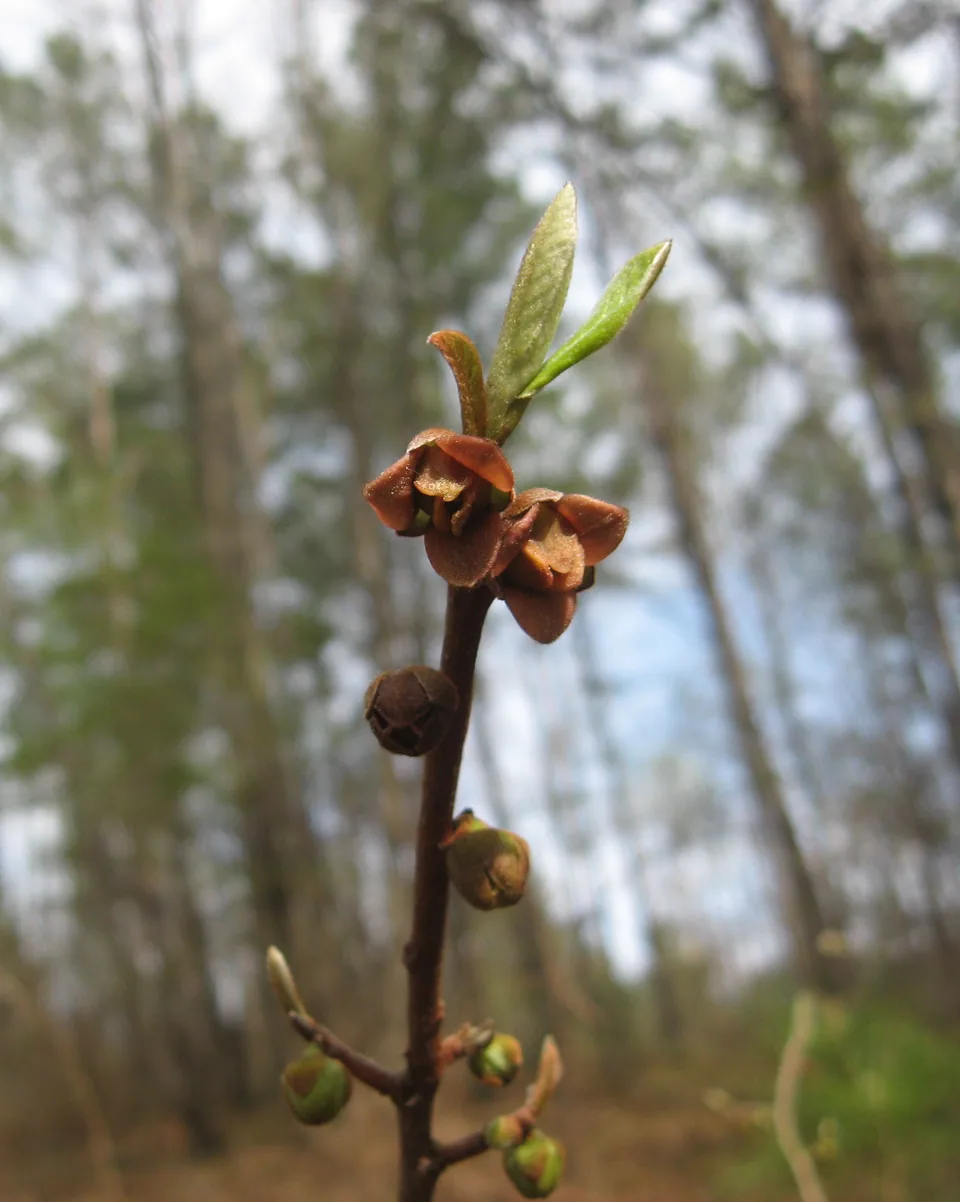


How to Grow and Care for Small-flowered Pawpaw
Asimina parviflora
Written by Emilio Marruso · last checked
At a glance
Small-flower pawpaw is a perennial that grows happily in partial shade and handles full sun once it settles in. From July to September it offers sweet fruit you can eat raw or cooked. The fruit is small, but it is a real treat picked from your own garden, and the plant stays a friendly 3 to 12 feet tall.
- Sun
Partial shade; takes full sun once established
What the sources say (1)
Light: Partial shade; tolerates full sun once established
Preference is for loose, moist to dry, well-drained soils in partial shade. As it matures and establishes, it will tolerate full sun.
— Asimina parviflora (Dwarf Pawpaw, Small-flowered Pawpaw) | North Carolina Extension Gardener Plant Toolbox [1] - Water
Soil can be moist to dry, but never dry and packed hard
What the sources say (1)
Watering notes: Prefers loose, moist to dry, well-drained soils; does not tolerate dry, compacted soils
Preference is for loose, moist to dry, well-drained soils in partial shade. As it matures and establishes, it will tolerate full sun. It does not tolerate dry, compacted soils.
— Asimina parviflora (Dwarf Pawpaw, Small-flowered Pawpaw) | North Carolina Extension Gardener Plant Toolbox [1] - Soil
Loose soil that drains well
What the sources say (1)
Watering notes: Prefers loose, moist to dry, well-drained soils; does not tolerate dry, compacted soils
Preference is for loose, moist to dry, well-drained soils in partial shade. As it matures and establishes, it will tolerate full sun. It does not tolerate dry, compacted soils.
— Asimina parviflora (Dwarf Pawpaw, Small-flowered Pawpaw) | North Carolina Extension Gardener Plant Toolbox [1] - Harvest
Sweet fruit from July to September, raw or cooked
What the sources say (2)
Harvest: Summer; fruit displays from July to September
Fruit Value To Gardener: Edible Fragrant Display/Harvest Time: Summer
— Asimina parviflora (Dwarf Pawpaw, Small-flowered Pawpaw) | North Carolina Extension Gardener Plant Toolbox [1] Fruit Description: 1- to 3-inch long cylindric yellow-green fruits mature to dark brown. Displays from July to September.
— Asimina parviflora (Dwarf Pawpaw, Small-flowered Pawpaw) | North Carolina Extension Gardener Plant Toolbox [1] - Size
3 to 12 ft tall and 2 to 6 ft wide
What the sources say (2)
Mature height: 91-366 cm (3 to 12 ft)
Dimensions: Height: 3 ft. 0 in. - 12 ft. 0 in. Width: 2 ft. 0 in. - 6 ft. 0 in.
— Asimina parviflora (Dwarf Pawpaw, Small-flowered Pawpaw) | North Carolina Extension Gardener Plant Toolbox [1] Mature width: 61-183 cm (2 to 6 ft)
Dimensions: Height: 3 ft. 0 in. - 12 ft. 0 in. Width: 2 ft. 0 in. - 6 ft. 0 in.
— Asimina parviflora (Dwarf Pawpaw, Small-flowered Pawpaw) | North Carolina Extension Gardener Plant Toolbox [1] - Propagation
By layering, root cuttings or seed
What the sources say (1)
Propagation: Layering, root cutting, seed
Life Cycle: Perennial Woody Recommended Propagation Strategy: Layering Root Cutting Seed
— Asimina parviflora (Dwarf Pawpaw, Small-flowered Pawpaw) | North Carolina Extension Gardener Plant Toolbox [1]
Overview
Small-flowered pawpaw is a deciduous shrub of dry pine or oak forests in the southeastern USA that generally grows 6-8 feet [1.8–2.4 m] tall. [1] It prefers partial shade and well-drained soils, tolerates full sun once established, and is difficult to transplant because of its long taproots. [1] Its leaves are the only food of Zebra Swallowtail larvae in North Carolina and its fruit is edible. [1]
This record is incomplete: the sources we read do not cover every field yet.
Not yet covered by our sources: Watering, Pruning
Small-flowered Pawpaw care
Measurements in square brackets are our conversion into the other unit system; the quoted text is unchanged.
How to water Small-flowered Pawpaw
Watering
Not stated in the sources we read.
Watering notes
Prefers loose, moist to dry, well-drained soils; does not tolerate dry, compacted soils
What the sources say (1)
Preference is for loose, moist to dry, well-drained soils in partial shade. As it matures and establishes, it will tolerate full sun. It does not tolerate dry, compacted soils.How much light Small-flowered Pawpaw needs
Partial shade; tolerates full sun once established
What the sources say (1)
Preference is for loose, moist to dry, well-drained soils in partial shade. As it matures and establishes, it will tolerate full sun.How much cold Small-flowered Pawpaw can take
Hardiness, coldest zone
The sources give different values depending on region, zone or growing conditions.
What each source says
According to NC State Extension: 7a-10b [winter low −17.8 to 4.4 °C (0 to 40 °F)]
According to Alabama Cooperative Extension System: 7b-10 [winter low −15 to 4.4 °C (5 to 40 °F)]
What the sources say (2)
According to NC State Extension: NC Region:
Coastal
Piedmont
USDA Plant Hardiness Zone:
7a, 7b, 8a, 8b, 9a, 9b, 10a, 10bAccording to Alabama Cooperative Extension System: Small-flower pawpaw can tolerate winters in USDA hardiness zones 7b–10.Hardiness, warmest zone
10b [winter low 1.7 to 4.4 °C (35 to 40 °F)]
What the sources say (1)
NC Region:
Coastal
Piedmont
USDA Plant Hardiness Zone:
7a, 7b, 8a, 8b, 9a, 9b, 10a, 10bHow to propagate Small-flowered Pawpaw
Layering, root cutting, seed
What the sources say (1)
Life Cycle:
Perennial
Woody
Recommended Propagation Strategy:
Layering
Root Cutting
SeedHow to grow Small-flowered Pawpaw
The plant
Life cycle
perennial
What the sources say (1)
Life Cycle:
Perennial
Woody
Recommended Propagation Strategy:
LayeringFamily
Annonaceae
What the sources say (1)
It is a member of the pawpaw family (Annonaceae). The species epithet is a compound of the two Latin words forMature height
91-366 cm (3 to 12 ft)
What the sources say (1)
Dimensions:
Height: 3 ft. 0 in. - 12 ft. 0 in.
Width: 2 ft. 0 in. - 6 ft. 0 in.Mature width
61-183 cm (2 to 6 ft)
What the sources say (1)
Dimensions:
Height: 3 ft. 0 in. - 12 ft. 0 in.
Width: 2 ft. 0 in. - 6 ft. 0 in.Remedies
The sources we checked give no remedies for this plant.
Calendar
Harvest
Summer; fruit displays from July to September
What the sources say (2)
Fruit Value To Gardener:
Edible
Fragrant
Display/Harvest Time:
SummerFruit Description:
1- to 3-inch long cylindric yellow-green fruits mature to dark brown. Displays from July to September.Pruning
Not stated in the sources we read.
Months as given by the sources, which are mostly from the United States (northern hemisphere). In the southern hemisphere they shift by about six months.
Edibility
Reported by the source, quoted verbatim. Do not eat a plant on the basis of this page alone: identification mistakes can be dangerous.
Similar plants
- Pawpaw Asimina triloba
- Soursop Annona muricata
- Abies grandis Abies grandis
- Abraham Trachystemon orientalis
- Abyssinian banana Ensete ventricosum
- Acacia longifolia Acacia longifolia
- Acanthus hungaricus Acanthus hungaricus
- Achlys triphylla Achlys triphylla
Sources
Every value above is quoted from these documents. Links lead to the original publisher.
- Asimina parviflora (Dwarf Pawpaw, Small-flowered Pawpaw) | North Carolina Extension Gardener Plant Toolbox · plants.ces.ncsu.edu, consulted
- Small-flowered Pawpaw - Asimina parviflora | North Carolina Extension Gardener Plant Toolbox · plants.ces.ncsu.edu, consulted
- Find a Plant | North Carolina Extension Gardener Plant Toolbox · plants.ces.ncsu.edu, consulted
- Pawpaw Production Guide - Alabama Cooperative Extension System · aces.edu, consulted
Written by Emilio Marruso · last checked