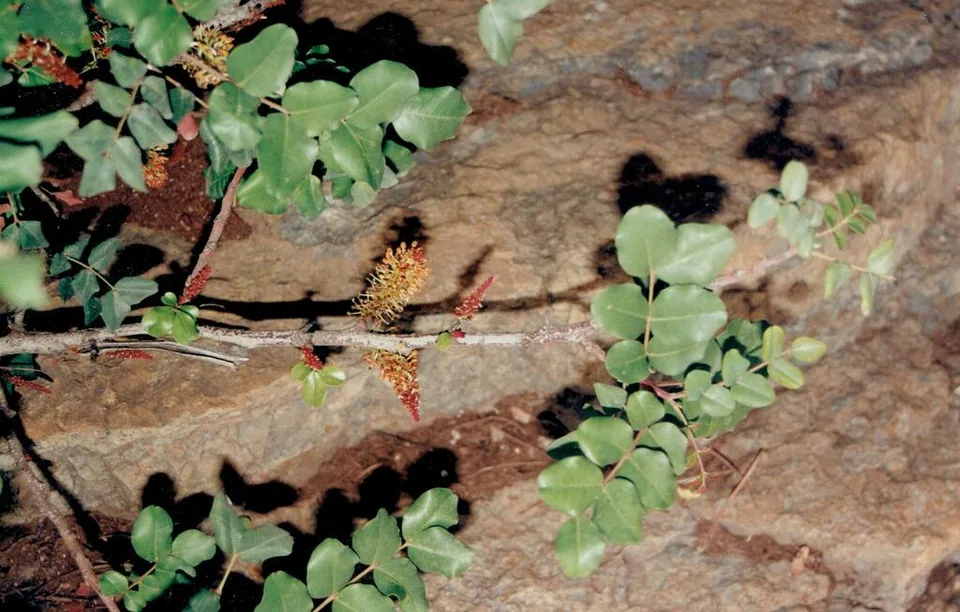
How to Grow and Care for Carob Tree
Ceratonia siliqua
Written by Emilio Marruso · last checked
Not toxic to cats and dogs, according to the sources · Sources
At a glance
Carob is a sun-loving tree that shrugs off drought: its deep roots let it grow even in very dry spots. Give it full sun and well-drained soil, and it can reach 50 feet. Its glossy brown pods can be ground into a powder for cakes, cookies and drinks as a chocolate substitute, and the roasted seeds make a coffee substitute.
- Sun
Full sun: 6 or more hours a day
What the sources say (1)
Light: Full sun (6 or more hours of direct sunlight a day)
Light: Full sun (6 or more hours of direct sunlight a day)
— Ceratonia siliqua (Algaroba, Beans, Carob, Carob Tree Kharoub, Locust Pods, Saint John's Bread, Sugar Pod) | North Carolina Extension Gardener Plant Toolbox [1] - Water
Tolerates drought; deep roots let it grow in very dry spots
What the sources say (3)
Watering: Tolerates drought; prefers dry or moist soil
It prefers dry or moist soil and can tolerate drought and strong winds.
— Ceratonia siliqua (Algaroba, Beans, Carob, Carob Tree Kharoub, Locust Pods, Saint John's Bread, Sugar Pod) | North Carolina Extension Gardener Plant Toolbox [1] Watering notes: Deep roots allow planting in very arid locations; prefers well-drained soil
Its roots penetrate deep into the soil in order to locate moisture, therefore, allowing it to be planted in very arid locations.
— Ceratonia siliqua (Algaroba, Beans, Carob, Carob Tree Kharoub, Locust Pods, Saint John's Bread, Sugar Pod) | North Carolina Extension Gardener Plant Toolbox [1] While it prefers well-drained soil, it can grow in nutritionally poor soil and in very alkaline soils.
— Ceratonia siliqua (Algaroba, Beans, Carob, Carob Tree Kharoub, Locust Pods, Saint John's Bread, Sugar Pod) | North Carolina Extension Gardener Plant Toolbox [1] - Cold
Survives winters down to 10 °F (−12.2 °C)
Hardy in cold winters · USDA 8a · RHS H5 · Z8
What the sources say (2)
Hardiness, coldest zone: 8a [winter low −12.2 to −9.4 °C (10 to 15 °F)]
8a, 8b, 9a, 9b, 10a, 10b, 11a, 11b
— Ceratonia siliqua (Algaroba, Beans, Carob, Carob Tree Kharoub, Locust Pods, Saint John's Bread, Sugar Pod) | North Carolina Extension Gardener Plant Toolbox [1] Hardiness, warmest zone: 11b [winter low 7.2 to 10 °C (45 to 50 °F)]
8a, 8b, 9a, 9b, 10a, 10b, 11a, 11b
— Ceratonia siliqua (Algaroba, Beans, Carob, Carob Tree Kharoub, Locust Pods, Saint John's Bread, Sugar Pod) | North Carolina Extension Gardener Plant Toolbox [1] - Soil
Prefers well-drained soil
What the sources say (2)
Watering notes: Deep roots allow planting in very arid locations; prefers well-drained soil
Its roots penetrate deep into the soil in order to locate moisture, therefore, allowing it to be planted in very arid locations.
— Ceratonia siliqua (Algaroba, Beans, Carob, Carob Tree Kharoub, Locust Pods, Saint John's Bread, Sugar Pod) | North Carolina Extension Gardener Plant Toolbox [1] While it prefers well-drained soil, it can grow in nutritionally poor soil and in very alkaline soils.
— Ceratonia siliqua (Algaroba, Beans, Carob, Carob Tree Kharoub, Locust Pods, Saint John's Bread, Sugar Pod) | North Carolina Extension Gardener Plant Toolbox [1] - Harvest
Harvest when the pods turn glossy brown: knock them down with a long stick
What the sources say (2)
Harvest: Once the pods have turned a glossy brown
Harvesting can be done once the pods have turned a glossy brown.
— Ceratonia siliqua (Algaroba, Beans, Carob, Carob Tree Kharoub, Locust Pods, Saint John's Bread, Sugar Pod) | North Carolina Extension Gardener Plant Toolbox [1] How to harvest: Harvest once the pods have turned a glossy brown; knock the pods off the tree with a long handled tool or stick.
Harvesting can be done once the pods have turned a glossy brown. A long handled tool or stick can be used to knock the pods off the tree
— Ceratonia siliqua (Algaroba, Beans, Carob, Carob Tree Kharoub, Locust Pods, Saint John's Bread, Sugar Pod) | North Carolina Extension Gardener Plant Toolbox [1] - Pests
Carob moth, scale, small rodents and mildew
What the sources say (2)
Pests: small rodents, scale, carob moth (Ectomyelois ceratoniae)
Surface roots can be aggressive. Small rodents can occasionally cause damage to the plant. Some cultivars can experience issues to scale and mildew. Larva of Ectomyelois ceratoniae (carob moth) may cause extensive damage to pods and seeds.
— Ceratonia siliqua (Algaroba, Beans, Carob, Carob Tree Kharoub, Locust Pods, Saint John's Bread, Sugar Pod) | North Carolina Extension Gardener Plant Toolbox [1] Diseases: mildew
Surface roots can be aggressive. Small rodents can occasionally cause damage to the plant. Some cultivars can experience issues to scale and mildew. Larva of Ectomyelois ceratoniae (carob moth) may cause extensive damage to pods and seeds.
— Ceratonia siliqua (Algaroba, Beans, Carob, Carob Tree Kharoub, Locust Pods, Saint John's Bread, Sugar Pod) | North Carolina Extension Gardener Plant Toolbox [1] - Watch out
Its surface roots can be aggressive
- Size
Up to 50 ft tall
What the sources say (1)
Mature height: 1524 cm (50 ft)
Carob is a flowering evergreen tree in the bean family growing at maturity to 50 feet and a native to the Mediterranean region and Iran
— Ceratonia siliqua (Algaroba, Beans, Carob, Carob Tree Kharoub, Locust Pods, Saint John's Bread, Sugar Pod) | North Carolina Extension Gardener Plant Toolbox [1] - Propagation
By layering or from seed
What the sources say (1)
Propagation: Layering, seed
Life Cycle: Perennial Woody Recommended Propagation Strategy: Layering Seed
— Ceratonia siliqua (Algaroba, Beans, Carob, Carob Tree Kharoub, Locust Pods, Saint John's Bread, Sugar Pod) | North Carolina Extension Gardener Plant Toolbox [1] - Safety
Not toxic to cats, dogs or horses
Overview
Carob is an evergreen, frost-tender flowering tree in the bean family with edible pods. [1] It needs full sun and tolerates drought, dry soil and strong winds. [1] Plants are male or female, so both sexes are needed for seed. [1]
This record is incomplete: the sources we read do not cover every field yet.
Not yet covered by our sources: Planting, Spacing
Carob Tree care
How to water Carob Tree
Watering
Tolerates drought; prefers dry or moist soil
What the sources say (1)
It prefers dry or moist soil and can tolerate drought and strong winds.Watering notes
Deep roots allow planting in very arid locations; prefers well-drained soil
What the sources say (2)
Its roots penetrate deep into the soil in order to locate moisture, therefore, allowing it to be planted in very arid locations.While it prefers well-drained soil, it can grow in nutritionally poor soil and in very alkaline soils.How much light Carob Tree needs
Full sun (6 or more hours of direct sunlight a day)
What the sources say (1)
Light:
Full sun (6 or more hours of direct sunlight a day)How much cold Carob Tree can take
Hardiness, coldest zone
8a [winter low −12.2 to −9.4 °C (10 to 15 °F)]
What the sources say (1)
8a, 8b, 9a, 9b, 10a, 10b, 11a, 11bHardiness, warmest zone
11b [winter low 7.2 to 10 °C (45 to 50 °F)]
What the sources say (1)
8a, 8b, 9a, 9b, 10a, 10b, 11a, 11bWhere to grow Carob Tree
Not stated in the sources we read.
How to propagate Carob Tree
Layering, seed
What the sources say (1)
Life Cycle:
Perennial
Woody
Recommended Propagation Strategy:
Layering
SeedHow to grow Carob Tree
The plant
Life cycle
perennial
What the sources say (1)
Genus: Ceratonia Species: siliqua Family: Fabaceae Uses (Ethnobotany): Seeds are used as a chocolate substitute in baking and as a coffee substitute. Life Cycle: Perennial WoodyFamily
Fabaceae
What the sources say (1)
Genus: Ceratonia Species: siliqua Family: Fabaceae Uses (Ethnobotany): Seeds are used as a chocolate substitute in baking and as a coffee substitute. Life Cycle: Perennial WoodyMature height
1524 cm (50 ft)
What the sources say (1)
Carob is a flowering evergreen tree in the bean family growing at maturity to 50 feet and a native to the Mediterranean region and IranHarvest and storage
How to harvest
Harvest once the pods have turned a glossy brown; knock the pods off the tree with a long handled tool or stick.
What the sources say (1)
Harvesting can be done once the pods have turned a glossy brown. A long handled tool or stick can be used to knock the pods off the treePests and diseases
Pests
small rodents, scale, carob moth (Ectomyelois ceratoniae)
What the sources say (1)
Surface roots can be aggressive. Small rodents can occasionally cause damage to the plant. Some cultivars can experience issues to scale and mildew. Larva of Ectomyelois ceratoniae (carob moth) may cause extensive damage to pods and seeds.Diseases
mildew
What the sources say (1)
Surface roots can be aggressive. Small rodents can occasionally cause damage to the plant. Some cultivars can experience issues to scale and mildew. Larva of Ectomyelois ceratoniae (carob moth) may cause extensive damage to pods and seeds.Carob Tree pests and problems
Aggressive surface roots
Symptom: Surface roots can be aggressive.
What to do: Not stated in the documents.
What the sources say (1)
Surface roots can be aggressive. Small rodents can occasionally cause damage to the plant.
— Ceratonia siliqua (Algaroba, Beans, Carob, Carob Tree Kharoub, Locust Pods, Saint John's Bread, Sugar Pod) | North Carolina Extension Gardener Plant Toolbox [1] Carob moth
Symptom: Larvae may cause extensive damage to pods and seeds.
What to do: Not stated in the documents.
What the sources say (1)
Larva of Ectomyelois ceratoniae (carob moth) may cause extensive damage to pods and seeds.
— Ceratonia siliqua (Algaroba, Beans, Carob, Carob Tree Kharoub, Locust Pods, Saint John's Bread, Sugar Pod) | North Carolina Extension Gardener Plant Toolbox [1] Scale and mildew
Symptom: Some cultivars can experience scale and mildew issues.
What to do: Not stated in the documents.
What the sources say (1)
Some cultivars can experience issues to scale and mildew.
— Ceratonia siliqua (Algaroba, Beans, Carob, Carob Tree Kharoub, Locust Pods, Saint John's Bread, Sugar Pod) | North Carolina Extension Gardener Plant Toolbox [1]
Remedies
Each remedy shows what official sources say about it; traditional remedies without an official source are marked as such. Harmful ones are listed so you know to avoid them.
Treating the plant
scale insects
removing and destroying affected plant parts Not verified
Traditional remedy, not verified by an official source.
How: Control scale problems on carob trees by first removing and destroying affected plant parts.
Is Carob Tree poisonous?
Reported by the source, quoted verbatim. This is not medical or veterinary advice: if a person or an animal may have eaten this plant, contact a poison control centre or a veterinarian.
#non-toxic for cats #non-toxic for horses #non-toxic for dogs
[1]The source flags the risk for this animal but does not explain why.
Calendar
Planting
Not stated in the sources we read.
Harvest
Once the pods have turned a glossy brown
What the sources say (1)
Harvesting can be done once the pods have turned a glossy brown.Months as given by the sources, which are mostly from the United States (northern hemisphere). In the southern hemisphere they shift by about six months.
Edibility
Reported by the source, quoted verbatim. Do not eat a plant on the basis of this page alone: identification mistakes can be dangerous.
Indicative values
Values from a secondary source, not checked word for word like the rest of this page. Use them as a starting point.
- Drought tolerant
- yesIndicative value, adapt it to your climate · Secondary source
- Soil pH
- 6-8.5Indicative value, adapt it to your climate · Secondary source
- Care level
- MediumIndicative value, adapt it to your climate · Secondary source
- Growth rate
- LowIndicative value, adapt it to your climate · Secondary source
- Pruning
- February, June, July, August, February, June, JulyIndicative value, adapt it to your climate · Secondary source
Similar plants
- Afghan Redbud Cercis griffithii
- Amur Maackia Maackia amurensis
- Bauhinia Bauhinia blakeana
- Bicolor Lespedeza Lespedeza bicolor
- Black Locust Robinia pseudoacacia
- Blue False Indigo Baptisia australis
- Blue Ridge Golden-banner Thermopsis villosa
- Buffalo Clover Trifolium reflexum
Sources
Every value above is quoted from these documents. Links lead to the original publisher.
- Ceratonia siliqua (Algaroba, Beans, Carob, Carob Tree Kharoub, Locust Pods, Saint John's Bread, Sugar Pod) | North Carolina Extension Gardener Plant Toolbox · plants.ces.ncsu.edu, consulted
- Saint John's Bread - Ceratonia siliqua | North Carolina Extension Gardener Plant Toolbox · plants.ces.ncsu.edu, consulted
Written by Emilio Marruso · last checked