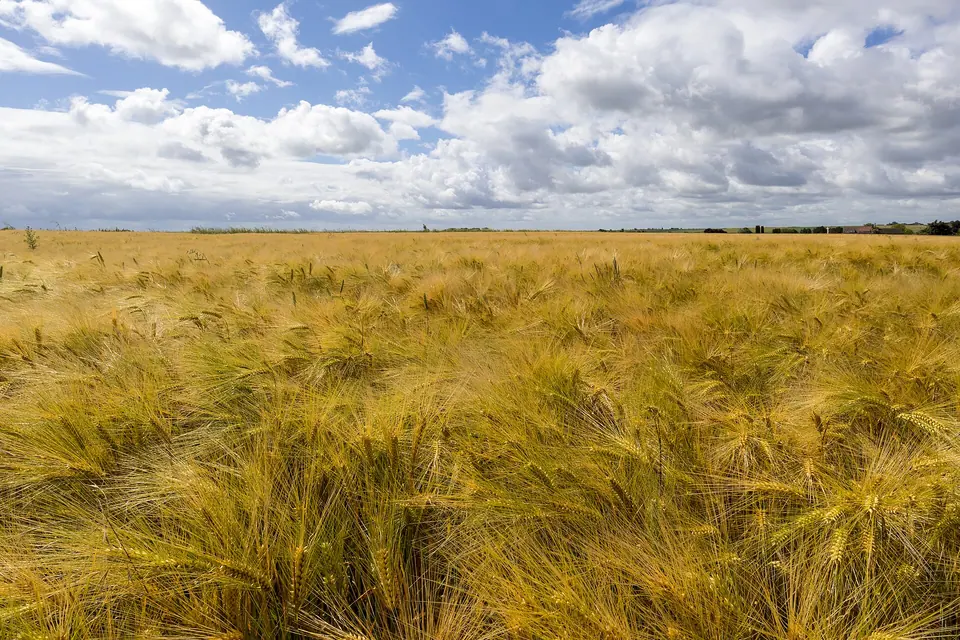


How to Grow and Care for Common barley
Hordeum vulgare
Written by Emilio Marruso · last checked
At a glance
Barley is an easy grain to grow from seed, and it can be sown in fall or as early as possible in spring. Give it full sun and it rises 1 to 4 feet tall, often with no extra watering. Winter barley is ready in early July, giving you a versatile grain for food, animal feed or malt.
- Sun
Full sun: 6 or more hours a day
What the sources say (1)
Light: Full sun (6 or more hours of direct sunlight a day)
Light: Full sun (6 or more hours of direct sunlight a day) Soil Texture: Clay
— Hordeum vulgare (Barley) | North Carolina Extension Gardener Plant Toolbox [1] - Water
In rainy climates it often needs no watering if sown in fall or early in spring
What the sources say (1)
Watering: Does not require irrigation when fall-planted west of the Cascades or if planted early enough in the spring to make best use of available moisture
Barley is a hardy crop that does not require irrigation when fall-planted west of the Cascades or if planted early enough in the spring to make best use of available moisture.
— Growing malting barley in and around the Willamette Valley | OSU Extension Service [2] - Soil
Neutral to alkaline soil, pH 6.0–8.0
What the sources say (2)
Soil pH, minimum: 6.0
Soil Texture: Clay High Organic Matter Loam (Silt) Sand Soil pH: Neutral (6.0-8.0) Soil Drainage: Good Drainage
— Hordeum vulgare (Barley) | North Carolina Extension Gardener Plant Toolbox [1] Soil pH, maximum: 8.0
Soil Texture: Clay High Organic Matter Loam (Silt) Sand Soil pH: Neutral (6.0-8.0) Soil Drainage: Good Drainage
— Hordeum vulgare (Barley) | North Carolina Extension Gardener Plant Toolbox [1] - Feeding
Feed with nitrogen in spring, based on a soil test; slow-release fertilizer can go on in fall
What the sources say (6)
When: Spring nitrogen application; slow-release fertilizer can go on in fall
fall-planted malting barley: Assuming that the crop used 20 lbs N over the fall and winter, 100 lbs/a of N should be applied in the spring.
— Growing malting barley in and around the Willamette Valley | OSU Extension Service [2] Assuming that the crop used 20 lbs N over the fall and winter, 100 lbs/a of N should be applied in the spring.
— Growing malting barley in and around the Willamette Valley | OSU Extension Service [2] Consider applying slow-release fertilizers in fall if it is cost effective.
— Growing malting barley in and around the Willamette Valley | OSU Extension Service [2] Mineral fertilizers: Nitrogen up to 135 kg [297.6 lb] N/ha per season, based on a soil test
fall-planted malting barley: Assuming that the crop used 20 lbs N over the fall and winter, 100 lbs/a of N should be applied in the spring.
— Growing malting barley in and around the Willamette Valley | OSU Extension Service [2] fall-planted malting barley: Consider applying slow-release fertilizers in fall if it is cost effective.
— Growing malting barley in and around the Willamette Valley | OSU Extension Service [2] recommendations call for a maximum of 120 lbs crop available N per acre per season based on soil tests.
— Growing malting barley in and around the Willamette Valley | OSU Extension Service [2] - Harvest
Winter barley is harvested in early July; the grain is used for food, feed and malt
What the sources say (2)
Harvest: Western Oregon: winter barley harvested in early July
Western Oregon, winter barley: In Western Oregon, winter barley is typically planted in mid-October and harvested in early July.
— Growing malting barley in and around the Willamette Valley | OSU Extension Service [2] In Western Oregon, winter barley is typically planted in mid-October and harvested in early July.
— Growing malting barley in and around the Willamette Valley | OSU Extension Service [2] - Pests
Aphids, rusts, scald and yellow dwarf virus; sowing in mid-October or later helps avoid aphids
What the sources say (6)
Pests: southern root knot nematode, bird cherry oat aphid, English grain aphid
Insects, Diseases, and Other Plant Problems: Barley is susceptible to southern root knot nematode.
— Hordeum vulgare (Barley) | North Carolina Extension Gardener Plant Toolbox [1] Our most common small grain aphid species are bird cherry oat aphid (Figure 2) and English grain aphid, although bird cherry oat aphid are associated with greater and more severe incidence of BYDV.
— Barley | University of Maryland Extension [3] Diseases: stripe rust, leaf rust, scald, barley yellow dwarf virus (BYDV), loose smut, covered smut, Fusarium head blight
The major diseases affecting barley in Western Oregon are stripe rust (incited by Puccinia striiformis f.sp. hordei ), scald (incited by Rhynchosporium commune ), and barley yellow dwarf virus, or BYDV, an aphid-transmitted luteovirus.
— Growing malting barley in and around the Willamette Valley | OSU Extension Service [2] In recent years, leaf rust (incited by Puccinia hordei ) has become more common.
— Growing malting barley in and around the Willamette Valley | OSU Extension Service [2] Loose and covered smuts (incited by Ustilago nuda and Ustilago hordei , respectively) are controlled by seed treatment in conventional production
— Growing malting barley in and around the Willamette Valley | OSU Extension Service [2] Fusarium head blight (FHB) is a severe fungal disease that affects small grains, wheat and barley.
— Barley | University of Maryland Extension [3] - Size
1 to 4 ft tall and 6 in to 1 ft wide
What the sources say (2)
Mature height: 30-122 cm (1-4 ft)
Height: 1 ft. 0 in. - 4 ft. 0 in.
— Hordeum vulgare (Barley) | North Carolina Extension Gardener Plant Toolbox [1] Mature width: 15-30 cm (6 in - 1 ft)
Width: 0 ft. 6 in. - 1 ft. 0 in.
— Hordeum vulgare (Barley) | North Carolina Extension Gardener Plant Toolbox [1] - Propagation
Grows from seed sown 1–2 inches deep
What the sources say (2)
Propagation: Seed
Life Cycle: Annual Recommended Propagation Strategy: Seed Dimensions: Height: 1 ft. 0 in. - 4 ft. 0 in.
— Hordeum vulgare (Barley) | North Carolina Extension Gardener Plant Toolbox [1] Sowing depth: 2.5-5 cm (1-2 in)
Seeding depth: Drill 1-2” deep or broadcast and lightly till-in.
— Spring Barley – Crops and Soils [4] - Sowing
Winter barley: mid-October to mid-November; spring barley: as early as possible from February
What the sources say (5)
Sowing: Western Oregon: winter barley mid-October to mid-November (optimum planting window); spring barley as early as possible, from February onward
Western Oregon, winter barley: The optimum planting window is mid-October to mid-November. Earlier plantings risk infection with barley yellow dwarf virus.
— Growing malting barley in and around the Willamette Valley | OSU Extension Service [2] Western Oregon, spring barley: Spring varieties should be seeded as early as possible, starting in February, in order to maximize crop growth and development while there is still a likelihood of rain.
— Growing malting barley in and around the Willamette Valley | OSU Extension Service [2] Willamette Valley, facultative varieties: Facultative varieties may be advantageous in the Willamette Valley, where they could give growers the option to plant the same variety anytime between October and April.
— Growing malting barley in and around the Willamette Valley | OSU Extension Service [2] The optimum planting window is mid-October to mid-November. Earlier plantings risk infection with barley yellow dwarf virus.
— Growing malting barley in and around the Willamette Valley | OSU Extension Service [2] Spring varieties should be seeded as early as possible, starting in February, in order to maximize crop growth and development while there is still a likelihood of rain.
— Growing malting barley in and around the Willamette Valley | OSU Extension Service [2]
Overview
Barley is an annual grass grown as a cover crop, for forage, or for grain. [1] It grows best in full sun and adapts to a variety of well-drained soil types. [1] Winter barley is planted in fall and spring barley as early as possible in spring. [2]
This record is incomplete: the sources we read do not cover every field yet.
Not yet covered by our sources: Spacing
Common barley care
How to water Common barley
Does not require irrigation when fall-planted west of the Cascades or if planted early enough in the spring to make best use of available moisture
What the sources say (1)
Barley is a hardy crop that does not require irrigation when fall-planted west of the Cascades or if planted early enough in the spring to make best use of available moisture.How much light Common barley needs
Full sun (6 or more hours of direct sunlight a day)
What the sources say (1)
Light:
Full sun (6 or more hours of direct sunlight a day)
Soil Texture:
ClayBest soil for Common barley
Soil pH, minimum
6.0
What the sources say (1)
Soil Texture:
Clay
High Organic Matter
Loam (Silt)
Sand
Soil pH:
Neutral (6.0-8.0)
Soil Drainage:
Good DrainageSoil pH, maximum
8.0
What the sources say (1)
Soil Texture:
Clay
High Organic Matter
Loam (Silt)
Sand
Soil pH:
Neutral (6.0-8.0)
Soil Drainage:
Good DrainageWhere to grow Common barley
Not stated in the sources we read.
How to propagate Common barley
Seed
What the sources say (1)
Life Cycle:
Annual
Recommended Propagation Strategy:
Seed
Dimensions:
Height: 1 ft. 0 in. - 4 ft. 0 in.How to grow Common barley
The plant
Life cycle
annual
What the sources say (1)
Barley is an annual grass grown as a cover crop, for forage, or for grain.Family
Poaceae
What the sources say (1)
The home gardener is apt to grow barley, which is a member of the grass family (Poaceae), as a fall-sown, winter cover crop.Mature height
30-122 cm (1-4 ft)
What the sources say (1)
Height: 1 ft. 0 in. - 4 ft. 0 in.Mature width
15-30 cm (6 in - 1 ft)
What the sources say (1)
Width: 0 ft. 6 in. - 1 ft. 0 in.Sowing and growth
Sowing depth
2.5-5 cm (1-2 in)
What the sources say (1)
Seeding depth: Drill 1-2” deep or broadcast and lightly till-in.Pests and diseases
Pests
southern root knot nematode, bird cherry oat aphid, English grain aphid
What the sources say (2)
Insects, Diseases, and Other Plant Problems: Barley is susceptible to southern root knot nematode.Our most common small grain aphid species are bird cherry oat aphid (Figure 2) and English grain aphid, although bird cherry oat aphid are associated with greater and more severe incidence of BYDV.Diseases
stripe rust, leaf rust, scald, barley yellow dwarf virus (BYDV), loose smut, covered smut, Fusarium head blight
What the sources say (4)
The major diseases affecting barley in Western Oregon are stripe rust (incited by Puccinia striiformis f.sp. hordei ), scald (incited by Rhynchosporium commune ), and barley yellow dwarf virus, or BYDV, an aphid-transmitted luteovirus.In recent years, leaf rust (incited by Puccinia hordei ) has become more common.Loose and covered smuts (incited by Ustilago nuda and Ustilago hordei , respectively) are controlled by seed treatment in conventional productionFusarium head blight (FHB) is a severe fungal disease that affects small grains, wheat and barley.Fertilizing
When
Spring nitrogen application; slow-release fertilizer can go on in fall
What each source says
fall-planted malting barley: 112 kg [246.9 lb] N/ha in spring
What the sources say (3)
fall-planted malting barley: Assuming that the crop used 20 lbs N over the fall and winter, 100 lbs/a of N should be applied in the spring.Assuming that the crop used 20 lbs N over the fall and winter, 100 lbs/a of N should be applied in the spring.Consider applying slow-release fertilizers in fall if it is cost effective.Mineral fertilizers
Nitrogen up to 135 kg [297.6 lb] N/ha per season, based on a soil test
What each source says
fall-planted malting barley: 112 kg [246.9 lb] N/ha in spring
fall-planted malting barley: Slow-release fertilizer in fall
What the sources say (3)
fall-planted malting barley: Assuming that the crop used 20 lbs N over the fall and winter, 100 lbs/a of N should be applied in the spring.fall-planted malting barley: Consider applying slow-release fertilizers in fall if it is cost effective.recommendations call for a maximum of 120 lbs crop available N per acre per season based on soil tests.Signs of excess
Higher grain yield but fewer plump kernels at high nitrogen rates
What the sources say (1)
Increasing nitrogen application did increase grain yield but decreased the percentage of plump seed, indicating that the medium level optimized performance for most varieties.Common barley pests and problems
Barley yellow dwarf virus (BYDV)
Symptom: Leaves turn shades of yellow, red and purple, plant vigor is reduced and young plants can die.
What to do: Delay fall planting until mid-October where possible to help prevent intensive aphid activity.
What the sources say (2)
BYDV causes leaves to turn shades of yellow, red and purple, with older leaves being more affected. Overall, plant vigor is reduced and young plants can die.
— Growing malting barley in and around the Willamette Valley | OSU Extension Service [2] Delaying fall planting until mid-October, where possible, will help to prevent intensive aphid activity.
— Growing malting barley in and around the Willamette Valley | OSU Extension Service [2] Scald
Symptom: Lesions first appear as dark, pale or bluish spots and expand, forming dark brown margins.
What to do: Fungicide applications can be effective in reducing scald symptoms; late winter/early spring applications are recommended.
What the sources say (2)
Lesions first appear as dark, pale or bluish spots and expand, forming dark brown margins.
— Growing malting barley in and around the Willamette Valley | OSU Extension Service [2] Fungicide applications can be effective in reducing scald symptoms. Late winter/early spring applications are recommended.
— Growing malting barley in and around the Willamette Valley | OSU Extension Service [2] Southern root knot nematode
Symptom: Barley is susceptible to southern root knot nematode.
What the sources say (1)
Insects, Diseases, and Other Plant Problems: Barley is susceptible to southern root knot nematode.
— Hordeum vulgare (Barley) | North Carolina Extension Gardener Plant Toolbox [1]
Remedies
Each remedy shows what official sources say about it; traditional remedies without an official source are marked as such. Harmful ones are listed so you know to avoid them.
Treating the plant
aphids
strong jet of water Official source, not independently tested
How: Sturdy plants can be sprayed with a strong jet of water to knock aphids from leaves.
Sturdy plants can be sprayed with a strong jet of water to knock aphids from leaves
— plantvillage.psu.edu [5] insecticidal soap Works
When “oils and soaps” are mentioned in UC IPM publications, we are referring to commercially available oils and soaps that are formulated specifically for use as pesticides- not household oils and soaps meant for cooking, cleaning, or other purposes.
— ucanr.edu [7] How: Insecticidal soaps are among the usual methods of control; check the product label for usage guidelines prior to use.
insecticidal soaps or oils such as neem or canola oil are usually the best method of control
— plantvillage.psu.edu [5] What the evidence says For example, insecticidal soap is a safe, effective organic insecticide with minimal environmental impact.
— extension.psu.edu [6] neem oil Partly works
How: Neem or canola oil is usually the best method of control; check the product label for usage guidelines prior to use.
insecticidal soaps or oils such as neem or canola oil are usually the best method of control
— plantvillage.psu.edu [5] What the evidence says However, neem oil is not effective against every insect and disease, and often must be frequently reapplied to reach the desired outcome.
— extension.unh.edu [8]
Calendar
Sowing
Western Oregon: winter barley mid-October to mid-November (optimum planting window); spring barley as early as possible, from February onward
What each source says
Western Oregon, winter barley: Mid-October to mid-November
Western Oregon, spring barley: As early as possible, from February onward
Willamette Valley, facultative varieties: Anytime between October and April
What the sources say (5)
Western Oregon, winter barley: The optimum planting window is mid-October to mid-November. Earlier plantings risk infection with barley yellow dwarf virus.Western Oregon, spring barley: Spring varieties should be seeded as early as possible, starting in February, in order to maximize crop growth and development while there is still a likelihood of rain.Willamette Valley, facultative varieties: Facultative varieties may be advantageous in the Willamette Valley, where they could give growers the option to plant the same variety anytime between October and April.The optimum planting window is mid-October to mid-November. Earlier plantings risk infection with barley yellow dwarf virus.Spring varieties should be seeded as early as possible, starting in February, in order to maximize crop growth and development while there is still a likelihood of rain.Harvest
Western Oregon: winter barley harvested in early July
What each source says
Western Oregon, winter barley: Early July
What the sources say (2)
Western Oregon, winter barley: In Western Oregon, winter barley is typically planted in mid-October and harvested in early July.In Western Oregon, winter barley is typically planted in mid-October and harvested in early July.Months as given by the sources, which are mostly from the United States (northern hemisphere). In the southern hemisphere they shift by about six months.
Edibility
Reported by the source, quoted verbatim. Do not eat a plant on the basis of this page alone: identification mistakes can be dangerous.
Barley is a versatile grain with multiple end uses, including feed, food, and malt (figure 4).
[2]
Similar plants
- Wall barley Hordeum murinum
- Corn Zea mays
- Giant Cane Arundinaria gigantea
- Oat Avena sativa
- Rye Secale cereale
- Sorghum Sorghum bicolor
- Wheat Triticum aestivum
- Teff Eragrostis tef
Sources
Every value above is quoted from these documents. Links lead to the original publisher.
- Hordeum vulgare (Barley) | North Carolina Extension Gardener Plant Toolbox · plants.ces.ncsu.edu, consulted
- Growing malting barley in and around the Willamette Valley | OSU Extension Service · extension.oregonstate.edu, consulted
- Barley | University of Maryland Extension · extension.umd.edu, consulted
- Spring Barley – Crops and Soils · cropsandsoils.extension.wisc.edu, consulted
- plantvillage.psu.edu · plantvillage.psu.edu
- extension.psu.edu · extension.psu.edu
- ucanr.edu · ucanr.edu
- extension.unh.edu · extension.unh.edu
Written by Emilio Marruso · last checked