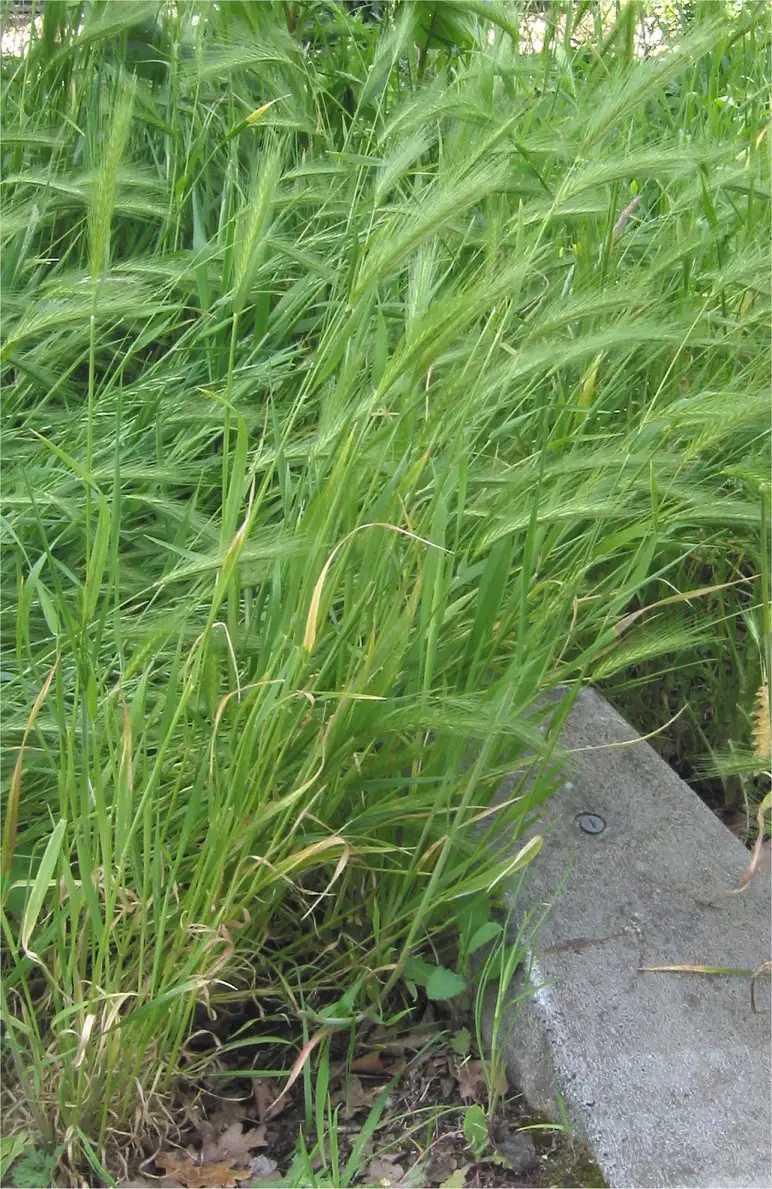
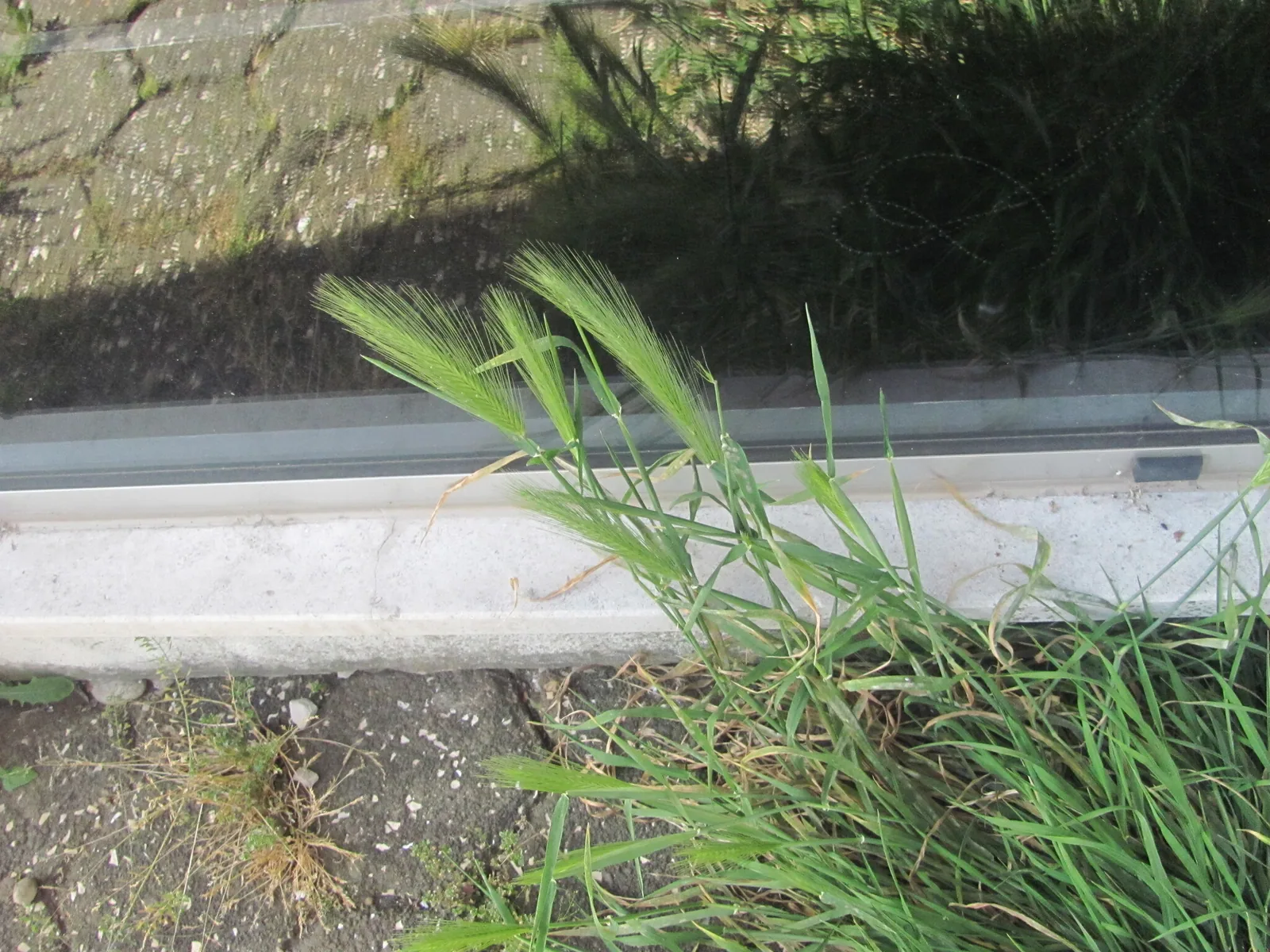

How to Grow and Care for Wall barley
Hordeum murinum
Written by Emilio Marruso · last checked
Classified as poisonous · Why
At a glance
Wall barley is a simple annual grass that gives grazing animals and wildlife a tasty, nourishing bite early in the season, before its flower spikes appear. Enjoy it while it's young and green, then keep it cut or closely grazed: once the seedheads dry and harden, their sharp bristles can hurt sheep and dogs.
- Harvest
Good early-season grazing for livestock and wildlife, before the flower spikes form
- Watch out
Dry seedheads hurt animals' eyes, mouths and skin: cut or graze it short before it seeds
Overview
Wall barley is a cool-season annual grass, native to Europe, of disturbed sites and field margins. [2][3] It flowers from June to July in the UK and its seeds germinate in autumn under cool, moist conditions. [3][4] The awned seeds injure the mouths, eyes and skin of grazing animals, so pasture is cut or closely grazed before seed set. [2][3]
This record is incomplete: the sources we read do not cover every field yet.
Not yet covered by our sources: Light, Hardiness, coldest zone, Hardiness, warmest zone, Propagation
Wall barley care
How much light Wall barley needs
Not stated in the sources we read.
How much cold Wall barley can take
Hardiness, coldest zone
Not stated in the sources we read.
Hardiness, warmest zone
Not stated in the sources we read.
How to propagate Wall barley
Not stated in the sources we read.
How to grow Wall barley
The plant
Life cycle
annual
What the sources say (1)
It’s a cool season annual grass native to Europe with dense stiff awned spikes.Family
Poaceae
What the sources say (1)
Scientific Family Poaceae Other common names farmer's foxtail foxtail barley squirrel grass Plant type Grasses Riparian YesWall barley pests and problems
Injury to livestock from awned seedheads
Symptom: Seeds penetrate eyes, mouth and skin of sheep; embed between the toes of sheep dogs
What to do: Cut or keep the pasture closely grazed to prevent seeding; a short but not overgrazed sward eradicated it within 2 years; poor competitor against perennial ryegrass and white clover
What the sources say (2)
In pasture, the grass should be cut or kept closely grazed down to prevent seeding and reduce injury to stock from the seed awns.
— Garden Organic | Wall Barley [3] Maintaining a short but not overgrazed sward has eradicated wall barley within 2 years.
— Garden Organic | Wall Barley [3]
Remedies
Each remedy shows what official sources say about it; traditional remedies without an official source are marked as such. Harmful ones are listed so you know to avoid them.
Getting rid of it
lawn weed
mowing high and frequently Works
How: Mow the lawn high (2 1/2" - 3") and frequently, with good fertilizer and irrigation practices, so a dense lawn outcompetes the seeds.
mowing your lawn high (2 1/2" - 3") reduces the amount of light that reaches the seed, and mowing frequently, together with good fertilizer and irrigation practices, encourages growth of a dense lawn
— ask.extension.org [8] What the evidence says mowing your lawn high (2 1/2" - 3") reduces the amount of light that reaches the seed, and mowing frequently, together with good fertilizer and irrigation practices, encourages growth of a dense lawn
— ask.extension.org [8] mowing off seed heads with a catcher Works
How: Mow off the seed heads using a catcher attachment to collect them.
Mowing off the seed heads using a catcher attachment to collect will reduce the seed bank in your lawn.
— ask.extension.org [8] What the evidence says Mowing off the seed heads using a catcher attachment to collect will reduce the seed bank in your lawn.
— ask.extension.org [8]
pasture weed
keeping the sward short by grazing or cutting Not verified
Traditional remedy, not verified by an official source.
How: In pasture, cut or keep closely grazed to prevent seeding; a short but not overgrazed sward.
perennial ryegrass and white clover sward Not verified
Traditional remedy, not verified by an official source.
How: Wall barley does not compete well against a mixture of perennial ryegrass and white clover.
Edibility
Reported by the source, quoted verbatim. Do not eat a plant on the basis of this page alone: identification mistakes can be dangerous.
Similar plants
- Common barley Hordeum vulgare
- African lovegrass Eragrostis curvula
- Amur silvergrass Miscanthus sacchariflorus
- Annual Ryegrass Lolium multiflorum
- Aristida purpurea Aristida purpurea
- Bamboo Phyllostachys aurea
- Bermuda grass Cynodon dactylon
- Browntop Millet Urochloa ramosa
Sources
Every value above is quoted from these documents. Links lead to the original publisher.
- Hordeum murinum - mouse barley | Yavapai County Native and Naturalized Plants · yavapaiplants.extension.arizona.edu, consulted
- Marco A. Pena · vegetableipmupdates.arizona.edu, consulted
- Garden Organic | Wall Barley · gardenorganic.org.uk, consulted
- Wall barley | IUCN UK Peatland Programme · iucn-uk-peatlandprogramme.org, consulted
- Hordeum murinum · keys.lucidcentral.org, consulted
- Hordeum murinum (mouse barley): Go Botany · gobotany.nativeplanttrust.org, consulted
- 169 Hordeum murinum L. · monteriza.aranzadi.eus, consulted
- ask.extension.org · ask.extension.org
Written by Emilio Marruso · last checked