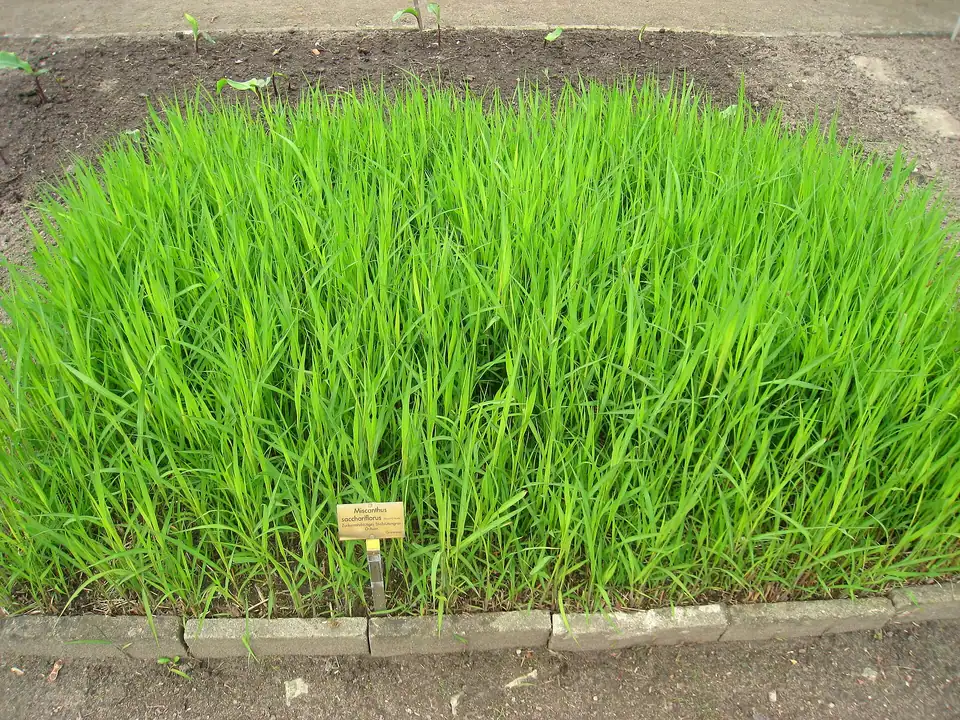

How to Grow and Care for Amur silvergrass
Miscanthus sacchariflorus
Written by Emilio Marruso · last checked
At a glance
This perennial grass comes back year after year and asks for little more than well-drained soil. Plant it in late spring or early summer, once the last frosts are over, or start it from seed sown in spring. Give it room and keep an eye on it: its spreading roots form dense patches that can crowd out its neighbors.
- Soil
Well-drained soil
What the sources say (1)
Watering notes: Well-drained soil
Soil pH acid, neutral, alkaline Drainage well drained Tolerances high wind, maritime exposure
— Amur Silver Grass (Miscanthus sacchariflorus) — Practical Plants [7] - Planting
Late spring or early summer, after the last frosts
What the sources say (1)
Planting: Late spring or early summer, after the last expected frosts
Plant them out into their permanent positions in late spring or early summer, after the last expected frosts.
— Amur Silver Grass (Miscanthus sacchariflorus) — Practical Plants [7] - Watch out
Spreads underground into dense patches; dig out every piece of root to stop it
- Propagation
By seed, or by dividing clumps in spring or early fall
What the sources say (2)
Propagation: Seed; division (spring or early autumn)
Seed - surface sow in spring in a greenhouse and keep moist.
— Amur Silver Grass (Miscanthus sacchariflorus) — Practical Plants [7] Division in spring or early autumn [4] . Very easy, large divisions can be planted out direct into their permanent positions.
— Amur Silver Grass (Miscanthus sacchariflorus) — Practical Plants [7] - Sowing
Sow in spring on the soil surface, in a greenhouse
What the sources say (1)
Sowing: Spring (surface sow in a greenhouse)
Seed - surface sow in spring in a greenhouse and keep moist. Germination should take place within a couple of weeks.
— Amur Silver Grass (Miscanthus sacchariflorus) — Practical Plants [7]
Overview
Miscanthus sacchariflorus is a tall rhizomatous perennial grass with arching leaves and silky plume-like flowers. [2] In Minnesota it is classed as a restricted noxious weed because its rhizomes form dense single-species stands. [5][1]
This record is incomplete: the sources we read do not cover every field yet.
Not yet covered by our sources: Hardiness, warmest zone, Pruning
Amur silvergrass care
How to water Amur silvergrass
Watering
The sources disagree:
What the sources say (2)
Light
full sun
Shade tolerance
light shade
Water
moderate
Hardiness
Zone 8+Prefers a deep fertile loamy soil that does not dry out in summer [4] but succeeds in any ordinary soil that is not too dryWatering notes
Well-drained soil
What the sources say (1)
Soil pH
acid, neutral, alkaline
Drainage
well drained
Tolerances
high wind, maritime exposureHow much light Amur silvergrass needs
The sources disagree:
What the sources say (2)
This is a rhizomatous species requiring full sun, and thriving in moist conditionsLight
full sun
Shade tolerance
light shade
Water
moderateHow much cold Amur silvergrass can take
Hardiness, coldest zone
The sources give different values depending on region, zone or growing conditions.
What each source says
According to Practical Plants: 8 [winter low −12.2 to −6.7 °C (10 to 20 °F)]+
According to University of Minnesota (Midwest): 2 [winter low −45.6 to −40 °C (−50 to −40 °F)]
What the sources say (2)
According to Practical Plants: Water
moderate
Hardiness
Zone 8+
Soil textures
sandy, loamy, clayAccording to University of Minnesota (Midwest): This species is very hardy and can be found as far north as USDA Zone 2.Hardiness, warmest zone
Not stated in the sources we read.
How to propagate Amur silvergrass
Seed; division (spring or early autumn)
What the sources say (2)
Seed - surface sow in spring in a greenhouse and keep moist.Division in spring or early autumn [4] . Very easy, large divisions can be planted out direct into their permanent positions.How to grow Amur silvergrass
The plant
Life cycle
perennial
What the sources say (1)
Creeping miscanthus ( Miscanthus sacchariflorus ) is a perennial warm-season grass.Family
Poaceae
What the sources say (1)
This member of the grass family (Poaceae) has erect, woody, bamboo-like stems reaching 3m in heightAmur silvergrass pests and problems
Invasive spread by rhizomes
Symptom: Forms dense patches and single-species stands that crowd out other species
What to do: Dig out all pieces of root and rhizome; repeated mowing as short as possible during the growing season; systemic herbicides such as glyphosate
What the sources say (2)
Mechanical control can be done by digging out the plant. All pieces of the root and rhizomes (underground stems) must be removed to prevent resprouting.
— Amur silver grass (Miscanthus sacchariflorus) | Minnesota DNR [5] Herbicide control can be done using systemic herbicides such as glyphosate.
— Amur silver grass (Miscanthus sacchariflorus) | Minnesota DNR [5]
Remedies
Each remedy shows what official sources say about it; traditional remedies without an official source are marked as such. Harmful ones are listed so you know to avoid them.
Getting rid of it
invasive spread by rhizomes
digging out Partly works
How: Dig out the plant; all pieces of the root and rhizomes must be removed to prevent resprouting.
Mechanical control can be done by digging out the plant. All pieces of the root and rhizomes (underground stems) must be removed to prevent resprouting.
— dnr.state.mn.us [8] What the evidence says Mechanical control can be done by digging out the plant. All pieces of the root and rhizomes (underground stems) must be removed to prevent resprouting.
— dnr.state.mn.us [8] repeated mowing Works
How: Mow repeatedly, as short as possible, during the growing season; it can reduce plants over several years.
Repeated mowing as short as possible during the growing season can also reduce plants over several years
— dnr.state.mn.us [8] What the evidence says Repeated mowing throughout the summer is a good control for this species of Miscanthus.
— Miscanthus sacchariflorus | Miscanthus [4] cutting dead stalks in winter Not proven
How: Cutting the dead stalks in winter has no effect on the plant.
Cutting the dead stalks in the winter has no effect on the plant. Burning increases vigor of creeping miscanthus.
— dnr.state.mn.us [8] What the evidence says Cutting the dead stalks in the winter has no effect on the plant. Burning increases vigor of creeping miscanthus.
— dnr.state.mn.us [8] burning Not proven
How: Burning increases the vigor of the plant.
Cutting the dead stalks in the winter has no effect on the plant. Burning increases vigor of creeping miscanthus.
— dnr.state.mn.us [8] What the evidence says Cutting the dead stalks in the winter has no effect on the plant. Burning increases vigor of creeping miscanthus.
— dnr.state.mn.us [8]
Calendar
Sowing
Spring (surface sow in a greenhouse)
What the sources say (1)
Seed - surface sow in spring in a greenhouse and keep moist. Germination should take place within a couple of weeks.Planting
Late spring or early summer, after the last expected frosts
What the sources say (1)
Plant them out into their permanent positions in late spring or early summer, after the last expected frosts.Pruning
Not stated in the sources we read.
Months as given by the sources, which are mostly from the United States (northern hemisphere). In the southern hemisphere they shift by about six months.
Indicative values
Values from a secondary source, not checked word for word like the rest of this page. Use them as a starting point.
- Mature height
- 152.4-243.8 cm (5-8 ft)Indicative value, adapt it to your climate · Secondary source
- Soil pH
- 5.5-7.5Indicative value, adapt it to your climate · Secondary source
- Care level
- MediumIndicative value, adapt it to your climate · Secondary source
- Growth rate
- HighIndicative value, adapt it to your climate · Secondary source
- Pruning
- February, March, AprilIndicative value, adapt it to your climate · Secondary source
Similar plants
- Maidengrass Miscanthus sinensis
- Pacific Island Silvergrass Miscanthus floridulus
- African lovegrass Eragrostis curvula
- Annual Ryegrass Lolium multiflorum
- Aristida purpurea Aristida purpurea
- Autumn Moor Grass Sesleria autumnalis
- Bamboo Phyllostachys aurea
- Beaked Panicgrass Coleataenia anceps
Sources
Every value above is quoted from these documents. Links lead to the original publisher.
- Amur silver grass · extension.umn.edu, consulted
- Miscanthus sacchariflorus - Cambridge University Botanic Garden · botanic.cam.ac.uk, consulted
- Miscanthus sacchariflorus - Useful Temperate Plants · temperate.theferns.info, consulted
- Miscanthus sacchariflorus | Miscanthus · miscanthus.cfans.umn.edu, consulted
- Amur silver grass (Miscanthus sacchariflorus) | Minnesota DNR · dnr.state.mn.us, consulted
- Miscanthus sacchariflorus (Creeping Miscanthus): Minnesota Wildflowers · minnesotawildflowers.info, consulted
- Amur Silver Grass (Miscanthus sacchariflorus) — Practical Plants · practicalplants.org, consulted
- dnr.state.mn.us · dnr.state.mn.us
Written by Emilio Marruso · last checked