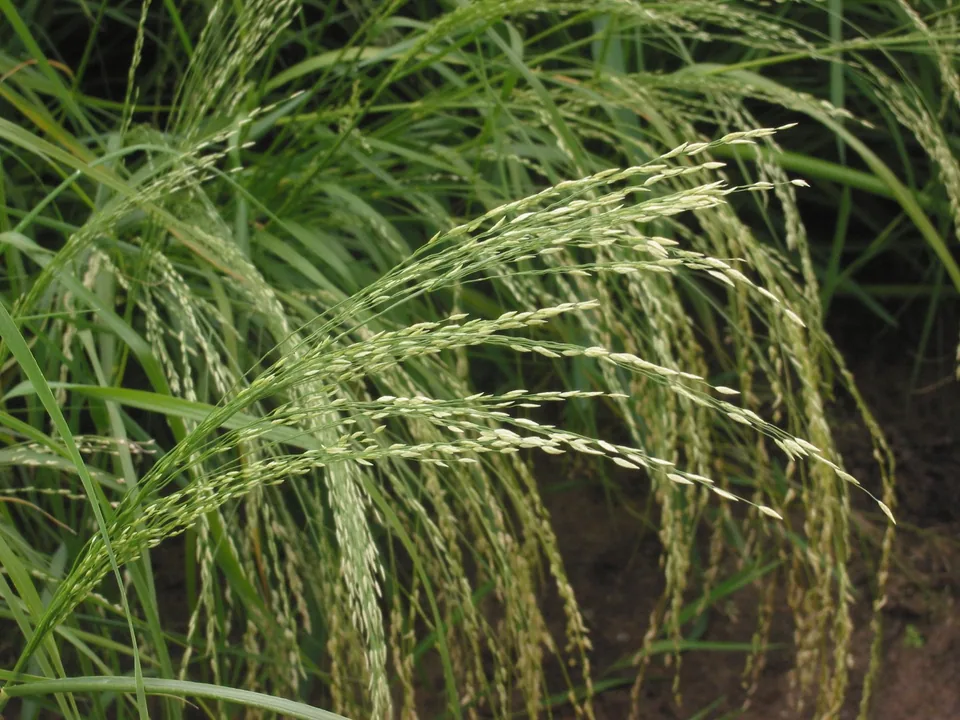

How to Grow and Care for Teff
Eragrostis tef
Written by Emilio Marruso · last checked
At a glance
Teff is a gluten-free grain, the heart of injera, the Ethiopian flatbread that has been a staple for 3,000 years. It tolerates drought yet thrives with plenty of water, and it grows fast: the first cutting comes just 45–55 days after planting, with a second one 40–50 days later. Horses, llamas and alpacas love its hay too.
- Water
Light, frequent watering to get started; it handles drought but grows best with plenty of water
What the sources say (2)
Watering: Irrigated like any other grass crop after emergence; drought tolerant, but highest yields and quality need plenty of water
After emergence, teff is irrigated similar to any other grass crop. Teff is drought tolerant, but highest yields and quality are achieved with plenty of water.
— Teff Hay Production Guidelines for Utah 1 [2] Watering notes: Light, frequent irrigations for establishment
The shallow placement and small size of teff seed necessitates light, frequent irrigations for establishment.
— Teff Hay Production Guidelines for Utah 1 [2] - Feeding
Feed with nitrogen before planting and after the first cut; too much makes plants fall over
What the sources say (5)
When: Before planting and again before the second cutting (right after the first)
Fertilization Before planting and before second cutting Apply approximately 50 lb N/acre each time.
— A PNW Extension Publication [4] Soil Fertility Research at USU and other universities has shown 50 to 60 units of nitrogen (N) should be applied to teff both at planting and after the first cutting.
— Teff Hay Production Guidelines for Utah 1 [2] Avoid: Excess nitrogen, which raises the risk of lodging; with high residual soil nitrogen, reduce or skip the pre-plant application
Excess N fertilizer, excess irrigation, excess wind, and delayed harvest (alone or in combination) can increase the chances of crop lodging.
— A PNW Extension Publication [4] With high soil residual N, reduce or eliminate the pre-plant fertilization.
— A PNW Extension Publication [4] Signs of excess: Lodging (plants falling over)
Although higher rates of N can increase yield and quality, they can also increase lodging and are usually not economical.
— Teff Hay Production Guidelines for Utah 1 [2] - Harvest
Cut 45–55 days after planting, as seedheads appear, leaving 3–4 in stubble; again 40–50 days later
What the sources say (3)
Harvest: First harvest 45 to 55 days after planting; second cutting 40 to 50 days thereafter
The first harvest for teff will normally occur within 45 to 55 days after planting, depending on location and year, and the second cutting 40 to 50 days thereafter.
— Teff Hay Production Guidelines for Utah 1 [2] How to harvest: Cut when seedheads begin to emerge, leaving a 3-4 inch (7.6-10.2 cm) stubble
For optimal quality, teff should be harvested as soon as seedheads begin to emerge.
— Teff Hay Production Guidelines for Utah 1 [2] It is recommended that teff be cut with a 3 to 4 inch stubble height; any shorter will reduce the rate of regrowth and may kill some plants.
— Teff Hay Production Guidelines for Utah 1 [2] - Size
2 to 3 ft tall
What the sources say (1)
Mature height: 60.96-91.44 cm (2-3 ft)
At harvest, teff will normally be 2 to 3 feet in height.
— Teff Hay Production Guidelines for Utah 1 [2] - Propagation
Grows from seed, sown in rows or scattered
What the sources say (1)
Propagation: Seed (grain drill or broadcast)
Teff can be planted using the small seed box on a grain drill or broadcast using a Brillion or an air type seeder.
— Teff Hay Production Guidelines for Utah 1 [2] - Sowing
Sow very shallow, 1/8 to 1/4 in deep, in firm soil; then roll or water
What the sources say (3)
Sowing depth: 0.3-0.64 cm (1/8 to 1/4 in)
It must be planted very shallow, about one-eighth of an inch deep, or seedlings will not emerge.
— Teff Grass Offers Benefits and Challenges | CropWatch | Nebraska [3] Seeds should be planted shallow (less than ¼ inch deep).
— Teff Hay Production Guidelines for Utah 1 [2] Teff does not emerge well from greater depths.
— A PNW Extension Publication [4]
Overview
Teff is a warm-season annual grass that is killed by freezing temperatures. [4][2] Teff seed is very small and must be planted shallow. [3]
This record is incomplete: the sources we read do not cover every field yet.
Not yet covered by our sources: Light, Sowing / Planting, Spacing
Teff care
How to water Teff
Watering
Irrigated like any other grass crop after emergence; drought tolerant, but highest yields and quality need plenty of water
What the sources say (1)
After emergence, teff is irrigated similar to any other grass crop. Teff is drought tolerant, but highest yields and quality are achieved with plenty of water.Watering notes
Light, frequent irrigations for establishment
What the sources say (1)
The shallow placement and small size of teff seed necessitates light, frequent irrigations for establishment.How much light Teff needs
Not stated in the sources we read.
Where to grow Teff
Not stated in the sources we read.
How to propagate Teff
Seed (grain drill or broadcast)
What the sources say (1)
Teff can be planted using the small seed box on a grain drill or broadcast using a Brillion or an air type seeder.How to grow Teff
The plant
Life cycle
annual
What the sources say (1)
It is an annual, warm-season grass that is native to Ethiopia.Family
Poaceae
What the sources say (1)
Describes characteristics and growing requirements of teff ( Eragrostis tef [Zucc.], Poaceae) as a hay and forage crop in Oregon.Mature height
60.96-91.44 cm (2-3 ft)
What the sources say (1)
At harvest, teff will normally be 2 to 3 feet in height.Sowing and growth
Sowing depth
0.3-0.64 cm (1/8 to 1/4 in)
What the sources say (3)
It must be planted very shallow, about one-eighth of an inch deep, or seedlings will not emerge.Seeds should be planted shallow (less than ¼ inch deep).Teff does not emerge well from greater depths.Days to maturity
45-55 days after planting (first harvest)
What the sources say (1)
The first harvest for teff will normally occur within 45 to 55 days after planting, depending on location and year, and the second cutting 40 to 50 days thereafter.Harvest and storage
How to harvest
Cut when seedheads begin to emerge, leaving a 3-4 inch (7.6-10.2 cm) stubble
What the sources say (2)
For optimal quality, teff should be harvested as soon as seedheads begin to emerge.It is recommended that teff be cut with a 3 to 4 inch stubble height; any shorter will reduce the rate of regrowth and may kill some plants.Fertilizing
When
Before planting and again before the second cutting (right after the first)
What the sources say (2)
Fertilization Before planting and before second cutting Apply approximately 50 lb N/acre each time.Soil Fertility Research at USU and other universities has shown 50 to 60 units of nitrogen (N) should be applied to teff both at planting and after the first cutting.How often
Twice per season: before planting and after the first cutting
What the sources say (1)
Fertilization Before planting and before second cutting Apply approximately 50 lb N/acre each time.Mineral fertilizers
Nitrogen fertilizer, 44.8–67.3 kg [98.8–148.4 lb] N/ha near planting and again after the first cutting; more than 67.3 kg [148.4 lb] N/ha does not raise yield; phosphorus and potassium according to soil test
What the sources say (3)
First-cutting yield typically increases when 40–60 lb/acre of N fertilizer is applied near planting timeyield generally increases when 40–60 lb N/acre is applied soon after the first cutting, and N in excess of 60 lb/acre does not increase yieldUntil those recommendations exist, base phosphorous (P), potassium (K), and other nutrients on soil test levels for other forage grasses (i.e., small grains, pasture, etc.).Avoid
Excess nitrogen, which raises the risk of lodging; with high residual soil nitrogen, reduce or skip the pre-plant application
What the sources say (2)
Excess N fertilizer, excess irrigation, excess wind, and delayed harvest (alone or in combination) can increase the chances of crop lodging.With high soil residual N, reduce or eliminate the pre-plant fertilization.Signs of excess
Lodging (plants falling over)
What the sources say (1)
Although higher rates of N can increase yield and quality, they can also increase lodging and are usually not economical.Teff pests and problems
Difficult establishment
Symptom: Thin or uneven stands
What to do: Plant very shallow (about 3 mm / one-eighth inch deep); extra firm seedbed; broadcast and roll or irrigate afterward
What the sources say (2)
It must be planted very shallow, about one-eighth of an inch deep, or seedlings will not emerge.
— Teff Grass Offers Benefits and Challenges | CropWatch | Nebraska [3] Many producers who have planted teff have had thin or uneven stands, partly because their drills placed the seed too deep.
— Teff Grass Offers Benefits and Challenges | CropWatch | Nebraska [3]
Remedies
Each remedy shows what official sources say about it; traditional remedies without an official source are marked as such. Harmful ones are listed so you know to avoid them.
Treating the plant
weeds
plowing before sowing Official source, not independently tested
How: Preparing the bed by plowing prior to planting the seeds will help to destroy existing weeds.
Teff should be grown in a weed-free field for best results. Preparing the bed by plowing prior to planting the seeds will help to destroy existing weeds.
— plantvillage.psu.edu [5] hand weeding Official source, not independently tested
How: Hand weed 25-30 days after teff emergence, when the plants reach the early tillering stage; a second hand weeding at stem elongation if weeds continue. Weeding after heading is not recommended.
If weeds begin to grow during the growing season the field may be hand weeded 25–30 days after teff emergence, when the plants reach the early tillering stage.
— plantvillage.psu.edu [5]
thin or uneven stands
broadcasting seed then rolling or irrigating Partly works
How: Broadcast the seed and roll or irrigate afterward; extra firm seedbeds may be needed when a drill is used.
Extra firm seedbeds may be needed when a drill is used; broadcasting seed and rolling or irrigating afterward might work better.
— Teff Grass Offers Benefits and Challenges | CropWatch | Nebraska [3] What the evidence says Extra firm seedbeds may be needed when a drill is used; broadcasting seed and rolling or irrigating afterward might work better.
— Teff Grass Offers Benefits and Challenges | CropWatch | Nebraska [3]
lodging
timely harvest, lower nitrogen and less irrigation near harvest Partly works
How: Proper harvest timing, lower N application rates, and limiting irrigation near harvest.
Lodging can be an issue with teff, although problems can be minimized through proper harvest timing, lower N application rates, and limiting irrigation near harvest.
— Teff Hay Production Guidelines for Utah 1 [2] What the evidence says Lodging can be an issue with teff, although problems can be minimized through proper harvest timing, lower N application rates, and limiting irrigation near harvest.
— Teff Hay Production Guidelines for Utah 1 [2]
Calendar
Sowing
The sources give different values depending on region, zone or growing conditions.
What each source says
Utah: Early to mid-June (two cuttings); mid-July (single cutting)
According to University of Nebraska-Lincoln CropWatch: Late May through July
What the sources say (2)
Utah: USU research has shown that planting in early- to mid-June is optimal for two teff cuttings, while a mid-July planting date is required for a grower targeting a single cutting.According to University of Nebraska-Lincoln CropWatch: It may be used in place of other summer annual grasses like millets, sorghums, and sudangrasses and should be planted about the same time — from late May through July.Planting
Not stated in the sources we read.
Harvest
First harvest 45 to 55 days after planting; second cutting 40 to 50 days thereafter
What the sources say (1)
The first harvest for teff will normally occur within 45 to 55 days after planting, depending on location and year, and the second cutting 40 to 50 days thereafter.Months as given by the sources, which are mostly from the United States (northern hemisphere). In the southern hemisphere they shift by about six months.
Relative to frost
Less precise estimate: there is no weather station within 300 km.
Find frost dates by ZIP code or city
Sow outdoors: around the last frost
The general recommendation is to plant teff after the last spring frost and when the soil temperatures at the 4-inch depth are at least 60°F.
— Teff Hay Production Guidelines for Utah 1 [2]
Count from the average frost dates where you live.
Edibility
Reported by the source, quoted verbatim. Do not eat a plant on the basis of this page alone: identification mistakes can be dangerous.
Similar plants
- African lovegrass Eragrostis curvula
- Bigtop Lovegrass Eragrostis hirsuta
- Purple Lovegrass Eragrostis spectabilis
- Common barley Hordeum vulgare
- Corn Zea mays
- Giant Cane Arundinaria gigantea
- Oat Avena sativa
- Rye Secale cereale
Sources
Every value above is quoted from these documents. Links lead to the original publisher.
- Teff: A New Warm-Season Annual Grass for Oregon | OSU Extension Service · extension.oregonstate.edu, consulted
- Teff Hay Production Guidelines for Utah 1 · extension.usu.edu, consulted
- Teff Grass Offers Benefits and Challenges | CropWatch | Nebraska · cropwatch.unl.edu, consulted
- A PNW Extension Publication · extension.oregonstate.edu, consulted
- plantvillage.psu.edu · plantvillage.psu.edu
Written by Emilio Marruso · last checked