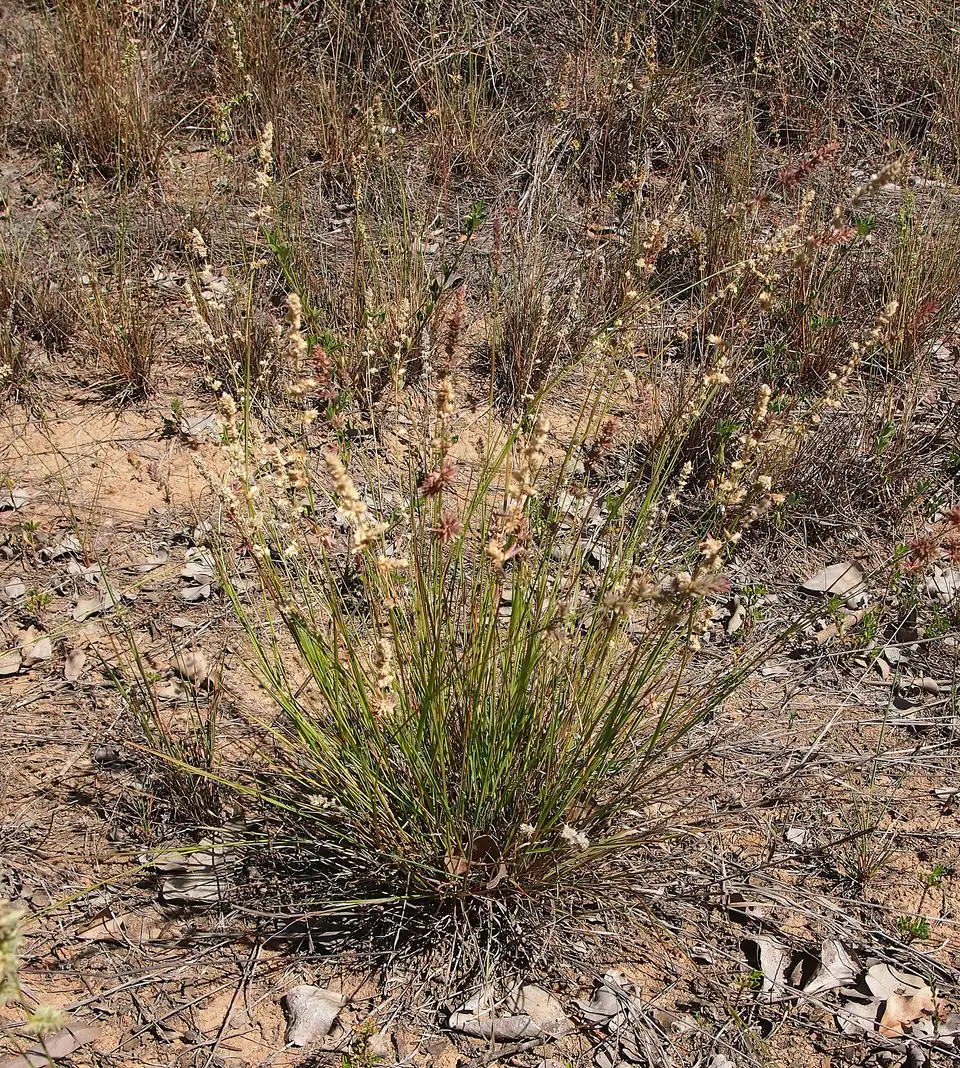


How to Grow and Care for Purple Lovegrass
Eragrostis spectabilis
Written by Emilio Marruso · last checked
At a glance
This easygoing perennial grass loves full sun but also tolerates partial shade. Water it regularly for a couple of weeks while it settles in; after that it handles hot, dry weather with no extra watering, even in droughts. It grows 1 to 3 feet tall, and you can plant it anytime during the growing season.
- Sun
Full sun; also tolerates partial shade
What the sources say (2)
Light: Full sun; tolerates partial shade
Light: Full sun (6 or more hours of direct sunlight a day) Soil Texture:
— Eragrostis spectabilis (Purple Lovegrass, Purple Love Grass, Tumble Grass) | North Carolina Extension Gardener Plant Toolbox [1] They perform best in full sun, but both can tolerate partial shade as well.
— Lovegrass – Gardening Solutions [4] - Water
Water regularly for the first couple of weeks; after that, no extra water even in droughts
What the sources say (3)
Watering: Tolerates hot, dry conditions; no extra irrigation needed even in droughts
It is tolerant of hot dry conditions.
— Eragrostis spectabilis (Purple Lovegrass, Purple Love Grass, Tumble Grass) | North Carolina Extension Gardener Plant Toolbox [1] Even in droughts lovegrass shouldn’t require any extra irrigation.
— Lovegrass – Gardening Solutions [4] Watering notes: Water regularly for a couple of weeks until the plant is well established
Plant lovegrass anytime during the growing season, watering regularly for a couple of weeks until the plant is well established.
— Lovegrass – Gardening Solutions [4] - Planting
Plant anytime during the growing season
What the sources say (1)
Planting: Anytime during the growing season
Plant lovegrass anytime during the growing season, watering regularly for a couple of weeks until the plant is well established.
— Lovegrass – Gardening Solutions [4] - Pruning
Cut back to a few inches above the ground just before new growth starts
What the sources say (1)
Pruning: End of the dormant season, just before the first flush of growth; cut back to a few inches above the ground
To prune, cut lovegrass back to a few inches above the ground. This is best done at the end of the dormant season, just before the first flush of growth.
— Lovegrass – Gardening Solutions [4] - Pests
Now and then aphids, spittlebugs and leaf spot
What the sources say (2)
Pests: aphids, spittlebugs
Insects, Diseases, and Other Plant Problems: Aphids, leaf spot, and spittlebugs are occasional pest problems.
— Eragrostis spectabilis (Purple Lovegrass, Purple Love Grass, Tumble Grass) | North Carolina Extension Gardener Plant Toolbox [1] Diseases: leaf spot
Insects, Diseases, and Other Plant Problems: Aphids, leaf spot, and spittlebugs are occasional pest problems.
— Eragrostis spectabilis (Purple Lovegrass, Purple Love Grass, Tumble Grass) | North Carolina Extension Gardener Plant Toolbox [1] - Size
1 to 3 ft tall
What the sources say (1)
Mature height: 30.48-91.44 cm (1-3 ft)
Both species remain fairly small, reaching only 1-3 feet in height.
— Lovegrass – Gardening Solutions [4] - Propagation
Divide the clump or grow from seed
What the sources say (2)
Propagation: Division; seed
Recommended Propagation Strategy: Division Seed Country Or Region Of Origin:
— Eragrostis spectabilis (Purple Lovegrass, Purple Love Grass, Tumble Grass) | North Carolina Extension Gardener Plant Toolbox [1] If you plan to divide a clump it is best to do so at this time.
— Lovegrass – Gardening Solutions [4]
Overview
Purple lovegrass is a small, clumping, warm-season perennial ornamental grass native to central and eastern North America. [1] It grows in full sun in well-drained, slightly dry soil and tolerates hot, dry conditions. [1] It is used in small groups, mass plantings, borders, meadows and native plant gardens, and can serve as a lawn alternative under light foot traffic. [1]
This record is incomplete: the sources we read do not cover every field yet.
Not yet covered by our sources: Hardiness, coldest zone
Purple Lovegrass care
How to water Purple Lovegrass
Watering
Tolerates hot, dry conditions; no extra irrigation needed even in droughts
Watering notes
Water regularly for a couple of weeks until the plant is well established
What the sources say (1)
Plant lovegrass anytime during the growing season, watering regularly for a couple of weeks until the plant is well established.How much light Purple Lovegrass needs
Full sun; tolerates partial shade
What the sources say (2)
Light:
Full sun (6 or more hours of direct sunlight a day)
Soil Texture:They perform best in full sun, but both can tolerate partial shade as well.How much cold Purple Lovegrass can take
Hardiness, coldest zone
Not stated in the sources we read.
Hardiness, warmest zone
9b [winter low −3.9 to −1.1 °C (25 to 30 °F)]
What the sources say (1)
USDA Plant Hardiness Zone:
5a, 5b, 6a, 6b, 7a, 7b, 8a, 8b, 9a, 9bHow to propagate Purple Lovegrass
Division; seed
What the sources say (2)
Recommended Propagation Strategy:
Division
Seed
Country Or Region Of Origin:If you plan to divide a clump it is best to do so at this time.How to grow Purple Lovegrass
The plant
Life cycle
perennial
What the sources say (1)
Purple love grass is a small, perennial, well-behaved ornamental grass in the Poaceae (grass family).Family
Poaceae
What the sources say (1)
Purple love grass is a small, perennial, well-behaved ornamental grass in the Poaceae (grass family).Mature height
30.48-91.44 cm (1-3 ft)
What the sources say (1)
Both species remain fairly small, reaching only 1-3 feet in height.Pests and diseases
Pests
aphids, spittlebugs
What the sources say (1)
Insects, Diseases, and Other Plant Problems: Aphids, leaf spot, and spittlebugs are occasional pest problems.Diseases
leaf spot
What the sources say (1)
Insects, Diseases, and Other Plant Problems: Aphids, leaf spot, and spittlebugs are occasional pest problems.Purple Lovegrass pests and problems
Occasional pests and leaf spot
Symptom: Aphids, leaf spot and spittlebugs
What the sources say (1)
Aphids, leaf spot, and spittlebugs are occasional pest problems.
— Eragrostis spectabilis (Purple Lovegrass, Purple Love Grass, Tumble Grass) | North Carolina Extension Gardener Plant Toolbox [1]
Remedies
Each remedy shows what official sources say about it; traditional remedies without an official source are marked as such. Harmful ones are listed so you know to avoid them.
Treating the plant
aphids
strong jet of water Works
How: a particularly strong jet of water will dislodge/kill most of them physically
Soapy water can help kill the aphids, as it sounds like you know, but a particularly strong jet of water will dislodge/kill most of them physically, as well.
— extension.umaine.edu [5] What the evidence says Soapy water can help kill the aphids, as it sounds like you know, but a particularly strong jet of water will dislodge/kill most of them physically, as well.
— extension.umaine.edu [5] soapy water Partly works
How: soapy water can help kill the aphids
Soapy water can help kill the aphids, as it sounds like you know, but a particularly strong jet of water will dislodge/kill most of them physically, as well.
— extension.umaine.edu [5] What the evidence says Soapy water can help kill the aphids, as it sounds like you know, but a particularly strong jet of water will dislodge/kill most of them physically, as well.
— extension.umaine.edu [5] insecticidal soap Partly works
How: requires direct contact with the aphid; it washes off easily and must be reapplied
I will note that insecticidal soap worked well for me with my purple passion, but it does require direct contact with the aphid to kill them and it washes off easily and must be reapplied.
— extension.umaine.edu [5] What the evidence says I will note that insecticidal soap worked well for me with my purple passion, but it does require direct contact with the aphid to kill them and it washes off easily and must be reapplied.
— extension.umaine.edu [5]
Calendar
Planting
Anytime during the growing season
What the sources say (1)
Plant lovegrass anytime during the growing season, watering regularly for a couple of weeks until the plant is well established.Pruning
End of the dormant season, just before the first flush of growth; cut back to a few inches above the ground
What the sources say (1)
To prune, cut lovegrass back to a few inches above the ground. This is best done at the end of the dormant season, just before the first flush of growth.Months as given by the sources, which are mostly from the United States (northern hemisphere). In the southern hemisphere they shift by about six months.
Similar plants
- African lovegrass Eragrostis curvula
- Bigtop Lovegrass Eragrostis hirsuta
- Teff Eragrostis tef
- Aristida purpurea Aristida purpurea
- Autumn Moor Grass Sesleria autumnalis
- Bamboo Phyllostachys aurea
- Beaked Panicgrass Coleataenia anceps
- Bermuda grass Cynodon dactylon
Sources
Every value above is quoted from these documents. Links lead to the original publisher.
- Eragrostis spectabilis (Purple Lovegrass, Purple Love Grass, Tumble Grass) | North Carolina Extension Gardener Plant Toolbox · plants.ces.ncsu.edu, consulted
- Tumble Grass - Eragrostis spectabilis | North Carolina Extension Gardener Plant Toolbox · plants.ces.ncsu.edu, consulted
- Purple Lovegrass - Eragrostis spectabilis | North Carolina Extension Gardener Plant Toolbox · plants.ces.ncsu.edu, consulted
- Lovegrass – Gardening Solutions · gardeningsolutions.ifas.ufl.edu, consulted
- extension.umaine.edu · extension.umaine.edu
Written by Emilio Marruso · last checked