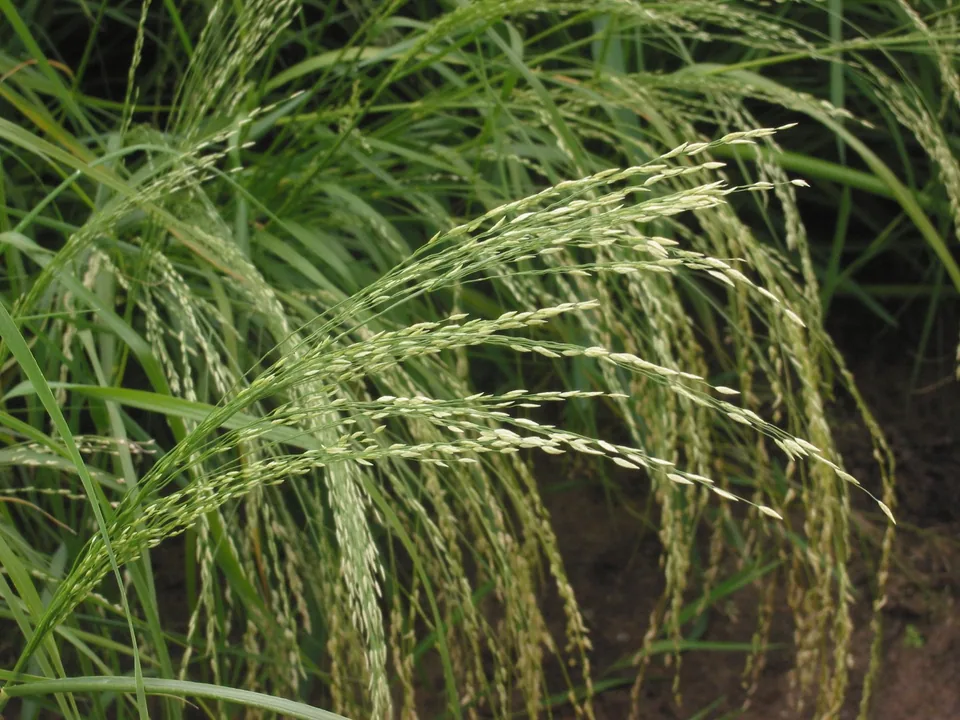

Cómo cultivar y cuidar Teff
Eragrostis tef
Escrito por Emilio Marruso · última revisión
De un vistazo
El teff es un cereal sin gluten, el alma de la injera, el pan plano etíope que se come desde hace 3000 años. Aguanta la sequía, pero rinde mejor con agua abundante, y crece deprisa: el primer corte llega solo 45–55 días después de sembrar, y un segundo 40–50 días más tarde. Además, a caballos, llamas y alpacas les encanta su heno.
- Riego
Riegos ligeros y frecuentes al principio; aguanta la sequía, pero crece mejor con agua abundante
Qué dicen las fuentes (2)
Riego: Se riega como cualquier otro cultivo de pasto después de la emergencia; tolerante a la sequía, pero los rendimientos y la calidad más altos necesitan abundante agua
After emergence, teff is irrigated similar to any other grass crop. Teff is drought tolerant, but highest yields and quality are achieved with plenty of water.
— Teff Hay Production Guidelines for Utah 1 [2] Notas sobre el riego: Riegos ligeros y frecuentes para el establecimiento
The shallow placement and small size of teff seed necessitates light, frequent irrigations for establishment.
— Teff Hay Production Guidelines for Utah 1 [2] - Abonado
Abona con nitrógeno antes de sembrar y tras el primer corte; si te pasas, las plantas se tumban
Qué dicen las fuentes (5)
Cuándo: Antes de plantar y nuevamente antes del segundo corte (justo después del primero)
Fertilization Before planting and before second cutting Apply approximately 50 lb N/acre each time.
— A PNW Extension Publication [4] Soil Fertility Research at USU and other universities has shown 50 to 60 units of nitrogen (N) should be applied to teff both at planting and after the first cutting.
— Teff Hay Production Guidelines for Utah 1 [2] Evitar: El exceso de nitrógeno, que aumenta el riesgo de acame; con alto nitrógeno residual en el suelo, reduce u omite la aplicación previa a la siembra
Excess N fertilizer, excess irrigation, excess wind, and delayed harvest (alone or in combination) can increase the chances of crop lodging.
— A PNW Extension Publication [4] With high soil residual N, reduce or eliminate the pre-plant fertilization.
— A PNW Extension Publication [4] Signos de exceso: Acame (plantas que se caen)
Although higher rates of N can increase yield and quality, they can also increase lodging and are usually not economical.
— Teff Hay Production Guidelines for Utah 1 [2] - Cosecha
Corta a los 45–55 días, cuando asomen las espigas, dejando 8–10 cm de tallo; otra vez 40–50 días después
Qué dicen las fuentes (3)
Cosecha: Primera cosecha 45 a 55 días después de la siembra; segundo corte 40 a 50 días después
The first harvest for teff will normally occur within 45 to 55 days after planting, depending on location and year, and the second cutting 40 to 50 days thereafter.
— Teff Hay Production Guidelines for Utah 1 [2] Cómo cosechar: Corta cuando las cabezas de las semillas empiecen a aparecer, dejando un rastrojo de 3-4 pulgadas (7.6-10.2 cm)
For optimal quality, teff should be harvested as soon as seedheads begin to emerge.
— Teff Hay Production Guidelines for Utah 1 [2] It is recommended that teff be cut with a 3 to 4 inch stubble height; any shorter will reduce the rate of regrowth and may kill some plants.
— Teff Hay Production Guidelines for Utah 1 [2] - Tamaño
De 60 a 90 cm de alto
Qué dicen las fuentes (1)
Altura adulta: 60.96-91.44 cm (2-3 pies)
At harvest, teff will normally be 2 to 3 feet in height.
— Teff Hay Production Guidelines for Utah 1 [2] - Multiplicación
Se multiplica por semilla, en hileras o a voleo
Qué dicen las fuentes (1)
Propagación: Semilla (sembradora de grano o al voleo)
Teff can be planted using the small seed box on a grain drill or broadcast using a Brillion or an air type seeder.
— Teff Hay Production Guidelines for Utah 1 [2] - Siembra
Siembra muy superficial, a 3–6 mm, en tierra bien firme; después aprieta o riega
Qué dicen las fuentes (3)
Profundidad de siembra: 0.3-0.64 cm (1/8 a 1/4 de pulgada)
It must be planted very shallow, about one-eighth of an inch deep, or seedlings will not emerge.
— Teff Grass Offers Benefits and Challenges | CropWatch | Nebraska [3] Seeds should be planted shallow (less than ¼ inch deep).
— Teff Hay Production Guidelines for Utah 1 [2] Teff does not emerge well from greater depths.
— A PNW Extension Publication [4]
Resumen
El teff es un pasto anual de estación cálida que se elimina con temperaturas bajo cero. [4][2] La semilla de teff es muy pequeña y debe sembrarse superficialmente. [3]
Citado en inglés, como en la fuente.
Esta ficha está incompleta: las fuentes consultadas aún no cubren todos los campos.
Aún no cubierto por nuestras fuentes: Luz, Siembra / Plantación, Distancia de plantación
Cuidados
Riego
Riego
Se riega como cualquier otro cultivo de pasto después de la emergencia; tolerante a la sequía, pero los rendimientos y la calidad más altos necesitan abundante agua
Qué dicen las fuentes (1)
After emergence, teff is irrigated similar to any other grass crop. Teff is drought tolerant, but highest yields and quality are achieved with plenty of water.Notas sobre el riego
Riegos ligeros y frecuentes para el establecimiento
Qué dicen las fuentes (1)
The shallow placement and small size of teff seed necessitates light, frequent irrigations for establishment.Luz
No figura en las fuentes consultadas.
Dónde cultivarla
No figura en las fuentes consultadas.
Propagación
Semilla (sembradora de grano o al voleo)
Qué dicen las fuentes (1)
Teff can be planted using the small seed box on a grain drill or broadcast using a Brillion or an air type seeder.Cultivo
La planta
Ciclo de vida
anual
Qué dicen las fuentes (1)
It is an annual, warm-season grass that is native to Ethiopia.Familia
Poaceae
Qué dicen las fuentes (1)
Describes characteristics and growing requirements of teff ( Eragrostis tef [Zucc.], Poaceae) as a hay and forage crop in Oregon.Altura adulta
60.96-91.44 cm (2-3 pies)
Qué dicen las fuentes (1)
At harvest, teff will normally be 2 to 3 feet in height.Siembra y crecimiento
Profundidad de siembra
0.3-0.64 cm (1/8 a 1/4 de pulgada)
Qué dicen las fuentes (3)
It must be planted very shallow, about one-eighth of an inch deep, or seedlings will not emerge.Seeds should be planted shallow (less than ¼ inch deep).Teff does not emerge well from greater depths.Días hasta la madurez
45-55 días después de la siembra (primera cosecha)
Qué dicen las fuentes (1)
The first harvest for teff will normally occur within 45 to 55 days after planting, depending on location and year, and the second cutting 40 to 50 days thereafter.Cosecha y conservación
Cómo cosechar
Corta cuando las cabezas de las semillas empiecen a aparecer, dejando un rastrojo de 3-4 pulgadas (7.6-10.2 cm)
Qué dicen las fuentes (2)
For optimal quality, teff should be harvested as soon as seedheads begin to emerge.It is recommended that teff be cut with a 3 to 4 inch stubble height; any shorter will reduce the rate of regrowth and may kill some plants.Abonado
Cuándo
Antes de plantar y nuevamente antes del segundo corte (justo después del primero)
Qué dicen las fuentes (2)
Fertilization Before planting and before second cutting Apply approximately 50 lb N/acre each time.Soil Fertility Research at USU and other universities has shown 50 to 60 units of nitrogen (N) should be applied to teff both at planting and after the first cutting.Frecuencia
Dos veces por temporada: antes de plantar y después del primer corte
Qué dicen las fuentes (1)
Fertilization Before planting and before second cutting Apply approximately 50 lb N/acre each time.Abonos minerales
Fertilizante nitrogenado, 44.8–67.3 kg [98,8–148,4 lb] N/ha cerca de la siembra y nuevamente después del primer corte; más de 67.3 kg [148,4 lb] N/ha no aumenta el rendimiento; fósforo y potasio según el análisis del suelo
Qué dicen las fuentes (3)
First-cutting yield typically increases when 40–60 lb/acre of N fertilizer is applied near planting timeyield generally increases when 40–60 lb N/acre is applied soon after the first cutting, and N in excess of 60 lb/acre does not increase yieldUntil those recommendations exist, base phosphorous (P), potassium (K), and other nutrients on soil test levels for other forage grasses (i.e., small grains, pasture, etc.).Evitar
El exceso de nitrógeno, que aumenta el riesgo de acame; con alto nitrógeno residual en el suelo, reduce u omite la aplicación previa a la siembra
Qué dicen las fuentes (2)
Excess N fertilizer, excess irrigation, excess wind, and delayed harvest (alone or in combination) can increase the chances of crop lodging.With high soil residual N, reduce or eliminate the pre-plant fertilization.Signos de exceso
Acame (plantas que se caen)
Qué dicen las fuentes (1)
Although higher rates of N can increase yield and quality, they can also increase lodging and are usually not economical.Problemas
Establecimiento difícil
Síntoma: Rodales ralos o desiguales
Qué hacer: Siembra muy superficial (unos 3 mm / un octavo de pulgada de profundidad); lecho de siembra muy firme; siembra al voleo y pasa un rodillo o riega después
Qué dicen las fuentes (2)
It must be planted very shallow, about one-eighth of an inch deep, or seedlings will not emerge.
— Teff Grass Offers Benefits and Challenges | CropWatch | Nebraska [3] Many producers who have planted teff have had thin or uneven stands, partly because their drills placed the seed too deep.
— Teff Grass Offers Benefits and Challenges | CropWatch | Nebraska [3]
Remedios
Cada remedio indica qué dicen las fuentes oficiales; los remedios tradicionales sin fuente oficial aparecen marcados. Los perjudiciales están para que sepas evitarlos.
Cuidar la planta
malezas
arado antes de la siembra Fuente oficial, sin prueba independiente
Cómo: Preparar el lecho con arado antes de sembrar las semillas ayudará a destruir las malas hierbas existentes.
Teff should be grown in a weed-free field for best results. Preparing the bed by plowing prior to planting the seeds will help to destroy existing weeds.
— plantvillage.psu.edu [5] deshierbe manual Fuente oficial, sin prueba independiente
Cómo: Escarda manual 25-30 días después de la emergencia del teff, cuando las plantas alcancen la etapa temprana de macollamiento; una segunda escarda manual en la elongación del tallo si las malas hierbas continúan. No se recomienda escardar después del espigado.
If weeds begin to grow during the growing season the field may be hand weeded 25–30 days after teff emergence, when the plants reach the early tillering stage.
— plantvillage.psu.edu [5]
cultivos ralos o desiguales
Siembra la semilla al voleo y luego pasa un rodillo o riega Funciona en parte
Cómo: Siembra la semilla al voleo y luego pasa un rodillo o riega; puede que se necesiten camas de siembra más firmes cuando se usa una sembradora.
Extra firm seedbeds may be needed when a drill is used; broadcasting seed and rolling or irrigating afterward might work better.
— Teff Grass Offers Benefits and Challenges | CropWatch | Nebraska [3] Qué dicen las pruebas Extra firm seedbeds may be needed when a drill is used; broadcasting seed and rolling or irrigating afterward might work better.
— Teff Grass Offers Benefits and Challenges | CropWatch | Nebraska [3]
acame
Cosecha oportuna, menos nitrógeno y menos riego cerca de la cosecha Funciona en parte
Cómo: El momento adecuado de cosecha, tasas de aplicación de nitrógeno más bajas y limitar el riego cerca de la cosecha.
Lodging can be an issue with teff, although problems can be minimized through proper harvest timing, lower N application rates, and limiting irrigation near harvest.
— Teff Hay Production Guidelines for Utah 1 [2] Qué dicen las pruebas Lodging can be an issue with teff, although problems can be minimized through proper harvest timing, lower N application rates, and limiting irrigation near harvest.
— Teff Hay Production Guidelines for Utah 1 [2]
Calendario
Siembra
Las fuentes dan valores distintos según la región, la zona o las condiciones de cultivo.
Lo que dice cada fuente
Utah: De principios a mediados de junio (dos cortes); mediados de julio (un solo corte)
Según University of Nebraska-Lincoln CropWatch: Desde finales de mayo hasta julio
Qué dicen las fuentes (2)
Utah: USU research has shown that planting in early- to mid-June is optimal for two teff cuttings, while a mid-July planting date is required for a grower targeting a single cutting.Según University of Nebraska-Lincoln CropWatch: It may be used in place of other summer annual grasses like millets, sorghums, and sudangrasses and should be planted about the same time — from late May through July.Plantación
No figura en las fuentes consultadas.
Cosecha
Primera cosecha 45 a 55 días después de la siembra; segundo corte 40 a 50 días después
Qué dicen las fuentes (1)
The first harvest for teff will normally occur within 45 to 55 days after planting, depending on location and year, and the second cutting 40 to 50 days thereafter.Meses tal como los dan las fuentes, en su mayoría de Estados Unidos (hemisferio norte). En el hemisferio sur se desplazan unos seis meses.
Respecto a las heladas
Estimación menos precisa: no hay ninguna estación meteorológica a menos de 300 km.
Busca las fechas de heladas por código postal o ciudad
Siembra al aire libre: hacia la última helada
The general recommendation is to plant teff after the last spring frost and when the soil temperatures at the 4-inch depth are at least 60°F.
— Teff Hay Production Guidelines for Utah 1 [2]
Cuenta desde las fechas medias de las heladas de tu zona.
Comestibilidad
Según la fuente, citada textualmente. No comas una planta basándote solo en esta página: los errores de identificación pueden ser peligrosos.
Plantas similares
- African lovegrass Eragrostis curvula
- Bigtop Lovegrass Eragrostis hirsuta
- Purple Lovegrass Eragrostis spectabilis
- Cebada Hordeum vulgare
- Maíz Zea mays
- Giant Cane Arundinaria gigantea
- Avena Avena sativa
- Centeno Secale cereale
Fuentes
Cada valor anterior se cita de estos documentos. Los enlaces llevan al editor original.
- Teff: A New Warm-Season Annual Grass for Oregon | OSU Extension Service · extension.oregonstate.edu, consultado
- Teff Hay Production Guidelines for Utah 1 · extension.usu.edu, consultado
- Teff Grass Offers Benefits and Challenges | CropWatch | Nebraska · cropwatch.unl.edu, consultado
- A PNW Extension Publication · extension.oregonstate.edu, consultado
- plantvillage.psu.edu · plantvillage.psu.edu
Escrito por Emilio Marruso · última revisión