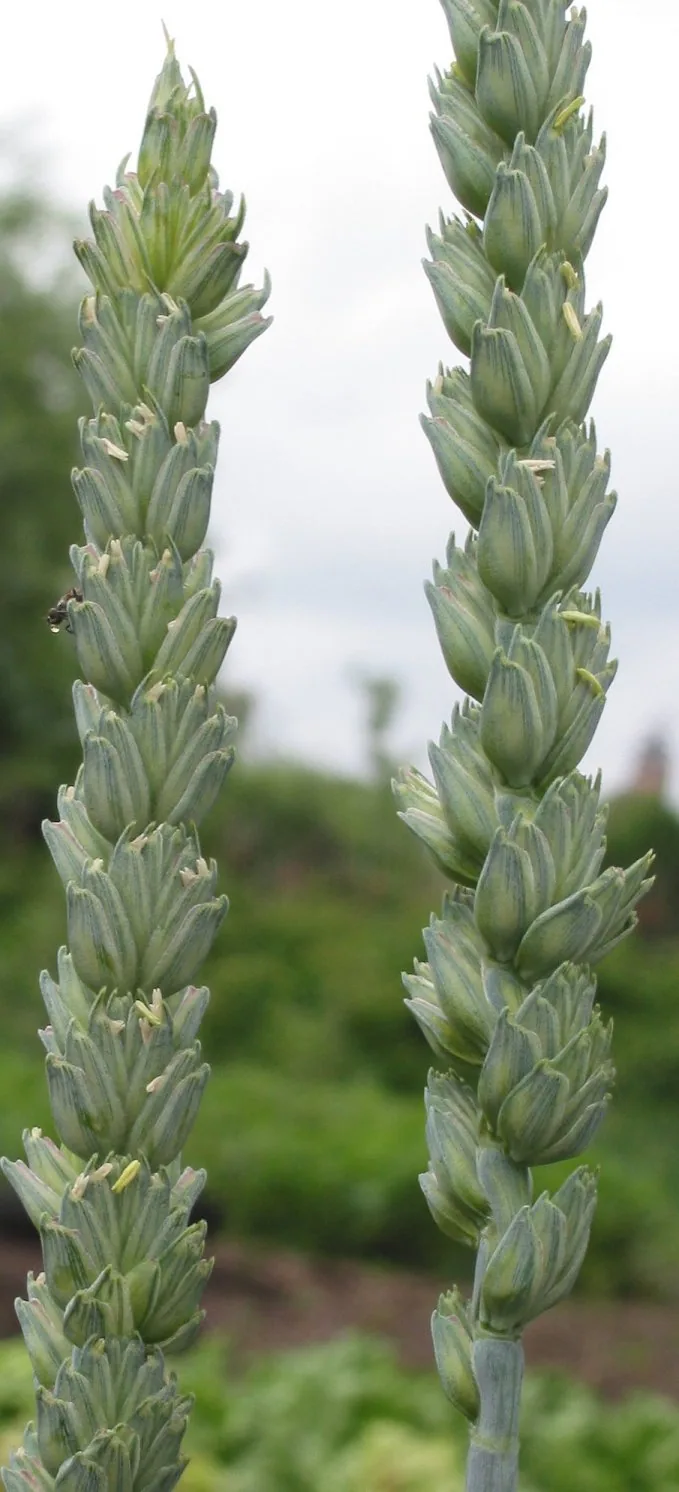
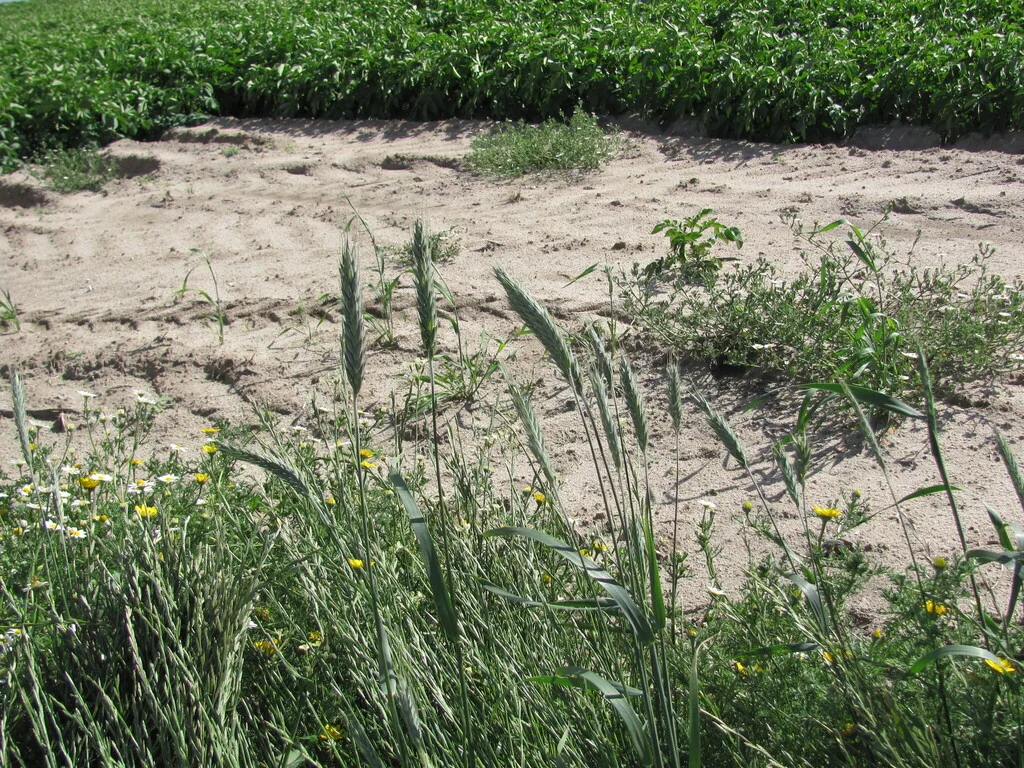

How to Grow and Care for Wheat
Triticum aestivum
Written by Emilio Marruso · last checked
At a glance
Common wheat is the most widely grown crop in the world, and you can grow this staple grain in your own garden. Sow it in fall as a winter cover crop, give it full sun, and feed it just once in spring after it greens up. This simple annual reaches 2–4 ft tall and fills a sunny patch with grain.
- Sun
Full sun
What the sources say (1)
Light: Full sun
Wheat grows best in full sun but is adaptable to a variety of soil types, as long as the soil is well-drained.
— Triticum aestivum (Wheat, Winter Wheat) | North Carolina Extension Gardener Plant Toolbox [1] - Feeding
Feed once in spring after it greens up; nitrogen given too early is wasted
What the sources say (4)
When: In spring, from green-up to Feekes stage 6 (one visible node)
Keep in mind that research has shown no yield benefit to early N applications as long as the application was made by Feekes GS 6 (one visible node).
— [3] In a split system, the first application should be applied no sooner than green-up.
— [3] How often: One application after green-up; splitting gives no yield gain
spread the risk of N loss and to improve N use efficiency. However, Ohio State University research has not shown a yield increase from this practice compared to a single application after green-up.
— [3] Avoid: Early nitrogen before jointing, when wheat uses little and nitrogen can be lost
Nitrogen applied early has the potential to be lost since wheat will use little N until after jointing.
— [3] - Harvest
Its grain is a staple food and the most widely grown crop in the world
- Pests
Hessian fly and root knot nematodes; where Hessian fly is present, sow after the first fall frost
What the sources say (1)
Pests: southern root knot nematode, Hessian fly
Wheat is susceptible to southern root knot nematode. If Hessian fly is present in your area, plant wheat after the first fall frost.
— Triticum aestivum (Wheat, Winter Wheat) | North Carolina Extension Gardener Plant Toolbox [1] - Size
2–4 ft tall and 6–12 in wide
What the sources say (2)
Mature height: 61-122 cm (2-4 ft)
Height: 2 ft. 0 in. - 4 ft. 0 in.
— Triticum aestivum (Wheat, Winter Wheat) | North Carolina Extension Gardener Plant Toolbox [1] Mature width: 15-30 cm (0.5-1 ft)
Width: 0 ft. 6 in. - 1 ft. 0 in.
— Triticum aestivum (Wheat, Winter Wheat) | North Carolina Extension Gardener Plant Toolbox [1] - Sowing
Sow in fall as a winter cover crop
What the sources say (2)
Sowing: Fall (as a fall-sown winter cover crop); after the first fall frost where Hessian fly is present
The home gardener is apt to grow wheat, which is a member of the grass family (Poaceae), as a fall-sown, winter cover crop.
— Triticum aestivum (Wheat, Winter Wheat) | North Carolina Extension Gardener Plant Toolbox [1] If Hessian fly is present in your area, plant wheat after the first fall frost.
— Triticum aestivum (Wheat, Winter Wheat) | North Carolina Extension Gardener Plant Toolbox [1]
Overview
Wheat is an annual grass grown as a cover crop, for forage, or for grain. [1] It grows best in full sun in well-drained soil and is used by home gardeners as a fall-sown winter cover crop. [1]
This record is incomplete: the sources we read do not cover every field yet.
Not yet covered by our sources: Watering, Harvest, Spacing, Propagation
Wheat care
How to water Wheat
Not stated in the sources we read.
How much light Wheat needs
Full sun
What the sources say (1)
Wheat grows best in full sun but is adaptable to a variety of soil types, as long as the soil is well-drained.Where to grow Wheat
Not stated in the sources we read.
How to propagate Wheat
Not stated in the sources we read.
How to grow Wheat
The plant
Life cycle
annual
What the sources say (1)
Wheat is an annual grass grown as a cover crop, for forage, or for grain.Family
Poaceae
What the sources say (1)
Family: PoaceaeMature height
61-122 cm (2-4 ft)
What the sources say (1)
Height: 2 ft. 0 in. - 4 ft. 0 in.Mature width
15-30 cm (0.5-1 ft)
What the sources say (1)
Width: 0 ft. 6 in. - 1 ft. 0 in.Pests and diseases
Pests
southern root knot nematode, Hessian fly
What the sources say (1)
Wheat is susceptible to southern root knot nematode. If Hessian fly is present in your area, plant wheat after the first fall frost.Fertilizing
When
In spring, from green-up to Feekes stage 6 (one visible node)
How often
One application after green-up; splitting gives no yield gain
What the sources say (1)
spread the risk of N loss and to improve N use efficiency. However, Ohio State University research has not shown a yield increase from this practice compared to a single application after green-up.Natural fertilizers
The sources give different values depending on region, zone or growing conditions.
What each source says
field production: Manure nitrogen is subtracted from the recommended rate
field production, all nitrogen from organic sources: Use the top end of the rate range
What the sources say (2)
field production: Manure N credits must be subtracted from the recommended N ratesfield production, all nitrogen from organic sources: If 100% of the N will come from organic sources, use the top end of the range.Mineral fertilizers
Nitrogen as ammonium sulfate (lowest loss) or urea; urea-ammonium nitrate solution has the highest loss
What each source says
field production: 89.7 to 135 kg [197.8–297.6 lb]/ha of total nitrogen, scaled to the yield goal
field production: No yield gain above 135 kg [297.6 lb]/ha of spring nitrogen
field production, spring wheat: 11.2 kg [24.7 lb]/ha less nitrogen than winter wheat; none on organic soils
What the sources say (4)
field production: Table 10 in the Tri-State Fertilizer Bulletin recommends 120 lb N for yield goals of 100 bu/A, 110 for 90 bu/A crop, 90 lb for 80 bu/A crop, and 80 lb for a 70 bu/A crops.field production: These studies have also shown apart from one year, yields did not increase above a spring rate of 120 lb N per acre.field production, spring wheat: Reduce N rates by 10 lb N/a for spring wheat on all soils. No N is required on organic soils.Urea-ammonium nitrate (UAN) or 28% has the greatest potential for loss and ammonium sulfate the least. Urea will have little potential for loss as long as it does not volatize.Micronutrients
Copper only when plant analysis confirms a deficiency; chelates at one sixth of the inorganic rate
What each source says
field production: 11.2 to 28 kg [24.7–61.7 lb]/ha of sulfur
What the sources say (2)
field production: General sulfur fertilizer recommendations are as follows: | Crop | Sulfur Application Rate | Corn, small grains, vegetable, and fruit crops | 10-25 lbs. S per acreCopper chelates can also be used at 1/6 of the rates recommended above. Do not apply Cu unless a deficiency has been verified by plant analysis.Avoid
Early nitrogen before jointing, when wheat uses little and nitrogen can be lost
What the sources say (1)
Nitrogen applied early has the potential to be lost since wheat will use little N until after jointing.Wheat pests and problems
Southern root knot nematode
Symptom: Wheat is susceptible to southern root knot nematode.
What to do: Wheat does not host certain nematodes, so it may be useful as a cover crop where those pests are prevalent.
What the sources say (1)
Wheat does not host certain nematodes and may be a useful cover crop where those pests are prevalent.
— Triticum aestivum (Wheat, Winter Wheat) | North Carolina Extension Gardener Plant Toolbox [1] Hessian fly
Symptom: Pest present in some areas.
What to do: Plant wheat after the first fall frost if Hessian fly is present in your area.
What the sources say (1)
If Hessian fly is present in your area, plant wheat after the first fall frost.
— Triticum aestivum (Wheat, Winter Wheat) | North Carolina Extension Gardener Plant Toolbox [1]
Remedies
Each remedy shows what official sources say about it; traditional remedies without an official source are marked as such. Harmful ones are listed so you know to avoid them.
Treating the plant
aphids
strong water jet Official source, not independently tested
How: Spray sturdy plants with a strong jet of water to knock the aphids from the leaves.
Sturdy plants can be sprayed with a strong jet of water to knock aphids from leaves
— plantvillage.psu.edu [5] insecticidal soap Works
How: Use insecticidal soaps or oils; always check the product label for usage guidelines before use.
insecticidal soaps or oils such as neem or canola oil are usually the best method of control
— plantvillage.psu.edu [5] What the evidence says insecticidal soaps or oils such as neem or canola oil are usually the best method of control
— plantvillage.psu.edu [5] neem oil Works
How: Use oils such as neem or canola oil; always check the product label for usage guidelines before use.
insecticidal soaps or oils such as neem or canola oil are usually the best method of control
— plantvillage.psu.edu [5] What the evidence says insecticidal soaps or oils such as neem or canola oil are usually the best method of control
— plantvillage.psu.edu [5]
hessian fly
neem seed extract Not verified
Traditional remedy, not verified by an official source.
How: Azadirachtin, an extract from the seeds of the neem plant, can be used in sprays to help control hessian fly numbers.
stink bugs
weed removal around the crop Official source, not independently tested
How: Remove weeds around the crop, which may act as overwintering sites for stink bugs, and practice good weed management throughout the year.
Remove weeds around crop which may act as overwintering sites for stink bugs and practice good weed management throughout the year
— plantvillage.psu.edu [5]
Calendar
Sowing
Fall (as a fall-sown winter cover crop); after the first fall frost where Hessian fly is present
What the sources say (2)
The home gardener is apt to grow wheat, which is a member of the grass family (Poaceae), as a fall-sown, winter cover crop.If Hessian fly is present in your area, plant wheat after the first fall frost.Harvest
Not stated in the sources we read.
Months as given by the sources, which are mostly from the United States (northern hemisphere). In the southern hemisphere they shift by about six months.
Edibility
Reported by the source, quoted verbatim. Do not eat a plant on the basis of this page alone: identification mistakes can be dangerous.
It is the most widely cultivated crop in the world, a staple grain.
[1]
Similar plants
- Rivet wheat Triticum turgidum
- Common barley Hordeum vulgare
- Corn Zea mays
- Giant Cane Arundinaria gigantea
- Oat Avena sativa
- Rye Secale cereale
- Sorghum Sorghum bicolor
- Teff Eragrostis tef
Sources
Every value above is quoted from these documents. Links lead to the original publisher.
- Triticum aestivum (Wheat, Winter Wheat) | North Carolina Extension Gardener Plant Toolbox · plants.ces.ncsu.edu, consulted
- Wheat - Triticum aestivum | North Carolina Extension Gardener Plant Toolbox · plants.ces.ncsu.edu, consulted
- agcrops.osu.edu · agcrops.osu.edu
- cropsandsoils.extension.wisc.edu · cropsandsoils.extension.wisc.edu
- plantvillage.psu.edu · plantvillage.psu.edu
Written by Emilio Marruso · last checked