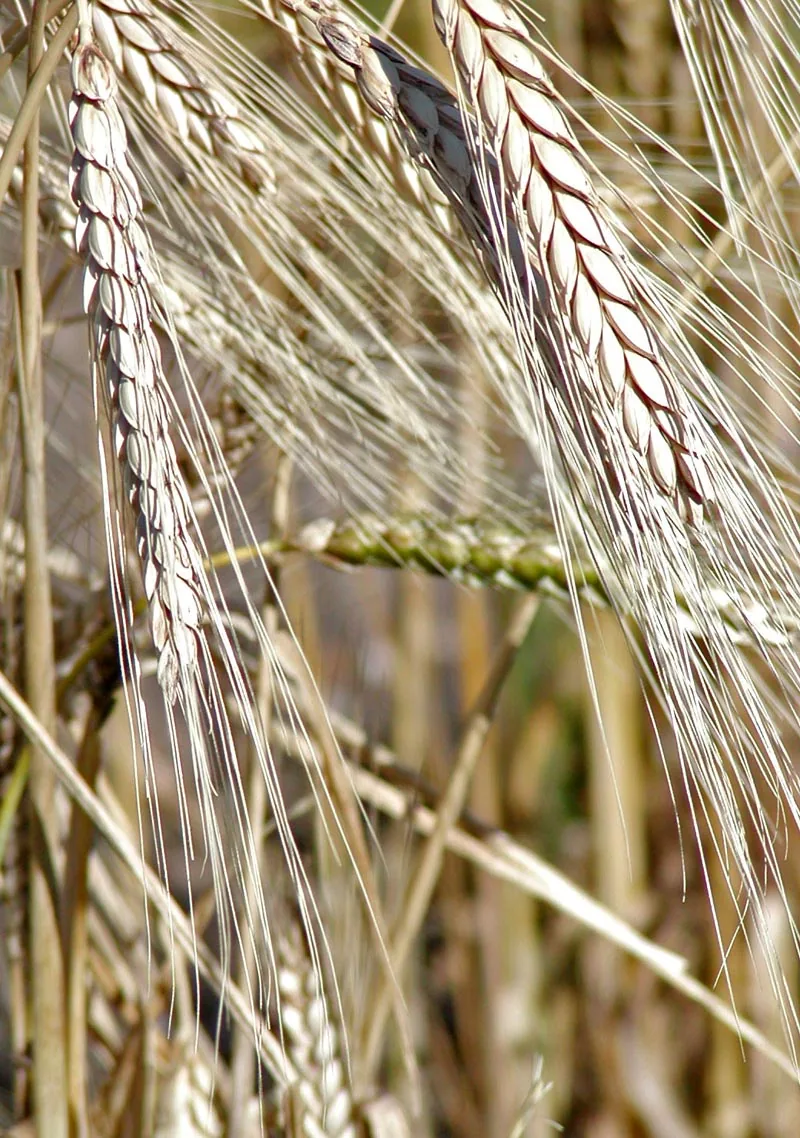
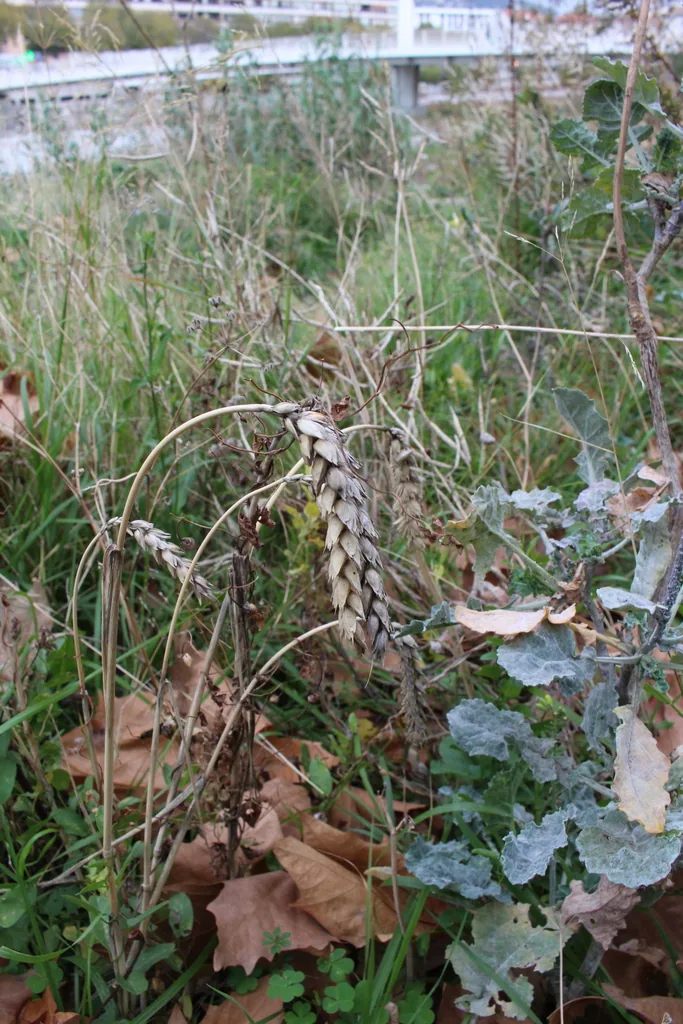

How to Grow and Care for Rivet wheat
Triticum turgidum
Written by Emilio Marruso · last checked
At a glance
Durum wheat is the grain behind most dried pasta and couscous, and starting it is simple: sow the seed in spring, as early as the ground can be worked, by hand or in rows. Give it a sunny spot and 1 inch of water a week, more in a long dry spell, and you'll be growing your own semolina.
- Sun
A sunny spot
What the sources say (1)
Light: Sunny site
Prepare a sunny site in the fall by plowing and then till and sow seed in the spring.
— What Is Durum Wheat - How To Grow Durum Wheat Plants In The Garden | Gardening Know How [2] - Water
1 inch of water a week; more during a long dry spell
What the sources say (1)
Watering: 1 inch (2.5 cm) of water per week; more in a prolonged dry spell
Just make sure to give the plants an inch (2.5 cm.) of water per week. Of course, if you get a prolonged dry spell, water more often.
— What Is Durum Wheat - How To Grow Durum Wheat Plants In The Garden | Gardening Know How [2] - Feeding
Give nitrogen before planting, better in spring than fall; don't overdo the feeding
What the sources say (4)
When: Most or all nitrogen before planting; spring applications preferred to fall
to raise grain protein: A foliar application of N immediately after flowering (post-anthesis) can be used to enhance the grain protein content and vitreous kernel percentage (hard count) of durum.
— A1825 (Revised March 2026) [1] Therefore, apply most or all of the N needed for the crop prior to planting. Spring N fertilizer applications are preferable to fall applications.
— A1825 (Revised March 2026) [1] Avoid: Overusing nutrients, which is costly and causes runoff; surface urea on no-till fields
Overusing nutrients is expensive and can cause runoff from the farm. Phosphate and N movement into surface water resources are particularly harmful
— A1825 (Revised March 2026) [1] Surface application of urea to no-till acres is not as efficient as subsurface application.
— A1825 (Revised March 2026) [1] - Harvest
The grain makes semolina for pasta, couscous and breads; dry it well before storing
What the sources say (1)
Storage: Grain must be dry before storage; maximum recommended storage moisture content 13.5% (wet basis)
Molds and insects need moisture to live and reproduce, so make sure grain is dry before it is stored. The maximum recommended storage moisture content for durum wheat is 13.5% (wet basis).
— A1825 (Revised March 2026) [1] - Pests
Aphids, armyworms, cutworms and grasshoppers; stripe rust and head blight
What the sources say (3)
Pests: wheat stem sawfly, wheat midge, aphids, armyworms, cutworms, grasshoppers, wireworms
Aphids, armyworms, cutworms, grasshoppers and wireworms are examples of insects that are problematic to a wide range of crops.
— A1825 (Revised March 2026) [1] Wheat stem sawfly and wheat midge are the two insects that can cause economic damage to durum and other classes of wheat in North Dakota.
— A1825 (Revised March 2026) [1] Diseases: stripe rust, tan spot, Stagonospora nodorum blotch, bacterial leaf streak, Fusarium head blight
The most common diseases impacting durum are stripe rust, tan spot, Stagonospora nodorum blotch, bacterial leaf streak and Fusarium head blight.
— A1825 (Revised March 2026) [1] - Propagation
From seed, scattered by hand or sown in rows
What the sources say (1)
Propagation: Seed, broadcast by hand or sown in rows
Seeds can be broadcast by hand in a small plot. It can even be planted in rows as you would other types of crops.
— What Is Durum Wheat - How To Grow Durum Wheat Plants In The Garden | Gardening Know How [2] - Sowing
Sow in spring, as early as the ground can be worked
What the sources say (2)
Sowing: Spring, as early as the ground can be worked
North Dakota: NDSU seeding date trials found that the earliest date at which producers were able to plant resulted in a significant yield increase over later dates
— A1825 (Revised March 2026) [1] Durum wheat, a spring wheat, should be planted as early as the ground can be worked.
— What Is Durum Wheat - How To Grow Durum Wheat Plants In The Garden | Gardening Know How [2]
Overview
Durum wheat is used for most dried pastas and couscous and is a spring wheat. [2] It is sown as early as the ground can be worked, on a sunny site. [2]
This record is incomplete: the sources we read do not cover every field yet.
Not yet covered by our sources: Harvest, Spacing
Rivet wheat care
How to water Rivet wheat
1 inch (2.5 cm) of water per week; more in a prolonged dry spell
What the sources say (1)
Just make sure to give the plants an inch (2.5 cm.) of water per week. Of course, if you get a prolonged dry spell, water more often.How much light Rivet wheat needs
Sunny site
What the sources say (1)
Prepare a sunny site in the fall by plowing and then till and sow seed in the spring.Where to grow Rivet wheat
Not stated in the sources we read.
How to propagate Rivet wheat
Seed, broadcast by hand or sown in rows
What the sources say (1)
Seeds can be broadcast by hand in a small plot. It can even be planted in rows as you would other types of crops.How to grow Rivet wheat
Harvest and storage
Storage
Grain must be dry before storage; maximum recommended storage moisture content 13.5% (wet basis)
What the sources say (1)
Molds and insects need moisture to live and reproduce, so make sure grain is dry before it is stored. The maximum recommended storage moisture content for durum wheat is 13.5% (wet basis).Pests and diseases
Pests
wheat stem sawfly, wheat midge, aphids, armyworms, cutworms, grasshoppers, wireworms
What the sources say (2)
Aphids, armyworms, cutworms, grasshoppers and wireworms are examples of insects that are problematic to a wide range of crops.Wheat stem sawfly and wheat midge are the two insects that can cause economic damage to durum and other classes of wheat in North Dakota.Diseases
stripe rust, tan spot, Stagonospora nodorum blotch, bacterial leaf streak, Fusarium head blight
What the sources say (1)
The most common diseases impacting durum are stripe rust, tan spot, Stagonospora nodorum blotch, bacterial leaf streak and Fusarium head blight.Fertilizing
When
Most or all nitrogen before planting; spring applications preferred to fall
What each source says
to raise grain protein: Foliar nitrogen just after flowering
What the sources say (2)
to raise grain protein: A foliar application of N immediately after flowering (post-anthesis) can be used to enhance the grain protein content and vitreous kernel percentage (hard count) of durum.Therefore, apply most or all of the N needed for the crop prior to planting. Spring N fertilizer applications are preferable to fall applications.Mineral fertilizers
Adequate nitrogen plus a phosphate starter placed with or near the seed; phosphorus and potassium by soil test
What each source says
foliar feeding after flowering, for grain protein: 33.6 kg [74 lb] N/ha as 28% UAN (93.5 L [24.7 gal]/ha) mixed with 93.5 L [24.7 gal]/ha of water
long-term no-till fields: 56.0 kg [123.5 lb]/ha less nitrogen than on tilled fields
after a legume crop: Nitrogen credit of 44.8 kg [98.8 lb]/ha
What the sources say (4)
foliar feeding after flowering, for grain protein: The recommended rate is 30 pounds of N per acre as UAN (10 gallons per acre of 28%) mixed with 10 gallons per acre of water.long-term no-till fields: Nitrogen (N) fertilizer rates are 50 pounds per acre less for long-term no-till production of durum, compared with traditionally cultivated fieldsafter a legume crop: When a legume crop proceeds durum, a nitrogen credit of 40 pounds per acre is available and can help reduce fertilizer costs.Applying adequate nitrogen (N) is extremely important. Also, phosphate seed-placed or near seed-placed starter is crucial to highest durum yield. Phosphorus (P) and potassium (K) recommendation charts are based on soil test results.Avoid
Overusing nutrients, which is costly and causes runoff; surface urea on no-till fields
What the sources say (2)
Overusing nutrients is expensive and can cause runoff from the farm. Phosphate and N movement into surface water resources are particularly harmfulSurface application of urea to no-till acres is not as efficient as subsurface application.Remedies
Each remedy shows what official sources say about it; traditional remedies without an official source are marked as such. Harmful ones are listed so you know to avoid them.
Treating the plant
fusarium head blight
rotation with a non-host crop Works
How: Rotate with a non-host crop such as soybean or sunflower to decrease the amount of fungus present during wheat flowering.
Rotating with a non-host crop such as soybean or sunflower will decrease the amount of fungus present during wheat flowering.
— extension.okstate.edu [4] What the evidence says Rotating with a non-host crop such as soybean or sunflower will decrease the amount of fungus present during wheat flowering.
— extension.okstate.edu [4] stagger planting dates Partly works
How: Stagger wheat planting dates and spread acreage among early, medium, and late-maturing wheat varieties.
Another best management practice is to stagger wheat planting dates and spread acreage among early, medium, and late-maturing wheat varieties.
— extension.okstate.edu [4] What the evidence says Another best management practice is to stagger wheat planting dates and spread acreage among early, medium, and late-maturing wheat varieties. This practice will spread risk by spreading wheat flowering over a longer period of time and a wider set of environmental conditions.
— extension.okstate.edu [4]
wheat stem sawfly
shallow fall tillage Works
How: Shallow, fall tillage can result in 90% sawfly mortality; spring tillage only provides about 25%.
Shallow, fall tillage can result in 90% sawfly mortality. Spring tillage only provides about 25% sawfly mortality.
— gov.mb.ca [5] What the evidence says Shallow, fall tillage can result in 90% sawfly mortality. Spring tillage only provides about 25% sawfly mortality.
— gov.mb.ca [5] burning infested stubble Partly works
How: Burning infested stubble may reduce sawfly numbers but also greatly reduces parasite numbers.
Burning infested stubble may reduce sawfly numbers but it also greatly reduces parasite numbers and the benefits of returning stubble to the soil.
— gov.mb.ca [5] What the evidence says Burning infested stubble may reduce sawfly numbers but it also greatly reduces parasite numbers and the benefits of returning stubble to the soil.
— gov.mb.ca [5]
stored grain insects
keeping bins clean Works
How: Never store new grain on old grain, mix it with old grain, or store it in a dirty bin.
Never store new grain on old grain, mix it with old grain, or store it in a dirty bin. Old grain and debris are the most important sources of insects that attack new grain.
— extension.colostate.edu [6] What the evidence says Six steps to prevent and control insect damage are: keep bins clean and repaired; use residual sprays; store only clean, dry grain; aerate the grain; protect the grain; and inspect the grain regularly.
— extension.colostate.edu [6]
Calendar
Sowing
Spring, as early as the ground can be worked
What each source says
North Dakota: Earliest possible planting date
What the sources say (2)
North Dakota: NDSU seeding date trials found that the earliest date at which producers were able to plant resulted in a significant yield increase over later datesDurum wheat, a spring wheat, should be planted as early as the ground can be worked.Harvest
Not stated in the sources we read.
Months as given by the sources, which are mostly from the United States (northern hemisphere). In the southern hemisphere they shift by about six months.
Edibility
Reported by the source, quoted verbatim. Do not eat a plant on the basis of this page alone: identification mistakes can be dangerous.
Durum wheat, Triticum turgidum , is used for most dried pastas and couscous as well as for raised and flat breads throughout the Middle East.
[2]
Similar plants
- Wheat Triticum aestivum
- Buckwheat Fagopyrum esculentum
- Common barley Hordeum vulgare
- Finger millet Eleusine coracana
- Foxtail millet Setaria italica
- Job's tears Coix lacryma-jobi
- Oat Avena sativa
- Proso millet Panicum miliaceum
Sources
Every value above is quoted from these documents. Links lead to the original publisher.
- A1825 (Revised March 2026) · ndsu.edu, consulted
- What Is Durum Wheat - How To Grow Durum Wheat Plants In The Garden | Gardening Know How · gardeningknowhow.com, consulted
- Triticum turgidum durum - Useful Temperate Plants · temperate.theferns.info, consulted
- extension.okstate.edu · extension.okstate.edu
- gov.mb.ca · gov.mb.ca
- extension.colostate.edu · extension.colostate.edu
Written by Emilio Marruso · last checked