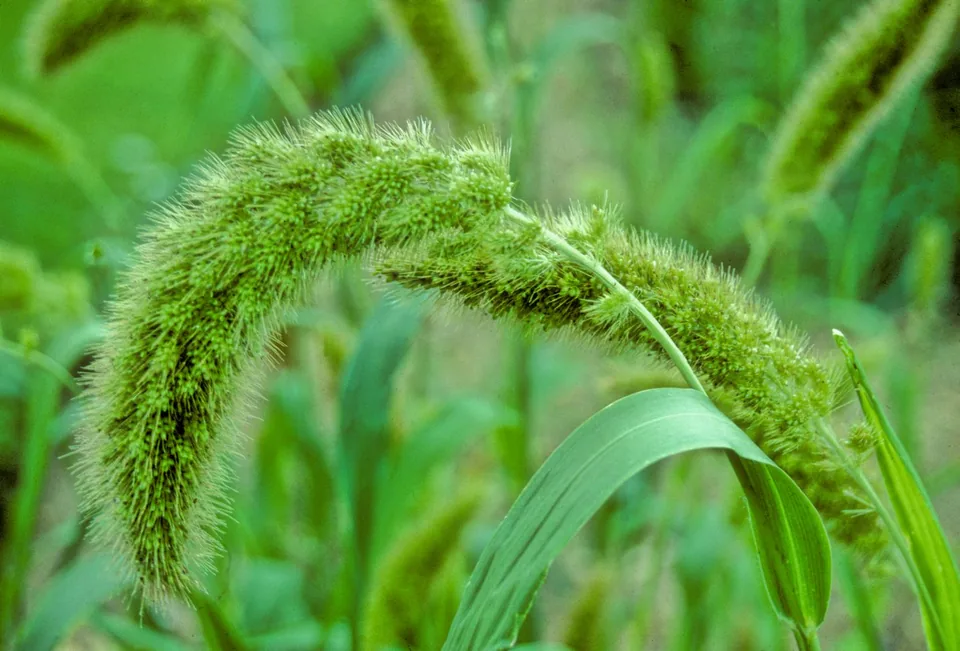
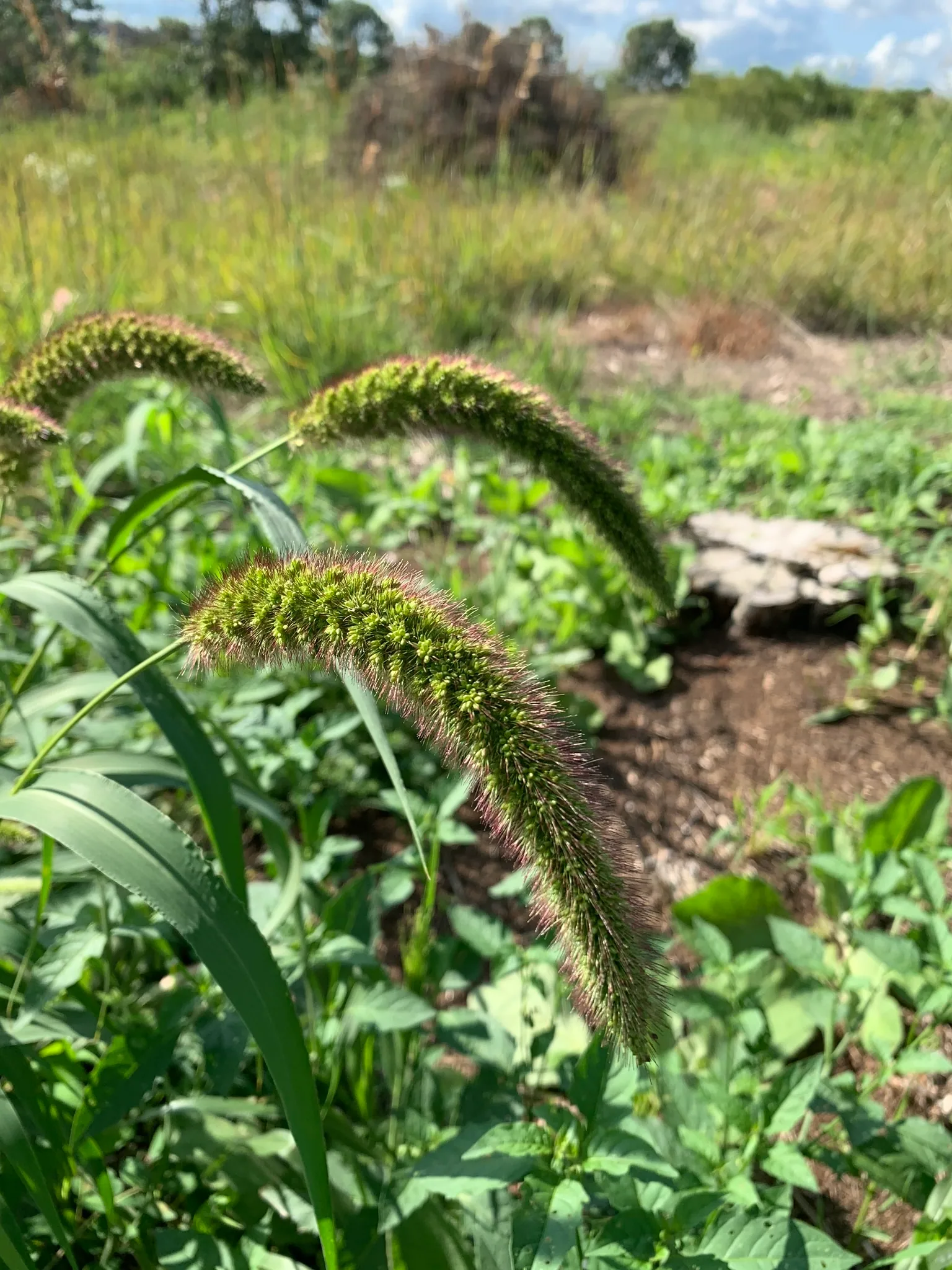

How to Grow and Care for Foxtail millet
Setaria italica
Written by Emilio Marruso · last checked
Toxic to: Horses · Why
At a glance
Foxtail millet is an easy annual to start from seed: sow it once frost is past and the soil reaches 65 °F (18 °C), just ¼–½ inch deep. It needs little water, and in 45–60 days it is ready for grazing or hay. It makes good hay for cattle and sheep, but keep horses away, because it is toxic to them.
- Water
Needs little water, but its shallow roots don't recover well from drought
What the sources say (1)
Watering: Low water requirement; shallow root system, does not recover well from drought
Generally grown in semiarid regions, it has a low water requirement, though it does not recover well from drought conditions because it has a shallow root system.
— Millets for Forage and Grain in New Mexico and West Texas | New Mexico State University - BE BOLD. Shape the Future. [2] - Cold
Sow only once there is no more chance of frost
What the sources say (2)
Sowing: After there is no chance of frost and when soil temperature has reached at least 65ºF (18 °C)
Kentucky (fonte: University of Kentucky Cooperative Extension): Foxtail millet should be planted after there is no chance of frost and when the soil temperature has reached at least 65ºF.
— Cooperative Extension Service | Agriculture and Natural Resources | Family and Consumer Sciences | 4-H Youth Development | Community and Economic Development [1] Foxtail millet should be planted after there is no chance of frost and when the soil temperature has reached at least 65ºF.
— Cooperative Extension Service | Agriculture and Natural Resources | Family and Consumer Sciences | 4-H Youth Development | Community and Economic Development [1] - Feeding
Phosphorus and potassium before sowing, nitrogen at sowing; too much nitrogen can poison grazing animals
What the sources say (2)
When: Phosphorus and potassium before seeding, nitrogen at seeding
In the absence of a soil test, apply 60-80 lb/A of P2O5 and 70-100 lb/A K2O prior to seeding. Apply 60 to 80 lb/A of actual nitrogen at seeding.
— Cooperative Extension Service | Agriculture and Natural Resources | Family and Consumer Sciences | 4-H Youth Development | Community and Economic Development [1] Avoid: Excessive nitrogen fertilizer, which risks nitrate poisoning of grazing livestock
Forage Related Disorders: Nitrate poisoning. To avoid nitrate poisoning do not apply excessive amounts of nitrogen fertilizer. Do not graze drought stressed or slow growing plants.
— Cooperative Extension Service | Agriculture and Natural Resources | Family and Consumer Sciences | 4-H Youth Development | Community and Economic Development [1] - Harvest
Ready for grazing or hay 45–60 days after planting; good hay for cattle and sheep
What the sources say (1)
Harvest: Grazing or hay 45 to 60 days after planting
Foxtail millet will provide grazing or hay in 45 to 60 days after planting with good growing conditions.
— Cooperative Extension Service | Agriculture and Natural Resources | Family and Consumer Sciences | 4-H Youth Development | Community and Economic Development [1] - Pests
Can get mildew, bacterial blight and leaf spot
What the sources say (1)
Diseases: mildew, bacterial blight, leaf spot
Some diseases affecting foxtail millet include mildew, bacterial blight, and leaf spot.
— Millets for Forage and Grain in New Mexico and West Texas | New Mexico State University - BE BOLD. Shape the Future. [2] - Propagation
From seed, scattered by hand or sown in rows
What the sources say (1)
Propagation: Seed (broadcast or drilled)
Seed can be broadcast at rate of 20-30 lb/A onto a fine, but firm seedbed and then cultipacked to ensure good soil-seed contact.
— Cooperative Extension Service | Agriculture and Natural Resources | Family and Consumer Sciences | 4-H Youth Development | Community and Economic Development [1] - Sowing
Sow ¼–½ inch deep once the soil reaches 65 °F (18 °C)
What the sources say (3)
Sowing: After there is no chance of frost and when soil temperature has reached at least 65ºF (18 °C)
Kentucky (fonte: University of Kentucky Cooperative Extension): Foxtail millet should be planted after there is no chance of frost and when the soil temperature has reached at least 65ºF.
— Cooperative Extension Service | Agriculture and Natural Resources | Family and Consumer Sciences | 4-H Youth Development | Community and Economic Development [1] Foxtail millet should be planted after there is no chance of frost and when the soil temperature has reached at least 65ºF.
— Cooperative Extension Service | Agriculture and Natural Resources | Family and Consumer Sciences | 4-H Youth Development | Community and Economic Development [1] Sowing depth: 0.6-1.3 cm (1/4-1/2 in)
Seeding depth should be between 1/4 and 1/2 inch.
— Cooperative Extension Service | Agriculture and Natural Resources | Family and Consumer Sciences | 4-H Youth Development | Community and Economic Development [1] - Safety
Toxic to horses
Overview
Foxtail millet is a fine-stemmed summer annual grass used mainly for emergency hay or pasture for cattle. [1] It is planted after the last frost once the soil has warmed, and provides grazing or hay 45 to 60 days after planting. [1] It contains the glucoside setarian, which is toxic to horses. [1]
This record is incomplete: the sources we read do not cover every field yet.
Not yet covered by our sources: Light, Hardiness, coldest zone, Hardiness, warmest zone, Pruning
Foxtail millet care
Measurements in square brackets are our conversion into the other unit system; the quoted text is unchanged.
How to water Foxtail millet
Low water requirement; shallow root system, does not recover well from drought
What the sources say (1)
Generally grown in semiarid regions, it has a low water requirement, though it does not recover well from drought conditions because it has a shallow root system.How much light Foxtail millet needs
Not stated in the sources we read.
How much cold Foxtail millet can take
Hardiness, coldest zone
Not stated in the sources we read.
Hardiness, warmest zone
Not stated in the sources we read.
How to propagate Foxtail millet
Seed (broadcast or drilled)
What the sources say (1)
Seed can be broadcast at rate of 20-30 lb/A onto a fine, but firm seedbed and then cultipacked to ensure good soil-seed contact.How to grow Foxtail millet
The plant
Life cycle
annual
What the sources say (1)
Foxtail millet (German millet) is a fine-stemmed summer annual used mainly for emergency hay or pasture for cattle.Sowing and growth
Sowing depth
0.6-1.3 cm (1/4-1/2 in)
What the sources say (1)
Seeding depth should be between 1/4 and 1/2 inch.Pests and diseases
Diseases
mildew, bacterial blight, leaf spot
What the sources say (1)
Some diseases affecting foxtail millet include mildew, bacterial blight, and leaf spot.Fertilizing
When
Phosphorus and potassium before seeding, nitrogen at seeding
What the sources say (1)
In the absence of a soil test, apply 60-80 lb/A of P2O5 and 70-100 lb/A K2O prior to seeding. Apply 60 to 80 lb/A of actual nitrogen at seeding.Mineral fertilizers
Phosphorus and potassium according to soil test; without a test, 67.3 to 89.7 kg [148.4–197.8 lb]/ha of P₂O₅ and 78.5 to 112 kg [173–246.9 lb]/ha of K₂O before seeding, plus 67.3 to 89.7 kg [148.4–197.8 lb]/ha of nitrogen at seeding
What each source says
millets in New Mexico and West Texas: 44.8 to 89.7 kg [98.8–197.8 lb]/ha of nitrogen at planting, for forage or grain
What the sources say (3)
millets in New Mexico and West Texas: Millets are grown and can be productive on less fertile soils, but they respond well to nitrogen (N) and phosphorus (P) fertilizers. Generally, 40 to 80 lb N per acre at planting is adequate for both forage and grain.In the absence of a soil test, apply 60-80 lb/A of P2O5 and 70-100 lb/A K2O prior to seeding. Apply 60 to 80 lb/A of actual nitrogen at seeding.Fertilization: Apply phosphorus and potassium according to soil test. Nitrogen, 60-80 lb/A at establishmentAvoid
Excessive nitrogen fertilizer, which risks nitrate poisoning of grazing livestock
What the sources say (1)
Forage Related Disorders: Nitrate poisoning. To avoid nitrate poisoning do not apply excessive amounts of nitrogen fertilizer. Do not graze drought stressed or slow growing plants.Remedies
The sources we checked give no remedies for this plant.
Is Foxtail millet toxic to pets?
Reported by the source, quoted verbatim. This is not medical or veterinary advice: if a person or an animal may have eaten this plant, contact a poison control centre or a veterinarian.
Foxtail also contains the glucoside setarian, which is toxic to horses.
[1]- Poisonous parts
seedheads from foxtail millet can become lodged in the horse’s mouth resulting in physical damage
[1]- Toxic principle
Foxtail also contains the glucoside setarian, which is toxic to horses.
[1]- Symptoms
Foxtail millet can be dangerous to horses in large quantities due to a glucoside known as setarian that can damage kidneys, bones, and joints.
[2]
Calendar
Sowing
After there is no chance of frost and when soil temperature has reached at least 65ºF (18 °C)
What each source says
Kentucky (fonte: University of Kentucky Cooperative Extension): After there is no chance of frost and when soil temperature has reached at least 65ºF [18 °C]
What the sources say (2)
Kentucky (fonte: University of Kentucky Cooperative Extension): Foxtail millet should be planted after there is no chance of frost and when the soil temperature has reached at least 65ºF.Foxtail millet should be planted after there is no chance of frost and when the soil temperature has reached at least 65ºF.Harvest
Grazing or hay 45 to 60 days after planting
What the sources say (1)
Foxtail millet will provide grazing or hay in 45 to 60 days after planting with good growing conditions.Pruning
Not stated in the sources we read.
Months as given by the sources, which are mostly from the United States (northern hemisphere). In the southern hemisphere they shift by about six months.
Edibility
Reported by the source, quoted verbatim. Do not eat a plant on the basis of this page alone: identification mistakes can be dangerous.
foxtail millet makes good hay for cattle and sheep
[2]
Similar plants
- Aaron's Beard Hypericum calycinum
- Aconite Aconitum napellus
- Adam's Needle Yucca flaccida
- Afghan Cherry Prunus jacquemontii
- African Blood Lily Scadoxus multiflorus
- African Blue Lily Agapanthus praecox
- African Marigold Tagetes erecta
- African Spear Dracaena angolensis
Sources
Every value above is quoted from these documents. Links lead to the original publisher.
- Cooperative Extension Service | Agriculture and Natural Resources | Family and Consumer Sciences | 4-H Youth Development | Community and Economic Development · publications.ca.uky.edu, consulted
- Millets for Forage and Grain in New Mexico and West Texas | New Mexico State University - BE BOLD. Shape the Future. · pubs.nmsu.edu, consulted
Written by Emilio Marruso · last checked