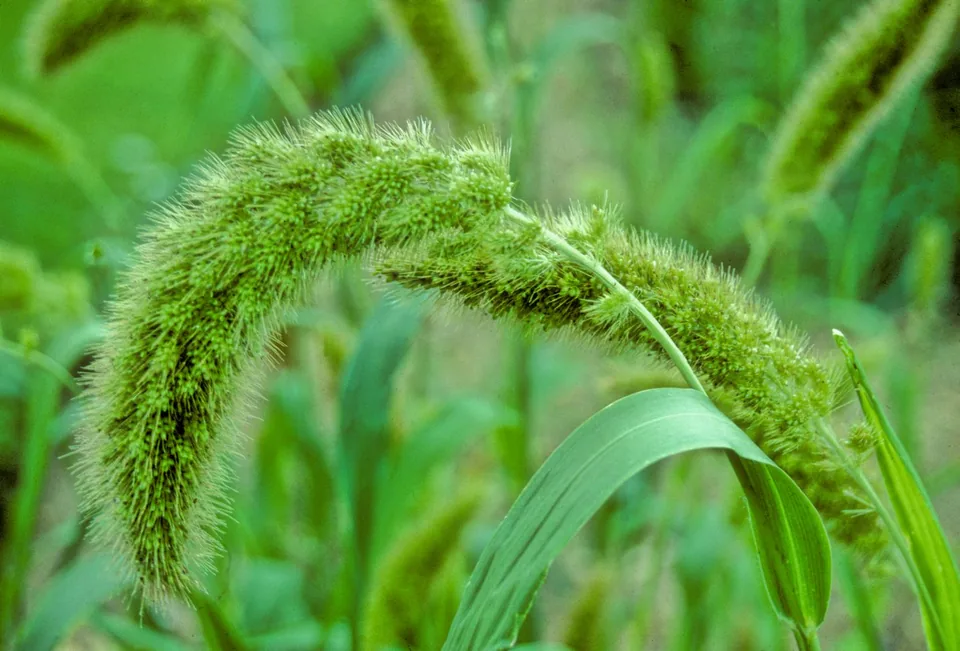
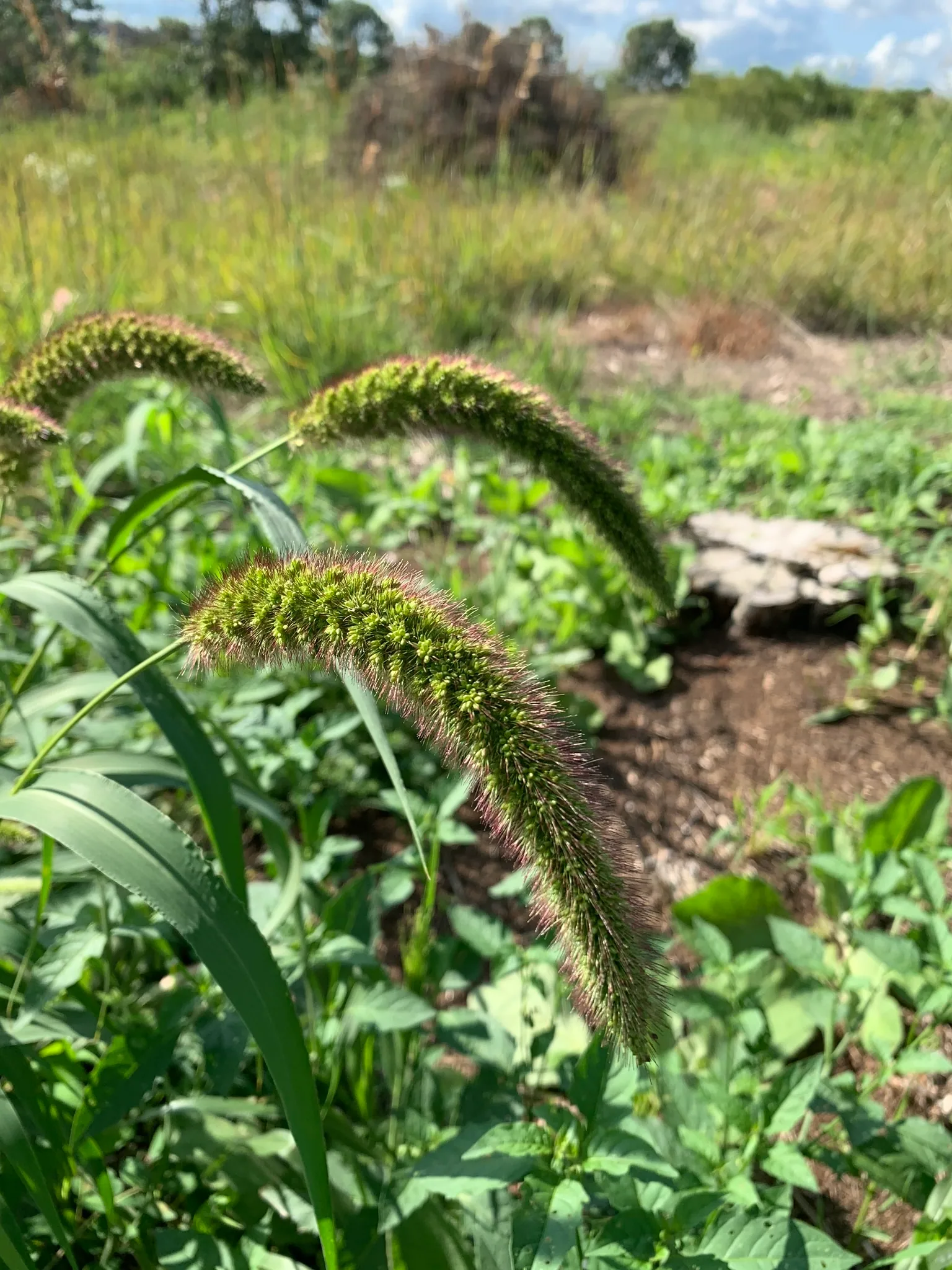

Cómo cultivar y cuidar Mijo menor
Setaria italica
Escrito por Emilio Marruso · última revisión
Tóxica para: Caballos · Por qué
De un vistazo
El mijo menor es un cultivo anual fácil de empezar por semilla: siémbralo cuando ya no haya heladas y la tierra llegue a 18 °C, a solo 1 cm de profundidad. Necesita poca agua y en 45–60 días está listo para pasto o heno. Da un buen heno para vacas y ovejas, pero mantén lejos a los caballos, porque es tóxico para ellos.
- Riego
Necesita poca agua, pero sus raíces superficiales no se recuperan bien de la sequía
Qué dicen las fuentes (1)
Riego: Bajo requerimiento de agua; sistema radicular superficial, no se recupera bien de la sequía
Generally grown in semiarid regions, it has a low water requirement, though it does not recover well from drought conditions because it has a shallow root system.
— Millets for Forage and Grain in New Mexico and West Texas | New Mexico State University - BE BOLD. Shape the Future. [2] - Frío
Siembra solo cuando ya no haya riesgo de heladas
Qué dicen las fuentes (2)
Siembra: Después de que no haya posibilidad de heladas y cuando la temperatura del suelo haya alcanzado al menos 65ºF (18 °C)
Kentucky (fuente: University of Kentucky Cooperative Extension): Foxtail millet should be planted after there is no chance of frost and when the soil temperature has reached at least 65ºF.
— Cooperative Extension Service | Agriculture and Natural Resources | Family and Consumer Sciences | 4-H Youth Development | Community and Economic Development [1] Foxtail millet should be planted after there is no chance of frost and when the soil temperature has reached at least 65ºF.
— Cooperative Extension Service | Agriculture and Natural Resources | Family and Consumer Sciences | 4-H Youth Development | Community and Economic Development [1] - Abonado
Fósforo y potasio antes de sembrar, nitrógeno al sembrar; el exceso de nitrógeno puede intoxicar al ganado
Qué dicen las fuentes (2)
Cuándo: Fósforo y potasio antes de la siembra, nitrógeno en la siembra
In the absence of a soil test, apply 60-80 lb/A of P2O5 and 70-100 lb/A K2O prior to seeding. Apply 60 to 80 lb/A of actual nitrogen at seeding.
— Cooperative Extension Service | Agriculture and Natural Resources | Family and Consumer Sciences | 4-H Youth Development | Community and Economic Development [1] Evitar: Exceso de fertilizante nitrogenado, que conlleva el riesgo de intoxicación por nitratos en el ganado en pastoreo
Forage Related Disorders: Nitrate poisoning. To avoid nitrate poisoning do not apply excessive amounts of nitrogen fertilizer. Do not graze drought stressed or slow growing plants.
— Cooperative Extension Service | Agriculture and Natural Resources | Family and Consumer Sciences | 4-H Youth Development | Community and Economic Development [1] - Cosecha
Listo para pasto o heno 45–60 días después de la siembra; buen heno para vacas y ovejas
Qué dicen las fuentes (1)
Cosecha: Pastoreo o heno 45 a 60 días después de la siembra
Foxtail millet will provide grazing or hay in 45 to 60 days after planting with good growing conditions.
— Cooperative Extension Service | Agriculture and Natural Resources | Family and Consumer Sciences | 4-H Youth Development | Community and Economic Development [1] - Plagas
Puede sufrir mildiu, tizón bacteriano y manchas en las hojas
Qué dicen las fuentes (1)
Enfermedades: mildiu, tizón bacteriano, mancha foliar
Some diseases affecting foxtail millet include mildew, bacterial blight, and leaf spot.
— Millets for Forage and Grain in New Mexico and West Texas | New Mexico State University - BE BOLD. Shape the Future. [2] - Multiplicación
Por semilla, a voleo o en líneas
Qué dicen las fuentes (1)
Propagación: Semilla (al voleo o en surcos)
Seed can be broadcast at rate of 20-30 lb/A onto a fine, but firm seedbed and then cultipacked to ensure good soil-seed contact.
— Cooperative Extension Service | Agriculture and Natural Resources | Family and Consumer Sciences | 4-H Youth Development | Community and Economic Development [1] - Siembra
Siembra a 1 cm de profundidad cuando la tierra llegue a 18 °C
Qué dicen las fuentes (3)
Siembra: Después de que no haya posibilidad de heladas y cuando la temperatura del suelo haya alcanzado al menos 65ºF (18 °C)
Kentucky (fuente: University of Kentucky Cooperative Extension): Foxtail millet should be planted after there is no chance of frost and when the soil temperature has reached at least 65ºF.
— Cooperative Extension Service | Agriculture and Natural Resources | Family and Consumer Sciences | 4-H Youth Development | Community and Economic Development [1] Foxtail millet should be planted after there is no chance of frost and when the soil temperature has reached at least 65ºF.
— Cooperative Extension Service | Agriculture and Natural Resources | Family and Consumer Sciences | 4-H Youth Development | Community and Economic Development [1] Profundidad de siembra: 0.6-1.3 cm (1/4-1/2 pulgada)
Seeding depth should be between 1/4 and 1/2 inch.
— Cooperative Extension Service | Agriculture and Natural Resources | Family and Consumer Sciences | 4-H Youth Development | Community and Economic Development [1] - Seguridad
Tóxico para los caballos
Resumen
El mijo cola de zorra es una hierba anual de verano de tallo fino que se utiliza principalmente para heno de emergencia o pastoreo de ganado bovino. [1] Se siembra después de la última helada, una vez que el suelo se ha calentado, y proporciona pastoreo o heno 45 a 60 días después de la siembra. [1] Contiene el glucósido setarian, que es tóxico para los caballos. [1]
Citado en inglés, como en la fuente.
Esta ficha está incompleta: las fuentes consultadas aún no cubren todos los campos.
Aún no cubierto por nuestras fuentes: Luz, Rusticidad, zona más fría, Rusticidad, zona más cálida, Poda
Cuidados
Las medidas entre corchetes son nuestra conversión al otro sistema de unidades; el texto citado no cambia.
Riego
Bajo requerimiento de agua; sistema radicular superficial, no se recupera bien de la sequía
Qué dicen las fuentes (1)
Generally grown in semiarid regions, it has a low water requirement, though it does not recover well from drought conditions because it has a shallow root system.Luz
No figura en las fuentes consultadas.
Clima y frío
Rusticidad, zona más fría
No figura en las fuentes consultadas.
Rusticidad, zona más cálida
No figura en las fuentes consultadas.
Propagación
Semilla (al voleo o en surcos)
Qué dicen las fuentes (1)
Seed can be broadcast at rate of 20-30 lb/A onto a fine, but firm seedbed and then cultipacked to ensure good soil-seed contact.Cultivo
La planta
Ciclo de vida
anual
Qué dicen las fuentes (1)
Foxtail millet (German millet) is a fine-stemmed summer annual used mainly for emergency hay or pasture for cattle.Siembra y crecimiento
Profundidad de siembra
0.6-1.3 cm (1/4-1/2 pulgada)
Qué dicen las fuentes (1)
Seeding depth should be between 1/4 and 1/2 inch.Plagas y enfermedades
Enfermedades
mildiu, tizón bacteriano, mancha foliar
Qué dicen las fuentes (1)
Some diseases affecting foxtail millet include mildew, bacterial blight, and leaf spot.Abonado
Cuándo
Fósforo y potasio antes de la siembra, nitrógeno en la siembra
Qué dicen las fuentes (1)
In the absence of a soil test, apply 60-80 lb/A of P2O5 and 70-100 lb/A K2O prior to seeding. Apply 60 to 80 lb/A of actual nitrogen at seeding.Abonos minerales
Fósforo y potasio según el análisis del suelo; sin análisis, 67.3 a 89.7 kg [148,4–197,8 lb]/ha de P₂O₅ y 78.5 a 112 kg [173–246,9 lb]/ha de K₂O antes de la siembra, más 67.3 a 89.7 kg [148,4–197,8 lb]/ha de nitrógeno en la siembra
Lo que dice cada fuente
mijo en Nuevo México y el oeste de Texas: 44.8 a 89.7 kg [98,8–197,8 lb]/ha de nitrógeno al momento de la siembra, para forraje o grano
Qué dicen las fuentes (3)
mijo en Nuevo México y el oeste de Texas: Millets are grown and can be productive on less fertile soils, but they respond well to nitrogen (N) and phosphorus (P) fertilizers. Generally, 40 to 80 lb N per acre at planting is adequate for both forage and grain.In the absence of a soil test, apply 60-80 lb/A of P2O5 and 70-100 lb/A K2O prior to seeding. Apply 60 to 80 lb/A of actual nitrogen at seeding.Fertilization: Apply phosphorus and potassium according to soil test. Nitrogen, 60-80 lb/A at establishmentEvitar
Exceso de fertilizante nitrogenado, que conlleva el riesgo de intoxicación por nitratos en el ganado en pastoreo
Qué dicen las fuentes (1)
Forage Related Disorders: Nitrate poisoning. To avoid nitrate poisoning do not apply excessive amounts of nitrogen fertilizer. Do not graze drought stressed or slow growing plants.Remedios
Las fuentes consultadas no dan remedios para esta planta.
Venenosa para los animales
Según la fuente, citada textualmente. No es un consejo médico ni veterinario: si una persona o un animal pudo haber ingerido esta planta, contacta con un centro de toxicología o con un veterinario.
Foxtail also contains the glucoside setarian, which is toxic to horses.
[1]- Partes venenosas
seedheads from foxtail millet can become lodged in the horse’s mouth resulting in physical damage
[1]- Principio tóxico
Foxtail also contains the glucoside setarian, which is toxic to horses.
[1]- Síntomas
Foxtail millet can be dangerous to horses in large quantities due to a glucoside known as setarian that can damage kidneys, bones, and joints.
[2]
Calendario
Siembra
Después de que no haya posibilidad de heladas y cuando la temperatura del suelo haya alcanzado al menos 65ºF (18 °C)
Lo que dice cada fuente
Kentucky (fuente: University of Kentucky Cooperative Extension): Después de que no haya posibilidad de heladas y cuando la temperatura del suelo haya alcanzado al menos 65ºF [18 °C]
Qué dicen las fuentes (2)
Kentucky (fuente: University of Kentucky Cooperative Extension): Foxtail millet should be planted after there is no chance of frost and when the soil temperature has reached at least 65ºF.Foxtail millet should be planted after there is no chance of frost and when the soil temperature has reached at least 65ºF.Cosecha
Pastoreo o heno 45 a 60 días después de la siembra
Qué dicen las fuentes (1)
Foxtail millet will provide grazing or hay in 45 to 60 days after planting with good growing conditions.Poda
No figura en las fuentes consultadas.
Meses tal como los dan las fuentes, en su mayoría de Estados Unidos (hemisferio norte). En el hemisferio sur se desplazan unos seis meses.
Comestibilidad
Según la fuente, citada textualmente. No comas una planta basándote solo en esta página: los errores de identificación pueden ser peligrosos.
foxtail millet makes good hay for cattle and sheep
[2]
Plantas similares
- Hipérico rastrero Hypericum calycinum
- Acónito común Aconitum napellus
- Palma de aguja Yucca flaccida
- Afghan Cherry Prunus jacquemontii
- African Blood Lily Scadoxus multiflorus
- Agapanto Agapanthus praecox
- Cempasúchil Tagetes erecta
- African Spear Dracaena angolensis
Fuentes
Cada valor anterior se cita de estos documentos. Los enlaces llevan al editor original.
- Cooperative Extension Service | Agriculture and Natural Resources | Family and Consumer Sciences | 4-H Youth Development | Community and Economic Development · publications.ca.uky.edu, consultado
- Millets for Forage and Grain in New Mexico and West Texas | New Mexico State University - BE BOLD. Shape the Future. · pubs.nmsu.edu, consultado
Escrito por Emilio Marruso · última revisión