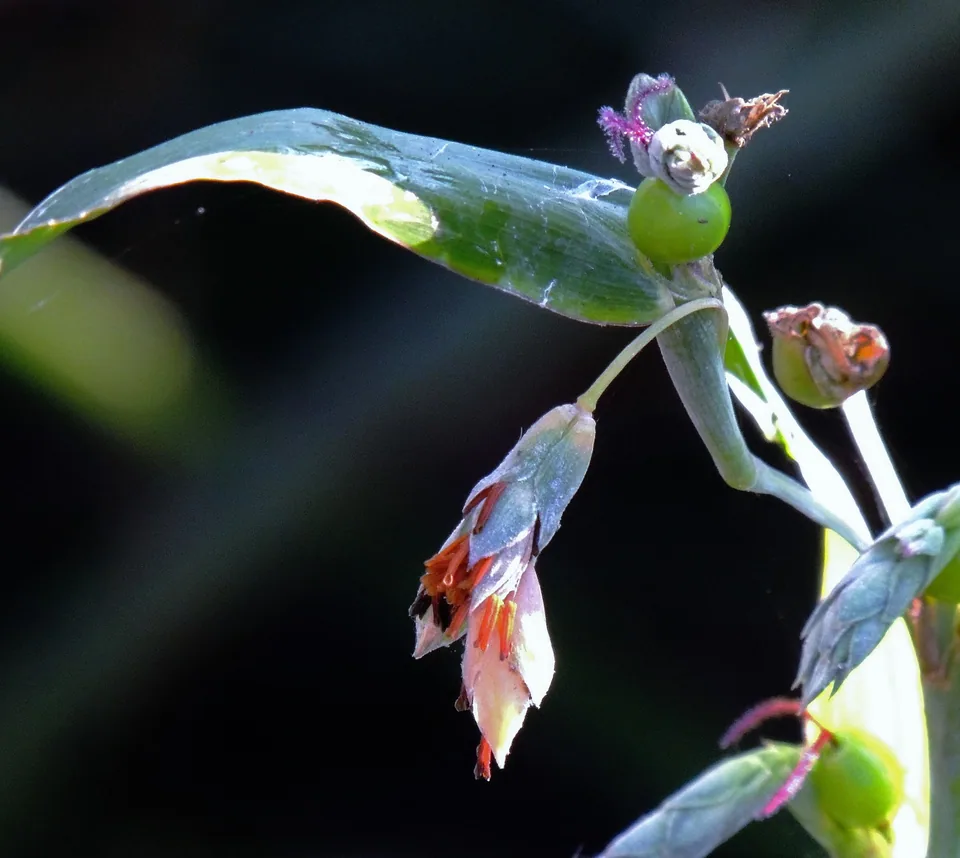
How to Grow and Care for Job's tears
Coix lacryma-jobi
Written by Emilio Marruso · last checked
At a glance
Job's tears is a perennial grass that gives you an edible grain, used as a cereal and, in Southeast Asia, to make a milk-like drink. Give it full sun and soil that stays consistently wet but never soggy, and it will reach 3 to 6 feet tall. It grows from seed and is happy in a container too.
- Sun
Full sun
What the sources say (1)
Light: Full sun
Prefers full sun and moist, well-drained, slightly acid, loamy soils.
— Coix lacryma-jobi (Adley Millet, Chinese Pearl Barley, Christ's Tears, Coix Millet, Coixseed, Coix Seed, Job's Tears, Tear Grass, Yi Yi) | North Carolina Extension Gardener Plant Toolbox [1] - Water
Keep the soil consistently wet, but not soggy
What the sources say (1)
Watering: Keep soil consistently wet, but not soggy
The soil should be consistently wet, but not soggy. It is perennial in zones 9 through 11, and can be propagated by seeds.
— Coix lacryma-jobi (Adley Millet, Chinese Pearl Barley, Christ's Tears, Coix Millet, Coixseed, Coix Seed, Job's Tears, Tear Grass, Yi Yi) | North Carolina Extension Gardener Plant Toolbox [1] - Cold
Survives winters down to 20 °F (−6.7 °C)
Hardy in average winters · USDA 9a · RHS H4 · Z9
What the sources say (2)
Hardiness, coldest zone: 9a [winter low −6.7 to −3.9 °C (20 to 25 °F)]
Available Space To Plant: Less than 12 inches USDA Plant Hardiness Zone: 9a, 9b, 10a, 10b, 11a, 11b
— Coix lacryma-jobi (Adley Millet, Chinese Pearl Barley, Christ's Tears, Coix Millet, Coixseed, Coix Seed, Job's Tears, Tear Grass, Yi Yi) | North Carolina Extension Gardener Plant Toolbox [1] Hardiness, warmest zone: 11b [winter low 7.2 to 10 °C (45 to 50 °F)]
Available Space To Plant: Less than 12 inches USDA Plant Hardiness Zone: 9a, 9b, 10a, 10b, 11a, 11b
— Coix lacryma-jobi (Adley Millet, Chinese Pearl Barley, Christ's Tears, Coix Millet, Coixseed, Coix Seed, Job's Tears, Tear Grass, Yi Yi) | North Carolina Extension Gardener Plant Toolbox [1] - Soil
Moist soil that drains well, pH up to 6.0
What the sources say (2)
Watering notes: Moist, well-drained soil
Prefers full sun and moist, well-drained, slightly acid, loamy soils.
— Coix lacryma-jobi (Adley Millet, Chinese Pearl Barley, Christ's Tears, Coix Millet, Coixseed, Coix Seed, Job's Tears, Tear Grass, Yi Yi) | North Carolina Extension Gardener Plant Toolbox [1] Soil pH, maximum: 6.0
Soil Texture: Loam (Silt) Soil pH: Acid (<6.0)
— Coix lacryma-jobi (Adley Millet, Chinese Pearl Barley, Christ's Tears, Coix Millet, Coixseed, Coix Seed, Job's Tears, Tear Grass, Yi Yi) | North Carolina Extension Gardener Plant Toolbox [1] - Harvest
The grain is eaten as a cereal and also used to make a milk-like drink
- Pests
Grasshoppers, flea beetles, stink bugs and weevils; leaf blight and smut
What the sources say (2)
Pests: short-winged grasshoppers, flea beetle, rice bug, green stink bug, leaf beetle, weevils
May be susceptible to short-winged grasshoppers, flea beetle, rice bug, green stink bug, leaf beetle, and weevils.
— Coix lacryma-jobi (Adley Millet, Chinese Pearl Barley, Christ's Tears, Coix Millet, Coixseed, Coix Seed, Job's Tears, Tear Grass, Yi Yi) | North Carolina Extension Gardener Plant Toolbox [1] Diseases: leaf blight, smut
Monitor for fungal diseases, such as leaf blight and smut.
— Coix lacryma-jobi (Adley Millet, Chinese Pearl Barley, Christ's Tears, Coix Millet, Coixseed, Coix Seed, Job's Tears, Tear Grass, Yi Yi) | North Carolina Extension Gardener Plant Toolbox [1] - Size
3 to 6 ft tall
What the sources say (1)
Mature height: 91-183 cm (3 to 6 ft)
It grows up to 3 to 6 feet tall, and its glossy, deep green leaf blades are wide, upright, and arching at the ends with coarse, slightly wavy edges.
— Coix lacryma-jobi (Adley Millet, Chinese Pearl Barley, Christ's Tears, Coix Millet, Coixseed, Coix Seed, Job's Tears, Tear Grass, Yi Yi) | North Carolina Extension Gardener Plant Toolbox [1] - Propagation
Grows from seed
What the sources say (1)
Propagation: Seed
Life Cycle: Annual Perennial Recommended Propagation Strategy: Seed
— Coix lacryma-jobi (Adley Millet, Chinese Pearl Barley, Christ's Tears, Coix Millet, Coixseed, Coix Seed, Job's Tears, Tear Grass, Yi Yi) | North Carolina Extension Gardener Plant Toolbox [1] - Containers
Grows in containers too
What the sources say (1)
In containers: Yes
This plant may be grown as a hedge or in a container.
— Coix lacryma-jobi (Adley Millet, Chinese Pearl Barley, Christ's Tears, Coix Millet, Coixseed, Coix Seed, Job's Tears, Tear Grass, Yi Yi) | North Carolina Extension Gardener Plant Toolbox [1]
Overview
Job's tears is a tropical perennial grass that may be grown as an annual or perennial and is propagated by seed. [1] It prefers full sun and moist, well-drained, slightly acid, loamy soils and is perennial in zones 9 through 11. [1]
This record is incomplete: the sources we read do not cover every field yet.
Not yet covered by our sources: Pruning
Job's tears care
How to water Job's tears
Watering
Keep soil consistently wet, but not soggy
What the sources say (1)
The soil should be consistently wet, but not soggy. It is perennial in zones 9 through 11, and can be propagated by seeds.Watering notes
Moist, well-drained soil
What the sources say (1)
Prefers full sun and moist, well-drained, slightly acid, loamy soils.How much light Job's tears needs
Full sun
What the sources say (1)
Prefers full sun and moist, well-drained, slightly acid, loamy soils.How much cold Job's tears can take
Hardiness, coldest zone
9a [winter low −6.7 to −3.9 °C (20 to 25 °F)]
What the sources say (1)
Available Space To Plant:
Less than 12 inches
USDA Plant Hardiness Zone:
9a, 9b, 10a, 10b, 11a, 11bHardiness, warmest zone
11b [winter low 7.2 to 10 °C (45 to 50 °F)]
What the sources say (1)
Available Space To Plant:
Less than 12 inches
USDA Plant Hardiness Zone:
9a, 9b, 10a, 10b, 11a, 11bBest soil for Job's tears
6.0
What the sources say (1)
Soil Texture:
Loam (Silt)
Soil pH:
Acid (<6.0)Where to grow Job's tears
Yes
What the sources say (1)
This plant may be grown as a hedge or in a container.How to propagate Job's tears
Seed
What the sources say (1)
Life Cycle:
Annual
Perennial
Recommended Propagation Strategy:
SeedHow to grow Job's tears
The plant
Life cycle
perennial
What the sources say (1)
Job's tears is a tropical perennial grass native to Southeast Asia and is a member of the grass family (Poaceae).Family
grass family (Poaceae)
What the sources say (1)
Job's tears is a tropical perennial grass native to Southeast Asia and is a member of the grass family (Poaceae).Mature height
91-183 cm (3 to 6 ft)
What the sources say (1)
It grows up to 3 to 6 feet tall, and its glossy, deep green leaf blades are wide, upright, and arching at the ends with coarse, slightly wavy edges.Pests and diseases
Pests
short-winged grasshoppers, flea beetle, rice bug, green stink bug, leaf beetle, weevils
What the sources say (1)
May be susceptible to short-winged grasshoppers, flea beetle, rice bug, green stink bug, leaf beetle, and weevils.Diseases
leaf blight, smut
What the sources say (1)
Monitor for fungal diseases, such as leaf blight and smut.Fertilizing
How often
The sources give different values depending on region, zone or growing conditions.
What each source says
field grain crop (Indonesian trials): Urea in three applications, at 3, 6 and 9 weeks after planting
What the sources say (1)
field grain crop (Indonesian trials): Urea
fertilizer 300 kg/ha was applied to the plants 3
times, namely at 3, 6, and 9 weeks after planting
(WAP).Natural fertilizers
The sources give different values depending on region, zone or growing conditions.
What each source says
field grain crop (Indonesian trials): Manure, 2 t/ha, a week before planting
What the sources say (1)
field grain crop (Indonesian trials): Manure was given a week before planting at
a dose of 2 tons/ha.Mineral fertilizers
The sources give different values depending on region, zone or growing conditions.
What each source says
field grain crop (Indonesian trials): NPK fertilizer, 200 kg [440.9 lb]/ha, side-dressed 3 weeks after sowing
field grain crop (Indonesian trials): Phosphorus and potassium fertilizer, 30-40 kg [66.1–88.2 lb]/ha, in one or two applications
What the sources say (2)
field grain crop (Indonesian trials): Fertilizing of NPK at a dose of 200 kg/ha was
given at 3 WAS by side dressing.field grain crop (Indonesian trials): Adding phosphorus and potassium
fertilizer 30-40 kg/ha increased the number of
panicles, either in one or two applications.Avoid
The sources give different values depending on region, zone or growing conditions.
What each source says
field grain crop (Indonesian trials): Phosphorus and potassium at 50 kg [110.2 lb]/ha: no more panicles than lower doses
What the sources say (1)
field grain crop (Indonesian trials): However, giving too much phosphorus and
potassium (50 kg/ha) did not increase the
number of paniclesRemedies
Each remedy shows what official sources say about it; traditional remedies without an official source are marked as such. Harmful ones are listed so you know to avoid them.
Getting rid of it
job's tears infestation
hand removal Official source, not independently tested
How: Dig up small immature plants, remove all roots and take the plants off site because the rhizomes can regrow; collect all seeds.
Dig up small immature plants if the infestation is small. Remove all of the roots and remove the plants from the site because the rhizomes can regrow.
— weeds.dpi.nsw.gov.au [4] bagging seed heads Official source, not independently tested
How: Bag and remove all seed heads across the infestation first, then manually remove the remaining plants and leave them to dry out above the flood zone.
Stage 1 was tediously bagging and removing all seed heads across the entire infestation area.
— landcare.nsw.gov.au [5]
Calendar
Pruning
Not stated in the sources we read.
Months as given by the sources, which are mostly from the United States (northern hemisphere). In the southern hemisphere they shift by about six months.
Edibility
Reported by the source, quoted verbatim. Do not eat a plant on the basis of this page alone: identification mistakes can be dangerous.
Used as a cereal grain. In Southeast Asia, the grain is used to make alcohol and a milk-like drink.
[1]
Similar plants
- Abies grandis Abies grandis
- Abraham Trachystemon orientalis
- Abyssinian banana Ensete ventricosum
- Acacia longifolia Acacia longifolia
- Acanthus hungaricus Acanthus hungaricus
- Aconite Aconitum napellus
- Adam's Needle Yucca flaccida
- Adriatic lizard orchid Himantoglossum adriaticum
Sources
Every value above is quoted from these documents. Links lead to the original publisher.
- Coix lacryma-jobi (Adley Millet, Chinese Pearl Barley, Christ's Tears, Coix Millet, Coixseed, Coix Seed, Job's Tears, Tear Grass, Yi Yi) | North Carolina Extension Gardener Plant Toolbox · plants.ces.ncsu.edu, consulted
- journals.unpad.ac.id · journals.unpad.ac.id
- journals.unpad.ac.id · journals.unpad.ac.id
- weeds.dpi.nsw.gov.au · weeds.dpi.nsw.gov.au
- landcare.nsw.gov.au · landcare.nsw.gov.au
Written by Emilio Marruso · last checked