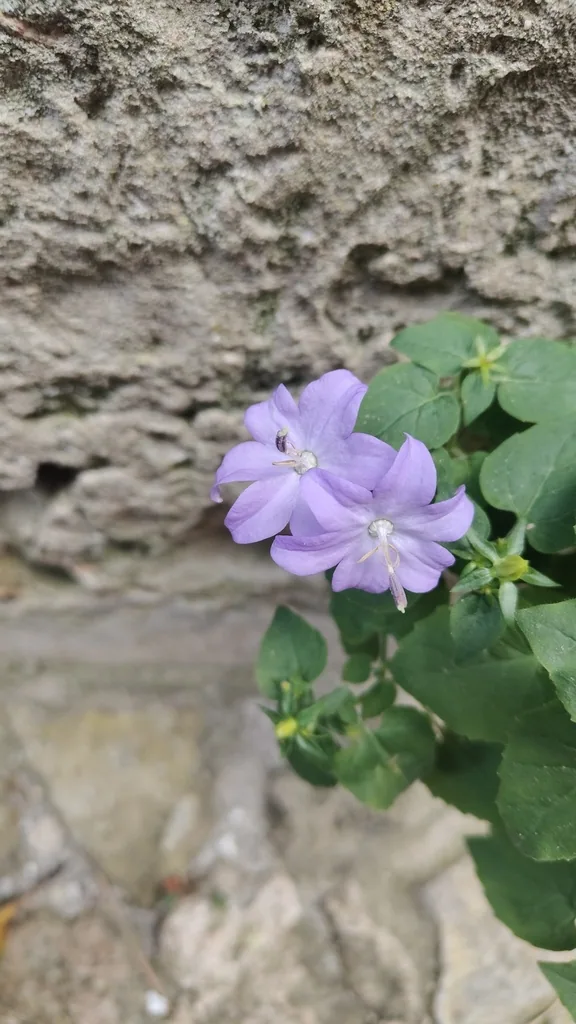
Cómo cultivar y cuidar Campana de Italia
Campanula isophylla
Escrito por Emilio Marruso · última revisión
De un vistazo
Esta vivaz compacta mide solo de 10 a 51 cm de alto y de ancho, así que cabe de maravilla en una maceta, dentro o fuera de casa. Dale sol pleno o semisombra y mantén el sustrato húmedo de forma constante, sin pasarte con el riego. Despunta los brotes mientras crece y podrás sacar plantas nuevas con esquejes de tallo o dividiendo la mata.
- Sol
Sol pleno o semisombra
Qué dicen las fuentes (1)
Luz: Pleno sol a semisombra
This plant prefers full sun to partial shade and moist, well-drained, organic soils of chalk, sand, or loam.
— Campanula isophylla (Falling Stars, Italian Bellflower, Jerusalem Star, Ligurian Harebell, Star Bellflower, Star of Bethlehem, Trailing Campanula) | North Carolina Extension Gardener Plant Toolbox [1] - Riego
Riega con regularidad para mantener el sustrato húmedo, pero sin pasarte
Qué dicen las fuentes (1)
Riego: Humedad constante; riega regularmente para mantener la mezcla para macetas completamente húmeda, evitando el exceso de riego
They require consistent moisture and should be watered regularly to keep the potting mixture thoroughly moist, but avoid overwatering.
— Campanula isophylla (Falling Stars, Italian Bellflower, Jerusalem Star, Ligurian Harebell, Star Bellflower, Star of Bethlehem, Trailing Campanula) | North Carolina Extension Gardener Plant Toolbox [1] - Frío
Aguanta inviernos de hasta −17,8 °C (0 °F)
Rústica en inviernos muy fríos · USDA 7a · RHS H6 · Z7
Qué dicen las fuentes (2)
Rusticidad, zona más fría: 7a [mínima invernal de −17,8 a −15 °C (de 0 a 5 °F)]
It is winter hardy in USDA Plant Hardiness Zones 7a to 10b.
— Campanula isophylla (Falling Stars, Italian Bellflower, Jerusalem Star, Ligurian Harebell, Star Bellflower, Star of Bethlehem, Trailing Campanula) | North Carolina Extension Gardener Plant Toolbox [1] Rusticidad, zona más cálida: 10b [mínima invernal de 1,7 a 4,4 °C (de 35 a 40 °F)]
It is winter hardy in USDA Plant Hardiness Zones 7a to 10b.
— Campanula isophylla (Falling Stars, Italian Bellflower, Jerusalem Star, Ligurian Harebell, Star Bellflower, Star of Bethlehem, Trailing Campanula) | North Carolina Extension Gardener Plant Toolbox [1] - Poda
Despunta los brotes mientras crece; al final de la temporada corta los tallos secos desde la base
Qué dicen las fuentes (1)
Poda: Durante la temporada de crecimiento (pellizca las puntas); al final de la temporada de crecimiento (corta los tallos secos hasta la base)
To encourage reblooming, pinch back the tips of the stems during their growing season, and cut dead stems to the base of the plant at the end of the growing season.
— Campanula isophylla (Falling Stars, Italian Bellflower, Jerusalem Star, Ligurian Harebell, Star Bellflower, Star of Bethlehem, Trailing Campanula) | North Carolina Extension Gardener Plant Toolbox [1] - Plagas
Vigila babosas, caracoles, pulgones y araña roja; puede sufrir roya y oídio
Qué dicen las fuentes (2)
Plagas: babosas, caracoles, pulgones, gorgojos de la vid y arañas rojas
Monitor for slugs, snails, aphids, vine weevils, and spider mites. Susceptible to rust, leaf spot, and powdery mildew.
— Campanula isophylla (Falling Stars, Italian Bellflower, Jerusalem Star, Ligurian Harebell, Star Bellflower, Star of Bethlehem, Trailing Campanula) | North Carolina Extension Gardener Plant Toolbox [1] Enfermedades: roya, mancha foliar y mildiu polvoriento
Monitor for slugs, snails, aphids, vine weevils, and spider mites. Susceptible to rust, leaf spot, and powdery mildew.
— Campanula isophylla (Falling Stars, Italian Bellflower, Jerusalem Star, Ligurian Harebell, Star Bellflower, Star of Bethlehem, Trailing Campanula) | North Carolina Extension Gardener Plant Toolbox [1] - Tamaño
De 10 a 51 cm de alto y de ancho
Qué dicen las fuentes (2)
Altura adulta: 10-51 cm (4-20 pulgadas)
The plant's ultimate height is from 4 to 20 inches tall and equally as wide.
— Campanula isophylla (Falling Stars, Italian Bellflower, Jerusalem Star, Ligurian Harebell, Star Bellflower, Star of Bethlehem, Trailing Campanula) | North Carolina Extension Gardener Plant Toolbox [1] Anchura adulta: 10-51 cm (4-20 pulgadas)
The plant's ultimate height is from 4 to 20 inches tall and equally as wide.
— Campanula isophylla (Falling Stars, Italian Bellflower, Jerusalem Star, Ligurian Harebell, Star Bellflower, Star of Bethlehem, Trailing Campanula) | North Carolina Extension Gardener Plant Toolbox [1] - Multiplicación
Esquejes de tallo, división de la mata o esquejes basales en primavera
Qué dicen las fuentes (2)
Propagación: Esquejes de tallo, división; semilla; esquejes basales en primavera
This plant may be propagated by stem cuttings or division.
— Campanula isophylla (Falling Stars, Italian Bellflower, Jerusalem Star, Ligurian Harebell, Star Bellflower, Star of Bethlehem, Trailing Campanula) | North Carolina Extension Gardener Plant Toolbox [1] basal cuttings in spring
— Campanula isophylla Moretti [4] - Siembra
Siembra las semillas en invierno
Qué dicen las fuentes (1)
Siembra: Invierno
seed in winter, uncovered, light, germ. 1-3 months, 16-21°C
— Campanula isophylla Moretti [4] - Maceta
Crece bien en maceta, incluso dentro de casa
Qué dicen las fuentes (2)
En maceta: Sí
Italian bellflower is ideal for containers or hanging baskets.
— Campanula isophylla (Falling Stars, Italian Bellflower, Jerusalem Star, Ligurian Harebell, Star Bellflower, Star of Bethlehem, Trailing Campanula) | North Carolina Extension Gardener Plant Toolbox [1] En interior: Sí
It is only marginally frost-hardy and is often grown as an annual or houseplant.
— Campanula isophylla (Falling Stars, Italian Bellflower, Jerusalem Star, Ligurian Harebell, Star Bellflower, Star of Bethlehem, Trailing Campanula) | North Carolina Extension Gardener Plant Toolbox [1]
Resumen
La campanula italiana es una perenne rastrera y tierna, originaria del noroeste de Italia. [1] Prefiere pleno sol a semisombra y suelo húmedo y bien drenado, y a menudo se cultiva como anual o planta de interior. [1]
Citado en inglés, como en la fuente.
Cuidados
Riego
Humedad constante; riega regularmente para mantener la mezcla para macetas completamente húmeda, evitando el exceso de riego
Qué dicen las fuentes (1)
They require consistent moisture and should be watered regularly to keep the potting mixture thoroughly moist, but avoid overwatering.Luz
Pleno sol a semisombra
Qué dicen las fuentes (1)
This plant prefers full sun to partial shade and moist, well-drained, organic soils of chalk, sand, or loam.Clima y frío
Rusticidad, zona más fría
7a [mínima invernal de −17,8 a −15 °C (de 0 a 5 °F)]
Qué dicen las fuentes (1)
It is winter hardy in USDA Plant Hardiness Zones 7a to 10b.Rusticidad, zona más cálida
10b [mínima invernal de 1,7 a 4,4 °C (de 35 a 40 °F)]
Qué dicen las fuentes (1)
It is winter hardy in USDA Plant Hardiness Zones 7a to 10b.Dónde cultivarla
En interior
Sí
Qué dicen las fuentes (1)
It is only marginally frost-hardy and is often grown as an annual or houseplant.En maceta
Sí
Qué dicen las fuentes (1)
Italian bellflower is ideal for containers or hanging baskets.Propagación
Esquejes de tallo, división; semilla; esquejes basales en primavera
Qué dicen las fuentes (2)
This plant may be propagated by stem cuttings or division.basal cuttings in springCultivo
La planta
Ciclo de vida
perenne
Qué dicen las fuentes (1)
Italian bellflower is a tender, trailing perennial native to northwest Italy and is a member of the bellflower family (Campanulaceae).Familia
Campanulaceae
Qué dicen las fuentes (1)
Italian bellflower is a tender, trailing perennial native to northwest Italy and is a member of the bellflower family (Campanulaceae).Altura adulta
10-51 cm (4-20 pulgadas)
Qué dicen las fuentes (1)
The plant's ultimate height is from 4 to 20 inches tall and equally as wide.Anchura adulta
10-51 cm (4-20 pulgadas)
Qué dicen las fuentes (1)
The plant's ultimate height is from 4 to 20 inches tall and equally as wide.Plagas y enfermedades
Plagas
babosas, caracoles, pulgones, gorgojos de la vid y arañas rojas
Qué dicen las fuentes (1)
Monitor for slugs, snails, aphids, vine weevils, and spider mites. Susceptible to rust, leaf spot, and powdery mildew.Enfermedades
roya, mancha foliar y mildiu polvoriento
Qué dicen las fuentes (1)
Monitor for slugs, snails, aphids, vine weevils, and spider mites. Susceptible to rust, leaf spot, and powdery mildew.Problemas
Plagas y enfermedades
Síntoma: Babosas, caracoles, pulgones, gorgojos de la vid y arañas rojas; roya, mancha foliar y mildiu polvoriento
Qué hacer: Supervisa las plantas.
Qué dicen las fuentes (1)
Monitor for slugs, snails, aphids, vine weevils, and spider mites. Susceptible to rust, leaf spot, and powdery mildew.
— Campanula isophylla (Falling Stars, Italian Bellflower, Jerusalem Star, Ligurian Harebell, Star Bellflower, Star of Bethlehem, Trailing Campanula) | North Carolina Extension Gardener Plant Toolbox [1]
Remedios
Cada remedio indica qué dicen las fuentes oficiales; los remedios tradicionales sin fuente oficial aparecen marcados. Los perjudiciales están para que sepas evitarlos.
Cuidar la planta
babosas
trampa con tabla para esconderse Fuente oficial, sin prueba independiente
Cómo: Coloca una tabla pequeña en el jardín para que las babosas se escondan debajo durante el día, luego destróyelas.
Placing a small board in the flowerbed for the slugs to hide under during the day makes it easy to destroy many at one time.
— portal.ct.gov [6] trampa de cerveza Funciona
Cómo: Entierra un recipiente con cerveza en el suelo, con un techo para protegerlo del sol y evitar que los animales grandes entren.
A bowl of beer, sunk into the ground, with a roof to protect from sun and keep large animals out, will act as a bait and the slugs will drown.
— portal.ct.gov [6] Qué dicen las pruebas Trap snails and slugs in shallow pans of stale beer sunken so that the lip of the container is even with the soil surface.
— hgic.clemson.edu [7] barrera de tierra de diatomeas Funciona en parte
Cómo: Pon una banda de tierra de diatomeas alrededor de las plantas recién plantadas.
A band of diatomaceous earth put around newly set plants will control slugs by rupturing their epidermis.
— portal.ct.gov [6] Qué dicen las pruebas Diatomaceous earth is very sharp and scratches the skin of these soft-bodied critters, resulting in dehydration and death. It must be reapplied after rain or watering.
— hgic.clemson.edu [7] recolección manual Funciona
Cómo: Retíralas recogiéndolas a mano; disuádelas quitando el mantillo y la hojarasca cerca de las plantas.
Discourage snails and slugs by removing mulch and leaf litter near plants. When found, these pests can be removed by handpicking or by making simple, effective traps.
— hgic.clemson.edu [7] Qué dicen las pruebas When found, these pests can be removed by handpicking or by making simple, effective traps.
— hgic.clemson.edu [7]
pulgones
spray de jabón insecticida Funciona
Pollinating insects, such as honey bees and bumblebees, can be adversely affected by the use of pesticides.
— hgic.clemson.edu [8] Cómo: Rocía con jabón insecticida.
They may be managed by spraying with insecticidal soap or ultrafine horticultural oil, which are among the compounds registered for control of this pest in Connecticut.
— portal.ct.gov [6] Qué dicen las pruebas Insecticidal soaps are most effective against soft-bodied insects and related pests, such as aphids, mealybugs, immature scales (crawlers), thrips, whiteflies, and spider mites.
— hgic.clemson.edu [8]
ácaros araña
chorro de agua fuerte Funciona en parte
Cómo: Rocía con fuerza las plantas resistentes con agua, incluyendo el envés de las hojas.
Spray sturdy plants forcefully with water, including the undersides of leaves, to dislodge mites and break up their webs.
— hgic.clemson.edu [8] Qué dicen las pruebas Spray sturdy plants forcefully with water, including the undersides of leaves, to dislodge mites and break up their webs.
— hgic.clemson.edu [8]
mildiu polvoriento
arranca las hojas afectadas Fuente oficial, sin prueba independiente
Cómo: Evita el exceso de densidad y retira las hojas afectadas en cuanto veas los síntomas; ponlas en bolsas para evitar la dispersión de las esporas.
Disease can be minimized by avoiding overcrowded spacing of plants and by carefully picking off affected leaves as soon as symptoms are evident.
— portal.ct.gov [6]
roya
limpia los residuos vegetales y espacia las plantas Fuente oficial, sin prueba independiente
Cómo: Limpia los restos vegetales en otoño y separa las plantas adecuadamente para que circule el aire.
These diseases can be minimized by cleaning up plant refuse in the fall and by adequate spacing of the plants to promote good air circulation.
— portal.ct.gov [6]
pudrición de la raíz
Evita el exceso de riego Fuente oficial, sin prueba independiente
Cómo: Evita el riego excesivo, especialmente en suelos pesados, y evita regar directamente sobre la zona de la corona.
It is helpful to avoid overwatering, especially in heavy soils, and to avoid watering directly into the crown area of the plant.
— portal.ct.gov [6]
Calendario
Siembra
Invierno
Qué dicen las fuentes (1)
seed in winter, uncovered, light, germ. 1-3 months, 16-21°CPoda
Durante la temporada de crecimiento (pellizca las puntas); al final de la temporada de crecimiento (corta los tallos secos hasta la base)
Qué dicen las fuentes (1)
To encourage reblooming, pinch back the tips of the stems during their growing season, and cut dead stems to the base of the plant at the end of the growing season.Meses tal como los dan las fuentes, en su mayoría de Estados Unidos (hemisferio norte). En el hemisferio sur se desplazan unos seis meses.
Plantas similares
- Appalachian Bellflower Campanula divaricata
- Campanilla aglomerada Campanula glomerata
- Canterbury Bells Campanula medium
- Creeping Bellflower Campanula rapunculoides
- Harebell Campanula rotundifolia
- Nettle-leaved Bellflower Campanula trachelium
- Peach-leaved Bellflower Campanula persicifolia
- Spotted Bellflower Campanula punctata
Fuentes
Cada valor anterior se cita de estos documentos. Los enlaces llevan al editor original.
- Campanula isophylla (Falling Stars, Italian Bellflower, Jerusalem Star, Ligurian Harebell, Star Bellflower, Star of Bethlehem, Trailing Campanula) | North Carolina Extension Gardener Plant Toolbox · plants.ces.ncsu.edu, consultado
- How to grow specialist campanulas / RHS Growing Guide · rhs.org.uk, consultado
- isophylla [www.campanula-campanulaceae.nl] · campanula-campanulaceae.nl, consultado
- Campanula isophylla Moretti · flora.kadel.cz, consultado
- RBG Census · data.rbg.vic.gov.au, consultado
- portal.ct.gov · portal.ct.gov
- hgic.clemson.edu · hgic.clemson.edu
- hgic.clemson.edu · hgic.clemson.edu
Escrito por Emilio Marruso · última revisión