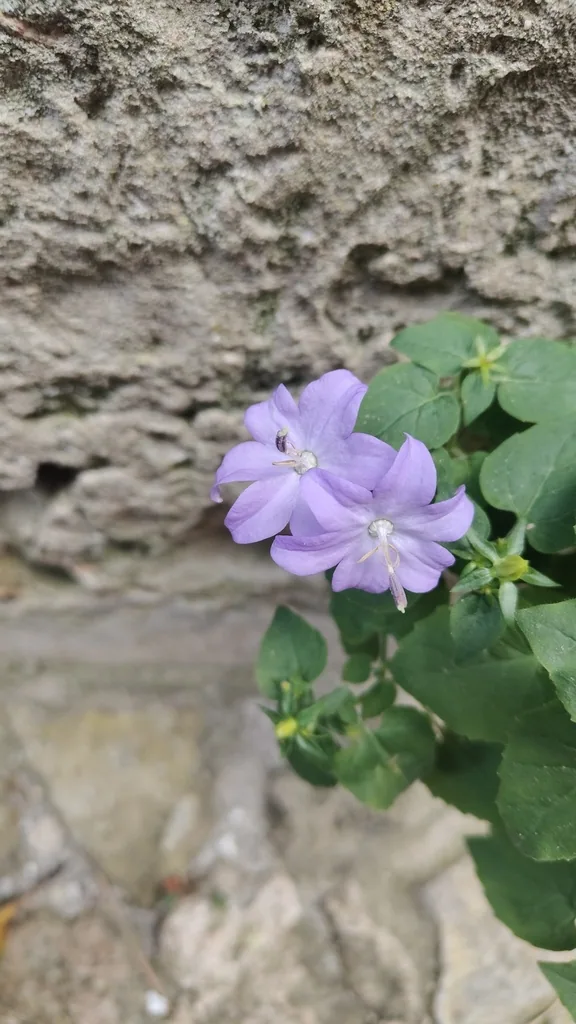
How to Grow and Care for Italian Bellflower
Campanula isophylla
Written by Emilio Marruso · last checked
At a glance
This compact perennial grows just 4 to 20 inches tall and wide, so it fits happily in a pot, indoors or out. Give it full sun to partial shade and keep the potting mix evenly moist without overwatering. Pinch back the tips while it grows, and you can make new plants from stem cuttings or by dividing it.
- Sun
Full sun to partial shade
What the sources say (1)
Light: Full sun to partial shade
This plant prefers full sun to partial shade and moist, well-drained, organic soils of chalk, sand, or loam.
— Campanula isophylla (Falling Stars, Italian Bellflower, Jerusalem Star, Ligurian Harebell, Star Bellflower, Star of Bethlehem, Trailing Campanula) | North Carolina Extension Gardener Plant Toolbox [1] - Water
Water regularly to keep the potting mix moist, but don't overwater
What the sources say (1)
Watering: Consistent moisture; water regularly to keep the potting mixture thoroughly moist, avoiding overwatering
They require consistent moisture and should be watered regularly to keep the potting mixture thoroughly moist, but avoid overwatering.
— Campanula isophylla (Falling Stars, Italian Bellflower, Jerusalem Star, Ligurian Harebell, Star Bellflower, Star of Bethlehem, Trailing Campanula) | North Carolina Extension Gardener Plant Toolbox [1] - Cold
Survives winters down to 0 °F (−17.8 °C)
Hardy in very cold winters · USDA 7a · RHS H6 · Z7
What the sources say (2)
Hardiness, coldest zone: 7a [winter low −17.8 to −15 °C (0 to 5 °F)]
It is winter hardy in USDA Plant Hardiness Zones 7a to 10b.
— Campanula isophylla (Falling Stars, Italian Bellflower, Jerusalem Star, Ligurian Harebell, Star Bellflower, Star of Bethlehem, Trailing Campanula) | North Carolina Extension Gardener Plant Toolbox [1] Hardiness, warmest zone: 10b [winter low 1.7 to 4.4 °C (35 to 40 °F)]
It is winter hardy in USDA Plant Hardiness Zones 7a to 10b.
— Campanula isophylla (Falling Stars, Italian Bellflower, Jerusalem Star, Ligurian Harebell, Star Bellflower, Star of Bethlehem, Trailing Campanula) | North Carolina Extension Gardener Plant Toolbox [1] - Pruning
Pinch back the tips as it grows; cut dead stems to the base at the end of the season
What the sources say (1)
Pruning: During the growing season (pinch back tips); at the end of the growing season (cut dead stems to the base)
To encourage reblooming, pinch back the tips of the stems during their growing season, and cut dead stems to the base of the plant at the end of the growing season.
— Campanula isophylla (Falling Stars, Italian Bellflower, Jerusalem Star, Ligurian Harebell, Star Bellflower, Star of Bethlehem, Trailing Campanula) | North Carolina Extension Gardener Plant Toolbox [1] - Pests
Watch for slugs, snails, aphids and spider mites; it can get rust and powdery mildew
What the sources say (2)
Pests: slugs, snails, aphids, vine weevils, spider mites
Monitor for slugs, snails, aphids, vine weevils, and spider mites. Susceptible to rust, leaf spot, and powdery mildew.
— Campanula isophylla (Falling Stars, Italian Bellflower, Jerusalem Star, Ligurian Harebell, Star Bellflower, Star of Bethlehem, Trailing Campanula) | North Carolina Extension Gardener Plant Toolbox [1] Diseases: rust, leaf spot, powdery mildew
Monitor for slugs, snails, aphids, vine weevils, and spider mites. Susceptible to rust, leaf spot, and powdery mildew.
— Campanula isophylla (Falling Stars, Italian Bellflower, Jerusalem Star, Ligurian Harebell, Star Bellflower, Star of Bethlehem, Trailing Campanula) | North Carolina Extension Gardener Plant Toolbox [1] - Size
4 to 20 in tall and wide
What the sources say (2)
Mature height: 10-51 cm (4-20 in)
The plant's ultimate height is from 4 to 20 inches tall and equally as wide.
— Campanula isophylla (Falling Stars, Italian Bellflower, Jerusalem Star, Ligurian Harebell, Star Bellflower, Star of Bethlehem, Trailing Campanula) | North Carolina Extension Gardener Plant Toolbox [1] Mature width: 10-51 cm (4-20 in)
The plant's ultimate height is from 4 to 20 inches tall and equally as wide.
— Campanula isophylla (Falling Stars, Italian Bellflower, Jerusalem Star, Ligurian Harebell, Star Bellflower, Star of Bethlehem, Trailing Campanula) | North Carolina Extension Gardener Plant Toolbox [1] - Propagation
Stem cuttings, division, or cuttings from the base in spring
What the sources say (2)
Propagation: Stem cuttings, division; seed; basal cuttings in spring
This plant may be propagated by stem cuttings or division.
— Campanula isophylla (Falling Stars, Italian Bellflower, Jerusalem Star, Ligurian Harebell, Star Bellflower, Star of Bethlehem, Trailing Campanula) | North Carolina Extension Gardener Plant Toolbox [1] basal cuttings in spring
— Campanula isophylla Moretti [4] - Sowing
Sow the seeds in winter
What the sources say (1)
Sowing: Winter
seed in winter, uncovered, light, germ. 1-3 months, 16-21°C
— Campanula isophylla Moretti [4] - Containers
Grows well in pots, even indoors
What the sources say (2)
In containers: Yes
Italian bellflower is ideal for containers or hanging baskets.
— Campanula isophylla (Falling Stars, Italian Bellflower, Jerusalem Star, Ligurian Harebell, Star Bellflower, Star of Bethlehem, Trailing Campanula) | North Carolina Extension Gardener Plant Toolbox [1] Indoors: Yes
It is only marginally frost-hardy and is often grown as an annual or houseplant.
— Campanula isophylla (Falling Stars, Italian Bellflower, Jerusalem Star, Ligurian Harebell, Star Bellflower, Star of Bethlehem, Trailing Campanula) | North Carolina Extension Gardener Plant Toolbox [1]
Overview
Italian bellflower is a tender, trailing perennial native to northwest Italy. [1] It prefers full sun to partial shade and moist, well-drained soil, and is often grown as an annual or houseplant. [1]
Italian Bellflower care
How to water Italian Bellflower
Consistent moisture; water regularly to keep the potting mixture thoroughly moist, avoiding overwatering
What the sources say (1)
They require consistent moisture and should be watered regularly to keep the potting mixture thoroughly moist, but avoid overwatering.How much light Italian Bellflower needs
Full sun to partial shade
What the sources say (1)
This plant prefers full sun to partial shade and moist, well-drained, organic soils of chalk, sand, or loam.How much cold Italian Bellflower can take
Hardiness, coldest zone
7a [winter low −17.8 to −15 °C (0 to 5 °F)]
What the sources say (1)
It is winter hardy in USDA Plant Hardiness Zones 7a to 10b.Hardiness, warmest zone
10b [winter low 1.7 to 4.4 °C (35 to 40 °F)]
What the sources say (1)
It is winter hardy in USDA Plant Hardiness Zones 7a to 10b.Where to grow Italian Bellflower
Indoors
Yes
What the sources say (1)
It is only marginally frost-hardy and is often grown as an annual or houseplant.In containers
Yes
What the sources say (1)
Italian bellflower is ideal for containers or hanging baskets.How to propagate Italian Bellflower
Stem cuttings, division; seed; basal cuttings in spring
What the sources say (2)
This plant may be propagated by stem cuttings or division.basal cuttings in springHow to grow Italian Bellflower
The plant
Life cycle
perennial
What the sources say (1)
Italian bellflower is a tender, trailing perennial native to northwest Italy and is a member of the bellflower family (Campanulaceae).Family
Campanulaceae
What the sources say (1)
Italian bellflower is a tender, trailing perennial native to northwest Italy and is a member of the bellflower family (Campanulaceae).Mature height
10-51 cm (4-20 in)
What the sources say (1)
The plant's ultimate height is from 4 to 20 inches tall and equally as wide.Mature width
10-51 cm (4-20 in)
What the sources say (1)
The plant's ultimate height is from 4 to 20 inches tall and equally as wide.Pests and diseases
Pests
slugs, snails, aphids, vine weevils, spider mites
What the sources say (1)
Monitor for slugs, snails, aphids, vine weevils, and spider mites. Susceptible to rust, leaf spot, and powdery mildew.Diseases
rust, leaf spot, powdery mildew
What the sources say (1)
Monitor for slugs, snails, aphids, vine weevils, and spider mites. Susceptible to rust, leaf spot, and powdery mildew.Italian Bellflower pests and problems
Pests and diseases
Symptom: Slugs, snails, aphids, vine weevils and spider mites; rust, leaf spot and powdery mildew
What to do: Monitor the plants
What the sources say (1)
Monitor for slugs, snails, aphids, vine weevils, and spider mites. Susceptible to rust, leaf spot, and powdery mildew.
— Campanula isophylla (Falling Stars, Italian Bellflower, Jerusalem Star, Ligurian Harebell, Star Bellflower, Star of Bethlehem, Trailing Campanula) | North Carolina Extension Gardener Plant Toolbox [1]
Remedies
Each remedy shows what official sources say about it; traditional remedies without an official source are marked as such. Harmful ones are listed so you know to avoid them.
Treating the plant
slugs
hiding board trap Official source, not independently tested
How: Place a small board in the flowerbed for the slugs to hide under during the day, then destroy them.
Placing a small board in the flowerbed for the slugs to hide under during the day makes it easy to destroy many at one time.
— portal.ct.gov [6] beer trap Works
How: Sink a bowl of beer into the ground, with a roof to protect it from sun and keep large animals out.
A bowl of beer, sunk into the ground, with a roof to protect from sun and keep large animals out, will act as a bait and the slugs will drown.
— portal.ct.gov [6] What the evidence says Trap snails and slugs in shallow pans of stale beer sunken so that the lip of the container is even with the soil surface.
— hgic.clemson.edu [7] diatomaceous earth barrier Partly works
How: Put a band of diatomaceous earth around newly set plants.
A band of diatomaceous earth put around newly set plants will control slugs by rupturing their epidermis.
— portal.ct.gov [6] What the evidence says Diatomaceous earth is very sharp and scratches the skin of these soft-bodied critters, resulting in dehydration and death. It must be reapplied after rain or watering.
— hgic.clemson.edu [7] handpicking Works
How: Remove them by handpicking; discourage them by removing mulch and leaf litter near plants.
Discourage snails and slugs by removing mulch and leaf litter near plants. When found, these pests can be removed by handpicking or by making simple, effective traps.
— hgic.clemson.edu [7] What the evidence says When found, these pests can be removed by handpicking or by making simple, effective traps.
— hgic.clemson.edu [7]
aphids
insecticidal soap spray Works
Pollinating insects, such as honey bees and bumblebees, can be adversely affected by the use of pesticides.
— hgic.clemson.edu [8] How: Spray with insecticidal soap.
They may be managed by spraying with insecticidal soap or ultrafine horticultural oil, which are among the compounds registered for control of this pest in Connecticut.
— portal.ct.gov [6] What the evidence says Insecticidal soaps are most effective against soft-bodied insects and related pests, such as aphids, mealybugs, immature scales (crawlers), thrips, whiteflies, and spider mites.
— hgic.clemson.edu [8]
spider mites
strong water spray Partly works
How: Spray sturdy plants forcefully with water, including the undersides of leaves.
Spray sturdy plants forcefully with water, including the undersides of leaves, to dislodge mites and break up their webs.
— hgic.clemson.edu [8] What the evidence says Spray sturdy plants forcefully with water, including the undersides of leaves, to dislodge mites and break up their webs.
— hgic.clemson.edu [8]
powdery mildew
pick off affected leaves Official source, not independently tested
How: Avoid overcrowding and pick off affected leaves as soon as symptoms are evident; bag them to avoid spreading spores.
Disease can be minimized by avoiding overcrowded spacing of plants and by carefully picking off affected leaves as soon as symptoms are evident.
— portal.ct.gov [6]
rust
clean up plant refuse and space plants Official source, not independently tested
How: Clean up plant refuse in the fall and space plants adequately for air circulation.
These diseases can be minimized by cleaning up plant refuse in the fall and by adequate spacing of the plants to promote good air circulation.
— portal.ct.gov [6]
root rot
avoid overwatering Official source, not independently tested
How: Avoid overwatering, especially in heavy soils, and avoid watering directly into the crown area.
It is helpful to avoid overwatering, especially in heavy soils, and to avoid watering directly into the crown area of the plant.
— portal.ct.gov [6]
Calendar
Sowing
Winter
What the sources say (1)
seed in winter, uncovered, light, germ. 1-3 months, 16-21°CPruning
During the growing season (pinch back tips); at the end of the growing season (cut dead stems to the base)
What the sources say (1)
To encourage reblooming, pinch back the tips of the stems during their growing season, and cut dead stems to the base of the plant at the end of the growing season.Months as given by the sources, which are mostly from the United States (northern hemisphere). In the southern hemisphere they shift by about six months.
Similar plants
- Appalachian Bellflower Campanula divaricata
- Bellflower Campanula glomerata
- Canterbury Bells Campanula medium
- Creeping Bellflower Campanula rapunculoides
- Harebell Campanula rotundifolia
- Nettle-leaved Bellflower Campanula trachelium
- Peach-leaved Bellflower Campanula persicifolia
- Spotted Bellflower Campanula punctata
Sources
Every value above is quoted from these documents. Links lead to the original publisher.
- Campanula isophylla (Falling Stars, Italian Bellflower, Jerusalem Star, Ligurian Harebell, Star Bellflower, Star of Bethlehem, Trailing Campanula) | North Carolina Extension Gardener Plant Toolbox · plants.ces.ncsu.edu, consulted
- How to grow specialist campanulas / RHS Growing Guide · rhs.org.uk, consulted
- isophylla [www.campanula-campanulaceae.nl] · campanula-campanulaceae.nl, consulted
- Campanula isophylla Moretti · flora.kadel.cz, consulted
- RBG Census · data.rbg.vic.gov.au, consulted
- portal.ct.gov · portal.ct.gov
- hgic.clemson.edu · hgic.clemson.edu
- hgic.clemson.edu · hgic.clemson.edu
Written by Emilio Marruso · last checked