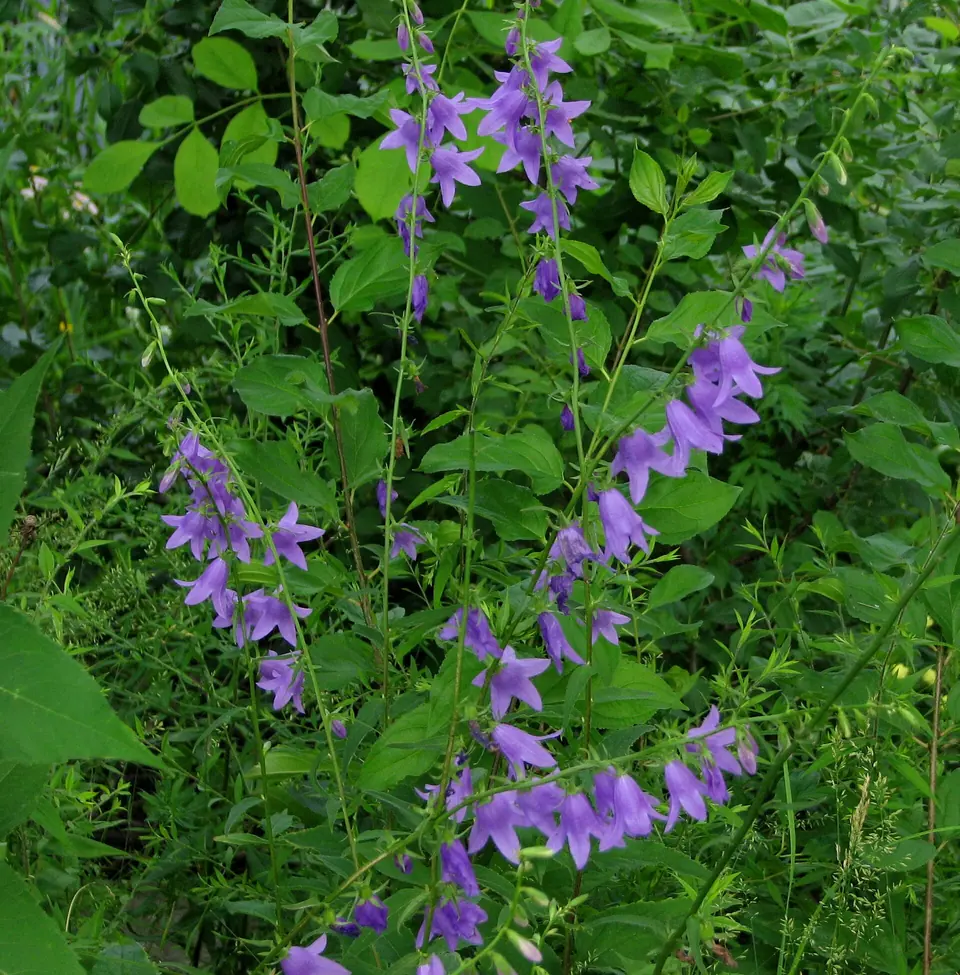
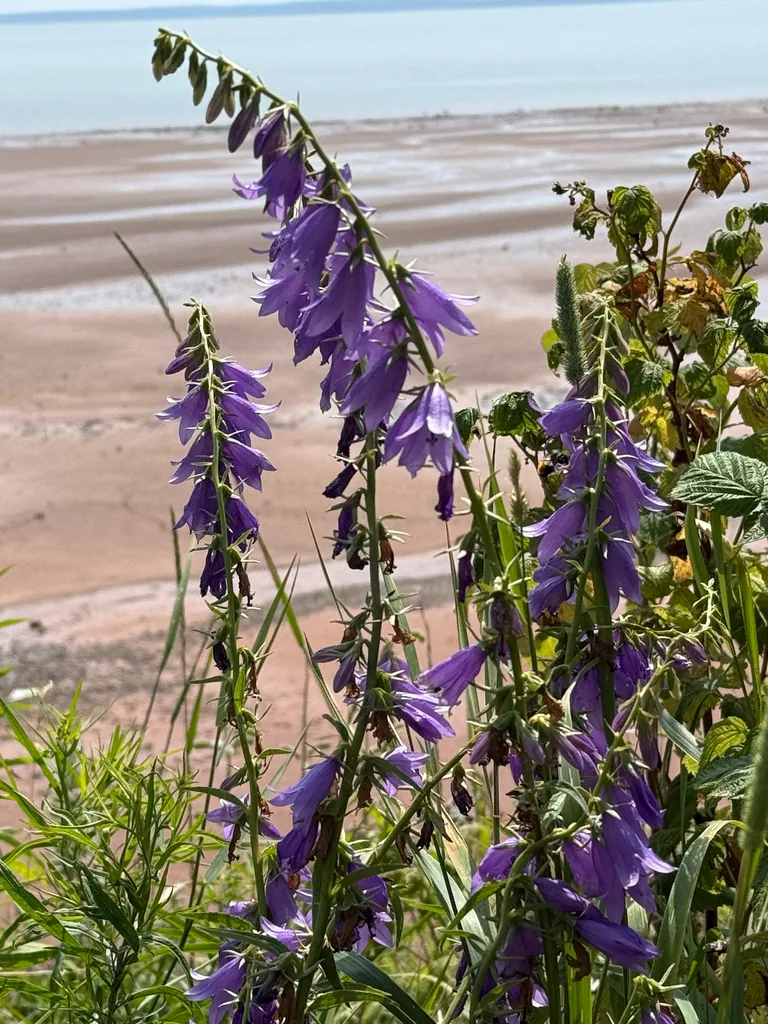

How to Grow and Care for Creeping Bellflower
Campanula rapunculoides
Written by Emilio Marruso · last checked
At a glance
Creeping bellflower is an easygoing perennial that grows 2–3 ft tall in full sun or partial shade, in moist but well-drained soil. Its somewhat sweet roots make a pleasant addition to the salad bowl, and many foragers use it as an edible plant. Just keep it in check: it spreads by seed and roots, and even small root pieces form new plants.
- Sun
Full sun to partial shade
What the sources say (1)
Light: Full sun to partial shade
though it prefers a moist but well-drained rich sandy loam and a neutral or alkaline soil in sun or partial shade
— Campanula rapunculoides - Useful Temperate Plants [4] - Water
Keep the soil moist, but never soggy
What the sources say (2)
Watering notes: Prefers moist but well-drained soil
though it prefers a moist but well-drained rich sandy loam and a neutral or alkaline soil in sun or partial shade
— Campanula rapunculoides - Useful Temperate Plants [4] Creeping bellflower thrives in disturbed soils and prefers to establish in moist garden sites, although due to its high adaptability, it can thrive in most environments.
— Creeping bellflower | UMN Extension [1] - Soil
Moist but well-drained soil
What the sources say (2)
Watering notes: Prefers moist but well-drained soil
though it prefers a moist but well-drained rich sandy loam and a neutral or alkaline soil in sun or partial shade
— Campanula rapunculoides - Useful Temperate Plants [4] Creeping bellflower thrives in disturbed soils and prefers to establish in moist garden sites, although due to its high adaptability, it can thrive in most environments.
— Creeping bellflower | UMN Extension [1] - Planting
Plant in late spring or early summer, after the last expected frosts
What the sources say (1)
Planting: Late spring or early summer, after the last expected frosts
Plant them out into their permanent positions in late spring or early summer, after the last expected frosts.
— Campanula rapunculoides - Useful Temperate Plants [4] - Harvest
The roots are somewhat sweet and nice in salads
- Watch out
Invasive: to remove it, dig out all roots at least 6 in deep and repeat as needed
What the sources say (2)
Root system: Extensive root system with large, tuber-like storage roots, horizontal rhizomes and small, thin roots; new plants can form from small root pieces.
Forms extensive root systems with a combination of large, tuber-like storage roots, horizontal rhizomes, and small, thin roots.
— Creeping bellflower | UMN Extension [1] New plants can form from small root pieces in the soil.
— Creeping bellflower | UMN Extension [1] - Size
2 to 3 ft tall
What the sources say (1)
Mature height: 61-91 cm (2-3 ft)
Growing between 2 and 3 feet tall, creeping bellflower outcompetes other species and requires dedicated removal efforts
— Creeping bellflower | UMN Extension [1] - Propagation
By seed, cuttings from the base or dividing the plant
What the sources say (3)
Propagation: Seed, basal cuttings, division
Seed - surface sow spring in a cold frame. The seed usually germinates in 2 - 4 weeks at 18°c
— Campanula rapunculoides - Useful Temperate Plants [4] Harvest the shoots when they are about 10 - 15cm long with plenty of underground stem.
— Campanula rapunculoides - Useful Temperate Plants [4] Very easy, any part of the root will produce a new plant
— Campanula rapunculoides - Useful Temperate Plants [4] - Sowing
Sow in spring on the soil surface, in a cold frame
What the sources say (1)
Sowing: Spring, surface sown in a cold frame
Seed - surface sow spring in a cold frame. The seed usually germinates in 2 - 4 weeks at 18°c
— Campanula rapunculoides - Useful Temperate Plants [4]
Overview
Campanula rapunculoides is an invasive perennial that spreads by both seed and roots and is hard to remove once established. [1] It prefers moist but well-drained, neutral or alkaline soil in sun or partial shade. [4] Small patches are managed by removing all roots and shoots, often repeatedly. [1]
This record is incomplete: the sources we read do not cover every field yet.
Not yet covered by our sources: Hardiness, coldest zone, Hardiness, warmest zone
Creeping Bellflower care
How to water Creeping Bellflower
Prefers moist but well-drained soil
What the sources say (2)
though it prefers a moist but well-drained rich sandy loam and a neutral or alkaline soil in sun or partial shadeCreeping bellflower thrives in disturbed soils and prefers to establish in moist garden sites, although due to its high adaptability, it can thrive in most environments.How much light Creeping Bellflower needs
Full sun to partial shade
What the sources say (1)
though it prefers a moist but well-drained rich sandy loam and a neutral or alkaline soil in sun or partial shadeHow much cold Creeping Bellflower can take
Hardiness, coldest zone
Not stated in the sources we read.
Hardiness, warmest zone
Not stated in the sources we read.
How to propagate Creeping Bellflower
Seed, basal cuttings, division
What the sources say (3)
Seed - surface sow spring in a cold frame. The seed usually germinates in 2 - 4 weeks at 18°cHarvest the shoots when they are about 10 - 15cm long with plenty of underground stem.Very easy, any part of the root will produce a new plantHow to grow Creeping Bellflower
The plant
Life cycle
perennial
What the sources say (1)
is an invasive perennial plant and member of the Campanulaceae (bellflower) family.Family
Campanulaceae
What the sources say (1)
is an invasive perennial plant and member of the Campanulaceae (bellflower) family.Mature height
61-91 cm (2-3 ft)
What the sources say (1)
Growing between 2 and 3 feet tall, creeping bellflower outcompetes other species and requires dedicated removal effortsRoots
Root system
Extensive root system with large, tuber-like storage roots, horizontal rhizomes and small, thin roots; new plants can form from small root pieces.
Creeping Bellflower pests and problems
Invasive spread
Symptom: Spreads by seed and roots and outcompetes other plants; small root pieces form new plants.
What to do: Remove all roots and shoots by hand, digging at least 6 inches deep, and repeat as needed; smother with a tarp or newspaper; mulch 4-6 inches to stop seed germination.
What the sources say (5)
Growing between 2 and 3 feet tall, creeping bellflower outcompetes other species and requires dedicated removal efforts as it spreads by both seed and roots.
— Creeping bellflower | UMN Extension [1] Hand removal is effective for removing small patches but may need to be repeated.
— Creeping bellflower | UMN Extension [1] Mechanical: Dig at least 6” deep and several inches out from the plant to ensure you have gotten all of the roots.
— Creeping bellflower | (Campanula rapunculoides) | Wisconsin DNR [2] Smothering the plant with a tarp or newspaper can effectively minimize creeping bellflower.
— Creeping bellflower | UMN Extension [1] Seeds need light to germinate. A 4" - 6" layer of mulch will prevent seed germination.
— Creeping bellflower - Gardening at USask - College of Agriculture and Bioresources | University of Saskatchewan [5]
Remedies
Each remedy shows what official sources say about it; traditional remedies without an official source are marked as such. Harmful ones are listed so you know to avoid them.
Getting rid of it
invasive spread
digging out the roots Works
If you leave any tiny chunks of the tuber-like roots, the plant will regrow.
— gardeningknowhow.com [6] How: Dig the plant out with a sturdy shovel, at least 15-20 cm (6-8 in) deep and 7.5 cm (several inches) around the plant; any tiny root pieces left behind regrow.
Dig the plant out, but be sure to dig at least 6 to 8 inches (15-20 cm.) deep and several inches (7.5 cm) around the plant.
— gardeningknowhow.com [6] What the evidence says Dig at least 6” deep and several inches out from the plant to ensure you have gotten all of the roots.
— Creeping bellflower | (Campanula rapunculoides) | Wisconsin DNR [2] sifting the soil for root pieces Partly works
How: After digging, sift the soil to remove any remaining fleshy root pieces the plant could resprout from.
It may be wise to sift the soil to remove any remaining fleshy root pieces the plant could resprout from.
— laidbackgardener.blog [7] What the evidence says Digging and sifting soil to a depth of 12 inches can remove most lateral roots and taproots.
— montana.edu [8] removing regrowth within 10 days Works
How: Remove new growth from missed root fragments within 10 days to prevent taproot formation; control takes at least two years.
New growth from any missed root fragments should be removed or killed within 10 days to prevent taproot formation.
— montana.edu [8] What the evidence says New growth from any missed root fragments should be removed or killed within 10 days to prevent taproot formation.
— montana.edu [8] hand removal of roots and shoots Partly works
How: Remove all parts of the roots and shoots by hand to prevent regrowth; effective on small patches, may need repeating.
Hand removal is effective for removing small patches but may need to be repeated. - Remove all parts of the roots and shoots to prevent regrowth.
— Creeping bellflower | UMN Extension [1] What the evidence says Hand removal is effective for removing small patches but may need to be repeated.
— Creeping bellflower | UMN Extension [1] pulling the plant Partly works
How: Pulling only slows the plant down: it soon sprouts again from rhizomes and tubers left in the soil.
If you try pulling the plant (indeed, if you are able to!), you’ll discover that will only slow it down.
— laidbackgardener.blog [7] What the evidence says Repeated pulling or mowing in a growing season will weaken the plant but will not kill it.
— Creeping bellflower | (Campanula rapunculoides) | Wisconsin DNR [2] mowing or deadheading Partly works
How: Mow or deadhead consistently to prevent reseeding.
Mow or deadhead creeping bellflower consistently to prevent reseeding.
— gardeningknowhow.com [6] What the evidence says Repeated pulling or mowing in a growing season will weaken the plant but will not kill it.
— Creeping bellflower | (Campanula rapunculoides) | Wisconsin DNR [2] smothering with black tarp Works
How: Cover the invaded section with black tarp and leave it for two full seasons; remove any new sprout immediately while it is still weak.
Cover the invaded section of the garden in black tarp and leave it there for two full seasons.
— laidbackgardener.blog [7] What the evidence says Smothering the plant with a tarp or newspaper can effectively minimize creeping bellflower.
— Creeping bellflower | UMN Extension [1] newspaper, soil and mulch layer Works
How: Cover a small patch with several layers of newspaper, then a generous layer of soil and mulch; deprived of light, the plant eventually dies.
Cover the patch with several layers of newspaper, then top the paper with a generous layer of soil and mulch. Deprived of light, the plant will eventually die.
— gardeningknowhow.com [6] What the evidence says Smothering the plant with a tarp or newspaper can effectively minimize creeping bellflower.
— Creeping bellflower | UMN Extension [1] mulching against seedlings Not verified
Traditional remedy, not verified by an official source.
How: Mulch the garden: it does not remove existing plants but stops new plants germinating from fallen seed.
burning or bagging pulled plants Works
How: Bag all removed plant parts and never compost this species; pulled plants can also be burned or left to decompose in a bag.
Dispose of all removed plant parts by bagging and putting directly in the black cart (never compost this species).
— calgary.ca [9] What the evidence says Pulled creeping bellflower plants should be burned or allowed to decompose in a bag to minimize their aggressive spread via seeds and rhizomes.
— Creeping bellflower | UMN Extension [1] dense healthy turf Works
How: In lawns, keep the turf dense and healthy.
A dense and healthy turf is the best defense against creeping bellflower encroachment.
— Creeping bellflower | UMN Extension [1] What the evidence says A dense and healthy turf is the best defense against creeping bellflower encroachment.
— Creeping bellflower | UMN Extension [1]
Calendar
Sowing
Spring, surface sown in a cold frame
What the sources say (1)
Seed - surface sow spring in a cold frame. The seed usually germinates in 2 - 4 weeks at 18°cPlanting
Late spring or early summer, after the last expected frosts
What the sources say (1)
Plant them out into their permanent positions in late spring or early summer, after the last expected frosts.Months as given by the sources, which are mostly from the United States (northern hemisphere). In the southern hemisphere they shift by about six months.
Edibility
Reported by the source, quoted verbatim. Do not eat a plant on the basis of this page alone: identification mistakes can be dangerous.
Similar plants
- Appalachian Bellflower Campanula divaricata
- Bellflower Campanula glomerata
- Canterbury Bells Campanula medium
- Harebell Campanula rotundifolia
- Italian Bellflower Campanula isophylla
- Nettle-leaved Bellflower Campanula trachelium
- Peach-leaved Bellflower Campanula persicifolia
- Spotted Bellflower Campanula punctata
Sources
Every value above is quoted from these documents. Links lead to the original publisher.
- Creeping bellflower | UMN Extension · extension.umn.edu, consulted
- Creeping bellflower | (Campanula rapunculoides) | Wisconsin DNR · dnr.wisconsin.gov, consulted
- Campanula rapunculoides (Creeping Bellflower): Minnesota Wildflowers · minnesotawildflowers.info, consulted
- Campanula rapunculoides - Useful Temperate Plants · temperate.theferns.info, consulted
- Creeping bellflower - Gardening at USask - College of Agriculture and Bioresources | University of Saskatchewan · gardening.usask.ca, consulted
- gardeningknowhow.com · gardeningknowhow.com
- laidbackgardener.blog · laidbackgardener.blog
- montana.edu · montana.edu
- calgary.ca · calgary.ca
Written by Emilio Marruso · last checked