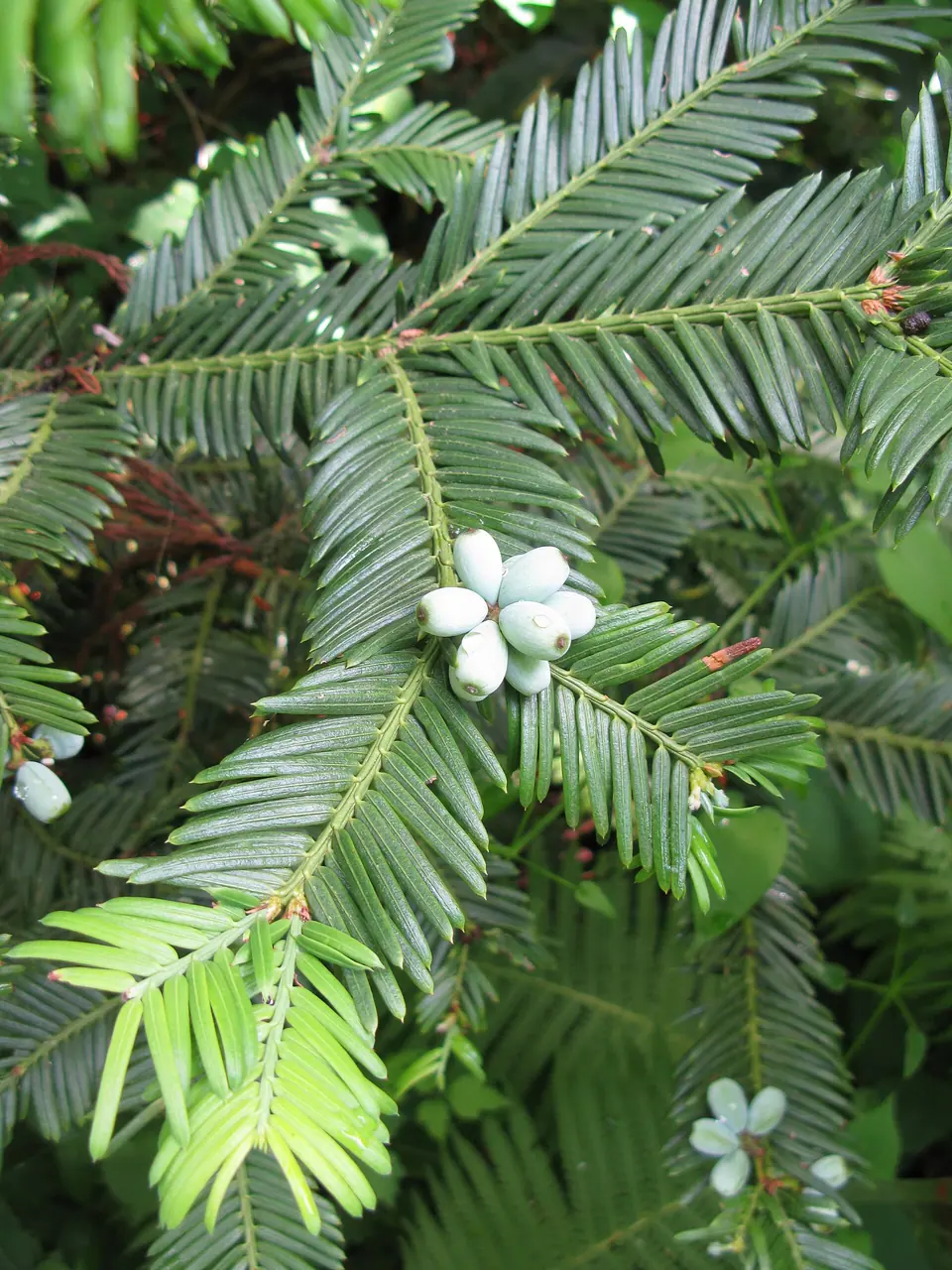


Cómo cultivar y cuidar Japanese Plum Yew
Cephalotaxus harringtonia
Escrito por Emilio Marruso · última revisión
Tóxica para: Personas · Por qué
De un vistazo
Esta planta leñosa es muy agradecida: crece a pleno sol o en semisombra e incluso tolera la sombra, así que encaja en muchos rincones del jardín. Riégala con regularidad hasta que arraigue; después aguanta la sequía, aunque lo agradece si le das agua en los periodos secos. Con el tiempo alcanza 1,5–3 m de alto y 1,5–4,3 m de ancho.
- Sol
Sol pleno a semisombra, incluso sombra; con veranos calurosos, mejor semisombra
Qué dicen las fuentes (4)
Luz: Pleno sol a semisombra; tolera la sombra
veranos frescos: Plant it in full sun if you have cool summers; otherwise, it needs partial shade
— Cephalotaxus harringtonia (Japanese Plum Yew, Japanese Plum-Yew, Spreading Plum Yew, Spreading Plum-Yew) | North Carolina Extension Gardener Plant Toolbox [1] de lo contrario (veranos más cálidos): otherwise, it needs partial shade and tolerates shade better than most other needled evergreens.
— Cephalotaxus harringtonia (Japanese Plum Yew, Japanese Plum-Yew, Spreading Plum Yew, Spreading Plum-Yew) | North Carolina Extension Gardener Plant Toolbox [1] Plum yew grows in full sun or moderate shade.
— Yew, Japanese Plum [2] Plant it in full sun if you have cool summers; otherwise, it needs partial shade
— Cephalotaxus harringtonia (Japanese Plum Yew, Japanese Plum-Yew, Spreading Plum Yew, Spreading Plum-Yew) | North Carolina Extension Gardener Plant Toolbox [1] - Riego
Riega con regularidad hasta que arraigue; luego aguanta la sequía, pero agradece agua en épocas secas
Qué dicen las fuentes (5)
Riego: Tolerante a la sequía una vez establecida; rinde mejor con algo de agua durante los períodos secos
Once established this plant is drought and heat-tolerant and deer resistant.
— Cephalotaxus harringtonia (Japanese Plum Yew, Japanese Plum-Yew, Spreading Plum Yew, Spreading Plum-Yew) | North Carolina Extension Gardener Plant Toolbox [1] After that it will be fairly drought tolerant, though it will perform best if it’s given some water during dry spells.
— Japanese Plum Yew – Gardening Solutions [3] It tolerates drought but grows a bit faster if given a good soil and water during dry spells.
— Yew, Japanese Plum [2] - Frío
Aguanta inviernos de hasta −23,3 °C (−10 °F)
Muy rústica · USDA 6a · RHS H7 · Z6
Qué dicen las fuentes (2)
Rusticidad, zona más fría: 6a [mínima invernal de −23,3 a −20,6 °C (de −10 a −5 °F)]
USDA Plant Hardiness Zone: 6a, 6b, 7a, 7b, 8a, 8b, 9a, 9b
— Cephalotaxus harringtonia (Japanese Plum Yew, Japanese Plum-Yew, Spreading Plum Yew, Spreading Plum-Yew) | North Carolina Extension Gardener Plant Toolbox [1] Rusticidad, zona más cálida: 9b [mínima invernal de −3,9 a −1,1 °C (de 25 a 30 °F)]
USDA Plant Hardiness Zone: 6a, 6b, 7a, 7b, 8a, 8b, 9a, 9b
— Cephalotaxus harringtonia (Japanese Plum Yew, Japanese Plum-Yew, Spreading Plum Yew, Spreading Plum-Yew) | North Carolina Extension Gardener Plant Toolbox [1] - Suelo
Evita los sitios donde el agua no drena bien
Qué dicen las fuentes (2)
- Tamaño
1,5–3 m de alto y 1,5–4,3 m de ancho
Qué dicen las fuentes (2)
Altura adulta: 152.4-304.8 cm (5-10 pies)
Height: 5 ft. 0 in. - 10 ft. 0 in. Width: 5 ft. 0 in. - 14 ft. 0 in.
— Cephalotaxus harringtonia (Japanese Plum Yew, Japanese Plum-Yew, Spreading Plum Yew, Spreading Plum-Yew) | North Carolina Extension Gardener Plant Toolbox [1] Anchura adulta: 152.4-426.72 cm (5-14 pies)
Height: 5 ft. 0 in. - 10 ft. 0 in. Width: 5 ft. 0 in. - 14 ft. 0 in.
— Cephalotaxus harringtonia (Japanese Plum Yew, Japanese Plum-Yew, Spreading Plum Yew, Spreading Plum-Yew) | North Carolina Extension Gardener Plant Toolbox [1] - Multiplicación
Se multiplica por semillas o por esquejes
Qué dicen las fuentes (1)
Propagación: Semilla; esquejes
New plants can be grown from seed or cuttings, but the process can be quite time consuming.
— Japanese Plum Yew – Gardening Solutions [3] - Seguridad
Las semillas y las hojas son venenosas si se ingieren
Resumen
El tejo ciruelo japonés es un arbusto o árbol pequeño de hoja perenne con agujas que tolera el calor y la humedad del verano y la sombra mejor que la mayoría de las coníferas de aguja. [1] Prefiere suelos húmedos y bien drenados y tolera la sequía una vez establecida. [1] Las semillas y el follaje son venenosos si se ingieren. [1]
Citado en inglés, como en la fuente.
Esta ficha está incompleta: las fuentes consultadas aún no cubren todos los campos.
Aún no cubierto por nuestras fuentes: Poda
Cuidados
Riego
Riego
Tolerante a la sequía una vez establecida; rinde mejor con algo de agua durante los períodos secos
Qué dicen las fuentes (3)
Once established this plant is drought and heat-tolerant and deer resistant.After that it will be fairly drought tolerant, though it will perform best if it’s given some water during dry spells.It tolerates drought but grows a bit
faster if given a good soil and water during dry spells.Notas sobre el riego
Riega con un horario regular hasta que se establezca; evita sitios con mal drenaje
Luz
Pleno sol a semisombra; tolera la sombra
Lo que dice cada fuente
veranos frescos: Pleno sol
de lo contrario (veranos más cálidos): Semisombra
Qué dicen las fuentes (4)
veranos frescos: Plant it in full sun if you have cool summers; otherwise, it needs partial shadede lo contrario (veranos más cálidos): otherwise, it needs partial shade and tolerates shade better than most other needled evergreens.Plum yew grows in full sun or moderate shade.Plant it in full sun if you have cool summers; otherwise, it needs partial shadeClima y frío
Rusticidad, zona más fría
6a [mínima invernal de −23,3 a −20,6 °C (de −10 a −5 °F)]
Qué dicen las fuentes (1)
USDA Plant Hardiness Zone:
6a, 6b, 7a, 7b, 8a, 8b, 9a, 9bRusticidad, zona más cálida
9b [mínima invernal de −3,9 a −1,1 °C (de 25 a 30 °F)]
Qué dicen las fuentes (1)
USDA Plant Hardiness Zone:
6a, 6b, 7a, 7b, 8a, 8b, 9a, 9bPropagación
Semilla; esquejes
Qué dicen las fuentes (1)
New plants can be grown from seed or cuttings, but the process can be quite time consuming.Cultivo
La planta
Ciclo de vida
leñoso
Qué dicen las fuentes (1)
Life Cycle:
Woody
Country Or Region Of Origin:Familia
Taxaceae
Qué dicen las fuentes (1)
Japanese plum-yew is an evergreen, needled shrub or small tree in the yew family (Taxaceae)Altura adulta
152.4-304.8 cm (5-10 pies)
Qué dicen las fuentes (1)
Height: 5 ft. 0 in. - 10 ft. 0 in.
Width: 5 ft. 0 in. - 14 ft. 0 in.Anchura adulta
152.4-426.72 cm (5-14 pies)
Qué dicen las fuentes (1)
Height: 5 ft. 0 in. - 10 ft. 0 in.
Width: 5 ft. 0 in. - 14 ft. 0 in.Remedios
Las fuentes consultadas no dan remedios para esta planta.
Toxicidad
Según la fuente, citada textualmente. No es un consejo médico ni veterinario: si una persona o un animal pudo haber ingerido esta planta, contacta con un centro de toxicología o con un veterinario.
The seeds and foliage of all of the plants in this botanical group are generally quite poisonous if ingested
[1]- Partes venenosas
Poison Part: Bark Leaves Seeds Download Print-Friendly QR
[1]- Principio tóxico
Poison Toxic Principle: Alkaloid taxine, Volatile oil Causes
[1]- Síntomas
Nervousness, trembling, slow pulse, pupil dilation, difficult breathing, abdominal pain, vomiting, diarrhea, weakness, convulsions; seizures, sudden death from acute heart failure if eaten in quantity.
[1]- Gravedad
Poison Severity: Medium Poison Symptoms: All plants in
[1]
Calendario
Poda
No figura en las fuentes consultadas.
Meses tal como los dan las fuentes, en su mayoría de Estados Unidos (hemisferio norte). En el hemisferio sur se desplazan unos seis meses.
Valores orientativos
Valores de una fuente secundaria, no comprobados palabra por palabra como el resto de esta página. Úselos como punto de partida.
- Horas de sol
- 4-6 horasValor orientativo, adáptalo a tu clima · Fuente secundaria
- pH del suelo
- 5-6.5Valor orientativo, adáptalo a tu clima · Fuente secundaria
- Nivel de cuidado
- MedioValor orientativo, adáptalo a tu clima · Fuente secundaria
- Crecimiento
- BajoValor orientativo, adáptalo a tu clima · Fuente secundaria
- Poda
- Mayo, junio, julioValor orientativo, adáptalo a tu clima · Fuente secundaria
Plantas similares
- Fortune's Yew Plum Cephalotaxus fortunei
- Chinese Yew Taxus chinensis
- Torreya de Florida Torreya taxifolia
- Florida Yew Taxus floridana
- Torreya japonesa Torreya nucifera
- Tejo japonés Taxus cuspidata
- American Yew Taxus canadensis
- Pacific Yew Taxus brevifolia
Fuentes
Cada valor anterior se cita de estos documentos. Los enlaces llevan al editor original.
- Cephalotaxus harringtonia (Japanese Plum Yew, Japanese Plum-Yew, Spreading Plum Yew, Spreading Plum-Yew) | North Carolina Extension Gardener Plant Toolbox · plants.ces.ncsu.edu, consultado
- Yew, Japanese Plum · uaex.uada.edu, consultado
- Japanese Plum Yew – Gardening Solutions · gardeningsolutions.ifas.ufl.edu, consultado
Escrito por Emilio Marruso · última revisión