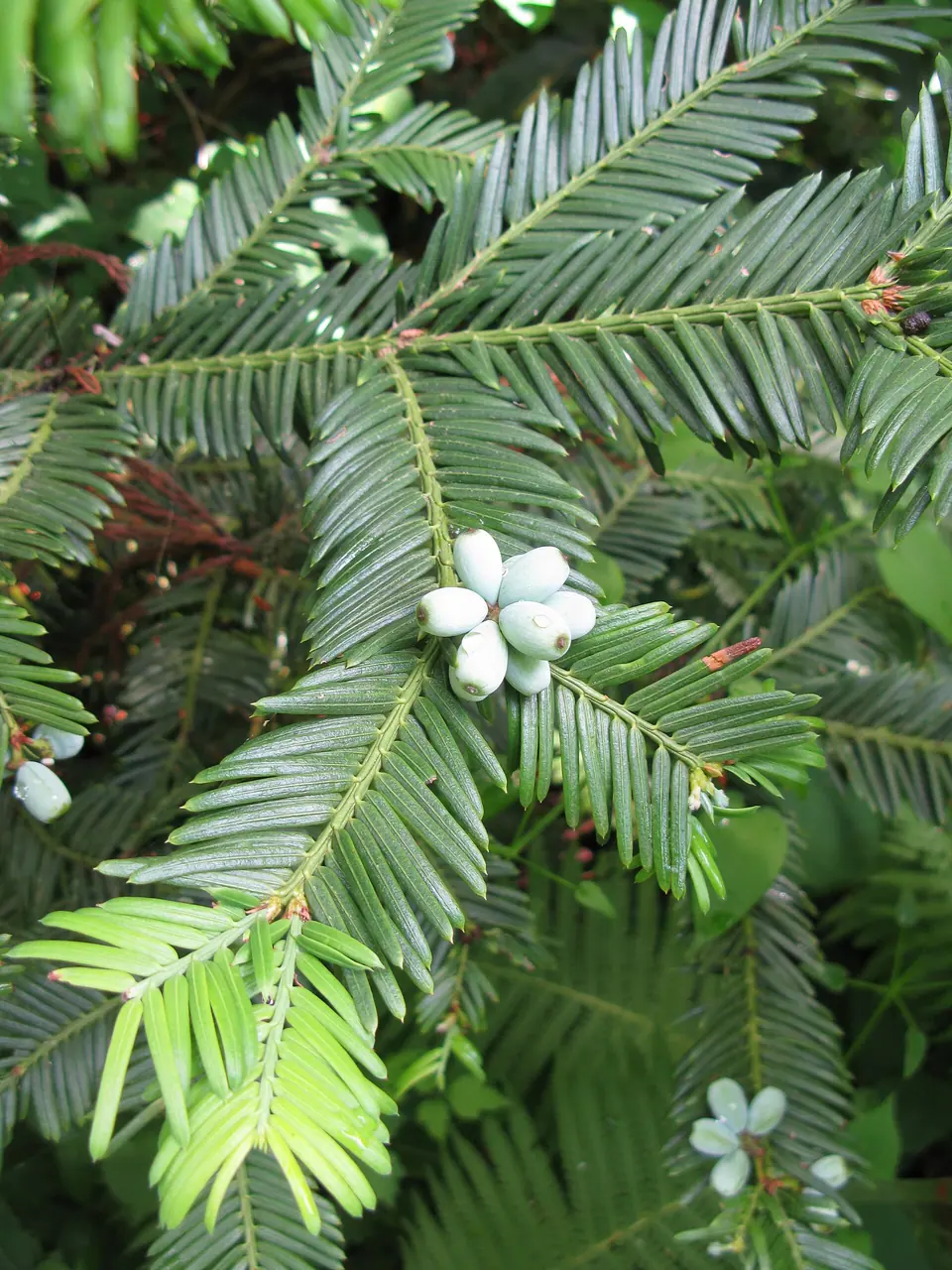


How to Grow and Care for Japanese Plum Yew
Cephalotaxus harringtonia
Written by Emilio Marruso · last checked
Toxic to: People · Why
At a glance
This woody plant is easygoing: it grows in full sun or partial shade and even tolerates shade, so it fits many corners of the garden. Water it regularly until it settles in; after that it tolerates drought, though it does best with a drink during dry spells. In time it reaches 5–10 feet tall and 5–14 feet wide.
- Sun
Full sun to partial shade, even shade; where summers are hot, give it partial shade
What the sources say (4)
Light: Full sun to partial shade; tolerates shade
cool summers: Plant it in full sun if you have cool summers; otherwise, it needs partial shade
— Cephalotaxus harringtonia (Japanese Plum Yew, Japanese Plum-Yew, Spreading Plum Yew, Spreading Plum-Yew) | North Carolina Extension Gardener Plant Toolbox [1] otherwise (warmer summers): otherwise, it needs partial shade and tolerates shade better than most other needled evergreens.
— Cephalotaxus harringtonia (Japanese Plum Yew, Japanese Plum-Yew, Spreading Plum Yew, Spreading Plum-Yew) | North Carolina Extension Gardener Plant Toolbox [1] Plum yew grows in full sun or moderate shade.
— Yew, Japanese Plum [2] Plant it in full sun if you have cool summers; otherwise, it needs partial shade
— Cephalotaxus harringtonia (Japanese Plum Yew, Japanese Plum-Yew, Spreading Plum Yew, Spreading Plum-Yew) | North Carolina Extension Gardener Plant Toolbox [1] - Water
Water regularly until settled in; then it tolerates drought but likes water in dry spells
What the sources say (5)
Watering: Drought tolerant once established; performs best with some water during dry spells
Once established this plant is drought and heat-tolerant and deer resistant.
— Cephalotaxus harringtonia (Japanese Plum Yew, Japanese Plum-Yew, Spreading Plum Yew, Spreading Plum-Yew) | North Carolina Extension Gardener Plant Toolbox [1] After that it will be fairly drought tolerant, though it will perform best if it’s given some water during dry spells.
— Japanese Plum Yew – Gardening Solutions [3] It tolerates drought but grows a bit faster if given a good soil and water during dry spells.
— Yew, Japanese Plum [2] - Cold
Survives winters down to −10 °F (−23.3 °C)
Very hardy · USDA 6a · RHS H7 · Z6
What the sources say (2)
Hardiness, coldest zone: 6a [winter low −23.3 to −20.6 °C (−10 to −5 °F)]
USDA Plant Hardiness Zone: 6a, 6b, 7a, 7b, 8a, 8b, 9a, 9b
— Cephalotaxus harringtonia (Japanese Plum Yew, Japanese Plum-Yew, Spreading Plum Yew, Spreading Plum-Yew) | North Carolina Extension Gardener Plant Toolbox [1] Hardiness, warmest zone: 9b [winter low −3.9 to −1.1 °C (25 to 30 °F)]
USDA Plant Hardiness Zone: 6a, 6b, 7a, 7b, 8a, 8b, 9a, 9b
— Cephalotaxus harringtonia (Japanese Plum Yew, Japanese Plum-Yew, Spreading Plum Yew, Spreading Plum-Yew) | North Carolina Extension Gardener Plant Toolbox [1] - Soil
Avoid spots where water does not drain well
- Size
5–10 ft tall and 5–14 ft wide
What the sources say (2)
Mature height: 152.4-304.8 cm (5-10 ft)
Height: 5 ft. 0 in. - 10 ft. 0 in. Width: 5 ft. 0 in. - 14 ft. 0 in.
— Cephalotaxus harringtonia (Japanese Plum Yew, Japanese Plum-Yew, Spreading Plum Yew, Spreading Plum-Yew) | North Carolina Extension Gardener Plant Toolbox [1] Mature width: 152.4-426.72 cm (5-14 ft)
Height: 5 ft. 0 in. - 10 ft. 0 in. Width: 5 ft. 0 in. - 14 ft. 0 in.
— Cephalotaxus harringtonia (Japanese Plum Yew, Japanese Plum-Yew, Spreading Plum Yew, Spreading Plum-Yew) | North Carolina Extension Gardener Plant Toolbox [1] - Propagation
Grow new plants from seed or cuttings
What the sources say (1)
Propagation: Seed; cuttings
New plants can be grown from seed or cuttings, but the process can be quite time consuming.
— Japanese Plum Yew – Gardening Solutions [3] - Safety
Seeds and leaves are poisonous if eaten
Overview
Japanese plum yew is an evergreen needled shrub or small tree that tolerates summer heat and humidity and shade better than most needled evergreens. [1] It prefers moist, well-drained soil and is drought tolerant once established. [1] The seeds and foliage are poisonous if ingested. [1]
This record is incomplete: the sources we read do not cover every field yet.
Not yet covered by our sources: Pruning
Japanese Plum Yew care
How to water Japanese Plum Yew
Watering
Drought tolerant once established; performs best with some water during dry spells
What the sources say (3)
Once established this plant is drought and heat-tolerant and deer resistant.After that it will be fairly drought tolerant, though it will perform best if it’s given some water during dry spells.It tolerates drought but grows a bit
faster if given a good soil and water during dry spells.How much light Japanese Plum Yew needs
Full sun to partial shade; tolerates shade
What each source says
cool summers: Full sun
otherwise (warmer summers): Partial shade
What the sources say (4)
cool summers: Plant it in full sun if you have cool summers; otherwise, it needs partial shadeotherwise (warmer summers): otherwise, it needs partial shade and tolerates shade better than most other needled evergreens.Plum yew grows in full sun or moderate shade.Plant it in full sun if you have cool summers; otherwise, it needs partial shadeHow much cold Japanese Plum Yew can take
Hardiness, coldest zone
6a [winter low −23.3 to −20.6 °C (−10 to −5 °F)]
What the sources say (1)
USDA Plant Hardiness Zone:
6a, 6b, 7a, 7b, 8a, 8b, 9a, 9bHardiness, warmest zone
9b [winter low −3.9 to −1.1 °C (25 to 30 °F)]
What the sources say (1)
USDA Plant Hardiness Zone:
6a, 6b, 7a, 7b, 8a, 8b, 9a, 9bHow to propagate Japanese Plum Yew
Seed; cuttings
What the sources say (1)
New plants can be grown from seed or cuttings, but the process can be quite time consuming.How to grow Japanese Plum Yew
The plant
Life cycle
woody
What the sources say (1)
Life Cycle:
Woody
Country Or Region Of Origin:Family
Taxaceae
What the sources say (1)
Japanese plum-yew is an evergreen, needled shrub or small tree in the yew family (Taxaceae)Mature height
152.4-304.8 cm (5-10 ft)
What the sources say (1)
Height: 5 ft. 0 in. - 10 ft. 0 in.
Width: 5 ft. 0 in. - 14 ft. 0 in.Mature width
152.4-426.72 cm (5-14 ft)
What the sources say (1)
Height: 5 ft. 0 in. - 10 ft. 0 in.
Width: 5 ft. 0 in. - 14 ft. 0 in.Remedies
The sources we checked give no remedies for this plant.
Is Japanese Plum Yew poisonous?
Reported by the source, quoted verbatim. This is not medical or veterinary advice: if a person or an animal may have eaten this plant, contact a poison control centre or a veterinarian.
The seeds and foliage of all of the plants in this botanical group are generally quite poisonous if ingested
[1]- Poisonous parts
Poison Part: Bark Leaves Seeds Download Print-Friendly QR
[1]- Toxic principle
Poison Toxic Principle: Alkaloid taxine, Volatile oil Causes
[1]- Symptoms
Nervousness, trembling, slow pulse, pupil dilation, difficult breathing, abdominal pain, vomiting, diarrhea, weakness, convulsions; seizures, sudden death from acute heart failure if eaten in quantity.
[1]- Severity
Poison Severity: Medium Poison Symptoms: All plants in
[1]
Calendar
Pruning
Not stated in the sources we read.
Months as given by the sources, which are mostly from the United States (northern hemisphere). In the southern hemisphere they shift by about six months.
Indicative values
Values from a secondary source, not checked word for word like the rest of this page. Use them as a starting point.
- Hours of sun
- 4-6 hoursIndicative value, adapt it to your climate · Secondary source
- Soil pH
- 5-6.5Indicative value, adapt it to your climate · Secondary source
- Care level
- MediumIndicative value, adapt it to your climate · Secondary source
- Growth rate
- LowIndicative value, adapt it to your climate · Secondary source
- Pruning
- May, June, JulyIndicative value, adapt it to your climate · Secondary source
Similar plants
- Fortune's Yew Plum Cephalotaxus fortunei
- Chinese Yew Taxus chinensis
- Florida Torreya Torreya taxifolia
- Florida Yew Taxus floridana
- Japanese Nutmeg Tree Torreya nucifera
- Japanese Yew Taxus cuspidata
- American Yew Taxus canadensis
- Pacific Yew Taxus brevifolia
Sources
Every value above is quoted from these documents. Links lead to the original publisher.
- Cephalotaxus harringtonia (Japanese Plum Yew, Japanese Plum-Yew, Spreading Plum Yew, Spreading Plum-Yew) | North Carolina Extension Gardener Plant Toolbox · plants.ces.ncsu.edu, consulted
- Yew, Japanese Plum · uaex.uada.edu, consulted
- Japanese Plum Yew – Gardening Solutions · gardeningsolutions.ifas.ufl.edu, consulted
Written by Emilio Marruso · last checked