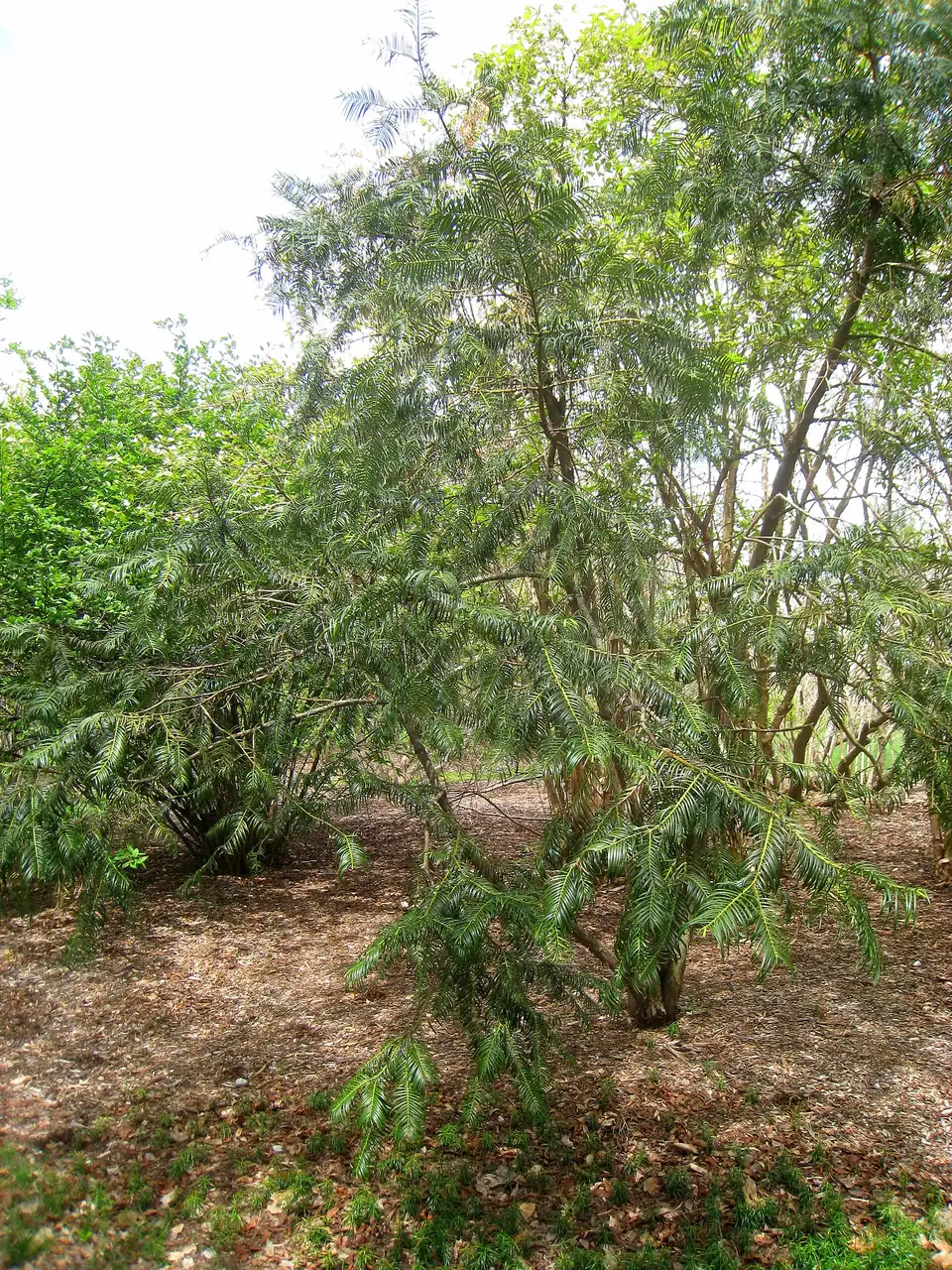

How to Grow and Care for Fortune's Yew Plum
Cephalotaxus fortunei
Written by Emilio Marruso · last checked
At a glance
Got a shady corner? This plant thrives in semi-shade and even tolerates full shade, as long as it has moist, well-drained sandy soil and a humid, sheltered spot. It usually grows up to 15 feet tall, and you can start it from seed or from cuttings. Plant it in late spring, once the last frosts are behind you.
- Sun
Partial shade; it also tolerates full shade
What the sources say (4)
Light: Semi-shade; tolerates full shade
According to Useful Temperate Plants (PFAF): Prefers a position in semi-shade but tolerates full shade
— Cephalotaxus fortunei - Useful Temperate Plants [2] mild wet coastal region of W. Scotland: It grows very well in the mild wet coastal region of W. Scotland where it succeeds even in full sun
— Cephalotaxus fortunei - Useful Temperate Plants [2] Prefers a position in semi-shade but tolerates full shade
— Cephalotaxus fortunei - Useful Temperate Plants [2] forests, thickets, and roadsides ( Fu et al. 1999 ); it is shade tolerant
— Cephalotaxus fortunei (三尖杉) description [3] - Water
Keep the soil moist but well drained; it needs a humid, sheltered spot
What the sources say (1)
Watering notes: Prefers moist, well-drained sandy soil; dislikes dry gravelly or chalky soils; requires a humid sheltered site
Prefers a moist well-drained sandy soil but succeeds in most soils though it dislikes dry gravelly or chalky soils
— Cephalotaxus fortunei - Useful Temperate Plants [2] - Cold
Survives winters down to 0 °F (−17.8 °C)
Hardy in very cold winters · USDA 7 · RHS H6 · Z7
What the sources say (1)
Hardiness, coldest zone: 7 [winter low −17.8 to −12.2 °C (0 to 10 °F)]
Hardy to USDA Zone 7, cold hardiness limit between 0º and 10ºF (-17.7° and -12.2°C).
— Conifer Database - fortunei [4] - Soil
Moist, well-drained sandy soil; avoid dry gravelly or chalky soil
What the sources say (1)
Watering notes: Prefers moist, well-drained sandy soil; dislikes dry gravelly or chalky soils; requires a humid sheltered site
Prefers a moist well-drained sandy soil but succeeds in most soils though it dislikes dry gravelly or chalky soils
— Cephalotaxus fortunei - Useful Temperate Plants [2] - Planting
Plant in late spring, after the last frosts
What the sources say (1)
Planting: Late spring after the last expected frosts
grow them on for at least their first winter under cover. Plant out in late spring after the last expected frosts.
— Cephalotaxus fortunei - Useful Temperate Plants [2] - Harvest
Gathered from the wild for local use as food and a source of oil
- Watch out
Frost can harm new spring growth; shelter it from early morning sun
- Size
Usually up to 15 ft tall, but it can reach 65 ft
What the sources say (1)
Mature height: commonly up to 457 cm (15 ft); up to 1981 cm (65 ft)
A small tree or multistemmed shrub to 65 feet but far more commonly to 15 feet; branches have a distinctive drooping habit.
— Virginia Tech Dendrology Fact Sheet [7] - Propagation
From seed or from cuttings of soft green shoot tips
What the sources say (2)
Propagation: Seed; greenwood cuttings of terminal shoots
Seed - best sown as soon as it is ripe in a cold frame
— Cephalotaxus fortunei - Useful Temperate Plants [2] Greenwood cuttings of terminal shoots, mid summer to early autumn in a humid cold frame
— Cephalotaxus fortunei - Useful Temperate Plants [2] - Sowing
Sow fresh seed in a cold frame; keep stored seed cold before sowing it in spring
What the sources say (2)
Sowing: As soon as ripe in a cold frame; stored seed cold-stratified and sown in spring
Seed - best sown as soon as it is ripe in a cold frame
— Cephalotaxus fortunei - Useful Temperate Plants [2] Stored seed should be cold-stratified and sown in a cold frame in the spring
— Cephalotaxus fortunei - Useful Temperate Plants [2]
Overview
Chinese plum yew is a dioecious evergreen conifer, a shrub or small tree, native to China and northern Myanmar. [3] It prefers semi-shade and moist, well-drained soil, and its young spring growth is frost-tender. [2] It tolerates pruning well and is used for hedges in shady positions. [2]
This record is incomplete: the sources we read do not cover every field yet.
Not yet covered by our sources: Watering, Hardiness, warmest zone, Pruning
Fortune's Yew Plum care
How to water Fortune's Yew Plum
Watering
Not stated in the sources we read.
Watering notes
Prefers moist, well-drained sandy soil; dislikes dry gravelly or chalky soils; requires a humid sheltered site
What the sources say (1)
Prefers a moist well-drained sandy soil but succeeds in most soils though it dislikes dry gravelly or chalky soilsHow much light Fortune's Yew Plum needs
Semi-shade; tolerates full shade
What each source says
According to Useful Temperate Plants (PFAF): Semi-shade; tolerates full shade
mild wet coastal region of W. Scotland: Full sun
What the sources say (4)
According to Useful Temperate Plants (PFAF): Prefers a position in semi-shade but tolerates full shademild wet coastal region of W. Scotland: It grows very well in the mild wet coastal region of W. Scotland where it succeeds even in full sunPrefers a position in semi-shade but tolerates full shadeforests, thickets, and roadsides ( Fu et al. 1999 ); it is shade tolerantHow much cold Fortune's Yew Plum can take
Hardiness, coldest zone
7 [winter low −17.8 to −12.2 °C (0 to 10 °F)]
What the sources say (1)
Hardy to USDA Zone 7, cold hardiness limit between 0º and 10ºF (-17.7° and -12.2°C).Hardiness, warmest zone
Not stated in the sources we read.
How to propagate Fortune's Yew Plum
Seed; greenwood cuttings of terminal shoots
How to grow Fortune's Yew Plum
The plant
Family
Cephalotaxaceae
What the sources say (1)
Chinese plum-yew Cephalotaxaceae Cephalotaxus
fortunei Hook.Mature height
commonly up to 457 cm (15 ft); up to 1981 cm (65 ft)
What the sources say (1)
A small tree or multistemmed shrub to 65 feet but far more commonly to 15 feet; branches have a distinctive drooping habit.Fortune's Yew Plum pests and problems
Spring frost damage
Symptom: Young spring growth is damaged by frost, even on mature plants
What to do: Grow in a position sheltered from the early morning sun
What the sources say (1)
The young growth in spring however, even on mature plants, is frost-tender and so it is best to grow the plants in a position sheltered from the early morning sun
— Cephalotaxus fortunei - Useful Temperate Plants [2]
Remedies
The sources we checked give no remedies for this plant.
Calendar
Sowing
As soon as ripe in a cold frame; stored seed cold-stratified and sown in spring
Planting
Late spring after the last expected frosts
What the sources say (1)
grow them on for at least their first winter under cover. Plant out in late spring after the last expected frosts.Pruning
Not stated in the sources we read.
Months as given by the sources, which are mostly from the United States (northern hemisphere). In the southern hemisphere they shift by about six months.
Edibility
Reported by the source, quoted verbatim. Do not eat a plant on the basis of this page alone: identification mistakes can be dangerous.
The plant is harvested from the wild for local use as a food and source of oil.
[2]
Indicative values
Values from a secondary source, not checked word for word like the rest of this page. Use them as a starting point.
- Life cycle
- PerennialIndicative value, adapt it to your climate · Secondary source
- Hours of sun
- 2-5 hoursIndicative value, adapt it to your climate · Secondary source
- Watering
- AverageIndicative value, adapt it to your climate · Secondary source
- Drought tolerant
- yesIndicative value, adapt it to your climate · Secondary source
- Soil pH
- 5-6.5Indicative value, adapt it to your climate · Secondary source
- Care level
- MediumIndicative value, adapt it to your climate · Secondary source
- Growth rate
- LowIndicative value, adapt it to your climate · Secondary source
Similar plants
- Japanese Plum Yew Cephalotaxus harringtonia
- Abraham Trachystemon orientalis
- African Marigold Tagetes erecta
- Alabama Croton Croton alabamensis
- Alpine Currant Ribes alpinum
- Alpine violet Viola labradorica
- Alumroot Heuchera americana
- American Arborvitae Thuja occidentalis
Sources
Every value above is quoted from these documents. Links lead to the original publisher.
- Cephalotaxus fortunei - Trees and Shrubs Online · treesandshrubsonline.org, consulted
- Cephalotaxus fortunei - Useful Temperate Plants · temperate.theferns.info, consulted
- Cephalotaxus fortunei (三尖杉) description · conifers.org, consulted
- Conifer Database - fortunei · conifersociety.org, consulted
- Bean's Trees and Shrubs · beanstreesandshrubs.org, consulted
- HortFlora · hortflora.rbg.vic.gov.au, consulted
- Virginia Tech Dendrology Fact Sheet · dendro.cnre.vt.edu, consulted
Written by Emilio Marruso · last checked