
How to Grow and Care for Pacific Yew
Taxus brevifolia
Written by Emilio Marruso · last checked
Toxic to: Cats, Dogs, Horses, Livestock, People · Why
At a glance
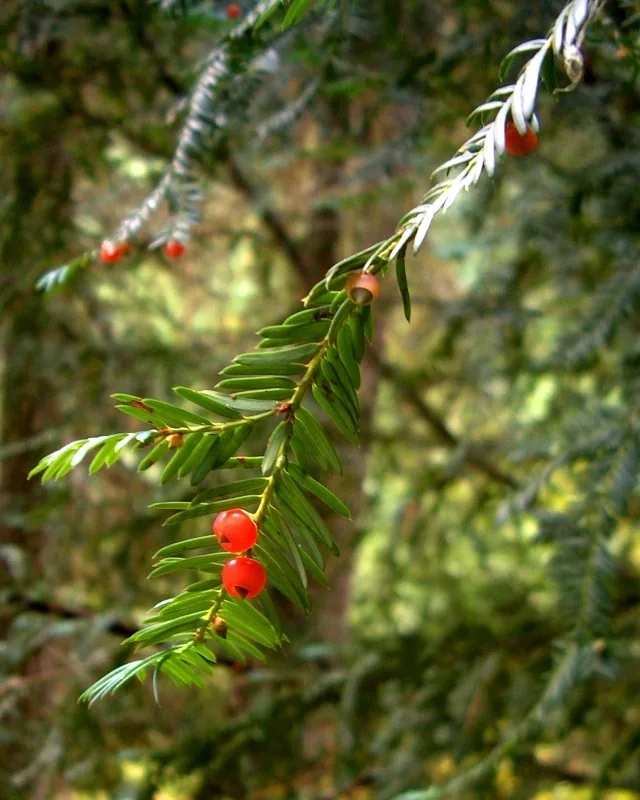
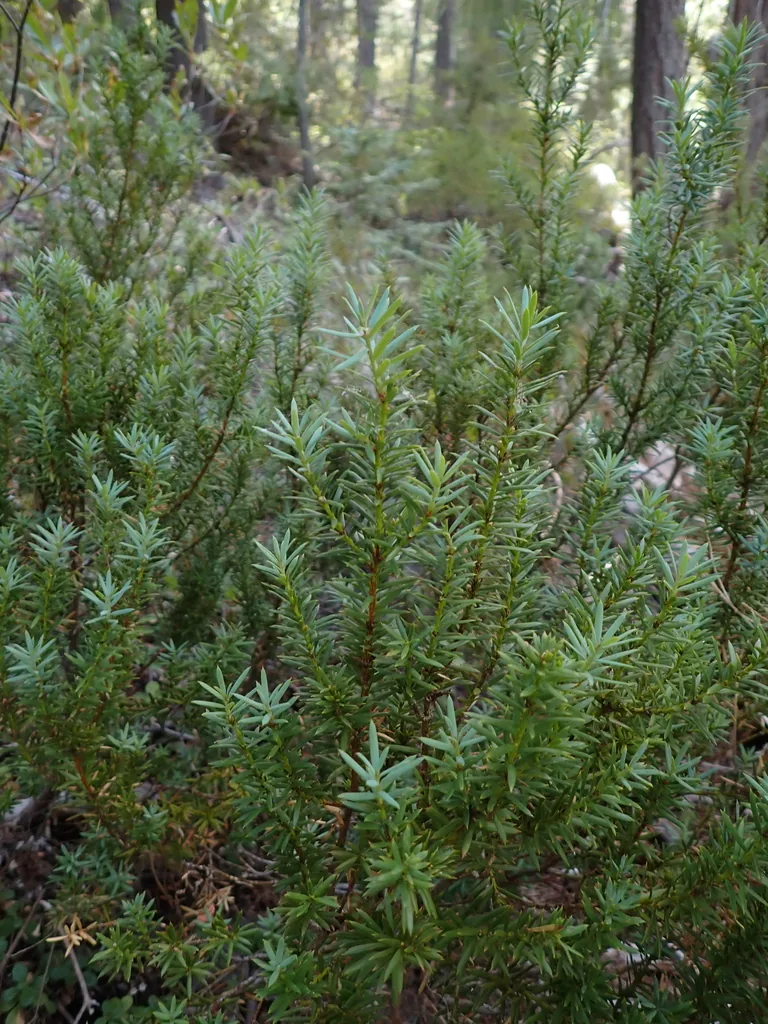
The Pacific yew is an evergreen that grows 6–12 ft tall and 3–6 ft wide, bringing year-round green to your garden. It loves moist, well-drained soil yet shrugs off occasional dry spells, and you can grow it from seed. Just plant it where children and pets can't nibble it: its bark, leaves and seeds are poisonous.
- Water
Keep the soil moist and well drained; it handles occasional dry spells
What the sources say (1)
Watering: Prefers moist conditions and good drainage; tolerates occasional dry spells
It prefers moist conditions and good drainage but can tolerate occasional dry spells.
— Taxus brevifolia (Pacific Yew, Western Yew) | North Carolina Extension Gardener Plant Toolbox [1] - Pests
Mealybugs, budworms and garden beetles; needle blight, root disease and rot inside the trunk
What the sources say (2)
Pests: grape mealybug, budworm, Asiatic garden beetle
Insect issues include grape mealybug, budworm, and Asiatic garden beetle.
— Taxus brevifolia (Pacific Yew, Western Yew) | North Carolina Extension Gardener Plant Toolbox [1] Diseases: needle blight, root disease, internal rot
It may rot from the inside. Needle blight and root disease are diseases that can affect the plant's health.
— Taxus brevifolia (Pacific Yew, Western Yew) | North Carolina Extension Gardener Plant Toolbox [1] - Size
6–12 ft tall and 3–6 ft wide
What the sources say (2)
Mature height: 183-366 cm (6-12 ft)
It is native to Alaska and the western United States and can grow 6 to 12 feet tall and 3 to 6 feet wide.
— Taxus brevifolia (Pacific Yew, Western Yew) | North Carolina Extension Gardener Plant Toolbox [1] Mature width: 91-183 cm (3-6 ft)
It is native to Alaska and the western United States and can grow 6 to 12 feet tall and 3 to 6 feet wide.
— Taxus brevifolia (Pacific Yew, Western Yew) | North Carolina Extension Gardener Plant Toolbox [1] - Propagation
Grow new plants from seed
What the sources say (1)
Propagation: Seed
In these instances, it can form broad mats that will grow much wider than tall. It is easy to grow from seed.
— Taxus brevifolia (Pacific Yew, Western Yew) | North Carolina Extension Gardener Plant Toolbox [1] - Safety
Bark, leaves and seeds are poisonous to people, cats, dogs, horses and livestock
Overview
Pacific yew is a slow-growing needled evergreen tree or shrub native to Alaska and the western United States. [1]
This record is incomplete: the sources we read do not cover every field yet.
Not yet covered by our sources: Pruning
Pacific Yew care
How to water Pacific Yew
Prefers moist conditions and good drainage; tolerates occasional dry spells
What the sources say (1)
It prefers moist conditions and good drainage but can tolerate occasional dry spells.How much light Pacific Yew needs
The sources give different values depending on region, zone or growing conditions.
What each source says
According to NC State Extension (Taxus brevifolia page): Partial shade
According to NC State Extension (genus Taxus page): Full sun to partial shade
What the sources say (4)
According to NC State Extension (Taxus brevifolia page): The western yew requires partial shade.According to NC State Extension (genus Taxus page): Plant them 6 to 12 feet apart in full sun to partial shade.The western yew requires partial shade. It prefers moist conditionsPartial Shade (Direct sunlight only part of the day, 2-6 hours)How much cold Pacific Yew can take
Hardiness, coldest zone
The sources give different values depending on region, zone or growing conditions.
What each source says
According to NC State Extension (Taxus brevifolia page): 5a [winter low −28.9 to −26.1 °C (−20 to −15 °F)]
According to NC State Extension (genus Taxus page): 4a [winter low −34.4 to −31.7 °C (−30 to −25 °F)]
What the sources say (3)
According to NC State Extension (Taxus brevifolia page): USDA Plant Hardiness Zone:
5a, 5b, 6aAccording to NC State Extension (genus Taxus page): USDA Plant Hardiness Zone:
4a, 4b, 5a5a, 5b, 6a, 6b, 7a, 7b, 8a, 8b, 9a, 9bHardiness, warmest zone
The sources give different values depending on region, zone or growing conditions.
What each source says
According to NC State Extension (Taxus brevifolia page): 9b [winter low −3.9 to −1.1 °C (25 to 30 °F)]
According to NC State Extension (genus Taxus page): 8b [winter low −9.4 to −6.7 °C (15 to 20 °F)]
What the sources say (3)
According to NC State Extension (Taxus brevifolia page): USDA Plant Hardiness Zone:
5a, 5b, 6a, 6b, 7a, 7b, 8a, 8b, 9a, 9bAccording to NC State Extension (genus Taxus page): USDA Plant Hardiness Zone:
4a, 4b, 5a, 5b, 6a, 6b, 7a, 7b, 8a, 8b5a, 5b, 6a, 6b, 7a, 7b, 8a, 8b, 9a, 9bWhere to grow Pacific Yew
The sources give different values depending on region, zone or growing conditions.
What each source says
According to NC State Extension (genus Taxus page): 182.9-365.8 cm (6-12 ft)
What the sources say (1)
According to NC State Extension (genus Taxus page): Plant them 6 to 12 feet apart in full sun to partial shade.How to propagate Pacific Yew
Seed
What the sources say (1)
In these instances, it can form broad mats that will grow much wider than tall. It is easy to grow from seed.How to grow Pacific Yew
The plant
Family
Taxaceae
What the sources say (1)
Western yew is a woody, needled evergreen tree or shrub in the yew family (Taxaceae).Mature height
183-366 cm (6-12 ft)
What the sources say (1)
It is native to Alaska and the western United States and can grow 6 to 12 feet tall and 3 to 6 feet wide.Mature width
91-183 cm (3-6 ft)
What the sources say (1)
It is native to Alaska and the western United States and can grow 6 to 12 feet tall and 3 to 6 feet wide.Pests and diseases
Pests
grape mealybug, budworm, Asiatic garden beetle
What the sources say (1)
Insect issues include grape mealybug, budworm, and Asiatic garden beetle.Diseases
needle blight, root disease, internal rot
What the sources say (1)
It may rot from the inside. Needle blight and root disease are diseases that can affect the plant's health.Pacific Yew pests and problems
Rot and diseases
Symptom: It may rot from the inside; needle blight and root disease can affect the plant.
What to do: Not stated in the provided documents.
What the sources say (1)
It may rot from the inside. Needle blight and root disease are diseases that can affect the plant's health.
— Taxus brevifolia (Pacific Yew, Western Yew) | North Carolina Extension Gardener Plant Toolbox [1] Insect pests
Symptom: Grape mealybug, budworm and Asiatic garden beetle.
What to do: Not stated in the provided documents.
What the sources say (1)
Insect issues include grape mealybug, budworm, and Asiatic garden beetle.
— Taxus brevifolia (Pacific Yew, Western Yew) | North Carolina Extension Gardener Plant Toolbox [1]
Remedies
Each remedy shows what official sources say about it; traditional remedies without an official source are marked as such. Harmful ones are listed so you know to avoid them.
First aid
First aid: not a substitute for a doctor
yew ingestion
seek immediate medical help and call poison control Official source, not independently tested
The local poison control center can be reached directly by calling the national toll-free Poison Help hotline (1-800-222-1222) from anywhere in the United States.
— medlineplus.gov [4] How: Seek immediate medical help. Do not make the person throw up unless told to by poison control or a health care provider.
Seek immediate medical help. DO NOT make a person throw up unless told to do so by poison control or a health care provider.
— medlineplus.gov [4]
Treating the plant
mealybugs
insecticidal soap spray Works
How: Apply insecticidal soap (potassium salts of fatty acids) or horticultural oil.
They can be treated by applying a horticultural oil (active ingredient mineral-based paraffin or olefin) or and insecticidal soap (active ingredient is potassium salts of fatty acids).
— ask.extension.org [5] What the evidence says insecticidal soap is a safe, effective organic insecticide with minimal environmental impact.
— extension.psu.edu [6]
root rot
planting in well-drained soil Official source, not independently tested
How: Do not plant in soil with poor drainage or in areas that receive drainage from roads.
Do not plant in soil with poor drainage or in areas that receive drainage from roads.
— pnwhandbooks.org [7]
Is Pacific Yew toxic to pets?
Reported by the source, quoted verbatim. This is not medical or veterinary advice: if a person or an animal may have eaten this plant, contact a poison control centre or a veterinarian.
Animals
Problems: Problem for Cats Problem for Dogs Problem for Horses
[1]The source flags the risk for this animal but does not explain why.
#evergreen #poisonous to livestock #poisonous #poisonous if ingested #dry soils tolerant
[1]The source flags the risk for this animal but does not explain why.
People
Calendar
Pruning
Not stated in the sources we read.
Months as given by the sources, which are mostly from the United States (northern hemisphere). In the southern hemisphere they shift by about six months.
Indicative values
Values from a secondary source, not checked word for word like the rest of this page. Use them as a starting point.
- Life cycle
- PerennialIndicative value, adapt it to your climate · Secondary source
- Hours of sun
- 6-8 hoursIndicative value, adapt it to your climate · Secondary source
- Drought tolerant
- yesIndicative value, adapt it to your climate · Secondary source
- Soil
- Well-drainedIndicative value, adapt it to your climate · Secondary source
- Soil pH
- 5.5-7Indicative value, adapt it to your climate · Secondary source
- Care level
- MediumIndicative value, adapt it to your climate · Secondary source
- Growth rate
- LowIndicative value, adapt it to your climate · Secondary source
- Pruning
- February, March, April, August, December, January, February, March, AprilIndicative value, adapt it to your climate · Secondary source
Similar plants
- American Yew Taxus canadensis
- Chinese Yew Taxus chinensis
- Florida Yew Taxus floridana
- Japanese Yew Taxus cuspidata
- English Yew Taxus baccata
- Florida Torreya Torreya taxifolia
- Japanese Nutmeg Tree Torreya nucifera
- Japanese Plum Yew Cephalotaxus harringtonia
Sources
Every value above is quoted from these documents. Links lead to the original publisher.
- Taxus brevifolia (Pacific Yew, Western Yew) | North Carolina Extension Gardener Plant Toolbox · plants.ces.ncsu.edu, consulted
- Taxus (Yew) | North Carolina Extension Gardener Plant Toolbox · plants.ces.ncsu.edu, consulted
- Pacific Yew - Taxus brevifolia | North Carolina Extension Gardener Plant Toolbox · plants.ces.ncsu.edu, consulted
- medlineplus.gov · medlineplus.gov
- ask.extension.org · ask.extension.org
- extension.psu.edu · extension.psu.edu
- pnwhandbooks.org · pnwhandbooks.org
Written by Emilio Marruso · last checked