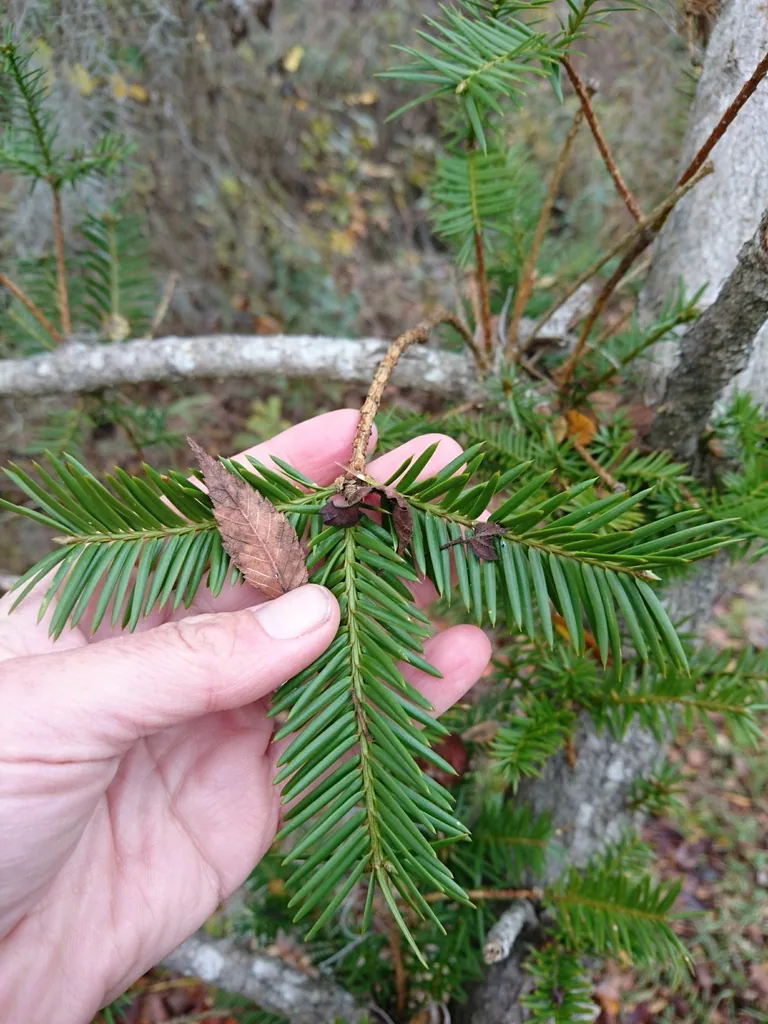
How to Grow and Care for Florida Torreya
Torreya taxifolia
Written by Emilio Marruso · last checked
At a glance
Torreya is a rare tree: fungal diseases have devastated its wild populations and put it on endangered species lists, yet gardeners have grown it healthy and disease-free. Give it part shade to shade and constantly moist, well-drained soil, and it can grow into a striking tree 30–50 ft tall and just as wide. Growing one helps keep this special tree alive.
- Sun
Part shade to shade
What the sources say (1)
Light: Part shade to shade
It prefers part shade to shade in constantly moist well-drained soils and can be used as an ornamental or specimen tree.
— Torreya taxifolia (Florida Torreya, Gopherwood, Stinking Cedar) | North Carolina Extension Gardener Plant Toolbox [1] - Water
Keep the soil constantly moist but well drained
What the sources say (1)
Watering: Constantly moist, well-drained soil
It prefers part shade to shade in constantly moist well-drained soils and can be used as an ornamental or specimen tree.
— Torreya taxifolia (Florida Torreya, Gopherwood, Stinking Cedar) | North Carolina Extension Gardener Plant Toolbox [1] - Cold
Survives winters down to −20 °F (−28.9 °C)
Very hardy · USDA 5a · RHS H7 · Z5
What the sources say (2)
Hardiness, coldest zone: 5a [winter low −28.9 to −26.1 °C (−20 to −15 °F)]
USDA Plant Hardiness Zone: 5a, 5b, 6a, 6b, 7a, 7b, 8a, 8b, 9a, 9b
— Torreya taxifolia (Florida Torreya, Gopherwood, Stinking Cedar) | North Carolina Extension Gardener Plant Toolbox [1] Hardiness, warmest zone: 9b [winter low −3.9 to −1.1 °C (25 to 30 °F)]
USDA Plant Hardiness Zone: 5a, 5b, 6a, 6b, 7a, 7b, 8a, 8b, 9a, 9b
— Torreya taxifolia (Florida Torreya, Gopherwood, Stinking Cedar) | North Carolina Extension Gardener Plant Toolbox [1] - Pests
Scale insects; fungal blight, root rot, leaf spot and needle damage
What the sources say (2)
Pests: scale
Scale is an insect problem.
— Torreya taxifolia (Florida Torreya, Gopherwood, Stinking Cedar) | North Carolina Extension Gardener Plant Toolbox [1] Diseases: fungal blight, mushroom root rot, leaf spot, needle necrosis
Fungal blight, mushroom root rot, leaf spot, and needle necrosis are devastating natural populations of this plant putting it on endangered species lists.
— Torreya taxifolia (Florida Torreya, Gopherwood, Stinking Cedar) | North Carolina Extension Gardener Plant Toolbox [1] - Watch out
Fungal diseases have made it endangered in the wild: watch it closely for signs of disease
- Size
30–50 ft tall and 30–50 ft wide
What the sources say (2)
Mature height: 914-1524 cm (30 ft - 50 ft)
Dimensions: Height: 30 ft. 0 in. - 50 ft. 0 in. Width: 30 ft. 0 in. - 50 ft. 0 in.
— Torreya taxifolia (Florida Torreya, Gopherwood, Stinking Cedar) | North Carolina Extension Gardener Plant Toolbox [1] Mature width: 914-1524 cm (30 ft - 50 ft)
Dimensions: Height: 30 ft. 0 in. - 50 ft. 0 in. Width: 30 ft. 0 in. - 50 ft. 0 in.
— Torreya taxifolia (Florida Torreya, Gopherwood, Stinking Cedar) | North Carolina Extension Gardener Plant Toolbox [1]
Overview
Florida torreya is a needled evergreen conifer in the yew family native to riparian areas of Georgia and Florida. [1] It prefers part shade to shade in constantly moist, well-drained soils. [1] Fungal blight, mushroom root rot, leaf spot and needle necrosis are devastating natural populations. [1]
This record is incomplete: the sources we read do not cover every field yet.
Not yet covered by our sources: Pruning, Propagation
Florida Torreya care
How to water Florida Torreya
Constantly moist, well-drained soil
What the sources say (1)
It prefers part shade to shade in constantly moist well-drained soils and can be used as an ornamental or specimen tree.How much light Florida Torreya needs
Part shade to shade
What the sources say (1)
It prefers part shade to shade in constantly moist well-drained soils and can be used as an ornamental or specimen tree.How much cold Florida Torreya can take
Hardiness, coldest zone
5a [winter low −28.9 to −26.1 °C (−20 to −15 °F)]
What the sources say (1)
USDA Plant Hardiness Zone:
5a, 5b, 6a, 6b, 7a, 7b, 8a, 8b, 9a, 9bHardiness, warmest zone
9b [winter low −3.9 to −1.1 °C (25 to 30 °F)]
What the sources say (1)
USDA Plant Hardiness Zone:
5a, 5b, 6a, 6b, 7a, 7b, 8a, 8b, 9a, 9bHow to propagate Florida Torreya
Not stated in the sources we read.
How to grow Florida Torreya
The plant
Family
Taxaceae
What the sources say (1)
Genus: Torreya Species: taxifolia Family: Taxaceae Uses (Ethnobotany): Had been used for fence postsMature height
914-1524 cm (30 ft - 50 ft)
What the sources say (1)
Dimensions: Height: 30 ft. 0 in. - 50 ft. 0 in. Width: 30 ft. 0 in. - 50 ft. 0 in.Mature width
914-1524 cm (30 ft - 50 ft)
What the sources say (1)
Dimensions: Height: 30 ft. 0 in. - 50 ft. 0 in. Width: 30 ft. 0 in. - 50 ft. 0 in.Pests and diseases
Pests
scale
What the sources say (1)
Scale is an insect problem.Diseases
fungal blight, mushroom root rot, leaf spot, needle necrosis
What the sources say (1)
Fungal blight, mushroom root rot, leaf spot, and needle necrosis are devastating natural populations of this plant putting it on endangered species lists.Florida Torreya pests and problems
Scale
Symptom: Scale insects
What to do: Not stated in the source.
What the sources say (1)
Scale is an insect problem. Fungal blight, mushroom root rot, leaf spot, and needle necrosis are devastating
— Torreya taxifolia (Florida Torreya, Gopherwood, Stinking Cedar) | North Carolina Extension Gardener Plant Toolbox [1] Fungal blight, mushroom root rot, leaf spot, needle necrosis
Symptom: Devastating natural populations and putting the species on endangered species lists
What to do: The Biltmore Estate in NC has been successfully growing disease-free trees.
What the sources say (2)
Insects, Diseases, and Other Plant Problems: Scale is an insect problem. Fungal blight, mushroom root rot, leaf spot, and needle necrosis are devastating natural populations of this plant
— Torreya taxifolia (Florida Torreya, Gopherwood, Stinking Cedar) | North Carolina Extension Gardener Plant Toolbox [1] The Biltmore Estate in NC has been successfully growing disease-free trees.
— Torreya taxifolia (Florida Torreya, Gopherwood, Stinking Cedar) | North Carolina Extension Gardener Plant Toolbox [1]
Remedies
The sources we checked give no remedies for this plant.
Calendar
Pruning
Not stated in the sources we read.
Months as given by the sources, which are mostly from the United States (northern hemisphere). In the southern hemisphere they shift by about six months.
Indicative values
Values from a secondary source, not checked word for word like the rest of this page. Use them as a starting point.
- Life cycle
- PerennialIndicative value, adapt it to your climate · Secondary source
- Hours of sun
- 6-8 hoursIndicative value, adapt it to your climate · Secondary source
- Drought tolerant
- yesIndicative value, adapt it to your climate · Secondary source
- Soil pH
- 5-6.5Indicative value, adapt it to your climate · Secondary source
- Care level
- MediumIndicative value, adapt it to your climate · Secondary source
- Growth rate
- LowIndicative value, adapt it to your climate · Secondary source
- Pruning
- February, March, AprilIndicative value, adapt it to your climate · Secondary source
- Propagation
- Seed Propagation, Cutting, Grafting Propagation, Layering Propagation, Air Layering Propagation, Tissue CultureIndicative value, adapt it to your climate · Secondary source
Similar plants
- Japanese Nutmeg Tree Torreya nucifera
- Chinese Yew Taxus chinensis
- Florida Yew Taxus floridana
- Japanese Plum Yew Cephalotaxus harringtonia
- Japanese Yew Taxus cuspidata
- American Yew Taxus canadensis
- Pacific Yew Taxus brevifolia
- Abies grandis Abies grandis
Sources
Every value above is quoted from these documents. Links lead to the original publisher.
- Torreya taxifolia (Florida Torreya, Gopherwood, Stinking Cedar) | North Carolina Extension Gardener Plant Toolbox · plants.ces.ncsu.edu, consulted
- Florida Torreya - Torreya taxifolia | North Carolina Extension Gardener Plant Toolbox · plants.ces.ncsu.edu, consulted
- Gopherwood - Torreya taxifolia | North Carolina Extension Gardener Plant Toolbox · plants.ces.ncsu.edu, consulted
- Torreya (Nutmeg Yew, Stinking Cedar, Torreya) | North Carolina Extension Gardener Plant Toolbox · plants.ces.ncsu.edu, consulted
Written by Emilio Marruso · last checked