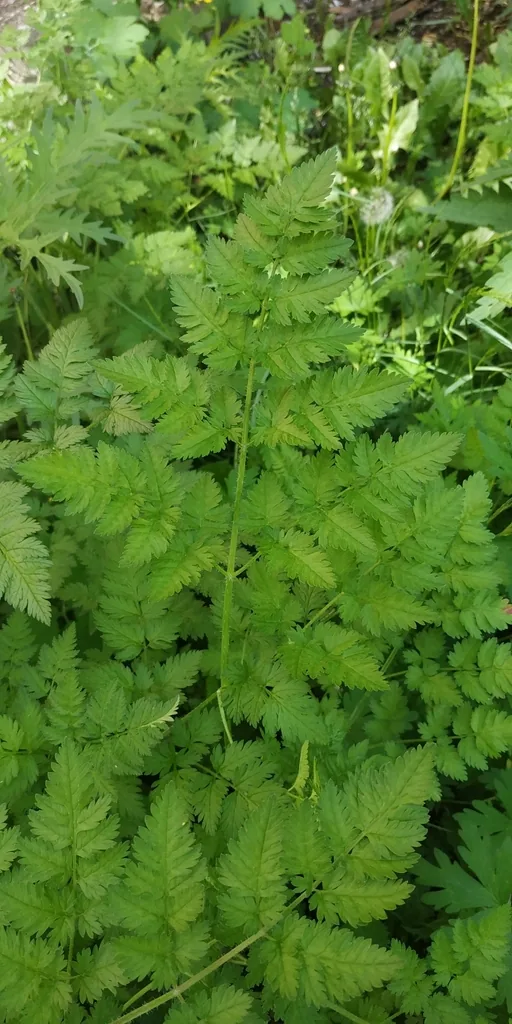
Cómo cultivar y cuidar Perifollo bulboso
Chaerophyllum bulbosum
Escrito por Emilio Marruso · última revisión
De un vistazo
El perifollo tuberoso esconde un regalo bajo tierra: cocida, su raíz se vuelve harinosa y dulce, y los tallos jóvenes se comen crudos o cocinados. Siémbralo en otoño directamente en el huerto, a pleno sol, y mantén la tierra húmeda. Cuando las hojas se secan, normalmente en julio o agosto, llega el momento de sacar tu cosecha.
- Sol
Sol pleno
- Riego
Mantén la tierra húmeda; no tolera la sequía
- Frío
Aguanta inviernos de hasta −23,3 °C (−10 °F)
Muy rústica · USDA 6 · RHS H7 · Z6
Qué dicen las fuentes (1)
Rusticidad, zona más fría: 6 [mínima invernal de −23,3 a −17,8 °C (de −10 a 0 °F)]
Light full sun Shade tolerance light shade Water moderate Hardiness Zone 6+
— Turnip-Rooted Chervil (Chaerophyllum bulbosum) — Practical Plants [2] - Suelo
Suelo de ácido a neutro, pH 4,6–7
- Distancia
5–8 cm entre plantas
Qué dicen las fuentes (1)
Distancia de plantación: 5.1-7.6 cm (2-3 pulgadas)
Chervil roots can probably be spaced at 2 to 3 inches, especially in a deep-dug or raised bed, or a container.
— Chervil Root [4] - Cosecha
Saca las raíces cuando se sequen las hojas, normalmente en julio–agosto; cocidas son dulces
Qué dicen las fuentes (1)
Cosecha: Cuando el follaje se marchita, generalmente en julio/agosto si se sembró en otoño
It can be harvested when the foliage dies down, usually in July/August from an autumn sowing
— Chaerophyllum bulbosum - Useful Temperate Plants [1] - Multiplicación
Por semilla, fresca en otoño o tras un periodo de frío
Qué dicen las fuentes (1)
Propagación: Semilla (estratificada o sembrada fresca en otoño)
Seed - best sown in the autumn in situ
— Chaerophyllum bulbosum - Useful Temperate Plants [1] - Siembra
Siembra en otoño en su sitio definitivo; con semilla guardada, a principios de primavera
Qué dicen las fuentes (2)
Siembra: Otoño (in situ); principios de primavera si se usa semilla almacenada
Seed - best sown in the autumn in situ
— Chaerophyllum bulbosum - Useful Temperate Plants [1] If stored for a spring sowing it should be kept in damp sand in a cold but frost-free place and then sown in situ in early spring
— Chaerophyllum bulbosum - Useful Temperate Plants [1] - Maceta
Crece también en maceta
Qué dicen las fuentes (1)
En maceta: Sí
For that and other logistic reasons, it is probably best grown (like scorzonera) in a large container
— Chervil Root [4]
Resumen
El perifollo de raíz de nabo es una planta bienal que se cultiva por su raíz comestible, que se cocina o se come cruda. [1] La semilla se siembra mejor en otoño donde va a crecer. [1] Su raíz tiene un contenido muy alto de almidón en la cosecha, y la sacarosa aumenta durante el almacenamiento en frío. [3]
Citado en inglés, como en la fuente.
Cuidados
Riego
Riego
Requiere suelo húmedo.
Qué dicen las fuentes (1)
Chervil root, like chervil as such, requires moist soil.Notas sobre el riego
Intolerante a la sequía
Qué dicen las fuentes (1)
Drought
intolerantLuz
Clima y frío
6 [mínima invernal de −23,3 a −17,8 °C (de −10 a 0 °F)]
Qué dicen las fuentes (1)
Light
full sun
Shade tolerance
light shade
Water
moderate
Hardiness
Zone 6+Suelo
pH del suelo, mínimo
4.6
Qué dicen las fuentes (1)
Tolerates a pH in the range 4.6 to 7.pH del suelo, máximo
7
Qué dicen las fuentes (1)
Tolerates a pH in the range 4.6 to 7.Dónde cultivarla
En maceta
Sí
Qué dicen las fuentes (1)
For that and other logistic reasons, it is probably best grown (like scorzonera) in a large containerDistancia de plantación
5.1-7.6 cm (2-3 pulgadas)
Qué dicen las fuentes (1)
Chervil roots can probably be spaced at 2 to 3 inches, especially in a deep-dug or raised bed, or a container.Propagación
Semilla (estratificada o sembrada fresca en otoño)
Qué dicen las fuentes (1)
Seed - best sown in the autumn in situRemedios
Las fuentes consultadas no dan remedios para esta planta.
Calendario
Otoño (in situ); principios de primavera si se usa semilla almacenada
Qué dicen las fuentes (2)
Seed - best sown in the autumn in situIf stored for a spring sowing it should be kept in damp sand in a cold but frost-free place and then sown in situ in early springCuando el follaje se marchita, generalmente en julio/agosto si se sembró en otoño
Qué dicen las fuentes (1)
It can be harvested when the foliage dies down, usually in July/August from an autumn sowingMeses tal como los dan las fuentes, en su mayoría de Estados Unidos (hemisferio norte). En el hemisferio sur se desplazan unos seis meses.
Comestibilidad
Según la fuente, citada textualmente. No comas una planta basándote solo en esta página: los errores de identificación pueden ser peligrosos.
Plantas similares
- Bananero de Etiopía Ensete ventricosum
- Agretti Soda inermis
- Apio caballar Smyrnium olusatrum
- Allium triquetrum Allium triquetrum
- Alpine dock Rumex alpinus
- Bledo Amaranthus hybridus
- American hogpeanut Amphicarpaea bracteata
- American Yellow Rocket Barbarea orthoceras
Fuentes
Cada valor anterior se cita de estos documentos. Los enlaces llevan al editor original.
- Chaerophyllum bulbosum - Useful Temperate Plants · temperate.theferns.info, consultado
- Turnip-Rooted Chervil (Chaerophyllum bulbosum) — Practical Plants · practicalplants.org, consultado
- CHAEROPHYLLUM BULBOSUM: A NEW VEGETABLE INTERESTING FOR ITS ROOT CARBOHYDRATE RESERVES - ishs · ishs.org, consultado
- Chervil Root · growingtaste.com, consultado
- Chaerophyllum bulbosum | Euro+Med-Plantbase · europlusmed.org, consultado
Escrito por Emilio Marruso · última revisión