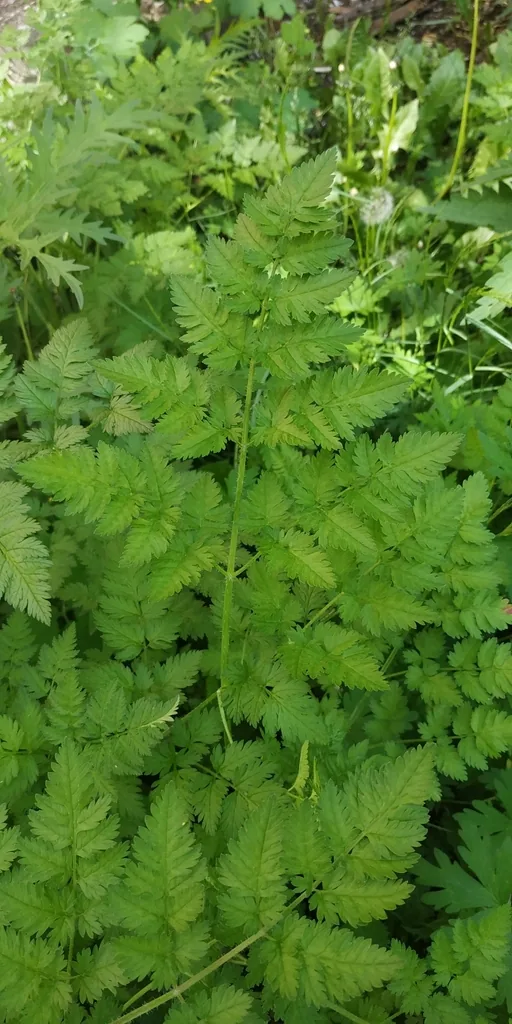
How to Grow and Care for Bulbous chervil
Chaerophyllum bulbosum
Written by Emilio Marruso · last checked
At a glance
Turnip-rooted chervil hides a sweet treat underground: once cooked, its root turns floury and sweet, and the young stems can be eaten raw or cooked. Sow it outdoors in autumn in a sunny spot and keep the soil moist. When the leaves die down, usually in July or August, it's time to dig up your harvest.
- Sun
Full sun
- Water
Keep the soil moist; it can't stand drought
- Cold
Survives winters down to −10 °F (−23.3 °C)
Very hardy · USDA 6 · RHS H7 · Z6
What the sources say (1)
Hardiness, coldest zone: 6 [winter low −23.3 to −17.8 °C (−10 to 0 °F)]
Light full sun Shade tolerance light shade Water moderate Hardiness Zone 6+
— Turnip-Rooted Chervil (Chaerophyllum bulbosum) — Practical Plants [2] - Soil
Acidic to neutral soil, pH 4.6–7
- Spacing
2–3 in between plants
What the sources say (1)
Spacing: 5.1-7.6 cm (2-3 in)
Chervil roots can probably be spaced at 2 to 3 inches, especially in a deep-dug or raised bed, or a container.
— Chervil Root [4] - Harvest
Dig the roots when the leaves die down, usually July–August; cook them, they turn sweet
What the sources say (1)
Harvest: When the foliage dies down, usually in July/August from an autumn sowing
It can be harvested when the foliage dies down, usually in July/August from an autumn sowing
— Chaerophyllum bulbosum - Useful Temperate Plants [1] - Propagation
By seed, sown fresh in autumn or given a cold spell first
What the sources say (1)
Propagation: Seed (stratified or sown fresh in autumn)
Seed - best sown in the autumn in situ
— Chaerophyllum bulbosum - Useful Temperate Plants [1] - Sowing
Sow outdoors where it will grow in autumn; with stored seed, in early spring
What the sources say (2)
Sowing: Autumn (in situ); early spring if stored seed is used
Seed - best sown in the autumn in situ
— Chaerophyllum bulbosum - Useful Temperate Plants [1] If stored for a spring sowing it should be kept in damp sand in a cold but frost-free place and then sown in situ in early spring
— Chaerophyllum bulbosum - Useful Temperate Plants [1] - Containers
Grows in containers too
What the sources say (1)
In containers: Yes
For that and other logistic reasons, it is probably best grown (like scorzonera) in a large container
— Chervil Root [4]
Overview
Turnip-rooted chervil is a biennial grown for its edible root, which is cooked or eaten raw. [1] The seed is best sown in autumn where it is to grow. [1] Its root has a very high starch content at harvest, and sucrose rises during cold storage. [3]
Bulbous chervil care
How to water Bulbous chervil
Watering
Requires moist soil
What the sources say (1)
Chervil root, like chervil as such, requires moist soil.Watering notes
Intolerant of drought
What the sources say (1)
Drought
intolerantHow much light Bulbous chervil needs
How much cold Bulbous chervil can take
6 [winter low −23.3 to −17.8 °C (−10 to 0 °F)]
What the sources say (1)
Light
full sun
Shade tolerance
light shade
Water
moderate
Hardiness
Zone 6+Best soil for Bulbous chervil
Soil pH, minimum
4.6
What the sources say (1)
Tolerates a pH in the range 4.6 to 7.Soil pH, maximum
7
What the sources say (1)
Tolerates a pH in the range 4.6 to 7.Where to grow Bulbous chervil
In containers
Yes
What the sources say (1)
For that and other logistic reasons, it is probably best grown (like scorzonera) in a large containerSpacing
5.1-7.6 cm (2-3 in)
What the sources say (1)
Chervil roots can probably be spaced at 2 to 3 inches, especially in a deep-dug or raised bed, or a container.How to propagate Bulbous chervil
Seed (stratified or sown fresh in autumn)
What the sources say (1)
Seed - best sown in the autumn in situRemedies
The sources we checked give no remedies for this plant.
Calendar
Autumn (in situ); early spring if stored seed is used
When the foliage dies down, usually in July/August from an autumn sowing
What the sources say (1)
It can be harvested when the foliage dies down, usually in July/August from an autumn sowingMonths as given by the sources, which are mostly from the United States (northern hemisphere). In the southern hemisphere they shift by about six months.
Edibility
Reported by the source, quoted verbatim. Do not eat a plant on the basis of this page alone: identification mistakes can be dangerous.
Similar plants
- Abyssinian banana Ensete ventricosum
- Agretti Soda inermis
- Alexanders Smyrnium olusatrum
- Allium triquetrum Allium triquetrum
- Alpine dock Rumex alpinus
- Amaranth pigweed Amaranthus hybridus
- American hogpeanut Amphicarpaea bracteata
- American Yellow Rocket Barbarea orthoceras
Sources
Every value above is quoted from these documents. Links lead to the original publisher.
- Chaerophyllum bulbosum - Useful Temperate Plants · temperate.theferns.info, consulted
- Turnip-Rooted Chervil (Chaerophyllum bulbosum) — Practical Plants · practicalplants.org, consulted
- CHAEROPHYLLUM BULBOSUM: A NEW VEGETABLE INTERESTING FOR ITS ROOT CARBOHYDRATE RESERVES - ishs · ishs.org, consulted
- Chervil Root · growingtaste.com, consulted
- Chaerophyllum bulbosum | Euro+Med-Plantbase · europlusmed.org, consulted
Written by Emilio Marruso · last checked