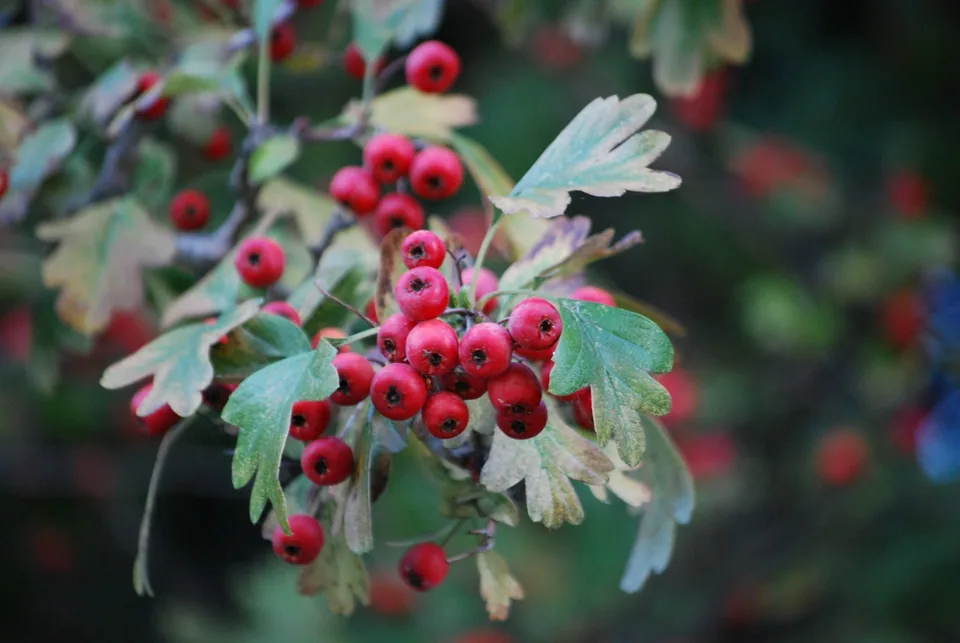
Cómo cultivar y cuidar Majuelo
Crataegus monogyna
Escrito por Emilio Marruso · última revisión
Tóxica para: Personas · Por qué
De un vistazo
El espino albar es un árbol generoso que crece a pleno sol o en semisombra y forma un seto precioso. Riégalo bien durante sus tres primeras temporadas de crecimiento y después aguantará la sequía sin problemas. En otoño da frutos comestibles, con sus hojas secas se prepara una infusión y sus flores se usan en jarabes y postres dulces.
- Sol
Sol pleno o semisombra; a pleno sol da más fruta y de mejor calidad
Qué dicen las fuentes (3)
Luz: Pleno sol a semisombra.
cultivado por su fruto (fuente: Plants for a Future).: A position in full sun is best when plants are being grown for their fruit, they also succeed in semi-shade though fruit yields and quality will be lower in such a position
— Crataegus monogyna - Useful Temperate Plants [5] Hawthorn is a hardy plant and will grow on a range of soils, in full sun or part-shade.
— How to grow hawthorn / RHS Growing Guide [3] Ideally plant in moist but well-drained soil in full sun to partial shade.
— How to Grow Hawthorn | BBC Gardeners World Magazine [4] - Riego
Un cubo de agua a la semana en verano y algo menos el resto del año; ya arraigado, aguanta la sequía
Qué dicen las fuentes (3)
Riego: Riega semanalmente en verano con un cubo de agua por planta; reduce un poco el riego el resto del año.
Water weekly in summer with a bucket of water per plant. Reduce the water a little the rest of the year.
— Crataegus monogyna or Common hawthorn | Care and Growing [7] Notas sobre el riego: El riego es clave para el establecimiento: vigila durante los períodos secos las primeras tres temporadas de crecimiento después de la plantación; una vez establecido, tolera la sequía y los suelos excesivamente húmedos.
Continue to monitor watering during dry periods for the first three growing seasons after planting.
— How to grow hawthorn / RHS Growing Guide [3] Once established, it succeeds in excessively moist soils and also tolerates drought
— Crataegus monogyna - Useful Temperate Plants [5] - Distancia
45–60 cm entre plantas para un seto
Qué dicen las fuentes (1)
Distancia de plantación: Separación de 45-60 cm (18 pulg-2 pies) para una hilera de seto.
Make a row, spacing plants 45-60cm (18in-2ft) apart.
— How to grow hawthorn / RHS Growing Guide [3] - Plantación
De otoño a primavera, en reposo; plantas de seto a raíz desnuda, de octubre a febrero
Qué dicen las fuentes (5)
Plantación: Otoño a primavera, cuando está en reposo (plantas de seto a raíz desnuda de octubre a febrero).
Plantas de seto a raíz desnuda (fuente: RHS): Bare-root hedging plants can be planted during winter. Anytime between October and February is fine
— How to grow hawthorn / RHS Growing Guide [3] Según BBC Gardeners World: Hawthorns are best planted when dormant, from autumn to spring, as bare-root trees or hedging plants.
— How to Grow Hawthorn | BBC Gardeners World Magazine [4] Según Consulta Plantas: Quickthorn prefers a calcareous-clayey soil , cool and humid. Planting is done in spring or autumn.
— Crataegus monogyna or Common hawthorn | Care and Growing [7] Bare-root hedging plants can be planted during winter. Anytime between October and February is fine
— How to grow hawthorn / RHS Growing Guide [3] Hawthorns are best planted when dormant, from autumn to spring, as bare-root trees or hedging plants.
— How to Grow Hawthorn | BBC Gardeners World Magazine [4] - Abonado
Poco exigente: harina de sangre, pescado y huesos a principios de primavera en plantas nuevas
Qué dicen las fuentes (5)
Cuándo: Primavera, antes de que comience el nuevo crecimiento
Fertilize the hawthorn tree with a 10-10-10 fertilizer in the spring before new growth starts. Use one tablespoon of fertilizer per foot of tree height, up to one cup of fertilizer.
— [8] Hawthorns are difficult to propagate from seed, but do throw out shoots that can be replanted. Local nurseries sell hawthorns. They should be planted in full sun, and fertilized in the spring.
— [9] or blood, fish and bone applied in early spring (February) often gives newly-planted hedges and trees a boost during the growing season
— How to grow hawthorn / RHS Growing Guide [3] Abonos naturales: No es un gran consumidor; sangre, pescado y huesos a principios de primavera para setos y árboles recién plantados
Hawthorn aren't heavy feeders, but a general purpose fertiliser
— How to grow hawthorn / RHS Growing Guide [3] or blood, fish and bone applied in early spring (February) often gives newly-planted hedges and trees a boost during the growing season
— How to grow hawthorn / RHS Growing Guide [3] - Poda
Poda los árboles en enero–febrero; recorta los setos dos o más veces de finales de primavera a verano
Qué dicen las fuentes (6)
Poda: Finales de invierno a mediados de invierno (enero-febrero) para árboles y poda de formación; los setos se recortan desde finales de primavera hasta verano
Árboles de espino (fuente: RHS): Pruning should ideally be done when the tree is dormant in mid-winter (Jan/Feb).
— How to grow hawthorn / RHS Growing Guide [3] Según Consulta Plantas: Prune these shrubs in late winter to keep them compact.
— Crataegus monogyna or Common hawthorn | Care and Growing [7] Mantenimiento de un seto formal (fuente: RHS): Once established, to maintain a formal look, cut your hedge twice or more from late spring to summer.
— How to grow hawthorn / RHS Growing Guide [3] Pruning should ideally be done when the tree is dormant in mid-winter (Jan/Feb).
— How to grow hawthorn / RHS Growing Guide [3] Prune these shrubs in late winter to keep them compact.
— Crataegus monogyna or Common hawthorn | Care and Growing [7] Once established, to maintain a formal look, cut your hedge twice or more from late spring to summer.
— How to grow hawthorn / RHS Growing Guide [3] - Cosecha
Recoge los frutos comestibles en otoño; las hojas secas dan infusión y las flores, jarabes
Qué dicen las fuentes (1)
Cosecha: Otoño
The fruits appear in autumn and can be white, red or yellow.
— Crataegus monogyna or Common hawthorn | Care and Growing [7] - Plagas
Pulgones, orugas y ácaros; oídio, manchas en las hojas y fuego bacteriano
Qué dicen las fuentes (5)
Plagas: ácaro del margen de la hoja del espino, pulgones, orugas
Hawthorn leaf margin mite ( Phyllocoptes goniothorax ) causes pale thickening and curling of the leaf margins.
— How to grow hawthorn / RHS Growing Guide [3] Aphids and caterpillars feed on the leaves, but don't usually need controlling.
— How to grow hawthorn / RHS Growing Guide [3] Enfermedades: manchas foliares por hongos, mildiu polvoriento, fuego bacteriano
Fungal leaf spots cause dark-spotting and blotching to the leaf surface. Spots often have a grey centre and can be accompanied by leaf yellowing. Although unsightly, this is unlikely to cause the tree to die
— How to grow hawthorn / RHS Growing Guide [3] Powdery mildew may occur, especially in dry conditions.
— How to grow hawthorn / RHS Growing Guide [3] Fireblight affects members of the Rosaceae (rose family) like hawthorn.
— How to grow hawthorn / RHS Growing Guide [3] - Tamaño
Hasta 10 m de alto
Qué dicen las fuentes (1)
Altura adulta: hasta 1000 cm (10 m)
It is a deciduous shrub or small tree that can grow up to 10 m tall
— Crataegus monogyna - EUFORGEN European forest genetic resources programme [1] - Siembra
Siembra en cajonera fría de finales de verano a otoño, con semillas de frutos cogidos aún verdes
Qué dicen las fuentes (3)
Siembra: Finales de verano a otoño (en cuanto madura, en un marco frío).
Seed - this is best sown as soon as it is ripe in the autumn in a cold frame
— Crataegus monogyna - Useful Temperate Plants [5] Hawthorn is more often propagated from seed in late summer
— How to Grow Hawthorn | BBC Gardeners World Magazine [4] Guardar semillas: recolecta las semillas cuando los frutos del espino aún estén verdes a fines del verano, remójalos en agua tibia durante varios días para ablandar la pulpa, luego aplasta el fruto contra el costado de un colador para extraer las semillas
Seed is best collected when the haws (fruit) are still green in late summer. Soak in warm water for several days to soften the flesh, then remove seed by squashing fruit against the side of a seive.
— How to grow hawthorn / RHS Growing Guide [3] - Maceta
Crece también en maceta
Qué dicen las fuentes (1)
En maceta: Sí
as well as on terraces in large pots.
— Crataegus monogyna or Common hawthorn | Care and Growing [7] - Seguridad
Sin riesgos conocidos para las personas
Resumen
El espino común es una planta resistente de hoja caduca muy utilizada para setos y árboles pequeños de jardín, que crece a pleno sol o en semisombra en una variedad de suelos. [3][7] Es una planta fácil de cultivar que tolera la sequía una vez establecida y es muy resistente. [5] Se propaga principalmente por semilla, que puede tardar mucho tiempo en germinar. [4]
Citado en inglés, como en la fuente.
Esta ficha está incompleta: las fuentes consultadas aún no cubren todos los campos.
Aún no cubierto por nuestras fuentes: Rusticidad, zona más fría, Rusticidad, zona más cálida
Cuidados
Riego
Riego
Riega semanalmente en verano con un cubo de agua por planta; reduce un poco el riego el resto del año.
Qué dicen las fuentes (1)
Water weekly in summer with a bucket of water per plant. Reduce the water a little the rest of the year.Notas sobre el riego
El riego es clave para el establecimiento: vigila durante los períodos secos las primeras tres temporadas de crecimiento después de la plantación; una vez establecido, tolera la sequía y los suelos excesivamente húmedos.
Qué dicen las fuentes (2)
Continue to monitor watering during dry periods for the first three growing seasons after planting.Once established, it succeeds in excessively moist soils and also tolerates droughtLuz
Pleno sol a semisombra.
Lo que dice cada fuente
cultivado por su fruto (fuente: Plants for a Future).: El pleno sol es lo mejor; la semisombra reduce el rendimiento y la calidad del fruto.
Qué dicen las fuentes (3)
cultivado por su fruto (fuente: Plants for a Future).: A position in full sun is best when plants are being grown for their fruit, they also succeed in semi-shade though fruit yields and quality will be lower in such a positionHawthorn is a hardy plant and will grow on a range of soils, in full sun or part-shade.Ideally plant in moist but well-drained soil in full sun to partial shade.Clima y frío
Rusticidad, zona más fría
No figura en las fuentes consultadas.
Rusticidad, zona más cálida
No figura en las fuentes consultadas.
Dónde cultivarla
En maceta
Sí
Qué dicen las fuentes (1)
as well as on terraces in large pots.Distancia de plantación
Separación de 45-60 cm (18 pulg-2 pies) para una hilera de seto.
Qué dicen las fuentes (1)
Make a row, spacing plants 45-60cm (18in-2ft) apart.Propagación
Las fuentes no coinciden:
Qué dicen las fuentes (2)
The best method of propagating hawthorns is from seed, saved from the haws or berries.The most reliable way of obtaining a good fruiting form is by grafting from a known good tree, or obtaining a named cultivar from a reliable sourceCultivo
La planta
Familia
Rosáceas
Qué dicen las fuentes (1)
Fireblight affects members of the Rosaceae (rose family) like hawthorn.Altura adulta
hasta 1000 cm (10 m)
Qué dicen las fuentes (1)
It is a deciduous shrub or small tree that can grow up to 10 m tallCosecha y conservación
Guardar semillas
recolecta las semillas cuando los frutos del espino aún estén verdes a fines del verano, remójalos en agua tibia durante varios días para ablandar la pulpa, luego aplasta el fruto contra el costado de un colador para extraer las semillas
Qué dicen las fuentes (1)
Seed is best collected when the haws (fruit) are still green in late summer. Soak in warm water for several days to soften the flesh, then remove seed by squashing fruit against the side of a seive.Plagas y enfermedades
Plagas
ácaro del margen de la hoja del espino, pulgones, orugas
Qué dicen las fuentes (2)
Hawthorn leaf margin mite ( Phyllocoptes goniothorax ) causes pale thickening and curling of the leaf margins.Aphids and caterpillars feed on the leaves, but don't usually need controlling.Enfermedades
manchas foliares por hongos, mildiu polvoriento, fuego bacteriano
Qué dicen las fuentes (3)
Fungal leaf spots cause dark-spotting and blotching to the leaf surface. Spots often have a grey centre and can be accompanied by leaf yellowing. Although unsightly, this is unlikely to cause the tree to diePowdery mildew may occur, especially in dry conditions.Fireblight affects members of the Rosaceae (rose family) like hawthorn.Abonado
Cuándo
Primavera, antes de que comience el nuevo crecimiento
Qué dicen las fuentes (3)
Fertilize the hawthorn tree with a 10-10-10 fertilizer in the spring before new growth starts. Use one tablespoon of fertilizer per foot of tree height, up to one cup of fertilizer.Hawthorns are difficult to propagate from seed, but do throw out shoots that can be replanted. Local nurseries sell hawthorns. They should be planted in full sun, and fertilized in the spring.or blood, fish and bone applied in early spring (February) often gives newly-planted hedges and trees a boost during the growing seasonAbonos naturales
No es un gran consumidor; sangre, pescado y huesos a principios de primavera para setos y árboles recién plantados
Qué dicen las fuentes (2)
Hawthorn aren't heavy feeders, but a general purpose fertiliseror blood, fish and bone applied in early spring (February) often gives newly-planted hedges and trees a boost during the growing seasonAbonos minerales
Fertilizante 10-10-10: 14.8 mL por cada 30.5 cm [12 in] de altura del árbol, hasta 237 mL
Qué dicen las fuentes (1)
Fertilize the hawthorn tree with a 10-10-10 fertilizer in the spring before new growth starts. Use one tablespoon of fertilizer per foot of tree height, up to one cup of fertilizer.Problemas
Pulgones lanudos
Síntoma: Pelusa blanca en los tallos
Qué hacer: Si es necesario, los pulgones lanudos se pueden eliminar con agua y un cepillo rígido.
Qué dicen las fuentes (2)
White fluff is likely to be produced by woolly aphids, which feed on hawthorn as well as other plants such as apples, crab apples, pears and cotoneaster.
— How to Grow Hawthorn | BBC Gardeners World Magazine [4] If necessary, woolly aphids can be removed with water and a stiff brush.
— How to Grow Hawthorn | BBC Gardeners World Magazine [4] Estrés por sequía
Síntoma: Las hojas se vuelven amarillas o marrones, o se caen en épocas distintas al otoño
Qué hacer: No se indica en las fuentes.
Qué dicen las fuentes (1)
If hawthorn leaves turn yellow or brown, or drop at other times, the plant may be suffering from drought stress.
— How to Grow Hawthorn | BBC Gardeners World Magazine [4] Roya
Síntoma: Infección fúngica por roya
Qué hacer: No se indica en las fuentes.
Qué dicen las fuentes (1)
Oneseed hawthorn can be victim of Rust (fungi).
— Crataegus monogyna or Common hawthorn | Care and Growing [7]
Remedios
Cada remedio indica qué dicen las fuentes oficiales; los remedios tradicionales sin fuente oficial aparecen marcados. Los perjudiciales están para que sepas evitarlos.
Cómo eliminarla
espino invasivo
arranca o desentierra las plántulas Fuente oficial, sin prueba independiente
Cómo: Arranca o desentierra las plántulas y los árboles jóvenes cuando el suelo esté húmedo; la planta suele rebrotar del tocón, por lo que cortarla solo no es eficaz.
Seedlings and young saplings can be pulled or dug up when soil is moist. The roots quickly become deep and stout, and sharp thorns are present even on young seedlings. Mature trees have deep and extensive roots. Digging is labor-intensive and results in major soil disturbance if all the roots are removed. It often stump-sprouts, so removal by cutting alone is not effective.
— kingcounty.gov [10] Corta o siega repetidamente Funciona en parte
Berries should go in the garbage to prevent the spread of more plants.
— kingcounty.gov [10] Cómo: Corta o siega con un calendario estricto para que la planta no pueda florecer; esto evita las bayas y la propagación de más plantas.
Cutting or mowing alone is not effective. But this can prevent berries and the spread of more plants.
— kingcounty.gov [10] Qué dicen las pruebas Cutting or mowing alone is not effective. But this can prevent berries and the spread of more plants.
— kingcounty.gov [10]
Toxicidad
Según la fuente, citada textualmente. No es un consejo médico ni veterinario: si una persona o un animal pudo haber ingerido esta planta, contacta con un centro de toxicología o con un veterinario.
## Known Hazards None known
[5]
Calendario
Finales de verano a otoño (en cuanto madura, en un marco frío).
Otoño a primavera, cuando está en reposo (plantas de seto a raíz desnuda de octubre a febrero).
Lo que dice cada fuente
Plantas de seto a raíz desnuda (fuente: RHS): Octubre a febrero.
Según BBC Gardeners World: De otoño a primavera, cuando están en reposo
Según Consulta Plantas: Primavera u otoño.
Qué dicen las fuentes (5)
Plantas de seto a raíz desnuda (fuente: RHS): Bare-root hedging plants can be planted during winter. Anytime between October and February is fineSegún BBC Gardeners World: Hawthorns are best planted when dormant, from autumn to spring, as bare-root trees or hedging plants.Según Consulta Plantas: Quickthorn prefers a calcareous-clayey soil , cool and humid. Planting is done in spring or autumn.Bare-root hedging plants can be planted during winter. Anytime between October and February is fineHawthorns are best planted when dormant, from autumn to spring, as bare-root trees or hedging plants.Otoño
Qué dicen las fuentes (1)
The fruits appear in autumn and can be white, red or yellow.Finales de invierno a mediados de invierno (enero-febrero) para árboles y poda de formación; los setos se recortan desde finales de primavera hasta verano
Lo que dice cada fuente
Árboles de espino (fuente: RHS): Mediados de invierno, cuando están en reposo (enero/febrero)
Según Consulta Plantas: Finales del invierno
Mantenimiento de un seto formal (fuente: RHS): Dos veces o más desde finales de primavera hasta verano
Qué dicen las fuentes (6)
Árboles de espino (fuente: RHS): Pruning should ideally be done when the tree is dormant in mid-winter (Jan/Feb).Según Consulta Plantas: Prune these shrubs in late winter to keep them compact.Mantenimiento de un seto formal (fuente: RHS): Once established, to maintain a formal look, cut your hedge twice or more from late spring to summer.Pruning should ideally be done when the tree is dormant in mid-winter (Jan/Feb).Prune these shrubs in late winter to keep them compact.Once established, to maintain a formal look, cut your hedge twice or more from late spring to summer.Meses tal como los dan las fuentes, en su mayoría de Estados Unidos (hemisferio norte). En el hemisferio sur se desplazan unos seis meses.
Comestibilidad
Según la fuente, citada textualmente. No comas una planta basándote solo en esta página: los errores de identificación pueden ser peligrosos.
Valores orientativos
Valores de una fuente secundaria, no comprobados palabra por palabra como el resto de esta página. Úselos como punto de partida.
- Ciclo de vida
- PerenneValor orientativo, adáptalo a tu clima · Fuente secundaria
- Resiste la sequía
- SíValor orientativo, adáptalo a tu clima · Fuente secundaria
- pH del suelo
- 6-7.5Valor orientativo, adáptalo a tu clima · Fuente secundaria
- Crecimiento
- AltaValor orientativo, adáptalo a tu clima · Fuente secundaria
Plantas similares
Fuentes
Cada valor anterior se cita de estos documentos. Los enlaces llevan al editor original.
- Crataegus monogyna - EUFORGEN European forest genetic resources programme · euforgen.org, consultado
- Botanical, phytochemical, anti-microbial and pharmaceutical characteristics of hawthorn (Crataegusmonogyna jacq.), rosaceae · flore.unifi.it, consultado
- How to grow hawthorn / RHS Growing Guide · rhs.org.uk, consultado
- How to Grow Hawthorn | BBC Gardeners World Magazine · gardenersworld.com, consultado
- Crataegus monogyna - Useful Temperate Plants · temperate.theferns.info, consultado
- How to Grow Crataegus - Hawthorn · harvesttotable.com, consultado
- Crataegus monogyna or Common hawthorn | Care and Growing · consultaplantas.com, consultado
- ask.extension.org · ask.extension.org
- ucanr.edu · ucanr.edu
- kingcounty.gov · kingcounty.gov
Escrito por Emilio Marruso · última revisión