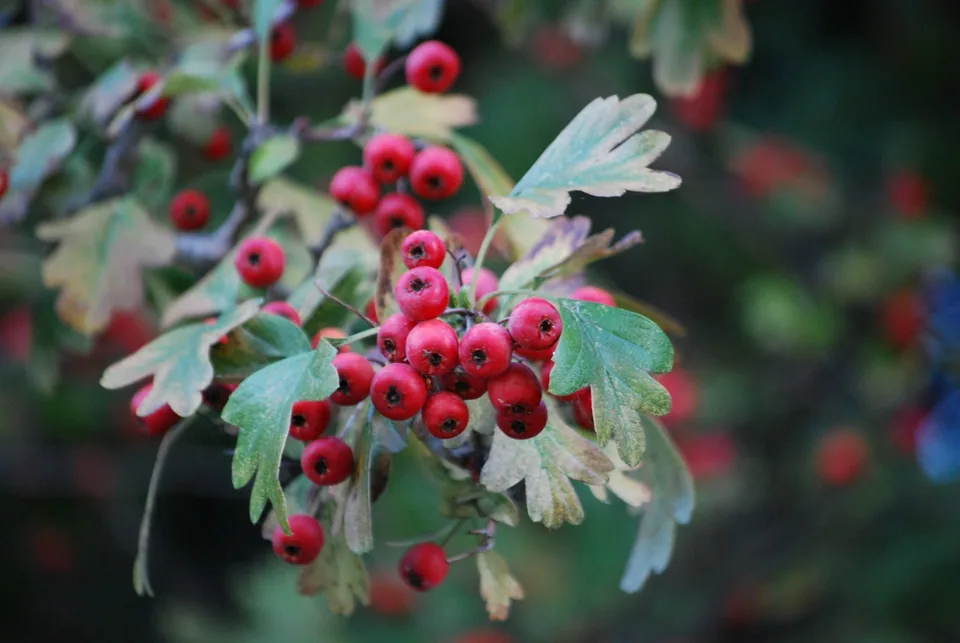
How to Grow and Care for Common hawthorn
Crataegus monogyna
Written by Emilio Marruso · last checked
Toxic to: People · Why
At a glance
Hawthorn is a generous tree that grows in full sun or part shade and makes a lovely hedge. Water it well through its first three growing seasons, and after that it handles drought with ease. In autumn it gives edible fruit, its dried leaves make a tea, and its flowers go into syrups and sweet puddings.
- Sun
Full sun to part shade; full sun gives more and better fruit
What the sources say (3)
Light: Full sun to part-shade
grown for fruit (fonte: Plants for a Future): A position in full sun is best when plants are being grown for their fruit, they also succeed in semi-shade though fruit yields and quality will be lower in such a position
— Crataegus monogyna - Useful Temperate Plants [5] Hawthorn is a hardy plant and will grow on a range of soils, in full sun or part-shade.
— How to grow hawthorn / RHS Growing Guide [3] Ideally plant in moist but well-drained soil in full sun to partial shade.
— How to Grow Hawthorn | BBC Gardeners World Magazine [4] - Water
A bucket of water a week in summer, a bit less the rest of the year; handles drought once settled
What the sources say (3)
Watering: Water weekly in summer with a bucket of water per plant; reduce the water a little the rest of the year
Water weekly in summer with a bucket of water per plant. Reduce the water a little the rest of the year.
— Crataegus monogyna or Common hawthorn | Care and Growing [7] Watering notes: Watering is key to establishment: monitor during dry periods for the first three growing seasons after planting; once established it tolerates drought and excessively moist soils
Continue to monitor watering during dry periods for the first three growing seasons after planting.
— How to grow hawthorn / RHS Growing Guide [3] Once established, it succeeds in excessively moist soils and also tolerates drought
— Crataegus monogyna - Useful Temperate Plants [5] - Spacing
18 in to 2 ft apart for a hedge
What the sources say (1)
Spacing: 45-60 cm (18 in-2 ft) apart for a hedge row
Make a row, spacing plants 45-60cm (18in-2ft) apart.
— How to grow hawthorn / RHS Growing Guide [3] - Planting
Autumn to spring, while dormant; bare-root hedge plants from October to February
What the sources say (5)
Planting: Autumn to spring, when dormant (bare-root hedging plants October to February)
bare-root hedging plants (fonte: RHS): Bare-root hedging plants can be planted during winter. Anytime between October and February is fine
— How to grow hawthorn / RHS Growing Guide [3] According to BBC Gardeners World: Hawthorns are best planted when dormant, from autumn to spring, as bare-root trees or hedging plants.
— How to Grow Hawthorn | BBC Gardeners World Magazine [4] According to Consulta Plantas: Quickthorn prefers a calcareous-clayey soil , cool and humid. Planting is done in spring or autumn.
— Crataegus monogyna or Common hawthorn | Care and Growing [7] Bare-root hedging plants can be planted during winter. Anytime between October and February is fine
— How to grow hawthorn / RHS Growing Guide [3] Hawthorns are best planted when dormant, from autumn to spring, as bare-root trees or hedging plants.
— How to Grow Hawthorn | BBC Gardeners World Magazine [4] - Feeding
Light feeder: blood, fish and bone in early spring for new plantings
What the sources say (5)
When: Spring, before new growth starts
Fertilize the hawthorn tree with a 10-10-10 fertilizer in the spring before new growth starts. Use one tablespoon of fertilizer per foot of tree height, up to one cup of fertilizer.
— [8] Hawthorns are difficult to propagate from seed, but do throw out shoots that can be replanted. Local nurseries sell hawthorns. They should be planted in full sun, and fertilized in the spring.
— [9] or blood, fish and bone applied in early spring (February) often gives newly-planted hedges and trees a boost during the growing season
— How to grow hawthorn / RHS Growing Guide [3] Natural fertilizers: Not a heavy feeder; blood, fish and bone in early spring for newly planted hedges and trees
Hawthorn aren't heavy feeders, but a general purpose fertiliser
— How to grow hawthorn / RHS Growing Guide [3] or blood, fish and bone applied in early spring (February) often gives newly-planted hedges and trees a boost during the growing season
— How to grow hawthorn / RHS Growing Guide [3] - Pruning
Prune trees in January–February; trim hedges twice or more from late spring to summer
What the sources say (6)
Pruning: Late winter to mid-winter (January-February) for trees and shaping; hedges cut from late spring to summer
hawthorn trees (fonte: RHS): Pruning should ideally be done when the tree is dormant in mid-winter (Jan/Feb).
— How to grow hawthorn / RHS Growing Guide [3] According to Consulta Plantas: Prune these shrubs in late winter to keep them compact.
— Crataegus monogyna or Common hawthorn | Care and Growing [7] maintaining a formal hedge (fonte: RHS): Once established, to maintain a formal look, cut your hedge twice or more from late spring to summer.
— How to grow hawthorn / RHS Growing Guide [3] Pruning should ideally be done when the tree is dormant in mid-winter (Jan/Feb).
— How to grow hawthorn / RHS Growing Guide [3] Prune these shrubs in late winter to keep them compact.
— Crataegus monogyna or Common hawthorn | Care and Growing [7] Once established, to maintain a formal look, cut your hedge twice or more from late spring to summer.
— How to grow hawthorn / RHS Growing Guide [3] - Harvest
Pick the edible fruit in autumn; dried leaves make tea and flowers go into syrups
What the sources say (1)
Harvest: Autumn
The fruits appear in autumn and can be white, red or yellow.
— Crataegus monogyna or Common hawthorn | Care and Growing [7] - Pests
Aphids, caterpillars and mites; powdery mildew, leaf spots and fireblight
What the sources say (5)
Pests: hawthorn leaf margin mite, aphids, caterpillars
Hawthorn leaf margin mite ( Phyllocoptes goniothorax ) causes pale thickening and curling of the leaf margins.
— How to grow hawthorn / RHS Growing Guide [3] Aphids and caterpillars feed on the leaves, but don't usually need controlling.
— How to grow hawthorn / RHS Growing Guide [3] Diseases: fungal leaf spots, powdery mildew, fireblight
Fungal leaf spots cause dark-spotting and blotching to the leaf surface. Spots often have a grey centre and can be accompanied by leaf yellowing. Although unsightly, this is unlikely to cause the tree to die
— How to grow hawthorn / RHS Growing Guide [3] Powdery mildew may occur, especially in dry conditions.
— How to grow hawthorn / RHS Growing Guide [3] Fireblight affects members of the Rosaceae (rose family) like hawthorn.
— How to grow hawthorn / RHS Growing Guide [3] - Size
Up to 33 ft tall
What the sources say (1)
Mature height: up to 1000 cm (10 m)
It is a deciduous shrub or small tree that can grow up to 10 m tall
— Crataegus monogyna - EUFORGEN European forest genetic resources programme [1] - Sowing
Sow in a cold frame from late summer to autumn, with seed from fruit picked still green
What the sources say (3)
Sowing: Late summer to autumn (as soon as ripe, in a cold frame)
Seed - this is best sown as soon as it is ripe in the autumn in a cold frame
— Crataegus monogyna - Useful Temperate Plants [5] Hawthorn is more often propagated from seed in late summer
— How to Grow Hawthorn | BBC Gardeners World Magazine [4] Saving seeds: collect seed when the haws are still green in late summer, soak in warm water for several days to soften the flesh, then squash the fruit against the side of a sieve to remove the seed
Seed is best collected when the haws (fruit) are still green in late summer. Soak in warm water for several days to soften the flesh, then remove seed by squashing fruit against the side of a seive.
— How to grow hawthorn / RHS Growing Guide [3] - Containers
Grows in containers too
What the sources say (1)
In containers: Yes
as well as on terraces in large pots.
— Crataegus monogyna or Common hawthorn | Care and Growing [7] - Safety
No known hazards to people
Overview
Common hawthorn is a hardy deciduous plant widely used for hedges and small garden trees, growing in full sun or part-shade on a range of soils. [3][7] It is an easily grown plant that tolerates drought once established and is very hardy. [5] It is mainly propagated from seed, which can take a long time to germinate. [4]
This record is incomplete: the sources we read do not cover every field yet.
Not yet covered by our sources: Hardiness, coldest zone, Hardiness, warmest zone
Common hawthorn care
How to water Common hawthorn
Watering
Water weekly in summer with a bucket of water per plant; reduce the water a little the rest of the year
What the sources say (1)
Water weekly in summer with a bucket of water per plant. Reduce the water a little the rest of the year.Watering notes
Watering is key to establishment: monitor during dry periods for the first three growing seasons after planting; once established it tolerates drought and excessively moist soils
What the sources say (2)
Continue to monitor watering during dry periods for the first three growing seasons after planting.Once established, it succeeds in excessively moist soils and also tolerates droughtHow much light Common hawthorn needs
Full sun to part-shade
What each source says
grown for fruit (fonte: Plants for a Future): Full sun is best; semi-shade lowers fruit yield and quality
What the sources say (3)
grown for fruit (fonte: Plants for a Future): A position in full sun is best when plants are being grown for their fruit, they also succeed in semi-shade though fruit yields and quality will be lower in such a positionHawthorn is a hardy plant and will grow on a range of soils, in full sun or part-shade.Ideally plant in moist but well-drained soil in full sun to partial shade.How much cold Common hawthorn can take
Hardiness, coldest zone
Not stated in the sources we read.
Hardiness, warmest zone
Not stated in the sources we read.
Where to grow Common hawthorn
In containers
Yes
What the sources say (1)
as well as on terraces in large pots.Spacing
45-60 cm (18 in-2 ft) apart for a hedge row
What the sources say (1)
Make a row, spacing plants 45-60cm (18in-2ft) apart.How to propagate Common hawthorn
The sources disagree:
What the sources say (2)
The best method of propagating hawthorns is from seed, saved from the haws or berries.The most reliable way of obtaining a good fruiting form is by grafting from a known good tree, or obtaining a named cultivar from a reliable sourceHow to grow Common hawthorn
The plant
Family
Rosaceae
What the sources say (1)
Fireblight affects members of the Rosaceae (rose family) like hawthorn.Mature height
up to 1000 cm (10 m)
What the sources say (1)
It is a deciduous shrub or small tree that can grow up to 10 m tallHarvest and storage
Saving seeds
collect seed when the haws are still green in late summer, soak in warm water for several days to soften the flesh, then squash the fruit against the side of a sieve to remove the seed
What the sources say (1)
Seed is best collected when the haws (fruit) are still green in late summer. Soak in warm water for several days to soften the flesh, then remove seed by squashing fruit against the side of a seive.Pests and diseases
Pests
hawthorn leaf margin mite, aphids, caterpillars
What the sources say (2)
Hawthorn leaf margin mite ( Phyllocoptes goniothorax ) causes pale thickening and curling of the leaf margins.Aphids and caterpillars feed on the leaves, but don't usually need controlling.Diseases
fungal leaf spots, powdery mildew, fireblight
What the sources say (3)
Fungal leaf spots cause dark-spotting and blotching to the leaf surface. Spots often have a grey centre and can be accompanied by leaf yellowing. Although unsightly, this is unlikely to cause the tree to diePowdery mildew may occur, especially in dry conditions.Fireblight affects members of the Rosaceae (rose family) like hawthorn.Fertilizing
When
Spring, before new growth starts
What the sources say (3)
Fertilize the hawthorn tree with a 10-10-10 fertilizer in the spring before new growth starts. Use one tablespoon of fertilizer per foot of tree height, up to one cup of fertilizer.Hawthorns are difficult to propagate from seed, but do throw out shoots that can be replanted. Local nurseries sell hawthorns. They should be planted in full sun, and fertilized in the spring.or blood, fish and bone applied in early spring (February) often gives newly-planted hedges and trees a boost during the growing seasonNatural fertilizers
Not a heavy feeder; blood, fish and bone in early spring for newly planted hedges and trees
What the sources say (2)
Hawthorn aren't heavy feeders, but a general purpose fertiliseror blood, fish and bone applied in early spring (February) often gives newly-planted hedges and trees a boost during the growing seasonMineral fertilizers
10-10-10 fertilizer: 14.8 mL per 30.5 cm [12 in] of tree height, up to 237 mL
What the sources say (1)
Fertilize the hawthorn tree with a 10-10-10 fertilizer in the spring before new growth starts. Use one tablespoon of fertilizer per foot of tree height, up to one cup of fertilizer.Common hawthorn pests and problems
Woolly aphids
Symptom: White fluff on the stems
What to do: If necessary, woolly aphids can be removed with water and a stiff brush.
What the sources say (2)
White fluff is likely to be produced by woolly aphids, which feed on hawthorn as well as other plants such as apples, crab apples, pears and cotoneaster.
— How to Grow Hawthorn | BBC Gardeners World Magazine [4] If necessary, woolly aphids can be removed with water and a stiff brush.
— How to Grow Hawthorn | BBC Gardeners World Magazine [4] Drought stress
Symptom: Leaves turn yellow or brown, or drop at other times than autumn
What to do: Not stated in the sources.
What the sources say (1)
If hawthorn leaves turn yellow or brown, or drop at other times, the plant may be suffering from drought stress.
— How to Grow Hawthorn | BBC Gardeners World Magazine [4] Rust
Symptom: Fungal rust infection
What to do: Not stated in the sources.
What the sources say (1)
Oneseed hawthorn can be victim of Rust (fungi).
— Crataegus monogyna or Common hawthorn | Care and Growing [7]
Remedies
Each remedy shows what official sources say about it; traditional remedies without an official source are marked as such. Harmful ones are listed so you know to avoid them.
Getting rid of it
invasive hawthorn
pulling or digging up seedlings Official source, not independently tested
How: Pull or dig up seedlings and young saplings when soil is moist; the plant often stump-sprouts, so cutting alone is not effective.
Seedlings and young saplings can be pulled or dug up when soil is moist. The roots quickly become deep and stout, and sharp thorns are present even on young seedlings. Mature trees have deep and extensive roots. Digging is labor-intensive and results in major soil disturbance if all the roots are removed. It often stump-sprouts, so removal by cutting alone is not effective.
— kingcounty.gov [10] repeated cutting or mowing Partly works
Berries should go in the garbage to prevent the spread of more plants.
— kingcounty.gov [10] How: Cut or mow on a strict schedule so the plant is not allowed to flower; this prevents berries and the spread of more plants.
Cutting or mowing alone is not effective. But this can prevent berries and the spread of more plants.
— kingcounty.gov [10] What the evidence says Cutting or mowing alone is not effective. But this can prevent berries and the spread of more plants.
— kingcounty.gov [10]
Is Common hawthorn poisonous?
Reported by the source, quoted verbatim. This is not medical or veterinary advice: if a person or an animal may have eaten this plant, contact a poison control centre or a veterinarian.
## Known Hazards None known
[5]
Calendar
Late summer to autumn (as soon as ripe, in a cold frame)
Autumn to spring, when dormant (bare-root hedging plants October to February)
What each source says
bare-root hedging plants (fonte: RHS): October to February
According to BBC Gardeners World: Autumn to spring, when dormant
According to Consulta Plantas: Spring or autumn
What the sources say (5)
bare-root hedging plants (fonte: RHS): Bare-root hedging plants can be planted during winter. Anytime between October and February is fineAccording to BBC Gardeners World: Hawthorns are best planted when dormant, from autumn to spring, as bare-root trees or hedging plants.According to Consulta Plantas: Quickthorn prefers a calcareous-clayey soil , cool and humid. Planting is done in spring or autumn.Bare-root hedging plants can be planted during winter. Anytime between October and February is fineHawthorns are best planted when dormant, from autumn to spring, as bare-root trees or hedging plants.Autumn
What the sources say (1)
The fruits appear in autumn and can be white, red or yellow.Late winter to mid-winter (January-February) for trees and shaping; hedges cut from late spring to summer
What each source says
hawthorn trees (fonte: RHS): Mid-winter, when dormant (Jan/Feb)
According to Consulta Plantas: Late winter
maintaining a formal hedge (fonte: RHS): Twice or more from late spring to summer
What the sources say (6)
hawthorn trees (fonte: RHS): Pruning should ideally be done when the tree is dormant in mid-winter (Jan/Feb).According to Consulta Plantas: Prune these shrubs in late winter to keep them compact.maintaining a formal hedge (fonte: RHS): Once established, to maintain a formal look, cut your hedge twice or more from late spring to summer.Pruning should ideally be done when the tree is dormant in mid-winter (Jan/Feb).Prune these shrubs in late winter to keep them compact.Once established, to maintain a formal look, cut your hedge twice or more from late spring to summer.Months as given by the sources, which are mostly from the United States (northern hemisphere). In the southern hemisphere they shift by about six months.
Edibility
Reported by the source, quoted verbatim. Do not eat a plant on the basis of this page alone: identification mistakes can be dangerous.
Indicative values
Values from a secondary source, not checked word for word like the rest of this page. Use them as a starting point.
- Life cycle
- PerennialIndicative value, adapt it to your climate · Secondary source
- Drought tolerant
- yesIndicative value, adapt it to your climate · Secondary source
- Soil pH
- 6-7.5Indicative value, adapt it to your climate · Secondary source
- Growth rate
- HighIndicative value, adapt it to your climate · Secondary source
Similar plants
Sources
Every value above is quoted from these documents. Links lead to the original publisher.
- Crataegus monogyna - EUFORGEN European forest genetic resources programme · euforgen.org, consulted
- Botanical, phytochemical, anti-microbial and pharmaceutical characteristics of hawthorn (Crataegusmonogyna jacq.), rosaceae · flore.unifi.it, consulted
- How to grow hawthorn / RHS Growing Guide · rhs.org.uk, consulted
- How to Grow Hawthorn | BBC Gardeners World Magazine · gardenersworld.com, consulted
- Crataegus monogyna - Useful Temperate Plants · temperate.theferns.info, consulted
- How to Grow Crataegus - Hawthorn · harvesttotable.com, consulted
- Crataegus monogyna or Common hawthorn | Care and Growing · consultaplantas.com, consulted
- ask.extension.org · ask.extension.org
- ucanr.edu · ucanr.edu
- kingcounty.gov · kingcounty.gov
Written by Emilio Marruso · last checked