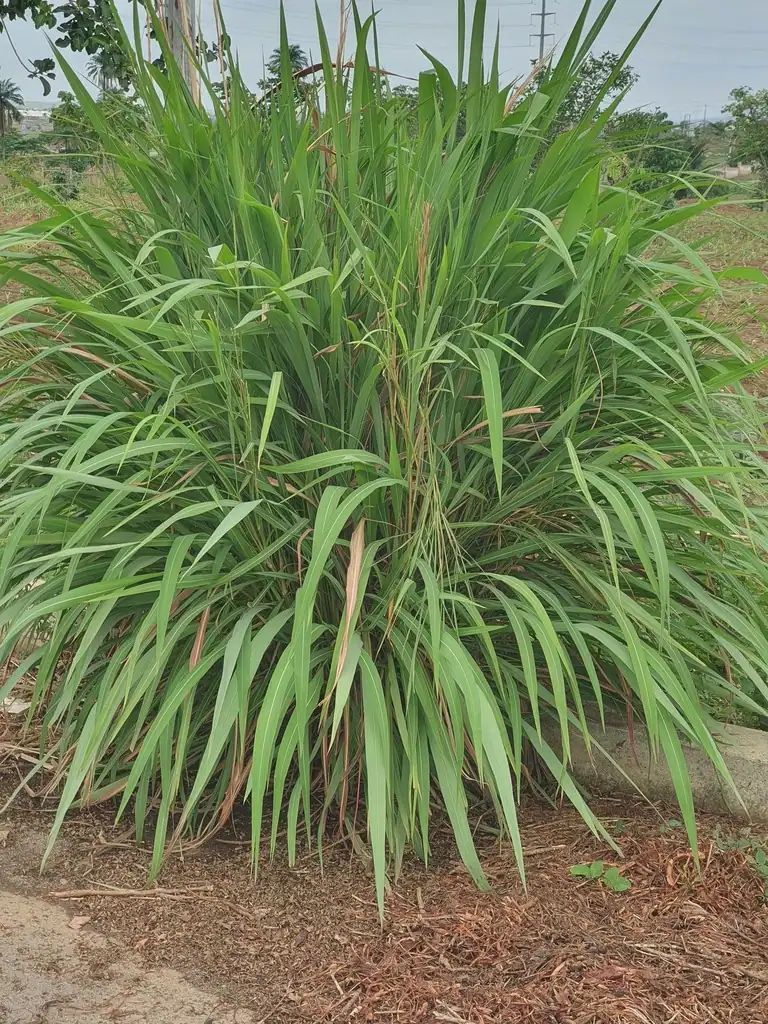
Cómo cultivar y cuidar Limonaria
Cymbopogon citratus
Escrito por Emilio Marruso · última revisión
Tóxica para: Gatos, Perros, Caballos · Por qué
De un vistazo
La hierba limón es una gramínea perenne amante del sol, con hojas de intenso aroma a limón que dan sabor a infusiones, sopas y salsas. Plántala cuando ya no haya riesgo de heladas, dale agua abundante y empieza a cortar tallos en cuanto tengan 13 mm de grosor. También crece en maceta, e incluso puedes enraizar en agua tallos comprados en el súper.
- Sol
Sol pleno o semisombra ligera
- Riego
Necesita mucha agua: riega con regularidad a pie de planta, pero el exceso pudre las raíces
Qué dicen las fuentes (6)
Riego: Riega regularmente; requiere mucha agua, así que riega regularmente si la lluvia es escasa; riega a mano o usa riego por inundación en lugar de aspersores
Lemongrass requires a great deal of water, so water regularly if rainfall is sparse.
— Lemongrass, Cymbopogon spp. – Wisconsin Horticulture [4] Water lemongrass by hand or use flood irrigation rather than irrigate with sprinklers.
— How to Grow Lemongrass in Your Garden | USU [3] Notas sobre el riego: Prefiere lluvias regulares y condiciones húmedas; en un clima seco se debe rociar con agua y regar regularmente; si se cultiva en un contenedor, riega regularmente para que las macetas no se sequen; no dejes que se seque cuando se pasa el invierno como planta de contenedor; no riegues en exceso porque eso puede provocar pudrición de la raíz.
Lemongrass is native to tropical climates, so it prefers regular rainfall and more humid conditions.
— How to Grow Lemongrass in Your Garden | USU [3] If grown in a container, water regularly so the pots do not dry out.
— How to Grow Lemongrass in Your Garden | USU [3] overwinter as a container plant but do not let it dry out.
— Cymbopogon citratus (Lemongrass, Lemon Grass, Oil Grass) | North Carolina Extension Gardener Plant Toolbox [1] Do not overwater as that can lead to root rot.
— Lemon Grass | Herbs | Illinois Extension | Illinois [6] - Frío
Aguanta inviernos de hasta −9,4 °C (15 °F)
Rústica en inviernos normales · USDA 8b · RHS H4 · Z8
Qué dicen las fuentes (2)
Rusticidad, zona más fría: 8b [mínima invernal de −9,4 a −6,7 °C (de 15 a 20 °F)]
USDA Plant Hardiness Zone: 8b, 9a, 9b, 10a, 10b, 11a, 11b
— Cymbopogon citratus (Lemongrass, Lemon Grass, Oil Grass) | North Carolina Extension Gardener Plant Toolbox [1] Rusticidad, zona más cálida: 11b [mínima invernal de 7,2 a 10 °C (de 45 a 50 °F)]
USDA Plant Hardiness Zone: 8b, 9a, 9b, 10a, 10b, 11a, 11b
— Cymbopogon citratus (Lemongrass, Lemon Grass, Oil Grass) | North Carolina Extension Gardener Plant Toolbox [1] - Distancia
90 cm entre plantas
Qué dicen las fuentes (1)
Distancia de plantación: 91,4 cm (3 pies) de distancia
Lemongrass divisions should be spaced 3 feet apart in the garden since it can grow 3 to 6 feet tall and 3 feet wide
— How to Grow Lemongrass in Your Garden | USU [3] - Plantación
Planta cuando ya no haya riesgo de heladas
Qué dicen las fuentes (2)
- Abonado
Compost antes de plantar; abono equilibrado a media dosis de junio a septiembre
Qué dicen las fuentes (8)
Cuándo: Durante la temporada de crecimiento de verano, de junio a septiembre; con menos frecuencia en interiores en invierno
Water and feed regularly from June through September to maximize growth.
— How to Grow Lemongrass in Your Garden | USU [3] Water and feed regularly from June through September to maximize growth.
— Fact sheet: Lemongrass - UF/IFAS Extension Nassau County [5] While indoors, water as need and reduce the frequency of fertilizer applications.
— Lemon Grass | Herbs | Illinois Extension | Illinois [6] Abonos minerales: Fertilizante soluble en agua equilibrado a media concentración, rico en nitrógeno para el crecimiento de verano; en el suelo, incorporado a los 15,2 cm [6 in] superiores según un análisis del suelo
Like other grasses, lemongrass requires lots of nitrogen during the summer.
— How to Grow Lemongrass in Your Garden | USU [3] It should be feed weekly with a half-strength solution of a balanced soluble fertilizer from June through September.
— How to Grow Lemongrass in Your Garden | USU [3] If fertilizer are needed, work the fertilizer into the top 6 inches of soil.
— How to Grow Lemongrass in Your Garden | USU [3] Abonos naturales: Materia orgánica bien compostada incorporada al suelo antes de plantar
If you fertilize with compost, apply no more than 1 inch of well-composted organic matter per 100 square feet of garden area.
— How to Grow Lemongrass in Your Garden | USU [3] Soil Preparation : Before planting, amend soils with 2 to 4 inches of organically rich compost.
— Fact sheet: Lemongrass - UF/IFAS Extension Nassau County [5] - Cosecha
Corta los tallos a ras de suelo cuando tengan 13 mm de grosor; las hojas aromatizan infusiones y sopas
Qué dicen las fuentes (6)
Cosecha: En cualquier momento una vez que los tallos hayan alcanzado 1/2 pulgada [1,3 cm] de grosor; en áreas más frescas al final de la temporada de crecimiento justo antes de la primera helada de otoño
áreas más frescas de Utah: In cooler areas of Utah, harvesting occurs at the end of the growing season just before the first fall frost.
— How to Grow Lemongrass in Your Garden | USU [3] Según Utah State University Extension: However, lemongrass can be harvested at any time, once the plant stalks have reached ½ inch thick.
— How to Grow Lemongrass in Your Garden | USU [3] Según University of Wisconsin Extension: The entire clump can be harvested (such as at the end of the season just before the first frost)
— Lemongrass, Cymbopogon spp. – Wisconsin Horticulture [4] In cooler areas of Utah, harvesting occurs at the end of the growing season just before the first fall frost.
— How to Grow Lemongrass in Your Garden | USU [3] However, lemongrass can be harvested at any time, once the plant stalks have reached ½ inch thick.
— How to Grow Lemongrass in Your Garden | USU [3] Cómo cosechar: Corta los tallos a nivel del suelo, o empuja un tallo exterior hacia un lado, gíralo y tira de él para arrancarlo, o córtalo con un cuchillo; cosecha una vez que los tallos tengan 1,3 cm (1/2 pulgada) de grosor. Desecha las capas exteriores leñosas y las hojas.
lemongrass can be harvested at any time, once the plant stalks have reached ½ inch thick. To harvest, cut stems at ground level, or push an outside stem to the side, twist and pull off, or cut with a knife.
— How to Grow Lemongrass in Your Garden | USU [3] - Plagas
Araña roja, sobre todo en interior, y tizón de las hojas; un chorro fuerte de agua elimina la araña
Qué dicen las fuentes (3)
Plagas: ácaros araña
Piercing type pest that feed on plants cell contents causing tiny yellow or white speckling. Mostly an indoor plant problem.
— How to Grow Lemongrass in Your Garden | USU [3] Enfermedades: tizón de la hoja, hoja pequeña (brotes herbáceos)
Leaf Blight: Reddish brown spots on leaf tips and margins; appear to be prematurely drying.
— Fact sheet: Lemongrass - UF/IFAS Extension Nassau County [5] Little Leaf or Grassy Shoot: Stunted growth of normal inflorescence. Spray with registered fungicides if positively identified.
— Fact sheet: Lemongrass - UF/IFAS Extension Nassau County [5] - Atención
Arranca a mano las malas hierbas mientras las plantas son pequeñas
- Multiplicación
Divide las matas, haz esquejes o enraíza en agua tallos comprados en la tienda
Qué dicen las fuentes (4)
Propagación: División de grupos, semilla (rara vez se cultiva a partir de semilla), esquejes de tallo, tallos de supermercado enraizados en agua
Recommended Propagation Strategy: Division Seed Country Or Region Of Origin:
— Cymbopogon citratus (Lemongrass, Lemon Grass, Oil Grass) | North Carolina Extension Gardener Plant Toolbox [1] Divide last year’s lemongrass clumps or purchase starter plants from local nurseries. Lemongrass is rarely grown from seed.
— How to Grow Lemongrass in Your Garden | USU [3] Lemon grass is easily grown from stem cuttings or divisions.
— Lemon Grass | Herbs | Illinois Extension | Illinois [6] Fresh stalks of lemongrass (leaves and roots absent) can be purchased at grocery stores specializing in Asian cuisine and will root in a glass of water in about 2 weeks.
— How to Grow Lemongrass in Your Garden | USU [3] - Maceta
Crece en maceta; riega a menudo para que nunca se seque, también en invierno
Qué dicen las fuentes (5)
En maceta: Sí
Because lemon grass is not winter hardy in colder climates, it is best grown as a container plant.
— Lemon Grass | Herbs | Illinois Extension | Illinois [6] Notas sobre el riego: Prefiere lluvias regulares y condiciones húmedas; en un clima seco se debe rociar con agua y regar regularmente; si se cultiva en un contenedor, riega regularmente para que las macetas no se sequen; no dejes que se seque cuando se pasa el invierno como planta de contenedor; no riegues en exceso porque eso puede provocar pudrición de la raíz.
Lemongrass is native to tropical climates, so it prefers regular rainfall and more humid conditions.
— How to Grow Lemongrass in Your Garden | USU [3] If grown in a container, water regularly so the pots do not dry out.
— How to Grow Lemongrass in Your Garden | USU [3] overwinter as a container plant but do not let it dry out.
— Cymbopogon citratus (Lemongrass, Lemon Grass, Oil Grass) | North Carolina Extension Gardener Plant Toolbox [1] Do not overwater as that can lead to root rot.
— Lemon Grass | Herbs | Illinois Extension | Illinois [6] - Seguridad
Mantenla lejos de gatos, perros y caballos: les resulta dañina
Resumen
La hierba de limón es una hierba perenne tierna que necesita condiciones cálidas y húmedas, pleno sol y mucha humedad. [3] Se propaga principalmente dividiendo matas o a partir de esquejes de tallo y rara vez se cultiva a partir de semillas. [3] No es resistente al invierno en climas más fríos, por lo que se cultiva como anual o en contenedores que se llevan al interior antes de las heladas. [6][3]
Citado en inglés, como en la fuente.
Cuidados
Las medidas entre corchetes son nuestra conversión al otro sistema de unidades; el texto citado no cambia.
Riego
Riego
Riega regularmente; requiere mucha agua, así que riega regularmente si la lluvia es escasa; riega a mano o usa riego por inundación en lugar de aspersores
Qué dicen las fuentes (2)
Lemongrass requires a great deal of water, so water regularly if rainfall is sparse.Water lemongrass by hand or use flood irrigation rather than irrigate with sprinklers.Notas sobre el riego
Prefiere lluvias regulares y condiciones húmedas; en un clima seco se debe rociar con agua y regar regularmente; si se cultiva en un contenedor, riega regularmente para que las macetas no se sequen; no dejes que se seque cuando se pasa el invierno como planta de contenedor; no riegues en exceso porque eso puede provocar pudrición de la raíz.
Qué dicen las fuentes (4)
Lemongrass is native to tropical climates, so it prefers regular rainfall and more humid conditions.If grown in a container, water regularly so the pots do not dry out.overwinter as a container plant but do not let it dry out.Do not overwater as that can lead to root rot.Luz
Clima y frío
Rusticidad, zona más fría
8b [mínima invernal de −9,4 a −6,7 °C (de 15 a 20 °F)]
Qué dicen las fuentes (1)
USDA Plant Hardiness Zone:
8b, 9a, 9b, 10a, 10b, 11a, 11bRusticidad, zona más cálida
11b [mínima invernal de 7,2 a 10 °C (de 45 a 50 °F)]
Qué dicen las fuentes (1)
USDA Plant Hardiness Zone:
8b, 9a, 9b, 10a, 10b, 11a, 11bDónde cultivarla
En interior
En revisión: nuestro segundo control cuestionó este valor.
En maceta
Sí
Qué dicen las fuentes (1)
Because lemon grass is not winter hardy in colder climates, it is best grown as a container plant.Distancia de plantación
91,4 cm (3 pies) de distancia
Qué dicen las fuentes (1)
Lemongrass divisions should be spaced 3 feet apart in the garden since it can grow 3 to 6 feet tall and 3 feet widePropagación
División de grupos, semilla (rara vez se cultiva a partir de semilla), esquejes de tallo, tallos de supermercado enraizados en agua
Qué dicen las fuentes (4)
Recommended Propagation Strategy:
Division
Seed
Country Or Region Of Origin:Divide last year’s lemongrass clumps or purchase starter plants from local nurseries. Lemongrass is rarely grown from seed.Lemon grass is easily grown from stem cuttings or divisions.Fresh stalks of lemongrass (leaves and roots absent) can be purchased at grocery stores specializing in Asian cuisine and will root in a glass of water in about 2 weeks.Cultivo
La planta
Ciclo de vida
perenne
Qué dicen las fuentes (1)
It is a tender perennial that is commonly grown as an annual in cooler areas of Utah.Familia
Poaceae
Qué dicen las fuentes (1)
Genus: Cymbopogon Species: citratus Family: Poaceae Uses (Ethnobotany): Flavoring in cuisine Life Cycle: PerennialAltura adulta
Las fuentes no coinciden:
Cosecha y conservación
Cómo cosechar
Corta los tallos a nivel del suelo, o empuja un tallo exterior hacia un lado, gíralo y tira de él para arrancarlo, o córtalo con un cuchillo; cosecha una vez que los tallos tengan 1,3 cm (1/2 pulgada) de grosor. Desecha las capas exteriores leñosas y las hojas.
Qué dicen las fuentes (1)
lemongrass can be harvested at any time, once the plant stalks have reached ½ inch thick. To harvest, cut stems at ground level, or push an outside stem to the side, twist and pull off, or cut with a knife.Conservación
Seca las hojas al sol o en el horno; los tallos se pueden congelar hasta 6 meses.
Qué dicen las fuentes (1)
Dry lemongrass leaves in the sun or oven and use like bay leaf in soups and teas. Lemongrass can be frozen up to 6 months.Plagas y enfermedades
Plagas
ácaros araña
Qué dicen las fuentes (1)
Piercing type pest that feed on plants cell contents causing tiny yellow or white speckling. Mostly an indoor plant problem.Enfermedades
tizón de la hoja, hoja pequeña (brotes herbáceos)
Qué dicen las fuentes (2)
Leaf Blight: Reddish brown spots on leaf tips and margins; appear to be prematurely drying.Little Leaf or Grassy Shoot: Stunted growth of normal inflorescence. Spray with registered fungicides if positively identified.Abonado
Cuándo
Durante la temporada de crecimiento de verano, de junio a septiembre; con menos frecuencia en interiores en invierno
Qué dicen las fuentes (3)
Water and feed regularly from June through September to maximize growth.Water and feed regularly from June through September to maximize growth.While indoors, water as need and reduce the frequency of fertilizer applications.Frecuencia
Las fuentes no coinciden:
Lo que dice cada fuente
En el suelo: Mensual
indoor potted plants: Mensual
Qué dicen las fuentes (2)
En el suelo: Supply a similar fertilizer monthly for plants in the ground. For indoor potted plants, feed monthly.indoor potted plants: Supply a similar fertilizer monthly for plants in the ground. For indoor potted plants, feed monthly.Abonos naturales
Materia orgánica bien compostada incorporada al suelo antes de plantar
Qué dicen las fuentes (2)
If you fertilize with compost, apply no more than 1 inch of well-composted organic matter per 100 square feet of garden area.Soil Preparation : Before planting, amend soils with 2 to 4 inches of organically rich compost.Abonos minerales
Fertilizante soluble en agua equilibrado a media concentración, rico en nitrógeno para el crecimiento de verano; en el suelo, incorporado a los 15,2 cm [6 in] superiores según un análisis del suelo
Qué dicen las fuentes (3)
Like other grasses, lemongrass requires lots of nitrogen during the summer.It should be feed weekly with a half-strength solution of a balanced soluble fertilizer from June through September.If fertilizer are needed, work the fertilizer into the top 6 inches of soil.Problemas
Arañitas rojas
Síntoma: Pequeñas motas amarillas o blancas causadas por plagas que perforan y se alimentan del contenido de las células de la planta; principalmente un problema de plantas de interior.
Qué hacer: Usa jabones insecticidas, insecticidas registrados o rocía la planta con un chorro de agua a presión para desalojar los insectos.
Qué dicen las fuentes (2)
Piercing type pest that feed on plants cell contents causing tiny yellow or white speckling. Mostly an indoor plant problem.
— How to Grow Lemongrass in Your Garden | USU [3] Use insecticidal soaps, registered insecticides or spray plant with a forceful jet of water to dislodge the insects.
— How to Grow Lemongrass in Your Garden | USU [3] Tizón foliar
Síntoma: Manchas marrón rojizas en las puntas y bordes de las hojas; las hojas parecen secarse prematuramente.
Qué hacer: Rocía con fungicidas registrados si se identifica positivamente o retira manualmente las hojas dañadas.
Malezas
Síntoma: Las malas hierbas no compiten bien con la hierba de limón madura, pero pueden ser un problema cuando las plantas son pequeñas.
Qué hacer: Puede ser necesario desherbar manualmente cuando las plantas son pequeñas.
Qué dicen las fuentes (1)
Weeds don’t compete well with mature lemongrass. Hand weeding may be required when plants are small.
— How to Grow Lemongrass in Your Garden | USU [3]
Remedios
Cada remedio indica qué dicen las fuentes oficiales; los remedios tradicionales sin fuente oficial aparecen marcados. Los perjudiciales están para que sepas evitarlos.
Cuidar la planta
ácaros araña
chorro de agua a presión Funciona
Cómo: Rocía la planta con un chorro de agua a presión para desalojar los insectos.
Use insecticidal soaps, registered insecticides or spray plant with a forceful jet of water to dislodge the insects.
— How to Grow Lemongrass in Your Garden | USU [3] Qué dicen las pruebas Spider Mites: Piercing type pest that feed on plants cell contents causing tiny yellow or white speckling. Problem mostly on indoor plants. Use insecticidal soaps, registered insecticides or spray plant with a forceful jet of water to dislodge the insects.
— Fact sheet: Lemongrass - UF/IFAS Extension Nassau County [5]
tizón foliar
eliminación manual de las hojas con tizón Fuente oficial, sin prueba independiente
Cómo: Elimina manualmente las hojas con tizón.
Spray with registered fungicides if positively identified or hand remove blighted leaves.
— Fact sheet: Lemongrass - UF/IFAS Extension Nassau County [5]
malezas
deshierbe manual Fuente oficial, sin prueba independiente
Cómo: El deshierbe manual puede ser necesario cuando las plantas son pequeñas; las malas hierbas no compiten bien con la hierba de limón madura.
Weeds don’t compete well with mature lemongrass. Hand weeding may be required when plants are small.
— How to Grow Lemongrass in Your Garden | USU [3]
Venenosa para los animales
Según la fuente, citada textualmente. No es un consejo médico ni veterinario: si una persona o un animal pudo haber ingerido esta planta, contacta con un centro de toxicología o con un veterinario.
#problem for horses #problem for dogs #problem for cats
[1]La fuente señala el riesgo para este animal pero no explica por qué.
Calendario
Plantación
Después de que haya pasado el peligro de las heladas
Cosecha
En cualquier momento una vez que los tallos hayan alcanzado 1/2 pulgada [1,3 cm] de grosor; en áreas más frescas al final de la temporada de crecimiento justo antes de la primera helada de otoño
Lo que dice cada fuente
áreas más frescas de Utah: Al final de la temporada de crecimiento justo antes de la primera helada de otoño
Según Utah State University Extension: En cualquier momento, una vez que los tallos de la planta hayan alcanzado 1/2 pulgada [1,3 cm] de grosor
Según University of Wisconsin Extension: Corta los tallos cuando tengan aproximadamente 1/2 pulgada [1,3 cm] de grosor; corta toda la mata al final de la temporada, justo antes de la primera helada
Qué dicen las fuentes (5)
áreas más frescas de Utah: In cooler areas of Utah, harvesting occurs at the end of the growing season just before the first fall frost.Según Utah State University Extension: However, lemongrass can be harvested at any time, once the plant stalks have reached ½ inch thick.Según University of Wisconsin Extension: The entire clump can be harvested (such as at the end of the season just before the first frost)In cooler areas of Utah, harvesting occurs at the end of the growing season just before the first fall frost.However, lemongrass can be harvested at any time, once the plant stalks have reached ½ inch thick.Meses tal como los dan las fuentes, en su mayoría de Estados Unidos (hemisferio norte). En el hemisferio sur se desplazan unos seis meses.
Respecto a las heladas
Estimación menos precisa: no hay ninguna estación meteorológica a menos de 300 km.
Busca las fechas de heladas por código postal o ciudad
Plantación: hacia la última helada
Plant the divisions after the danger from frost has passed.
— How to Grow Lemongrass in Your Garden | USU [3] Trasplante: hacia la última helada
Place plants outside as soon as the danger from frost is past.
— Lemongrass, Cymbopogon spp. – Wisconsin Horticulture [4]
Cuenta desde las fechas medias de las heladas de tu zona.
Comestibilidad
Según la fuente, citada textualmente. No comas una planta basándote solo en esta página: los errores de identificación pueden ser peligrosos.
Strongly scented lemon leaves used in India and Southern Asian cuisine; overwinter as a container plant but do not let it dry out.
[1]The whole stalk itself is too hard to be eaten, so it is usually smashed and simmered in liquid to impart the lemony flavor to the dish, then removed before serving.
[4]Leaves and the stems can be harvested for use.
[6]The lemongrass leaves are used to flavor teas, soups and sauces.
[3]
Valores orientativos
Valores de una fuente secundaria, no comprobados palabra por palabra como el resto de esta página. Úselos como punto de partida.
- Horas de sol
- 6-8 horasValor orientativo, adáptalo a tu clima · Fuente secundaria
- Resiste la sequía
- SíValor orientativo, adáptalo a tu clima · Fuente secundaria
- pH del suelo
- 5.5-7.5Valor orientativo, adáptalo a tu clima · Fuente secundaria
- Crecimiento
- BajoValor orientativo, adáptalo a tu clima · Fuente secundaria
- Poda
- marzo, abril, mayoValor orientativo, adáptalo a tu clima · Fuente secundaria
Plantas similares
- African lovegrass Eragrostis curvula
- Aristida purpurea Aristida purpurea
- Autumn Moor Grass Sesleria autumnalis
- Bambú Phyllostachys aurea
- Beaked Panicgrass Coleataenia anceps
- Grama común Cynodon dactylon
- Big Bluestem Andropogon gerardi
- Bigtop Lovegrass Eragrostis hirsuta
Fuentes
Cada valor anterior se cita de estos documentos. Los enlaces llevan al editor original.
- Cymbopogon citratus (Lemongrass, Lemon Grass, Oil Grass) | North Carolina Extension Gardener Plant Toolbox · plants.ces.ncsu.edu, consultado
- Lemongrass - Cymbopogon citratus | North Carolina Extension Gardener Plant Toolbox · plants.ces.ncsu.edu, consultado
- How to Grow Lemongrass in Your Garden | USU · extension.usu.edu, consultado
- Lemongrass, Cymbopogon spp. – Wisconsin Horticulture · hort.extension.wisc.edu, consultado
- Fact sheet: Lemongrass - UF/IFAS Extension Nassau County · blogs.ifas.ufl.edu, consultado
- Lemon Grass | Herbs | Illinois Extension | Illinois · extension.illinois.edu, consultado
- Lemongrass – Gardening Solutions · gardeningsolutions.ifas.ufl.edu, consultado
Escrito por Emilio Marruso · última revisión