
Cómo cultivar y cuidar Meadow Crane's-bill
Geranium pratense
Escrito por Emilio Marruso · última revisión
Tóxica para: Gatos, Perros, Aves · Por qué
De un vistazo
El geranio de prado es una planta perenne que se adapta a casi cualquier suelo, siempre que no esté encharcado. Plántalo de mayo a septiembre, riégalo con moderación y recórtalo entre septiembre y noviembre. Además, es fácil de compartir: divide las matas en primavera u otoño, y tranquilo, porque no se conoce toxicidad para gatos ni perros.
- Riego
Riego moderado; evita los sitios encharcados
Qué dicen las fuentes (3)
Riego: Moderado
Light full sun Shade tolerance no shade Water moderate Hardiness Zone 5+
— Meadow Crane's Bill (Geranium pratense) — Practical Plants [6] Notas sobre el riego: No tolera la sequía; prospera en la mayoría de los suelos excepto los pantanosos
Soil pH acid, neutral, alkaline Tolerates Nutritionally Poor Soil No Drought intolerant
— Meadow Crane's Bill (Geranium pratense) — Practical Plants [6] Trouble-free, Geranium pratense thrives in most soils, except boggy ones.
— Geranium pratense | BBC Gardeners World Magazine [4] - Frío
Aguanta inviernos de hasta −28,9 °C (−20 °F)
Muy rústica · USDA 5 · RHS H7 · Z5
Qué dicen las fuentes (1)
Rusticidad, zona más fría: 5 [mínima invernal de −28,9 a −23,3 °C (de −20 a −10 °F)]
Light full sun Shade tolerance no shade Water moderate Hardiness Zone 5+
— Meadow Crane's Bill (Geranium pratense) — Practical Plants [6] - Suelo
Crece en casi todos los suelos, pH 5,5–7,5, pero no en terrenos encharcados
Qué dicen las fuentes (8)
pH del suelo, mínimo: 5.5
Compilación de plantas vasculares suecas: Tyler et al. (2020) categorise G. pratense as occurring on soils that are subneutral to circumneutral with pH ranging from 5.5 to 7.5.
— Received: 22 March 2023 | Accepted: 2 September 2023 [1] norte de Inglaterra, 13 poblaciones (2020): In a sample of 13 G. pratense populations from sites in northern England from 2020, soil pH ranged from 6.3 to 7.0 with a mean of 6.7
— Received: 22 March 2023 | Accepted: 2 September 2023 [1] Tyler et al. (2020) categorise G. pratense as occurring on soils that are subneutral to circumneutral with pH ranging from 5.5 to 7.5.
— Received: 22 March 2023 | Accepted: 2 September 2023 [1] pH del suelo, máximo: 7.5
Compilación de plantas vasculares suecas: Tyler et al. (2020) categorise G. pratense as occurring on soils that are subneutral to circumneutral with pH ranging from 5.5 to 7.5.
— Received: 22 March 2023 | Accepted: 2 September 2023 [1] norte de Inglaterra, 13 poblaciones (2020): In a sample of 13 G. pratense populations from sites in northern England from 2020, soil pH ranged from 6.3 to 7.0 with a mean of 6.7
— Received: 22 March 2023 | Accepted: 2 September 2023 [1] Tyler et al. (2020) categorise G. pratense as occurring on soils that are subneutral to circumneutral with pH ranging from 5.5 to 7.5.
— Received: 22 March 2023 | Accepted: 2 September 2023 [1] Notas sobre el riego: No tolera la sequía; prospera en la mayoría de los suelos excepto los pantanosos
Soil pH acid, neutral, alkaline Tolerates Nutritionally Poor Soil No Drought intolerant
— Meadow Crane's Bill (Geranium pratense) — Practical Plants [6] Trouble-free, Geranium pratense thrives in most soils, except boggy ones.
— Geranium pratense | BBC Gardeners World Magazine [4] - Plantación
Planta de mayo a septiembre
Qué dicen las fuentes (4)
Plantación: De mayo a septiembre.
Según BBC Gardeners' World Magazine: | | Jan | Feb | Mar | Apr | May | Jun | Jul | Aug | Sep | Oct | Nov | Dec | Plant | | | | | yes | yes | yes | yes | yes | | |
— Geranium pratense | BBC Gardeners World Magazine [4] plántulas criadas en un marco frío: Seed - sow spring in a cold frame. When they are large enough to handle, prick the seedlings out into individual pots and plant them out in the summer.
— Meadow Crane's Bill (Geranium pratense) — Practical Plants [6] divisiones pequeñas cultivadas en un marco frío: it is best to pot up smaller clumps and grow them on in a cold frame until they are rooting well. Plant them out in the spring.
— Meadow Crane's Bill (Geranium pratense) — Practical Plants [6] | | Jan | Feb | Mar | Apr | May | Jun | Jul | Aug | Sep | Oct | Nov | Dec | Plant | | | | | yes | yes | yes | yes | yes | | |
— Geranium pratense | BBC Gardeners World Magazine [4] - Poda
Recorta de septiembre a noviembre
Qué dicen las fuentes (1)
Poda: Septiembre-noviembre
| Divide | | | yes | yes | yes | | | | yes | yes | yes | | Prune | | | | | | | | | yes | yes | yes |
— Geranium pratense | BBC Gardeners World Magazine [4] - Plagas
Pulgones, moscas de sierra y gorgojos; también mildiu, roya y oídio
Qué dicen las fuentes (5)
Plagas: escarabajos (incluido el gorgojo Zacladus geranii), micromariposas, larvas de mariposas, mosca de sierra, mosca de las agallas, pulgón
Eleven insect species have been recorded as feeding on G. pratense, including three bee-tles, four micromoths and one species each of butterfly, sawfly, gall midge and aphid.
— Received: 22 March 2023 | Accepted: 2 September 2023 [1] Close up of the flower showing a pair of the weevil Zacladus geranii that is confined to feeding on larger species of Geranium
— Received: 22 March 2023 | Accepted: 2 September 2023 [1] Enfermedades: mildiú velloso (Plasmopara pusilla), roya (Uromyces geranii), mildiú polvoriento (Podosphaera fugax)
Plasmopara pusilla (de Bary) Schröter is a downy mildew found on the leaves of G. pratense
— Received: 22 March 2023 | Accepted: 2 September 2023 [1] Uromyces geranii (DC.) Fr. Is an oligophagous rust fungus that occurs on the abaxial surface of the leaves of various Geranium spe-cies including G. pratense
— Received: 22 March 2023 | Accepted: 2 September 2023 [1] also lists the oligophagous powdery mil-dew Podosphaera fugax (Penz. & Sacc.) U. Braun & S. Takam as form-ing hypophyllous colonies on the leaves of G. pratense.
— Received: 22 March 2023 | Accepted: 2 September 2023 [1] - Tamaño
Tallos de 30–80 cm de alto
Qué dicen las fuentes (1)
Altura adulta: Tallos de 30–80 cm [12–31 in] (rango 10–130 cm [4–51 in])
Stem (10)30–80(130) cm, pale green, erect or as-cending
— Received: 22 March 2023 | Accepted: 2 September 2023 [1] - Multiplicación
Por semilla, o divide las matas de marzo a mayo o de septiembre a noviembre
Qué dicen las fuentes (4)
Propagación: Semillas; división
Según BBC Gardeners' World Magazine (division months): | Divide | | | yes | yes | yes | | | | yes | yes | yes | | Prune | | | | | | | | | yes | yes | yes |
— Geranium pratense | BBC Gardeners World Magazine [4] Division in spring or autumn. Larger clumps can be replanted direct into their permanent positions
— Meadow Crane's Bill (Geranium pratense) — Practical Plants [6] When the clump gets too large, simply lift the plant in spring and divide into smaller pieces.
— Geranium pratense | BBC Gardeners World Magazine [4] Reproduction of G. pratense is principally by seed. Plants grown in gardens often begin to flower and set seed from the second year onward
— Received: 22 March 2023 | Accepted: 2 September 2023 [1] - Siembra
Siembra en primavera en cajonera fría; raspa la cubierta de la semilla y germina en 2–5 días
Qué dicen las fuentes (5)
Siembra: Primavera, en un marco frío
Seed - sow spring in a cold frame. When they are large enough to handle, prick the seedlings out into individual pots and plant them out in the summer.
— Meadow Crane's Bill (Geranium pratense) — Practical Plants [6] Escarificación: La semilla fresca tiene dormancia física, que se elimina de inmediato al escarificar mecánicamente la cubierta de la semilla (perforando la testa, por ejemplo con un bisturí).
Alleviation of the physical seed dormancy of G. pratense can be instantly achieved by mechanical scarification of the seed coat, that is, by perforating the testa, for example with a scalpel
— Received: 22 March 2023 | Accepted: 2 September 2023 [1] Germinación: Tras la escarificación, la mitad de la germinación ocurre en 2-5 días; la semilla sin escarificar almacenada seca a 5 °C [41 °F] necesita 27-43 días para la mitad de su germinación.
Estudio de laboratorio (Grime et al. 1981).: In their study, at least 50% of maximum germination was observed for constant tem-peratures ranging from 6°C to 33°C.
— Received: 22 March 2023 | Accepted: 2 September 2023 [1] Estudio de laboratorio (Van Assche & Vandelook 2006).: a constant temperature of 23°C resulted in much more rapid and complete germination of scarified fresh seeds and of seeds scar-ified after 3 months of dry storage, compared with lower constant temperatures of 10°C or 5°C.
— Received: 22 March 2023 | Accepted: 2 September 2023 [1] After seed scarification, 50% of observed germination occurred after just 2 to 5 days, whereas in unscarified seeds that had been stored dry at 5°C, 27 to 43 days were required
— Received: 22 March 2023 | Accepted: 2 September 2023 [1] - Seguridad
No se conoce toxicidad para gatos ni perros
Resumen
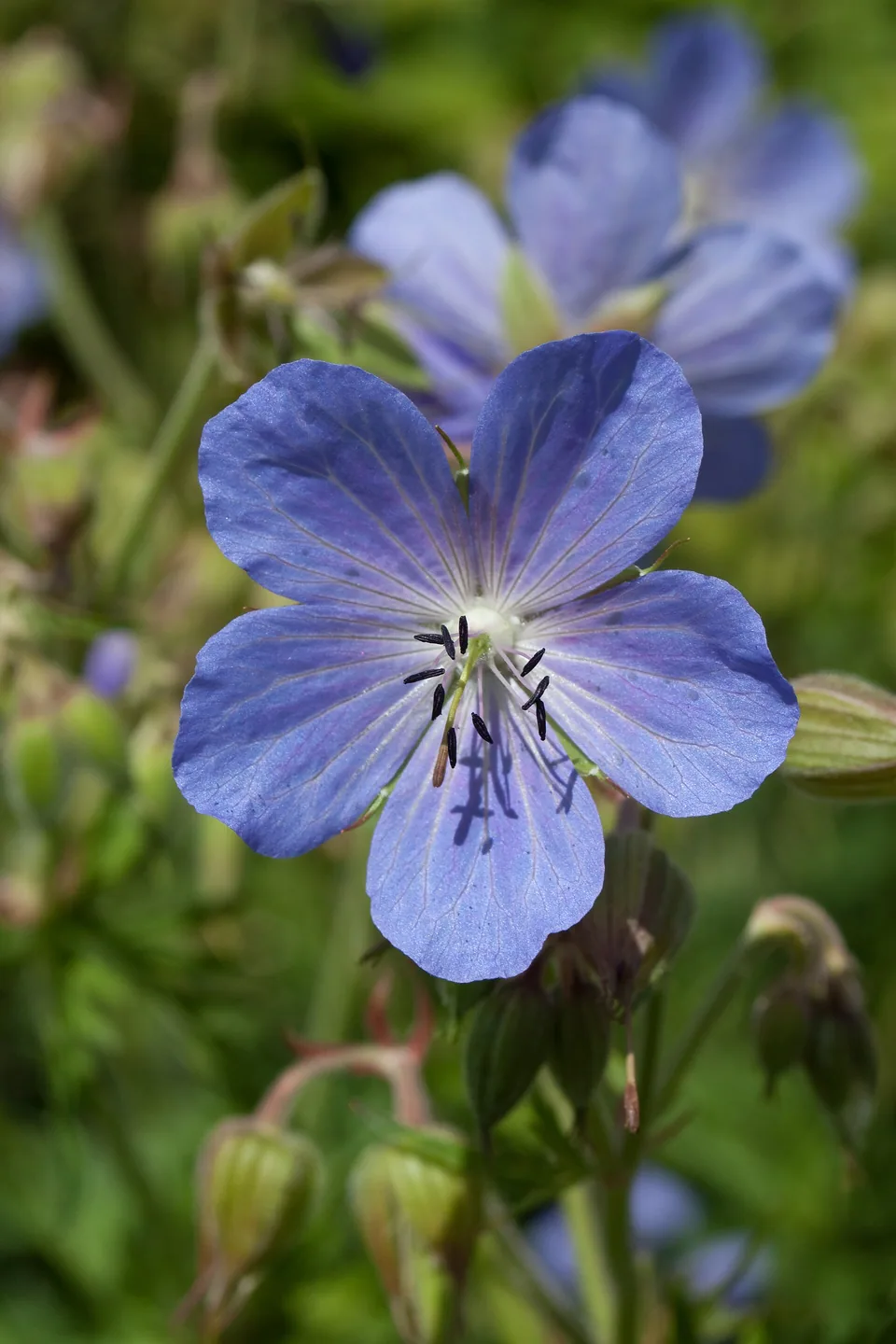
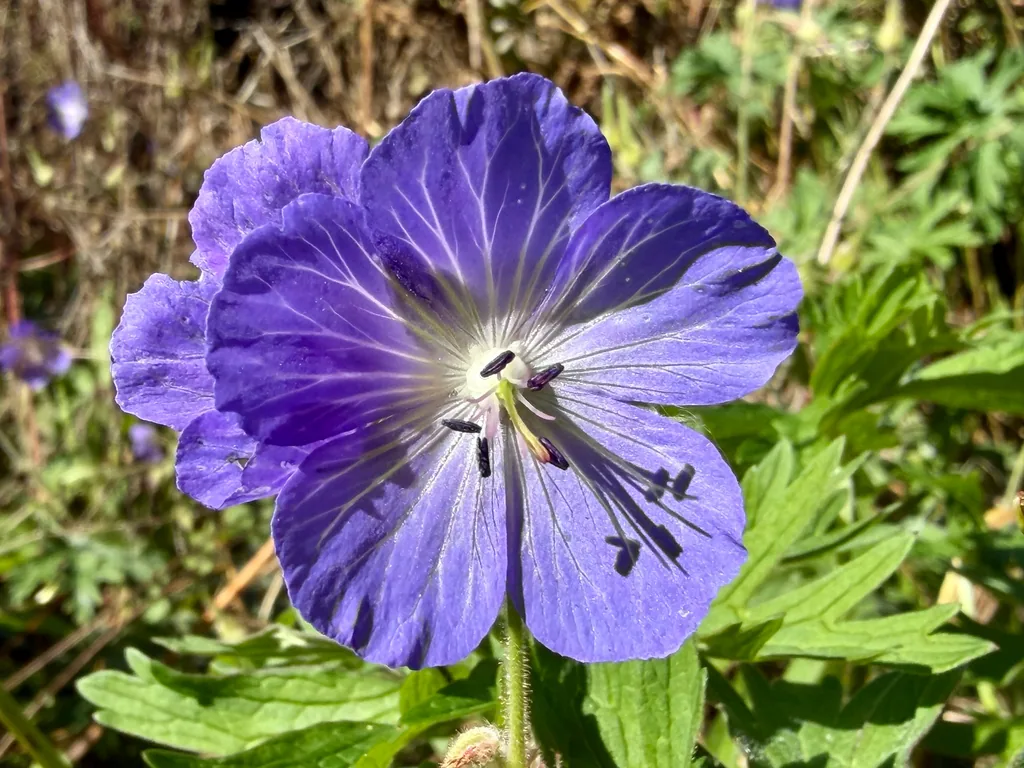
El geranio de prado es una hierba perenne de praderas con suelo neutro, nativa de Europa y Asia, que también se cultiva en jardines por sus flores blancas, azules o violetas en forma de platillo. [1][4] Crece en casi todos los suelos, excepto los pantanosos, y los grupos grandes se pueden levantar y dividir en primavera. [4] En estado silvestre suele aparecer en suelos de drenaje libre, a menudo ricos en nutrientes, que van de ligeramente ácidos a ligeramente alcalinos. [1]
Citado en inglés, como en la fuente.
Esta ficha está incompleta: las fuentes consultadas aún no cubren todos los campos.
Aún no cubierto por nuestras fuentes: Rusticidad, zona más cálida
Cuidados
Riego
Riego
Moderado
Qué dicen las fuentes (1)
Light
full sun
Shade tolerance
no shade
Water
moderate
Hardiness
Zone 5+Notas sobre el riego
No tolera la sequía; prospera en la mayoría de los suelos excepto los pantanosos
Qué dicen las fuentes (2)
Soil pH
acid, neutral, alkaline
Tolerates Nutritionally Poor Soil
No
Drought
intolerantTrouble-free, Geranium pratense thrives in most soils, except boggy ones.Luz
Las fuentes dan valores distintos según la región, la zona o las condiciones de cultivo.
Lo que dice cada fuente
Según BBC Gardeners' World Magazine: Luz filtrada, sombra completa, pleno sol, semisombra
Según Practical Plants (PFAF notes): Pleno sol, sin sombra
Qué dicen las fuentes (2)
Según BBC Gardeners' World Magazine: Sun Exposure:
Dappled shade, full shade, full sun, partial shade
|
Aspect:
East facing, north facing, south facing, west facingSegún Practical Plants (PFAF notes): Light
full sun
Shade tolerance
no shade
Water
moderate
Hardiness
Zone 5+Clima y frío
Rusticidad, zona más fría
5 [mínima invernal de −28,9 a −23,3 °C (de −20 a −10 °F)]
Qué dicen las fuentes (1)
Light
full sun
Shade tolerance
no shade
Water
moderate
Hardiness
Zone 5+Rusticidad, zona más cálida
No figura en las fuentes consultadas.
Suelo
pH del suelo, mínimo
5.5
Lo que dice cada fuente
Compilación de plantas vasculares suecas: 5.5-7.5
norte de Inglaterra, 13 poblaciones (2020): 6.3-7.0
Qué dicen las fuentes (3)
Compilación de plantas vasculares suecas: Tyler et al. (2020) categorise G. pratense as occurring on soils that are subneutral to circumneutral with pH ranging from 5.5 to 7.5.norte de Inglaterra, 13 poblaciones (2020): In a sample of 13 G. pratense populations from sites in northern England from 2020, soil pH ranged from 6.3 to 7.0 with a mean of 6.7Tyler et al. (2020) categorise G. pratense as occurring on soils that are subneutral to circumneutral with pH ranging from 5.5 to 7.5.pH del suelo, máximo
7.5
Lo que dice cada fuente
Compilación de plantas vasculares suecas: 5.5-7.5
norte de Inglaterra, 13 poblaciones (2020): 6.3-7.0
Qué dicen las fuentes (3)
Compilación de plantas vasculares suecas: Tyler et al. (2020) categorise G. pratense as occurring on soils that are subneutral to circumneutral with pH ranging from 5.5 to 7.5.norte de Inglaterra, 13 poblaciones (2020): In a sample of 13 G. pratense populations from sites in northern England from 2020, soil pH ranged from 6.3 to 7.0 with a mean of 6.7Tyler et al. (2020) categorise G. pratense as occurring on soils that are subneutral to circumneutral with pH ranging from 5.5 to 7.5.Propagación
Semillas; división
Lo que dice cada fuente
Según BBC Gardeners' World Magazine (division months): División de marzo a mayo y de septiembre a noviembre
Qué dicen las fuentes (4)
Según BBC Gardeners' World Magazine (division months): | Divide | | | yes | yes | yes | | | | yes | yes | yes |
| Prune | | | | | | | | | yes | yes | yes |Division in spring or autumn. Larger clumps can be replanted direct into their permanent positionsWhen the clump gets too large, simply lift the plant in spring and divide into smaller pieces.Reproduction of G. pratense is principally by seed. Plants grown in gardens often begin to flower and set seed from the second year onwardCultivo
La planta
Ciclo de vida
perenne
Qué dicen las fuentes (1)
Geranium pratense is a perennial gynodioecious forb of neutral grassland.Familia
Geraniaceae
Qué dicen las fuentes (1)
Meadow Cranesbill. Geraniaceae. Geranium pratense L. is a leafy, branched, perennial, gynodioecious herb with a compact, stout, oblique rhizome.Altura adulta
Tallos de 30–80 cm [12–31 in] (rango 10–130 cm [4–51 in])
Qué dicen las fuentes (1)
Stem (10)30–80(130) cm, pale green, erect or as-cendingPlagas y enfermedades
Plagas
escarabajos (incluido el gorgojo Zacladus geranii), micromariposas, larvas de mariposas, mosca de sierra, mosca de las agallas, pulgón
Qué dicen las fuentes (2)
Eleven insect species have been recorded as feeding on G. pratense, including three bee-tles, four micromoths and one species each of butterfly, sawfly, gall midge and aphid.Close up of the flower showing a pair of the weevil Zacladus geranii that is confined to feeding on larger species of GeraniumEnfermedades
mildiú velloso (Plasmopara pusilla), roya (Uromyces geranii), mildiú polvoriento (Podosphaera fugax)
Qué dicen las fuentes (3)
Plasmopara pusilla (de Bary) Schröter is a downy mildew found on the leaves of G. pratenseUromyces geranii (DC.) Fr. Is an oligophagous rust fungus that occurs on the abaxial surface of the leaves of various Geranium spe-cies including G. pratensealso lists the oligophagous powdery mil-dew Podosphaera fugax (Penz. & Sacc.) U. Braun & S. Takam as form-ing hypophyllous colonies on the leaves of G. pratense.Raíces
Sistema radicular
Rizoma corto y sistema radicular con una raíz principal y raíces adventicias que sirven como órganos de almacenamiento.
Qué dicen las fuentes (1)
and a root system consisting of a main root with adventitious poly-cyclic roots serving as storage organsPropagación
Germinación
Tras la escarificación, la mitad de la germinación ocurre en 2-5 días; la semilla sin escarificar almacenada seca a 5 °C [41 °F] necesita 27-43 días para la mitad de su germinación.
Lo que dice cada fuente
Estudio de laboratorio (Grime et al. 1981).: Al menos la mitad de la germinación máxima a temperaturas constantes desde 6 °C [43 °F] hasta 33 °C [91 °F].
Estudio de laboratorio (Van Assche & Vandelook 2006).: La semilla escarificada germinó más rápido y de forma más completa a una temperatura constante de 23 °C [73 °F] que a 10 °C [50 °F] o 5 °C [41 °F].
Qué dicen las fuentes (3)
Estudio de laboratorio (Grime et al. 1981).: In their study, at least 50% of maximum germination was observed for constant tem-peratures ranging from 6°C to 33°C.Estudio de laboratorio (Van Assche & Vandelook 2006).: a constant temperature of 23°C resulted in much more rapid and complete germination of scarified fresh seeds and of seeds scar-ified after 3 months of dry storage, compared with lower constant temperatures of 10°C or 5°C.After seed scarification, 50% of observed germination occurred after just 2 to 5 days, whereas in unscarified seeds that had been stored dry at 5°C, 27 to 43 days were requiredEscarificación
La semilla fresca tiene dormancia física, que se elimina de inmediato al escarificar mecánicamente la cubierta de la semilla (perforando la testa, por ejemplo con un bisturí).
Qué dicen las fuentes (1)
Alleviation of the physical seed dormancy of G. pratense can be instantly achieved by mechanical scarification of the seed coat, that is, by perforating the testa, for example with a scalpelCalor y sequía
Sequía
Tolerancia a la sequía relativamente alta: en un experimento de cinco años, la sequía no cambió significativamente su abundancia en el pastizal.
Qué dicen las fuentes (2)
Drought did not lead to any significant change in abundance in G. pratense in any of the 5 years.appears to be due to the relatively high drought tolerance of this species, compared to that of companion speciesRemedios
Las fuentes consultadas no dan remedios para esta planta.
Venenosa para los animales
Según la fuente, citada textualmente. No es un consejo médico ni veterinario: si una persona o un animal pudo haber ingerido esta planta, contacta con un centro de toxicología o con un veterinario.
Geranium ‘Pratense’ has no toxic effects reported. No reported toxicity to: Is not known to attract Birds
[4]La fuente señala el riesgo para este animal pero no explica por qué.
No reported toxicity to: Is not known to attract Birds Birds Is not known to attract Cats
[4]La fuente señala el riesgo para este animal pero no explica por qué.
No reported toxicity to: Is not known to attract Birds Birds Is not known to attract Cats Cats Is not known to attract Dogs
[4]La fuente señala el riesgo para este animal pero no explica por qué.
Calendario
Primavera, en un marco frío
Qué dicen las fuentes (1)
Seed - sow spring in a cold frame. When they are large enough to handle, prick the seedlings out into individual pots and plant them out in the summer.De mayo a septiembre.
Lo que dice cada fuente
Según BBC Gardeners' World Magazine: De mayo a septiembre.
plántulas criadas en un marco frío: Verano
divisiones pequeñas cultivadas en un marco frío: Primavera
Qué dicen las fuentes (4)
Según BBC Gardeners' World Magazine: | | Jan | Feb | Mar | Apr | May | Jun | Jul | Aug | Sep | Oct | Nov | Dec
| Plant | | | | | yes | yes | yes | yes | yes | | |plántulas criadas en un marco frío: Seed - sow spring in a cold frame. When they are large enough to handle, prick the seedlings out into individual pots and plant them out in the summer.divisiones pequeñas cultivadas en un marco frío: it is best to pot up smaller clumps and grow them on in a cold frame until they are rooting well. Plant them out in the spring.| | Jan | Feb | Mar | Apr | May | Jun | Jul | Aug | Sep | Oct | Nov | Dec
| Plant | | | | | yes | yes | yes | yes | yes | | |Septiembre-noviembre
Qué dicen las fuentes (1)
| Divide | | | yes | yes | yes | | | | yes | yes | yes |
| Prune | | | | | | | | | yes | yes | yes |Meses tal como los dan las fuentes, en su mayoría de Estados Unidos (hemisferio norte). En el hemisferio sur se desplazan unos seis meses.
Plantas similares
- Bloody Cranesbill Geranium Geranium sanguineum
- Wild Geranium Geranium maculatum
- Wood Crane's-bill Geranium sylvaticum
- Armenian crane's-bill Geranium psilostemon
- Black widow Geranium phaeum
- Endres's cranesbill Geranium endressii
- Geranium macrorrhizum Geranium macrorrhizum
- Geranium renardii Geranium renardii
Fuentes
Cada valor anterior se cita de estos documentos. Los enlaces llevan al editor original.
- Received: 22 March 2023 | Accepted: 2 September 2023 · nora.nerc.ac.uk, consultado
- Pagina 215 - Flora of the Southern Carnic Alps · dryades.units.it, consultado
- HortFlora · hortflora.rbg.vic.gov.au, consultado
- Geranium pratense | BBC Gardeners World Magazine · gardenersworld.com, consultado
- Geranium pratense • New Zealand Plant Conservation Network · nzpcn.org.nz, consultado
- Meadow Crane's Bill (Geranium pratense) — Practical Plants · practicalplants.org, consultado
Escrito por Emilio Marruso · última revisión