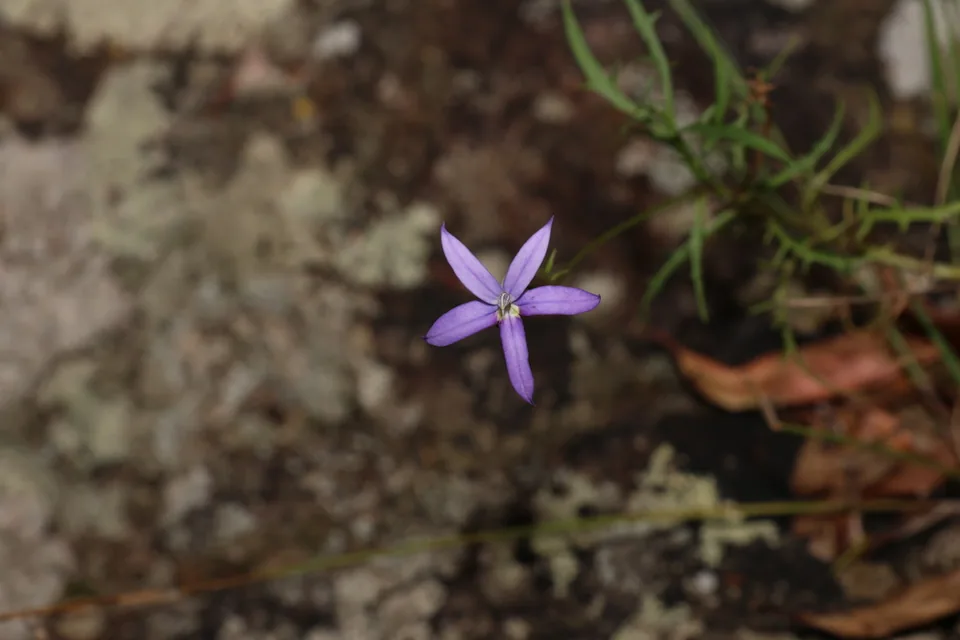
Cómo cultivar y cuidar Isotoma axillaris
Isotoma axillaris
Escrito por Emilio Marruso · última revisión
Tóxica para: Ganado, Personas · Por qué
De un vistazo
La isotoma es una planta agradecida para sol pleno o sombra tamizada, tanto en el jardín como en maceta. Plántala en primavera, después de la última helada, riégala una vez a la semana cuando ya esté asentada y recórtala a mitad de temporada para que dé más flores. Además se siembra sola, así que pueden aparecer plántulas nuevas sin que hagas nada.
- Sol
Sol pleno, semisombra o sombra tamizada
Qué dicen las fuentes (2)
Luz: Pleno sol a sol parcial o sombra filtrada
They thrive in well-drained, humus-enriched soil or rocky crevices and full sun, but will tolerate dappled shade.
— Isotoma axillaris, Isotoma anethifolia - Growing Native Plants [3] Grow laurentia in full sun to partial shade . Purchase plants in spring or grow from seed or cuttings.
— Laurentia, Isotoma axillaris – Wisconsin Horticulture [1] - Riego
Riega a menudo hasta que arraigue, luego una vez a la semana; más cuando haga calor
Qué dicen las fuentes (4)
Riego: Aproximadamente una vez por semana una vez establecido, más en climas cálidos
Plants will require regular watering until established, and then only need watering about once a week, perhaps more in the heat.
— Isotoma axillaris, Isotoma anethifolia - Growing Native Plants [3] Notas sobre el riego: Riega regularmente hasta que se establezca; crece mejor si no se deja secar por demasiado tiempo; suelo bien drenado
Plants will require regular watering until established, and then only need watering about once a week, perhaps more in the heat.
— Isotoma axillaris, Isotoma anethifolia - Growing Native Plants [3] Isotoma axillaris grow much better if not allowed to dry out for too long and after a wet 2011 winter
— Isotoma axillaris | Australian Plants Society [5] They thrive in well-drained, humus-enriched soil or rocky crevices and full sun, but will tolerate dappled shade.
— Isotoma axillaris, Isotoma anethifolia - Growing Native Plants [3] - Frío
Aguanta inviernos de hasta −17,8 °C (0 °F)
Rústica en inviernos muy fríos · USDA 7a · RHS H6 · Z7
Qué dicen las fuentes (2)
Rusticidad, zona más fría: 7a [mínima invernal de −17,8 a −15 °C (de 0 a 5 °F)]
Isotoma axillaris is a heat-loving tender perennial (zones 7a to 10b) plant native to Australia that is easily grown as an annual in cold climates .
— Laurentia, Isotoma axillaris – Wisconsin Horticulture [1] Rusticidad, zona más cálida: 10b [mínima invernal de 1,7 a 4,4 °C (de 35 a 40 °F)]
Isotoma axillaris is a heat-loving tender perennial (zones 7a to 10b) plant native to Australia that is easily grown as an annual in cold climates .
— Laurentia, Isotoma axillaris – Wisconsin Horticulture [1] - Suelo
Suelo bien drenado
Qué dicen las fuentes (3)
Notas sobre el riego: Riega regularmente hasta que se establezca; crece mejor si no se deja secar por demasiado tiempo; suelo bien drenado
Plants will require regular watering until established, and then only need watering about once a week, perhaps more in the heat.
— Isotoma axillaris, Isotoma anethifolia - Growing Native Plants [3] Isotoma axillaris grow much better if not allowed to dry out for too long and after a wet 2011 winter
— Isotoma axillaris | Australian Plants Society [5] They thrive in well-drained, humus-enriched soil or rocky crevices and full sun, but will tolerate dappled shade.
— Isotoma axillaris, Isotoma anethifolia - Growing Native Plants [3] - Plantación
Planta en primavera, después de la última helada
Qué dicen las fuentes (3)
Plantación: Primavera, después de la última helada
as it takes about 4 months for the plants to come into flower. Place plants in the garden after the last frost.
— Laurentia, Isotoma axillaris – Wisconsin Horticulture [1] Plants bloom from seed in 4 months with transplants not set out until the threat of frost is past.
— Isotoma axillaris, Laurentia, Blue Star [2] Seed can be scattered directly in late winter, when there is no more danger of frost, or planted into pots and then transplanting in spring.
— Isotoma axillaris, Isotoma anethifolia - Growing Native Plants [3] - Poda
Recórtala a mitad de temporada para más flores; pódala después de la floración
Qué dicen las fuentes (4)
Poda: Después de la floración, cuando el follaje se marchita (corta); recorte a mitad de temporada para obtener más flores
Según Australian Plants Society: Maintenance: After flowering the foliage will die off and I then cut the plant back hard, to encourage fresh new growth.
— Isotoma axillaris | Australian Plants Society [5] Según University of Wisconsin Extension (grown as annual): although shearing in midseason will encourage more flowers on a more compact plant .
— Laurentia, Isotoma axillaris – Wisconsin Horticulture [1] The foliage will then die off and should be cut back to encourage fresh new growth.
— Isotoma axillaris, Isotoma anethifolia - Growing Native Plants [3] Maintenance: After flowering the foliage will die off and I then cut the plant back hard, to encourage fresh new growth.
— Isotoma axillaris | Australian Plants Society [5] - Plagas
Pocas plagas: vigila la cochinilla algodonosa y unas orugas verdes pequeñas, que puedes quitar a mano
Qué dicen las fuentes (1)
Plagas: cochinillas harinosas
This plant has few pests, although it can be attacked by mealybugs, and is not favored by deer or rabbits .
— Laurentia, Isotoma axillaris – Wisconsin Horticulture [1] - Atención
Sufre y deja de florecer con el calor húmedo del verano
- Multiplicación
Por semilla, también de plántulas que nacen solas, o por esquejes
Qué dicen las fuentes (3)
Propagación: Semilla (incluidas las plántulas espontáneas); esquejes
Propagation from firm cuttings is also possible, but it is recommended that gloves be worn to avoid reactions to the sap .
— Isotoma axillaris, Isotoma anethifolia - Growing Native Plants [3] Grow laurentia in full sun to partial shade . Purchase plants in spring or grow from seed or cuttings.
— Laurentia, Isotoma axillaris – Wisconsin Horticulture [1] Many people propagate plants by letting them self-seed in the garden and then digging them up and moving them to desired spots.
— Isotoma axillaris | Australian Plants Society [5] - Siembra
Siembra fuera a finales de invierno, sin riesgo de heladas, o en interior en febrero en climas fríos
Qué dicen las fuentes (4)
Siembra: Finales de invierno (siembra directa, después del peligro de heladas) o febrero en interiores en climas fríos
Según Australian National Botanic Gardens: Seed can be scattered directly in late winter, when there is no more danger of frost, or planted into pots and then transplanting in spring.
— Isotoma axillaris, Isotoma anethifolia - Growing Native Plants [3] Según University of Wisconsin Extension: Seeds should be sown indoors very early (February) as it takes about 4 months for the plants to come into flower.
— Laurentia, Isotoma axillaris – Wisconsin Horticulture [1] Seed can be scattered directly in late winter, when there is no more danger of frost, or planted into pots and then transplanting in spring.
— Isotoma axillaris, Isotoma anethifolia - Growing Native Plants [3] Seeds should be sown indoors very early (February) as it takes about 4 months for the plants to come into flower.
— Laurentia, Isotoma axillaris – Wisconsin Horticulture [1] - Maceta
Crece también en maceta
Qué dicen las fuentes (2)
En maceta: Sí
Use laurentia in borders and in containers as a filler plant. As a low growing plant, it is useful as a soft edger along beds or paths
— Laurentia, Isotoma axillaris – Wisconsin Horticulture [1] They are both particularly suitable for planting in rockeries, containers and native cottage gardens.
— Isotoma axillaris, Isotoma anethifolia - Growing Native Plants [3] - Seguridad
Manéjala con cuidado: la savia irrita la piel y puede dañar los ojos; es tóxica para el ganado
Resumen
La isotoma de roca es una tierna perenne amante del calor, nativa de Australia, que se cultiva fácilmente como anual en climas fríos. [1] Florece abundantemente durante muchos meses con flores en forma de estrella de color azul a malva y requiere poco mantenimiento. [3] Su savia lechosa puede irritar gravemente la piel y los ojos, por lo que se recomienda usar guantes al tomar esquejes. [3]
Citado en inglés, como en la fuente.
Cuidados
Riego
Riego
Aproximadamente una vez por semana una vez establecido, más en climas cálidos
Qué dicen las fuentes (1)
Plants will require regular watering until established, and then only need watering about once a week, perhaps more in the heat.Notas sobre el riego
Riega regularmente hasta que se establezca; crece mejor si no se deja secar por demasiado tiempo; suelo bien drenado
Qué dicen las fuentes (3)
Plants will require regular watering until established, and then only need watering about once a week, perhaps more in the heat.Isotoma axillaris grow much better if not allowed to dry out for too long and after a wet 2011 winterThey thrive in well-drained, humus-enriched soil or rocky crevices and full sun, but will tolerate dappled shade.Luz
Pleno sol a sol parcial o sombra filtrada
Qué dicen las fuentes (2)
They thrive in well-drained, humus-enriched soil or rocky crevices and full sun, but will tolerate dappled shade.Grow laurentia in full sun to partial shade . Purchase plants in spring or grow from seed or cuttings.Clima y frío
Rusticidad, zona más fría
7a [mínima invernal de −17,8 a −15 °C (de 0 a 5 °F)]
Qué dicen las fuentes (1)
Isotoma axillaris is a heat-loving tender perennial (zones 7a to 10b) plant native to Australia that is easily grown as an annual in cold climates .Rusticidad, zona más cálida
10b [mínima invernal de 1,7 a 4,4 °C (de 35 a 40 °F)]
Qué dicen las fuentes (1)
Isotoma axillaris is a heat-loving tender perennial (zones 7a to 10b) plant native to Australia that is easily grown as an annual in cold climates .Dónde cultivarla
Sí
Qué dicen las fuentes (2)
Use laurentia in borders and in containers as a filler plant. As a low growing plant, it is useful as a soft edger along beds or pathsThey are both particularly suitable for planting in rockeries, containers and native cottage gardens.Propagación
Semilla (incluidas las plántulas espontáneas); esquejes
Qué dicen las fuentes (3)
Propagation from firm cuttings is also possible, but it is recommended that gloves be worn to avoid reactions to the sap .Grow laurentia in full sun to partial shade . Purchase plants in spring or grow from seed or cuttings.Many people propagate plants by letting them self-seed in the garden and then digging them up and moving them to desired spots.Cultivo
La planta
Ciclo de vida
perenne (tierna, generalmente cultivada como anual)
Qué dicen las fuentes (2)
Laurentia is a perennial grown as an annual.In its native range it is a tender perennial developing a deep taproot and a woody base, but in gardens is usually treated as an annual.Familia
Campanulaceae
Qué dicen las fuentes (1)
This species in the bellflower family (Campanulaceae) has other common names including blue star or star flower.Altura adulta
Plagas y enfermedades
Plagas
cochinillas harinosas
Qué dicen las fuentes (1)
This plant has few pests, although it can be attacked by mealybugs, and is not favored by deer or rabbits .Problemas
Cochinillas
Síntoma: Pocas plagas, pero puede ser atacado por cochinillas
Qué dicen las fuentes (1)
This plant has few pests, although it can be attacked by mealybugs, and is not favored by deer or rabbits .
— Laurentia, Isotoma axillaris – Wisconsin Horticulture [1] Orugas verdes
Síntoma: El follaje es devorado cada dos o tres años por pequeñas orugas verdes que coinciden con el color de las hojas
Qué hacer: Retíralas a mano
Qué dicen las fuentes (1)
Every two or three years Isotoma axillaris are eaten by little green caterpillars, 2 or 3 cm long, the exact same colour as the foliage, which can be removed easily by hand
— Isotoma axillaris | Australian Plants Society [5] Decae con el calor húmedo del verano
Síntoma: Sufre y deja de florecer con el calor húmedo del verano
Qué hacer: Recorta solo si el follaje no está en declive
Qué dicen las fuentes (1)
Though said to bloom all summer long, it seems to suffer in the muggy heat of an Arkansas summer.
— Isotoma axillaris, Laurentia, Blue Star [2]
Remedios
Cada remedio indica qué dicen las fuentes oficiales; los remedios tradicionales sin fuente oficial aparecen marcados. Los perjudiciales están para que sepas evitarlos.
Primeros auxilios
Primeros auxilios: no sustituyen al médico
contacto de la savia con la piel
lava la piel con agua corriente Fuente oficial, sin prueba independiente
Call the NSW Poisons Information Centre on 13 11 26 for further advice or see your local doctor.
— schn.health.nsw.gov.au [6] Warning is again given that this plant does cause allergic reactions in some people from handling the sap. Caution is advised.
— Isotoma axillaris | Australian Plants Society [5] Cómo: Lava la piel afectada con agua corriente.
For plant poisoning , first aid may include: - washing the affected skin with running water
— schn.health.nsw.gov.au [6]
contacto de la savia con los ojos
enjuaga los ojos con agua corriente Fuente oficial, sin prueba independiente
Call the NSW Poisons Information Centre on 13 11 26 for further advice or see your local doctor.
— schn.health.nsw.gov.au [6] Be careful when cuttings stems as they exude white sap that produces a severe stinging sensation if rubbed on eyes and may cause irritation to sensitive skin.
— Isotoma axillaris | Australian Plants Society [5] Cómo: Enjuaga los ojos con agua limpia y corriente durante 10-15 minutos.
washing the affected skin with running water - flushing the eyes with clean, running water for 10-15 minutes
— schn.health.nsw.gov.au [6]
Cuidar la planta
orugas
recogida manual No verificado
Remedio tradicional, no verificado por una fuente oficial.
Cómo: Retira a mano las pequeñas orugas verdes, del mismo color que el follaje.
Venenosa para los animales
Según la fuente, citada textualmente. No es un consejo médico ni veterinario: si una persona o un animal pudo haber ingerido esta planta, contacta con un centro de toxicología o con un veterinario.
Animales
It can cause severe irritation to skin and temporary blindness if inadvertent contact is made with eyes, and has been reported to be poisonous to stock.
[3]- Partes venenosas
The acrid milky sap of Isotoma axillaris and Isotoma anethifolia is a common characteristic in this family.
[3]
Personas
Warning is again given that this plant does cause allergic reactions in some people from handling the sap. Caution is advised.
[5]- Partes venenosas
Be careful when cuttings stems as they exude white sap that produces a severe stinging sensation if rubbed on eyes and may cause irritation to sensitive skin.
[5]- Síntomas
It can cause severe irritation to skin and temporary blindness if inadvertent contact is made with eyes, and has been reported to be poisonous to stock.
[3]
Calendario
Finales de invierno (siembra directa, después del peligro de heladas) o febrero en interiores en climas fríos
Lo que dice cada fuente
Según Australian National Botanic Gardens: Finales de invierno, siembra directa cuando ya no haya riesgo de heladas
Según University of Wisconsin Extension: Febrero, en interiores
Qué dicen las fuentes (4)
Según Australian National Botanic Gardens: Seed can be scattered directly in late winter, when there is no more danger of frost, or planted into pots and then transplanting in spring.Según University of Wisconsin Extension: Seeds should be sown indoors very early (February) as it takes about 4 months for the plants to come into flower.Seed can be scattered directly in late winter, when there is no more danger of frost, or planted into pots and then transplanting in spring.Seeds should be sown indoors very early (February) as it takes about 4 months for the plants to come into flower.Primavera, después de la última helada
Qué dicen las fuentes (3)
as it takes about 4 months for the plants to come into flower. Place plants in the garden after the last frost.Plants bloom from seed in 4 months with transplants not set out until
the threat of frost is past.Seed can be scattered directly in late winter, when there is no more danger of frost, or planted into pots and then transplanting in spring.Después de la floración, cuando el follaje se marchita (corta); recorte a mitad de temporada para obtener más flores
Lo que dice cada fuente
Según Australian Plants Society: Después de la floración, corta con fuerza
Según University of Wisconsin Extension (grown as annual): Recorte a mitad de temporada
Qué dicen las fuentes (4)
Según Australian Plants Society: Maintenance: After flowering the foliage will die off and I then cut the plant back hard, to encourage fresh new growth.Según University of Wisconsin Extension (grown as annual): although shearing in midseason will encourage more flowers on a more compact plant .The foliage will then die off and should be cut back to encourage fresh new growth.Maintenance: After flowering the foliage will die off and I then cut the plant back hard, to encourage fresh new growth.Meses tal como los dan las fuentes, en su mayoría de Estados Unidos (hemisferio norte). En el hemisferio sur se desplazan unos seis meses.
Respecto a las heladas
Estimación menos precisa: no hay ninguna estación meteorológica a menos de 300 km.
Busca las fechas de heladas por código postal o ciudad
Trasplante: hacia la última helada
Purchase plants in spring or grow from seed or cuttings. Seeds should be sown indoors very early (February) as it takes about 4 months for the plants to come into flower. Place plants in the garden after the last frost.
— Laurentia, Isotoma axillaris – Wisconsin Horticulture [1]
Cuenta desde las fechas medias de las heladas de tu zona.
Valores orientativos
Valores de una fuente secundaria, no comprobados palabra por palabra como el resto de esta página. Úselos como punto de partida.
- Horas de sol
- 5-6 horasValor orientativo, adáptalo a tu clima · Fuente secundaria
- Resiste la sequía
- SíValor orientativo, adáptalo a tu clima · Fuente secundaria
- pH del suelo
- 6-7Valor orientativo, adáptalo a tu clima · Fuente secundaria
- Nivel de cuidado
- MedioValor orientativo, adáptalo a tu clima · Fuente secundaria
- Crecimiento
- BajoValor orientativo, adáptalo a tu clima · Fuente secundaria
Plantas similares
- Blue Star Creeper Isotoma fluviatilis
- Appalachian Bellflower Campanula divaricata
- Campanilla Platycodon grandiflorus
- Campanilla aglomerada Campanula glomerata
- Canterbury Bells Campanula medium
- Creeping Bellflower Campanula rapunculoides
- Downy Lobelia Lobelia puberula
- Cardenala azul Lobelia siphilitica
Fuentes
Cada valor anterior se cita de estos documentos. Los enlaces llevan al editor original.
- Laurentia, Isotoma axillaris – Wisconsin Horticulture · hort.extension.wisc.edu, consultado
- Isotoma axillaris, Laurentia, Blue Star · uaex.uada.edu, consultado
- Isotoma axillaris, Isotoma anethifolia - Growing Native Plants · anbg.gov.au, consultado
- VicFlora: Isotoma axillaris · vicflora.rbg.vic.gov.au, consultado
- Isotoma axillaris | Australian Plants Society · resources.austplants.com.au, consultado
- schn.health.nsw.gov.au · schn.health.nsw.gov.au
Escrito por Emilio Marruso · última revisión