How to Grow and Care for Isotoma axillaris
Isotoma axillaris
Written by Emilio Marruso · last checked
Toxic to: Livestock, People · Why
At a glance
Isotoma is a rewarding plant for full sun or dappled shade, happy in the garden and in containers alike. Plant it in spring after the last frost, water it once a week once it is settled, and shear it midseason for more flowers. It even sows itself, so new seedlings may pop up on their own.
- Sun
Full sun to partial or dappled shade
What the sources say (2)
Light: Full sun to partial or dappled shade
They thrive in well-drained, humus-enriched soil or rocky crevices and full sun, but will tolerate dappled shade.
— Isotoma axillaris, Isotoma anethifolia - Growing Native Plants [3] Grow laurentia in full sun to partial shade . Purchase plants in spring or grow from seed or cuttings.
— Laurentia, Isotoma axillaris – Wisconsin Horticulture [1] - Water
Water regularly until settled, then once a week; more in hot weather
What the sources say (4)
Watering: About once a week once established, more in hot weather
Plants will require regular watering until established, and then only need watering about once a week, perhaps more in the heat.
— Isotoma axillaris, Isotoma anethifolia - Growing Native Plants [3] Watering notes: Water regularly until established; grows better if not allowed to dry out for too long; well-drained soil
Plants will require regular watering until established, and then only need watering about once a week, perhaps more in the heat.
— Isotoma axillaris, Isotoma anethifolia - Growing Native Plants [3] Isotoma axillaris grow much better if not allowed to dry out for too long and after a wet 2011 winter
— Isotoma axillaris | Australian Plants Society [5] They thrive in well-drained, humus-enriched soil or rocky crevices and full sun, but will tolerate dappled shade.
— Isotoma axillaris, Isotoma anethifolia - Growing Native Plants [3] - Cold
Survives winters down to 0 °F (−17.8 °C)
Hardy in very cold winters · USDA 7a · RHS H6 · Z7
What the sources say (2)
Hardiness, coldest zone: 7a [winter low −17.8 to −15 °C (0 to 5 °F)]
Isotoma axillaris is a heat-loving tender perennial (zones 7a to 10b) plant native to Australia that is easily grown as an annual in cold climates .
— Laurentia, Isotoma axillaris – Wisconsin Horticulture [1] Hardiness, warmest zone: 10b [winter low 1.7 to 4.4 °C (35 to 40 °F)]
Isotoma axillaris is a heat-loving tender perennial (zones 7a to 10b) plant native to Australia that is easily grown as an annual in cold climates .
— Laurentia, Isotoma axillaris – Wisconsin Horticulture [1] - Soil
Well-drained soil
What the sources say (3)
Watering notes: Water regularly until established; grows better if not allowed to dry out for too long; well-drained soil
Plants will require regular watering until established, and then only need watering about once a week, perhaps more in the heat.
— Isotoma axillaris, Isotoma anethifolia - Growing Native Plants [3] Isotoma axillaris grow much better if not allowed to dry out for too long and after a wet 2011 winter
— Isotoma axillaris | Australian Plants Society [5] They thrive in well-drained, humus-enriched soil or rocky crevices and full sun, but will tolerate dappled shade.
— Isotoma axillaris, Isotoma anethifolia - Growing Native Plants [3] - Planting
Plant in spring, after the last frost
What the sources say (3)
Planting: Spring, after the last frost
as it takes about 4 months for the plants to come into flower. Place plants in the garden after the last frost.
— Laurentia, Isotoma axillaris – Wisconsin Horticulture [1] Plants bloom from seed in 4 months with transplants not set out until the threat of frost is past.
— Isotoma axillaris, Laurentia, Blue Star [2] Seed can be scattered directly in late winter, when there is no more danger of frost, or planted into pots and then transplanting in spring.
— Isotoma axillaris, Isotoma anethifolia - Growing Native Plants [3] - Pruning
Shear midseason for more flowers; cut back after flowering
What the sources say (4)
Pruning: After flowering, when foliage dies off (cut back); midseason shearing for more flowers
According to Australian Plants Society: Maintenance: After flowering the foliage will die off and I then cut the plant back hard, to encourage fresh new growth.
— Isotoma axillaris | Australian Plants Society [5] According to University of Wisconsin Extension (grown as annual): although shearing in midseason will encourage more flowers on a more compact plant .
— Laurentia, Isotoma axillaris – Wisconsin Horticulture [1] The foliage will then die off and should be cut back to encourage fresh new growth.
— Isotoma axillaris, Isotoma anethifolia - Growing Native Plants [3] Maintenance: After flowering the foliage will die off and I then cut the plant back hard, to encourage fresh new growth.
— Isotoma axillaris | Australian Plants Society [5] - Pests
Few pests: watch for mealybugs and small green caterpillars, which you can pick off by hand
What the sources say (1)
Pests: mealybugs
This plant has few pests, although it can be attacked by mealybugs, and is not favored by deer or rabbits .
— Laurentia, Isotoma axillaris – Wisconsin Horticulture [1] - Watch out
Struggles and stops blooming in humid summer heat
- Propagation
From seed, including seedlings that sprout on their own, or from cuttings
What the sources say (3)
Propagation: Seed (including self-sown seedlings); cuttings
Propagation from firm cuttings is also possible, but it is recommended that gloves be worn to avoid reactions to the sap .
— Isotoma axillaris, Isotoma anethifolia - Growing Native Plants [3] Grow laurentia in full sun to partial shade . Purchase plants in spring or grow from seed or cuttings.
— Laurentia, Isotoma axillaris – Wisconsin Horticulture [1] Many people propagate plants by letting them self-seed in the garden and then digging them up and moving them to desired spots.
— Isotoma axillaris | Australian Plants Society [5] - Sowing
Sow outdoors in late winter once frost is past, or indoors in February in cold climates
What the sources say (4)
Sowing: Late winter (direct, after frost danger) or February indoors in cold climates
According to Australian National Botanic Gardens: Seed can be scattered directly in late winter, when there is no more danger of frost, or planted into pots and then transplanting in spring.
— Isotoma axillaris, Isotoma anethifolia - Growing Native Plants [3] According to University of Wisconsin Extension: Seeds should be sown indoors very early (February) as it takes about 4 months for the plants to come into flower.
— Laurentia, Isotoma axillaris – Wisconsin Horticulture [1] Seed can be scattered directly in late winter, when there is no more danger of frost, or planted into pots and then transplanting in spring.
— Isotoma axillaris, Isotoma anethifolia - Growing Native Plants [3] Seeds should be sown indoors very early (February) as it takes about 4 months for the plants to come into flower.
— Laurentia, Isotoma axillaris – Wisconsin Horticulture [1] - Containers
Grows in containers too
What the sources say (2)
In containers: Yes
Use laurentia in borders and in containers as a filler plant. As a low growing plant, it is useful as a soft edger along beds or paths
— Laurentia, Isotoma axillaris – Wisconsin Horticulture [1] They are both particularly suitable for planting in rockeries, containers and native cottage gardens.
— Isotoma axillaris, Isotoma anethifolia - Growing Native Plants [3] - Safety
Handle with care: the sap irritates skin and can harm the eyes; poisonous to livestock
Overview
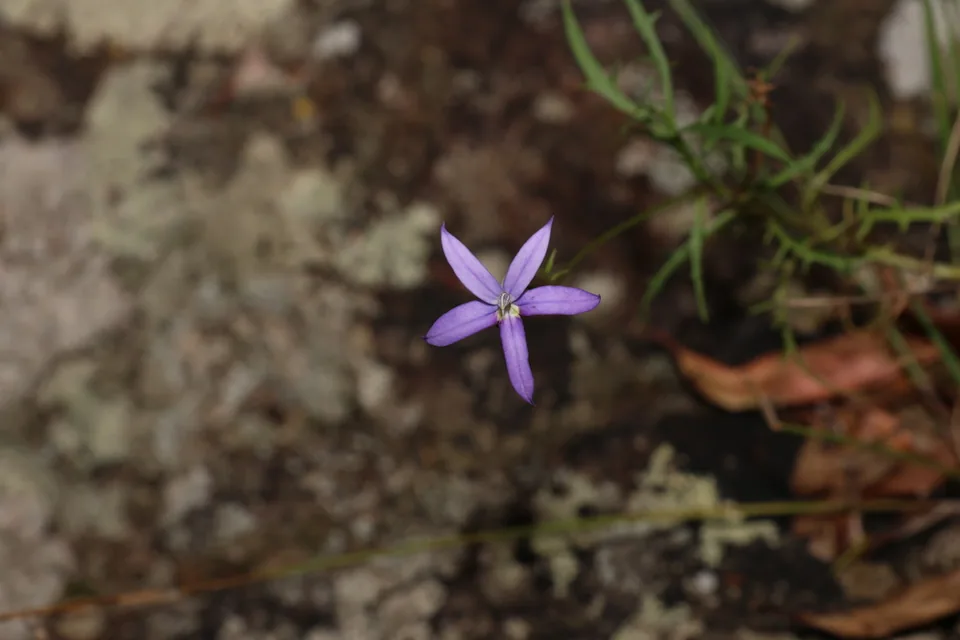
Rock isotome is a heat-loving tender perennial native to Australia that is easily grown as an annual in cold climates. [1] It flowers profusely for many months with star-shaped blue to mauve flowers and needs little maintenance. [3] Its milky sap can severely irritate skin and eyes, so gloves are recommended when taking cuttings. [3]
Isotoma axillaris care
How to water Isotoma axillaris
Watering
About once a week once established, more in hot weather
What the sources say (1)
Plants will require regular watering until established, and then only need watering about once a week, perhaps more in the heat.Watering notes
Water regularly until established; grows better if not allowed to dry out for too long; well-drained soil
What the sources say (3)
Plants will require regular watering until established, and then only need watering about once a week, perhaps more in the heat.Isotoma axillaris grow much better if not allowed to dry out for too long and after a wet 2011 winterThey thrive in well-drained, humus-enriched soil or rocky crevices and full sun, but will tolerate dappled shade.How much light Isotoma axillaris needs
Full sun to partial or dappled shade
What the sources say (2)
They thrive in well-drained, humus-enriched soil or rocky crevices and full sun, but will tolerate dappled shade.Grow laurentia in full sun to partial shade . Purchase plants in spring or grow from seed or cuttings.How much cold Isotoma axillaris can take
Hardiness, coldest zone
7a [winter low −17.8 to −15 °C (0 to 5 °F)]
What the sources say (1)
Isotoma axillaris is a heat-loving tender perennial (zones 7a to 10b) plant native to Australia that is easily grown as an annual in cold climates .Hardiness, warmest zone
10b [winter low 1.7 to 4.4 °C (35 to 40 °F)]
What the sources say (1)
Isotoma axillaris is a heat-loving tender perennial (zones 7a to 10b) plant native to Australia that is easily grown as an annual in cold climates .Where to grow Isotoma axillaris
Yes
What the sources say (2)
Use laurentia in borders and in containers as a filler plant. As a low growing plant, it is useful as a soft edger along beds or pathsThey are both particularly suitable for planting in rockeries, containers and native cottage gardens.How to propagate Isotoma axillaris
Seed (including self-sown seedlings); cuttings
What the sources say (3)
Propagation from firm cuttings is also possible, but it is recommended that gloves be worn to avoid reactions to the sap .Grow laurentia in full sun to partial shade . Purchase plants in spring or grow from seed or cuttings.Many people propagate plants by letting them self-seed in the garden and then digging them up and moving them to desired spots.How to grow Isotoma axillaris
The plant
Life cycle
perennial (tender, usually grown as an annual)
What the sources say (2)
Laurentia is a perennial grown as an annual.In its native range it is a tender perennial developing a deep taproot and a woody base, but in gardens is usually treated as an annual.Family
Campanulaceae
What the sources say (1)
This species in the bellflower family (Campanulaceae) has other common names including blue star or star flower.Mature height
Pests and diseases
Pests
mealybugs
What the sources say (1)
This plant has few pests, although it can be attacked by mealybugs, and is not favored by deer or rabbits .Isotoma axillaris pests and problems
Mealybugs
Symptom: Few pests, but can be attacked by mealybugs
What the sources say (1)
This plant has few pests, although it can be attacked by mealybugs, and is not favored by deer or rabbits .
— Laurentia, Isotoma axillaris – Wisconsin Horticulture [1] Green caterpillars
Symptom: Foliage eaten every two or three years by small green caterpillars matching the leaf colour
What to do: Remove by hand
What the sources say (1)
Every two or three years Isotoma axillaris are eaten by little green caterpillars, 2 or 3 cm long, the exact same colour as the foliage, which can be removed easily by hand
— Isotoma axillaris | Australian Plants Society [5] Decline in muggy summer heat
Symptom: Suffers and stops blooming in humid summer heat
What to do: Shear back only if foliage is not in decline
What the sources say (1)
Though said to bloom all summer long, it seems to suffer in the muggy heat of an Arkansas summer.
— Isotoma axillaris, Laurentia, Blue Star [2]
Remedies
Each remedy shows what official sources say about it; traditional remedies without an official source are marked as such. Harmful ones are listed so you know to avoid them.
First aid
First aid: not a substitute for a doctor
sap contact with skin
wash skin with running water Official source, not independently tested
Call the NSW Poisons Information Centre on 13 11 26 for further advice or see your local doctor.
— schn.health.nsw.gov.au [6] Warning is again given that this plant does cause allergic reactions in some people from handling the sap. Caution is advised.
— Isotoma axillaris | Australian Plants Society [5] How: Wash the affected skin with running water.
For plant poisoning , first aid may include: - washing the affected skin with running water
— schn.health.nsw.gov.au [6]
sap contact with eyes
flush eyes with running water Official source, not independently tested
Call the NSW Poisons Information Centre on 13 11 26 for further advice or see your local doctor.
— schn.health.nsw.gov.au [6] Be careful when cuttings stems as they exude white sap that produces a severe stinging sensation if rubbed on eyes and may cause irritation to sensitive skin.
— Isotoma axillaris | Australian Plants Society [5] How: Flush the eyes with clean, running water for 10-15 minutes.
washing the affected skin with running water - flushing the eyes with clean, running water for 10-15 minutes
— schn.health.nsw.gov.au [6]
Treating the plant
caterpillars
hand picking Not verified
Traditional remedy, not verified by an official source.
How: Remove the small green caterpillars, coloured like the foliage, by hand.
Is Isotoma axillaris toxic to pets?
Reported by the source, quoted verbatim. This is not medical or veterinary advice: if a person or an animal may have eaten this plant, contact a poison control centre or a veterinarian.
Animals
It can cause severe irritation to skin and temporary blindness if inadvertent contact is made with eyes, and has been reported to be poisonous to stock.
[3]- Poisonous parts
The acrid milky sap of Isotoma axillaris and Isotoma anethifolia is a common characteristic in this family.
[3]
People
Warning is again given that this plant does cause allergic reactions in some people from handling the sap. Caution is advised.
[5]- Poisonous parts
Be careful when cuttings stems as they exude white sap that produces a severe stinging sensation if rubbed on eyes and may cause irritation to sensitive skin.
[5]- Symptoms
It can cause severe irritation to skin and temporary blindness if inadvertent contact is made with eyes, and has been reported to be poisonous to stock.
[3]
Calendar
Late winter (direct, after frost danger) or February indoors in cold climates
What each source says
According to Australian National Botanic Gardens: Late winter, direct sowing when there is no more danger of frost
According to University of Wisconsin Extension: February, indoors
What the sources say (4)
According to Australian National Botanic Gardens: Seed can be scattered directly in late winter, when there is no more danger of frost, or planted into pots and then transplanting in spring.According to University of Wisconsin Extension: Seeds should be sown indoors very early (February) as it takes about 4 months for the plants to come into flower.Seed can be scattered directly in late winter, when there is no more danger of frost, or planted into pots and then transplanting in spring.Seeds should be sown indoors very early (February) as it takes about 4 months for the plants to come into flower.Spring, after the last frost
What the sources say (3)
as it takes about 4 months for the plants to come into flower. Place plants in the garden after the last frost.Plants bloom from seed in 4 months with transplants not set out until
the threat of frost is past.Seed can be scattered directly in late winter, when there is no more danger of frost, or planted into pots and then transplanting in spring.After flowering, when foliage dies off (cut back); midseason shearing for more flowers
What each source says
According to Australian Plants Society: After flowering, cut back hard
According to University of Wisconsin Extension (grown as annual): Midseason shearing
What the sources say (4)
According to Australian Plants Society: Maintenance: After flowering the foliage will die off and I then cut the plant back hard, to encourage fresh new growth.According to University of Wisconsin Extension (grown as annual): although shearing in midseason will encourage more flowers on a more compact plant .The foliage will then die off and should be cut back to encourage fresh new growth.Maintenance: After flowering the foliage will die off and I then cut the plant back hard, to encourage fresh new growth.Months as given by the sources, which are mostly from the United States (northern hemisphere). In the southern hemisphere they shift by about six months.
Relative to frost
Less precise estimate: there is no weather station within 300 km.
Find frost dates by ZIP code or city
Transplant: around the last frost
Purchase plants in spring or grow from seed or cuttings. Seeds should be sown indoors very early (February) as it takes about 4 months for the plants to come into flower. Place plants in the garden after the last frost.
— Laurentia, Isotoma axillaris – Wisconsin Horticulture [1]
Count from the average frost dates where you live.
Indicative values
Values from a secondary source, not checked word for word like the rest of this page. Use them as a starting point.
- Hours of sun
- 5-6 hoursIndicative value, adapt it to your climate · Secondary source
- Drought tolerant
- yesIndicative value, adapt it to your climate · Secondary source
- Soil pH
- 6-7Indicative value, adapt it to your climate · Secondary source
- Care level
- MediumIndicative value, adapt it to your climate · Secondary source
- Growth rate
- LowIndicative value, adapt it to your climate · Secondary source
Similar plants
- Blue Star Creeper Isotoma fluviatilis
- Appalachian Bellflower Campanula divaricata
- Balloon Flower Platycodon grandiflorus
- Bellflower Campanula glomerata
- Canterbury Bells Campanula medium
- Creeping Bellflower Campanula rapunculoides
- Downy Lobelia Lobelia puberula
- Great Blue Lobelia Lobelia siphilitica
Sources
Every value above is quoted from these documents. Links lead to the original publisher.
- Laurentia, Isotoma axillaris – Wisconsin Horticulture · hort.extension.wisc.edu, consulted
- Isotoma axillaris, Laurentia, Blue Star · uaex.uada.edu, consulted
- Isotoma axillaris, Isotoma anethifolia - Growing Native Plants · anbg.gov.au, consulted
- VicFlora: Isotoma axillaris · vicflora.rbg.vic.gov.au, consulted
- Isotoma axillaris | Australian Plants Society · resources.austplants.com.au, consulted
- schn.health.nsw.gov.au · schn.health.nsw.gov.au
Written by Emilio Marruso · last checked