
Cómo cultivar y cuidar Madreselva Azul
Lonicera caerulea
Escrito por Emilio Marruso · última revisión
De un vistazo
El haskap es un arbusto de bayas resistente, originario de regiones muy frías, que premia un poco de paciencia. Dale sol, un riego profundo cada 5 a 7 días y otra variedad cerca para el polen. A partir del tercer año cosecharás bayas azules en junio, perfectas para mermeladas, tartas, zumos y helados.
- Sol
Sol pleno o semisombra; con sol pleno da más bayas
Qué dicen las fuentes (3)
Luz: Pleno sol a semisombra; la mejor fructificación se da a pleno sol
Haskaps prefer sunny locations with well-drained soils but do well in a variety of situations.
— Haskap in the Garden 1 [1] Grows best in a good moist soil in a sunny position, it does not fruit so well in the shade
— Lonicera caerulea - Useful Temperate Plants [3] Honeyberry shrubs need at least six hours of sun to produce the highest yields, so plant in a full sun location if possible.
— How to Plant and Grow Honeyberries (Haskap) | Gardener’s Path [5] - Riego
Riega a fondo cada 5 a 7 días; no aguanta la sequía, sobre todo los 3 primeros años
Qué dicen las fuentes (10)
Riego: Mantén el suelo húmedo pero no demasiado mojado; riega profundamente cada 5 a 7 días según el tipo de suelo
Según Utah State University Extension: Depending on the soil type, deep water the plant every 5 to 7 days. Frequent, shallow watering events discourage deep root development.
— Haskap in the Garden 1 [1] la parte más calurosa del verano (agricultores de Saskatchewan): Farmers often water once a week during the hottest part of the summer. As a general practice it is best to water a few times thoroughly to promote deep root growth.
— Growing Haskap in Canada [4] Según Gardener's Path: Instead, water deeply once a week, in the absence of sufficient rain.
— How to Plant and Grow Honeyberries (Haskap) | Gardener’s Path [5] Depending on the soil type, deep water the plant every 5 to 7 days. Frequent, shallow watering events discourage deep root development.
— Haskap in the Garden 1 [1] Notas sobre el riego: No tolera la sequía; el riego es fundamental durante los primeros tres años de establecimiento y menos crítico para arbustos ya establecidos; detén el riego en otoño para favorecer el reposo; el riego por goteo mantiene las hojas secas
Ensure that soils remain moist, but not overly wet, particularly during establishment. Haskap naturally grows near water and is not drought-tolerant.
— Haskap in the Garden 1 [1] During the first three years watering is extremely important for tree establishment. Irrigation is less critical for established bushes.
— Growing Haskap in Canada [4] Where irrigation is provided, it should be discontinued in fall to encourage dormancy development.
— Growing Haskap in Canada [4] Drip irrigation is a particularly effective method as it keeps moisture off of the leaves and can be slowly applied, reducing runoff.
— Haskap in the Garden 1 [1] Sequía: No tolera la sequía: crece naturalmente cerca del agua; riega profundamente cada 5 a 7 días según el tipo de suelo.
Haskap naturally grows near water and is not drought-tolerant.
— Haskap in the Garden 1 [1] Depending on the soil type, deep water the plant every 5 to 7 days.
— Haskap in the Garden 1 [1] - Frío
Aguanta inviernos de hasta −45,6 °C (−50 °F)
Muy rústica · USDA 2 · RHS H7 · Z2
Qué dicen las fuentes (4)
Rusticidad, zona más fría: 2 [mínima invernal de −45,6 a −40 °C (de −50 a −40 °F)]
Plant type: Deciduous fruiting shrub Hardiness (USDA Zone): 2-8 Native to: Asia, Europe, North America
— How to Plant and Grow Honeyberries (Haskap) | Gardener’s Path [5] Rusticidad, zona más cálida:
Según Gardener's Path: These cold hardy plants can be cultivated in Zones 2 to 8, but Japanese and Russian varieties respond differently in different climates and conditions.
— How to Plant and Grow Honeyberries (Haskap) | Gardener’s Path [5] climas más cálidos (por encima de la zona 6): These plants are native to very cold regions and experience scorching, mildew and pre-mature leaf drop when grown in warmer climates (above zone 6).
— Haskap in the Garden 1 [1] Plant type: Deciduous fruiting shrub Hardiness (USDA Zone): 2-8 Native to: Asia, Europe, North America
— How to Plant and Grow Honeyberries (Haskap) | Gardener’s Path [5] - Distancia
90–120 cm entre plantas, 1,8–3 m entre hileras
Qué dicen las fuentes (3)
Entre plantas: 91-122 cm [36–48 in] entre plantas dentro de la hilera para la mayoría de los cultivares.
seto: Spacing: Within-row spacing is recommended at 1 meter if you want the plants to grow into a hedge.
— Growing Haskap in Canada [4] For most cultivars, leaving 3 to 4 feet between plants within the row and 6 to 10 feet between rows is sufficient.
— Haskap in the Garden 1 [1] Entre hileras: 183-305 cm [72–120 in] entre hileras para la mayoría de los cultivares.
For most cultivars, leaving 3 to 4 feet between plants within the row and 6 to 10 feet between rows is sufficient.
— Haskap in the Garden 1 [1] - Plantación
Planta en otoño, el mejor momento, o en primavera con la planta en reposo
Qué dicen las fuentes (3)
Plantación: Otoño (mejor); la siembra en primavera de plantas inactivas también es posible
Según Utah State University Extension: Fall is the best time to plant Haskap; however, spring plantings of dormant plants can be successful.
— Haskap in the Garden 1 [1] plántulas criadas a partir de semilla: Plant them out into their permanent positions in late spring or early summer, after the last expected frosts.
— Lonicera caerulea - Useful Temperate Plants [3] Fall is the best time to plant Haskap; however, spring plantings of dormant plants can be successful.
— Haskap in the Garden 1 [1] - Abonado
Una vez al año en primavera con abono equilibrado; nada de nitrógeno después
Qué dicen las fuentes (4)
Frecuencia: Una vez al año, en primavera
One half cup per plant of a general, balanced fertilizer such as a 16-16-16 applied in the spring should be enough to meet the nutrient needs of the plant throughout the growing season.
— Haskap in the Garden 1 [1] Abonos minerales: Fertilizante equilibrado como 16-16-16, 118 mL por planta en primavera
One half cup per plant of a general, balanced fertilizer such as a 16-16-16 applied in the spring should be enough to meet the nutrient needs of the plant throughout the growing season.
— Haskap in the Garden 1 [1] Evitar: Fertilizante nitrogenado después de la primavera: el crecimiento rápido tardío hace que la planta sea más susceptible a los daños invernales
Nitrogen fertilizers are recommended for spring application but discouraged after that time, as rapid growth late in the growing season can make the plant more susceptible to winter injury.
— Haskap in the Garden 1 [1] Subsequent fertilizing should take place only during spring as rapid succulent growth later in the growing season is prone to winter injury.
— Growing Haskap in Canada [4] - Poda
A finales de invierno o principios de primavera; poda poco y nunca más de un cuarto al año
Qué dicen las fuentes (5)
Cuándo podar: A fines del invierno, mientras los arbustos están en reposo, o a principios de la primavera; la poda es mínima durante los primeros tres o cuatro años.
The best time to prune is in late winter, while the bushes are still dormant.
— Haskap in the Garden 1 [1] Pruning should be undertaken in late winter or early spring.
— Growing Haskap in Canada [4] Pruning is minimal for the first three to four years: simply remove any dead, diseased or touching branches.
— Haskap in the Garden 1 [1] Poda drástica: No elimines más del 25% de la planta en un año; en plantas establecidas, aclara las ramas más viejas.
Do not prune out more than 25% of the plant in any given year.
— Haskap in the Garden 1 [1] Once the plant is well established and the canopy has filled in, pruning should also include thinning out the oldest branches to keep the canopy open and encourage new growth.
— Haskap in the Garden 1 [1] - Cosecha
De principios a mediados de junio, desde el tercer año; cosecha cuando el interior esté morado, no verde
Qué dicen las fuentes (9)
Cosecha: Principios o mediados de junio
Utah: Berries ripen in early to mid- June, usually just before strawberries begin producing.
— Haskap in the Garden 1 [1] Saskatoon: However, it is the 2nd or 3rd week in June when all the berries are purple and have began to have a purple inside.
— Growing Haskap in Canada [4] Según Gardener's Path: Haskaps are usually harvested in late spring to early summer.
— How to Plant and Grow Honeyberries (Haskap) | Gardener’s Path [5] Berries ripen in early to mid- June, usually just before strawberries begin producing.
— Haskap in the Garden 1 [1] Cómo cosechar: Recoge cada baya a mano o sacude las ramas sobre un plástico o una sábana; las bayas están maduras 2 a 3 semanas después de volverse azules, cuando el interior es morado en lugar de verde.
Harvest is typically done by hand-picking each berry but with some cultivars, the fruit can be shaken off onto a tarp placed beneath the branches.
— Haskap in the Garden 1 [1] Berries won’t be truly ripe for 2 to 3 weeks after they turn blue.
— Haskaps – Lonicera caerulea — Carrington REC [2] Don’t be too anxious: bite some berries in half, if they are green inside they aren’t ready.
— Growing Haskap in Canada [4] Años hasta el primer fruto: 3 años (pueden aparecer algunas bayas antes; unos kilos por arbusto después de 3–4 años)
You should get berries in the third and following years provided you have planted at least two different, compatible, plants that provide pollen for each other.
— Haskaps – Lonicera caerulea — Carrington REC [2] Bushes often bear a few fruit the year after planting but it will be 3 or 4 years before the bushes are big enough to get a few kilos per bush.
— Growing Haskap in Canada [4] - Polinización
Planta al menos dos variedades distintas que florezcan a la vez
Qué dicen las fuentes (4)
Cuajado: No autofértil: necesita polen de otra variedad
Haskaps require cross-pollination with an unrelated cultivar that blooms at the same time.
— Haskap in the Garden 1 [1] Qué necesita: Planta al menos dos cultivares no emparentados y compatibles, cerca uno del otro, que florezcan al mismo tiempo, para que se provean polen mutuamente.
Haskaps require cross-pollination with an unrelated cultivar that blooms at the same time.
— Haskap in the Garden 1 [1] Haskap needs two unrelated varieties in close proximity for good pollination.
— Growing Haskap in Canada [4] You should get berries in the third and following years provided you have planted at least two different, compatible, plants that provide pollen for each other.
— Haskaps – Lonicera caerulea — Carrington REC [2] - Plagas
Los pájaros se comen las bayas, así que usa malla; vigila el oídio
Qué dicen las fuentes (4)
Plagas: aves (especialmente los cedar waxwings)
Deer seem to leave the plants alone, but birds can be a significant problem.
— Haskap in the Garden 1 [1] Birds, particularly Cedar Waxwings, love Haskap. For 3 years they ignored our berries but then they wiped out 2 years of crops
— Growing Haskap in Canada [4] Enfermedades: mildiu polvoriento (Sphaerotheca spp.)
Although it seldom affects the berries, in late summer the fungus powdery mildew (Sphaerotheca spp.) can develop.
— Haskap in the Garden 1 [1] Diseases: The only diseases we have seen is powdery mildew which starts in the heat of July, well after harvest.
— Growing Haskap in Canada [4] - Atención
Le gusta el frío: en climas cálidos las hojas se queman y caen antes; las variedades japonesas aguantan mejor el calor
Qué dicen las fuentes (2)
Calor: Originaria de regiones muy frías: en climas más cálidos (por encima de la zona USDA 6) sufre quemaduras, mildiu y caída prematura de las hojas; las variedades japonesas se adaptan a zonas con intenso calor veraniego.
These plants are native to very cold regions and experience scorching, mildew and pre-mature leaf drop when grown in warmer climates (above zone 6).
— Haskap in the Garden 1 [1] In areas with intense summer heat, the Japanese varieties are better suited for planting.
— Haskap in the Garden 1 [1] - Tamaño
Hasta 1,8 m de alto y 1,8 m de ancho
Qué dicen las fuentes (2)
Altura adulta: hasta 183 cm (6 pies)
They can grow to be 6 feet high and wide and the form varies significantly, from low-growing to upright, depending on the variety.
— Haskap in the Garden 1 [1] Anchura adulta: hasta 183 cm (6 pies)
They can grow to be 6 feet high and wide and the form varies significantly, from low-growing to upright, depending on the variety.
— Haskap in the Garden 1 [1] - Multiplicación
Por semilla, esquejes o acodo
Qué dicen las fuentes (4)
Propagación: Semilla, esquejes semimaduros (a medio madurar), esquejes de madera dura de ramas maduras, acodo, cultivo de tejidos
Cuttings of half-ripe wood, 7 - 10cm with or without a heel, mid summer in a frame. Good percentage
— Lonicera caerulea - Useful Temperate Plants [3] Cuttings of mature wood of the current season's growth, 15 - 20cm with or without a heel, late autumn in a cold frame. Good percentage
— Lonicera caerulea - Useful Temperate Plants [3] Commercial growers propagate these shrubs asexually, using tissue cultures or cuttings, to produce clones of the parent plants.
— How to Plant and Grow Honeyberries (Haskap) | Gardener’s Path [5] Seed - best sown as soon as it is ripe in a cold frame. Stored seed requires 2 months cold stratification
— Lonicera caerulea - Useful Temperate Plants [3] - Siembra
Siembra la semilla fresca en cajonera fría; la guardada necesita antes 2 meses de frío
Qué dicen las fuentes (1)
Siembra: En cuanto la semilla esté madura, en un marco frío; la semilla almacenada necesita 2 meses de estratificación en frío
Seed - best sown as soon as it is ripe in a cold frame. Stored seed requires 2 months cold stratification
— Lonicera caerulea - Useful Temperate Plants [3]
Resumen
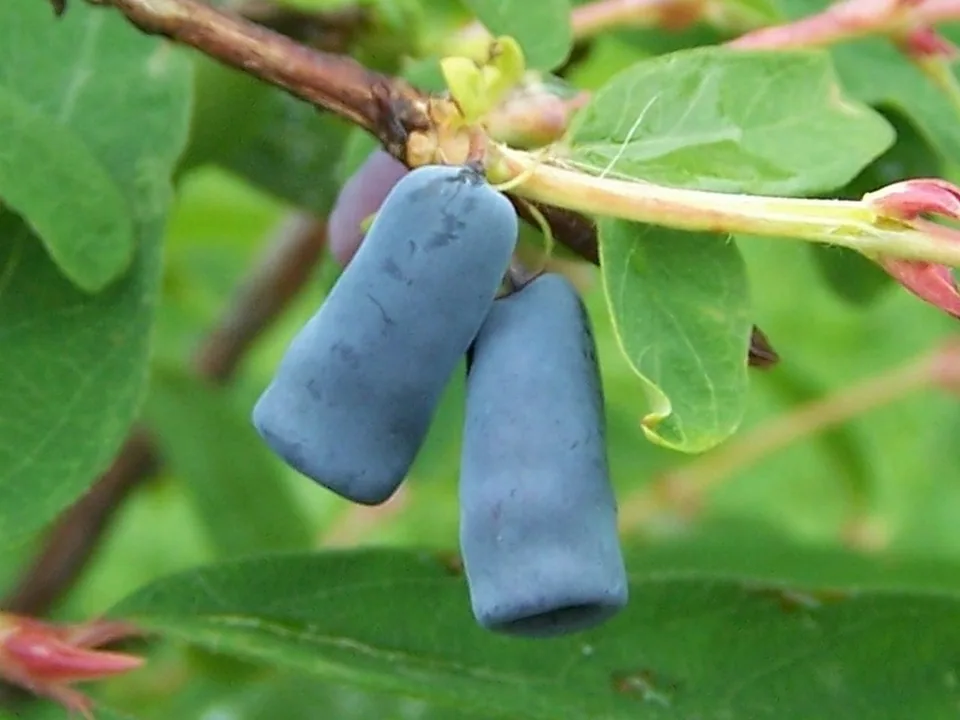
Lonicera caerulea (haskap, honeyberry, madreselva azul) es un arbusto caducifolio longevo y muy resistente al frío, cultivado por sus bayas comestibles de color azul oscuro. [1] El cuaje de frutos requiere polinización cruzada con un cultivar no relacionado que florezca al mismo tiempo. [1] Es uno de los primeros frutos de la temporada, madurando antes que las fresas. [4]
Citado en inglés, como en la fuente.
Cuidados
Riego
Riego
Mantén el suelo húmedo pero no demasiado mojado; riega profundamente cada 5 a 7 días según el tipo de suelo
Lo que dice cada fuente
Según Utah State University Extension: Riega profundamente cada 5 a 7 días según el tipo de suelo
la parte más calurosa del verano (agricultores de Saskatchewan): Una vez a la semana
Según Gardener's Path: Riega profundamente una vez a la semana si no llueve lo suficiente
Qué dicen las fuentes (4)
Según Utah State University Extension: Depending on the soil type, deep water the plant every 5 to 7 days. Frequent, shallow watering events discourage deep root development.la parte más calurosa del verano (agricultores de Saskatchewan): Farmers often water once a week during the hottest part of the summer. As a general practice it is best to water a few times thoroughly to promote deep root growth.Según Gardener's Path: Instead, water deeply once a week, in the absence of sufficient rain.Depending on the soil type, deep water the plant every 5 to 7 days. Frequent, shallow watering events discourage deep root development.Notas sobre el riego
No tolera la sequía; el riego es fundamental durante los primeros tres años de establecimiento y menos crítico para arbustos ya establecidos; detén el riego en otoño para favorecer el reposo; el riego por goteo mantiene las hojas secas
Qué dicen las fuentes (4)
Ensure that soils remain moist, but not overly wet, particularly during establishment. Haskap naturally grows near water and is not drought-tolerant.During the first three years watering is extremely important for tree establishment. Irrigation is less critical for established bushes.Where irrigation is provided, it should be discontinued in fall to encourage dormancy development.Drip irrigation is a particularly effective method as it keeps moisture off of the leaves and can be slowly applied, reducing runoff.Luz
Pleno sol a semisombra; la mejor fructificación se da a pleno sol
Qué dicen las fuentes (3)
Haskaps prefer sunny locations with well-drained soils but do well in a variety of situations.Grows best in a good moist soil in a sunny position, it does not fruit so well in the shadeHoneyberry shrubs need at least six hours of sun to produce the highest yields, so plant in a full sun location if possible.Clima y frío
Rusticidad, zona más fría
2 [mínima invernal de −45,6 a −40 °C (de −50 a −40 °F)]
Qué dicen las fuentes (1)
Plant type: Deciduous fruiting shrub
Hardiness (USDA Zone): 2-8
Native to: Asia, Europe, North AmericaRusticidad, zona más cálida
Las fuentes dan valores distintos según la región, la zona o las condiciones de cultivo.
Lo que dice cada fuente
Según Gardener's Path: 2-8 [mínima invernal de −45,6 a −6,7 °C (de −50 a 20 °F)]
climas más cálidos (por encima de la zona 6): problemas por encima de la zona 6 [mínima invernal de −23,3 a −17,8 °C (de −10 a 0 °F)]
Qué dicen las fuentes (3)
Según Gardener's Path: These cold hardy plants can be cultivated in Zones 2 to 8, but Japanese and Russian varieties respond differently in different climates and conditions.climas más cálidos (por encima de la zona 6): These plants are native to very cold regions and experience scorching, mildew and pre-mature leaf drop when grown in warmer climates (above zone 6).Plant type: Deciduous fruiting shrub
Hardiness (USDA Zone): 2-8
Native to: Asia, Europe, North AmericaSuelo
pH del suelo, mínimo
Las fuentes dan valores distintos según la región, la zona o las condiciones de cultivo.
Lo que dice cada fuente
Investigadores rusos (fuente: Universidad de Saskatchewan): 5.0-7.0
Según Gardener's Path: 5.5-8.0
Qué dicen las fuentes (2)
Investigadores rusos (fuente: Universidad de Saskatchewan): I have seen Canadian Haskap growing side by side with blueberries which indicate a pH around 5.4. Russian researchers recommend a pH between 5 and 7.Según Gardener's Path: They will grow in clay and sandy loams with a pH level ranging from 5.5 to 8.0.pH del suelo, máximo
Las fuentes dan valores distintos según la región, la zona o las condiciones de cultivo.
Lo que dice cada fuente
Investigadores rusos (fuente: Universidad de Saskatchewan): 7.0
Campo de la Universidad de Saskatchewan (suelo arcilloso): 7.9
rango nativo (fuente: Extensión de la Universidad Estatal de Utah): 7.7
Dakota del Norte (Llanuras): cerca de 8
Según Gardener's Path: 8.0
Qué dicen las fuentes (5)
Investigadores rusos (fuente: Universidad de Saskatchewan): I have seen Canadian Haskap growing side by side with blueberries which indicate a pH around 5.4. Russian researchers recommend a pH between 5 and 7.Campo de la Universidad de Saskatchewan (suelo arcilloso): At the University of Saskatchewan the plants are growing on a clay soil with pH 7.9.rango nativo (fuente: Extensión de la Universidad Estatal de Utah): Their native range includes calcareous soils with pH levels as high as 7.7, and may tolerate even higher pH levels.Dakota del Norte (Llanuras): Haskaps can be used just like blueberries but grow well in many soil types, even those near pH 8.Según Gardener's Path: They will grow in clay and sandy loams with a pH level ranging from 5.5 to 8.0.Dónde cultivarla
Las fuentes dan valores distintos según la región, la zona o las condiciones de cultivo.
Lo que dice cada fuente
Según Utah State University Extension: 91.4-121.9 cm (3-4 pies) dentro de la fila; 182.9-304.8 cm (6-10 pies) entre filas
seto: 100 cm (1 m)
arbustos individuales: 130 cm (1.3 m)
Según Gardener's Path: 91.4-243.8 cm (3-8 pies)
Qué dicen las fuentes (5)
Según Utah State University Extension: For most cultivars, leaving 3 to 4 feet between plants within the row and 6 to 10 feet between rows is sufficient.seto: Spacing: Within-row spacing is recommended at 1 meter if you want the plants to grow into a hedge. At 1.3 meter they would probably remain as individual bushes.arbustos individuales: Spacing: Within-row spacing is recommended at 1 meter if you want the plants to grow into a hedge. At 1.3 meter they would probably remain as individual bushes.Según Gardener's Path: Three to eight feet apart is generally fine, depending on the variety. Check the tag that comes with your new plant for spacing guidelines.For most cultivars, leaving 3 to 4 feet between plants within the row and 6 to 10 feet between rows is sufficient.Propagación
Semilla, esquejes semimaduros (a medio madurar), esquejes de madera dura de ramas maduras, acodo, cultivo de tejidos
Qué dicen las fuentes (4)
Cuttings of half-ripe wood, 7 - 10cm with or without a heel, mid summer in a frame. Good percentageCuttings of mature wood of the current season's growth, 15 - 20cm with or without a heel, late autumn in a cold frame. Good percentageCommercial growers propagate these shrubs asexually, using tissue cultures or cuttings, to produce clones of the parent plants.Seed - best sown as soon as it is ripe in a cold frame. Stored seed requires 2 months cold stratificationCultivo
La planta
Familia
familia de las madreselvas
Qué dicen las fuentes (1)
Haskap Plants Haskaps are in the honeysuckle family and are a deciduous, cold hardy shrub that can live up to 30 years.Altura adulta
hasta 183 cm (6 pies)
Qué dicen las fuentes (1)
They can grow to be 6 feet high and wide and the form varies significantly, from low-growing to upright, depending on the variety.Anchura adulta
hasta 183 cm (6 pies)
Qué dicen las fuentes (1)
They can grow to be 6 feet high and wide and the form varies significantly, from low-growing to upright, depending on the variety.Años hasta el primer fruto
3 años (pueden aparecer algunas bayas antes; unos kilos por arbusto después de 3–4 años)
Qué dicen las fuentes (2)
You should get berries in the third and following years provided you have planted at least two different, compatible, plants that provide pollen for each other.Bushes often bear a few fruit the year after planting but it will be 3 or 4 years before the bushes are big enough to get a few kilos per bush.Siembra y crecimiento
Distancia entre hileras
183–305 cm (6–10 pies)
Qué dicen las fuentes (1)
For most cultivars, leaving 3 to 4 feet between plants within the row and 6 to 10 feet between rows is sufficient.Cosecha y conservación
Cómo cosechar
Recoge cada baya a mano o sacude las ramas sobre un plástico o una sábana; las bayas están maduras 2 a 3 semanas después de volverse azules, cuando el interior es morado en lugar de verde.
Qué dicen las fuentes (3)
Harvest is typically done by hand-picking each berry but with some cultivars, the fruit can be shaken off onto a tarp placed beneath the branches.Berries won’t be truly ripe for 2 to 3 weeks after they turn blue.Don’t be too anxious: bite some berries in half, if they are green inside they aren’t ready.Conservación
Las bayas se pueden congelar, secar o embotellar; los cultivares que sangran por la cicatriz de recolección tienen una vida de almacenamiento más corta.
Plagas y enfermedades
Plagas
aves (especialmente los cedar waxwings)
Enfermedades
mildiu polvoriento (Sphaerotheca spp.)
Qué dicen las fuentes (2)
Although it seldom affects the berries, in late summer the fungus powdery mildew (Sphaerotheca spp.) can develop.Diseases: The only diseases we have seen is powdery mildew which starts in the heat of July, well after harvest.Abonado
Cuándo
Solo en primavera
Lo que dice cada fuente
Al plantar.: Antes de plantar, según un análisis del suelo
Al plantar.: Fertilizante incorporado al suelo antes de plantar, después de un análisis del suelo
Qué dicen las fuentes (4)
Al plantar.: It is recommended to have soil tested in order to add preplant fertilizer according to soil test recommendations.Al plantar.: Soil testing and fertilizer incorporation prior to planting is recommended.Nitrogen fertilizers are recommended for spring application but discouraged after that time, as rapid growth late in the growing season can make the plant more susceptible to winter injury.Subsequent fertilizing should take place only during spring as rapid succulent growth later in the growing season is prone to winter injury.Frecuencia
Una vez al año, en primavera
Qué dicen las fuentes (1)
One half cup per plant of a general, balanced fertilizer such as a 16-16-16 applied in the spring should be enough to meet the nutrient needs of the plant throughout the growing season.Abonos naturales
Materia orgánica añadida al suelo, lo que aumenta la disponibilidad de nutrientes
Qué dicen las fuentes (1)
Additionally, organic matter is highly beneficial to all soil types in Utah and will increase nutrient availability and waterholding capacity in the soil.Abonos minerales
Fertilizante equilibrado como 16-16-16, 118 mL por planta en primavera
Qué dicen las fuentes (1)
One half cup per plant of a general, balanced fertilizer such as a 16-16-16 applied in the spring should be enough to meet the nutrient needs of the plant throughout the growing season.Evitar
Fertilizante nitrogenado después de la primavera: el crecimiento rápido tardío hace que la planta sea más susceptible a los daños invernales
Qué dicen las fuentes (2)
Nitrogen fertilizers are recommended for spring application but discouraged after that time, as rapid growth late in the growing season can make the plant more susceptible to winter injury.Subsequent fertilizing should take place only during spring as rapid succulent growth later in the growing season is prone to winter injury.Distancias
Entre plantas
91-122 cm [36–48 in] entre plantas dentro de la hilera para la mayoría de los cultivares.
Lo que dice cada fuente
seto: 1 m [3,3 ft] dentro de la hilera
Qué dicen las fuentes (2)
seto: Spacing: Within-row spacing is recommended at 1 meter if you want the plants to grow into a hedge.For most cultivars, leaving 3 to 4 feet between plants within the row and 6 to 10 feet between rows is sufficient.Entre hileras
183-305 cm [72–120 in] entre hileras para la mayoría de los cultivares.
Qué dicen las fuentes (1)
For most cultivars, leaving 3 to 4 feet between plants within the row and 6 to 10 feet between rows is sufficient.Raíces
Sistema radicular
La profundidad de las raíces sigue al riego: unos pocos riegos profundos promueven raíces profundas; riegos pequeños y frecuentes dan un sistema radicular superficial.
Chupones
No produce retoños.
Calor y sequía
Calor
Originaria de regiones muy frías: en climas más cálidos (por encima de la zona USDA 6) sufre quemaduras, mildiu y caída prematura de las hojas; las variedades japonesas se adaptan a zonas con intenso calor veraniego.
Qué dicen las fuentes (2)
These plants are native to very cold regions and experience scorching, mildew and pre-mature leaf drop when grown in warmer climates (above zone 6).In areas with intense summer heat, the Japanese varieties are better suited for planting.Sequía
No tolera la sequía: crece naturalmente cerca del agua; riega profundamente cada 5 a 7 días según el tipo de suelo.
Polinización
Cuajado
No autofértil: necesita polen de otra variedad
Qué dicen las fuentes (1)
Haskaps require cross-pollination with an unrelated cultivar that blooms at the same time.Qué necesita
Planta al menos dos cultivares no emparentados y compatibles, cerca uno del otro, que florezcan al mismo tiempo, para que se provean polen mutuamente.
Qué dicen las fuentes (3)
Haskaps require cross-pollination with an unrelated cultivar that blooms at the same time.Haskap needs two unrelated varieties in close proximity for good pollination.You should get berries in the third and following years provided you have planted at least two different, compatible, plants that provide pollen for each other.Poda
Cuándo podar
A fines del invierno, mientras los arbustos están en reposo, o a principios de la primavera; la poda es mínima durante los primeros tres o cuatro años.
Qué dicen las fuentes (3)
The best time to prune is in late winter, while the bushes are still dormant.Pruning should be undertaken in late winter or early spring.Pruning is minimal for the first three to four years: simply remove any dead, diseased or touching branches.Poda drástica
No elimines más del 25% de la planta en un año; en plantas establecidas, aclara las ramas más viejas.
Qué dicen las fuentes (2)
Do not prune out more than 25% of the plant in any given year.Once the plant is well established and the canopy has filled in, pruning should also include thinning out the oldest branches to keep the canopy open and encourage new growth.Problemas
Mildiu polvoriento
Síntoma: Manchas blancas y polvorientas en las hojas a mediados del verano que luego se vuelven marrones
Qué hacer: Planta cultivares resistentes; poda para aumentar la circulación del aire
Qué dicen las fuentes (1)
Watch for white powdery patches on the leaves in mid-summer. These patches will eventually turn brown. The best control option for powdery mildew is to plant resistant cultivars.
— Haskap in the Garden 1 [1] Aves
Síntoma: Pérdida de bayas maduras por los pájaros
Qué hacer: Cubre las plantas con una red a finales de mayo o principios de junio
Qué dicen las fuentes (1)
Placing netting over plants in late May or early June will help reduce crop loss to birds.
— Haskap in the Garden 1 [1] Quemadura por sol en la fruta
Síntoma: Quemadura por sol en la fruta en plantaciones de gran altitud
Qué hacer: Planta en un lugar protegido de los vientos secos del verano y del sol de la tarde
Qué dicen las fuentes (1)
Sunscald on the fruit is an issue for high elevation plantings. Planting in an area protected from drying summer winds and late afternoon sun is recommended
— Haskap in the Garden 1 [1]
Remedios
Cada remedio indica qué dicen las fuentes oficiales; los remedios tradicionales sin fuente oficial aparecen marcados. Los perjudiciales están para que sepas evitarlos.
Cuidar la planta
pájaros
red para pájaros Funciona
If you buy the cheaper 1 inch you will have birds stuck with their heads in the net.
— Growing Haskap in Canada [4] Cómo: Cubre los arbustos hasta el suelo con una malla antipájaros con orificios de media pulgada o menos. Sujétala con estacas, ladrillos pesados o piedras pesadas y colócala sobre las plantas a finales de mayo o principios de junio.
You will need bird netting to cover your shrubs. Look for a netting with holes that are one-half inch or less in size.
— How to Plant and Grow Honeyberries (Haskap) | Gardener’s Path [5] Qué dicen las pruebas Placing netting over plants in late May or early June will help reduce crop loss to birds.
— Haskap in the Garden 1 [1]
mildiu polvoriento
Poda para mejorar la circulación del aire. Funciona
Cómo: Poda para aumentar la circulación de aire; si plantas cultivares resistentes, ese es el mejor control.
The best control option for powdery mildew is to plant resistant cultivars. Pruning to increase air circulation will also help keep disease occurrence low.
— Haskap in the Garden 1 [1] Qué dicen las pruebas Pruning to increase air circulation will also help keep disease occurrence low.
— Haskap in the Garden 1 [1]
Calendario
En cuanto la semilla esté madura, en un marco frío; la semilla almacenada necesita 2 meses de estratificación en frío
Qué dicen las fuentes (1)
Seed - best sown as soon as it is ripe in a cold frame. Stored seed requires 2 months cold stratificationOtoño (mejor); la siembra en primavera de plantas inactivas también es posible
Lo que dice cada fuente
Según Utah State University Extension: Otoño (mejor) o primavera con plantas inactivas
plántulas criadas a partir de semilla: Finales de primavera o principios de verano, después de las últimas heladas esperadas.
Qué dicen las fuentes (3)
Según Utah State University Extension: Fall is the best time to plant Haskap; however, spring plantings of dormant plants can be successful.plántulas criadas a partir de semilla: Plant them out into their permanent positions in late spring or early summer, after the last expected frosts.Fall is the best time to plant Haskap; however, spring plantings of dormant plants can be successful.Principios o mediados de junio
Lo que dice cada fuente
Utah: Principios o mediados de junio
Saskatoon: 2.ª o 3.ª semana de junio
Según Gardener's Path: Finales de primavera a principios de verano
Qué dicen las fuentes (4)
Utah: Berries ripen in early to mid- June, usually just before strawberries begin producing.Saskatoon: However, it is the 2nd or 3rd week in June when all the berries are purple and have began to have a purple inside.Según Gardener's Path: Haskaps are usually harvested in late spring to early summer.Berries ripen in early to mid- June, usually just before strawberries begin producing.Finales del invierno mientras está en reposo, o principios de la primavera
Lo que dice cada fuente
Según Utah State University Extension: Finales del invierno, mientras está en reposo
Según University of Saskatchewan: A fines del invierno o principios de la primavera
Según Gardener's Path: Después de la cosecha en otoño, durante el invierno o a principios de la primavera
Qué dicen las fuentes (5)
Según Utah State University Extension: The best time to prune is in late winter, while the bushes are still dormant.Según University of Saskatchewan: Pruning should be undertaken in late winter or early spring. You should mainly thin out older branches when the bush gets too dense.Según Gardener's Path: Pruning should be done after harvest in the fall, during the winter, or early spring.The best time to prune is in late winter, while the bushes are still dormant.Pruning should be undertaken in late winter or early spring. You should mainly thin out older branches when the bush gets too dense.Meses tal como los dan las fuentes, en su mayoría de Estados Unidos (hemisferio norte). En el hemisferio sur se desplazan unos seis meses.
Comestibilidad
Según la fuente, citada textualmente. No comas una planta basándote solo en esta página: los errores de identificación pueden ser peligrosos.
Plantas similares
- Alpine honeysuckle Lonicera alpigena
- Madreselva de bosque Lonicera xylosteum
- Madreselva Lonicera periclymenum
- Grape Honysuckle Lonicera reticulata
- Madreselva Lonicera japonica
- Honeysuckle Lonicera sempervirens
- Madreselva de los Jardines Lonicera caprifolium
- Limber Honeysuckle Lonicera dioica
Fuentes
Cada valor anterior se cita de estos documentos. Los enlaces llevan al editor original.
- Haskap in the Garden 1 · extension.usu.edu, consultado
- Haskaps – Lonicera caerulea — Carrington REC · ag.ndsu.edu, consultado
- Lonicera caerulea - Useful Temperate Plants · temperate.theferns.info, consultado
- Growing Haskap in Canada · cropsandsoils.extension.wisc.edu, consultado
- How to Plant and Grow Honeyberries (Haskap) | Gardener’s Path · gardenerspath.com, consultado
Escrito por Emilio Marruso · última revisión