
How to Grow and Care for Deepblue honeysuckle
Lonicera caerulea
Written by Emilio Marruso · last checked
At a glance
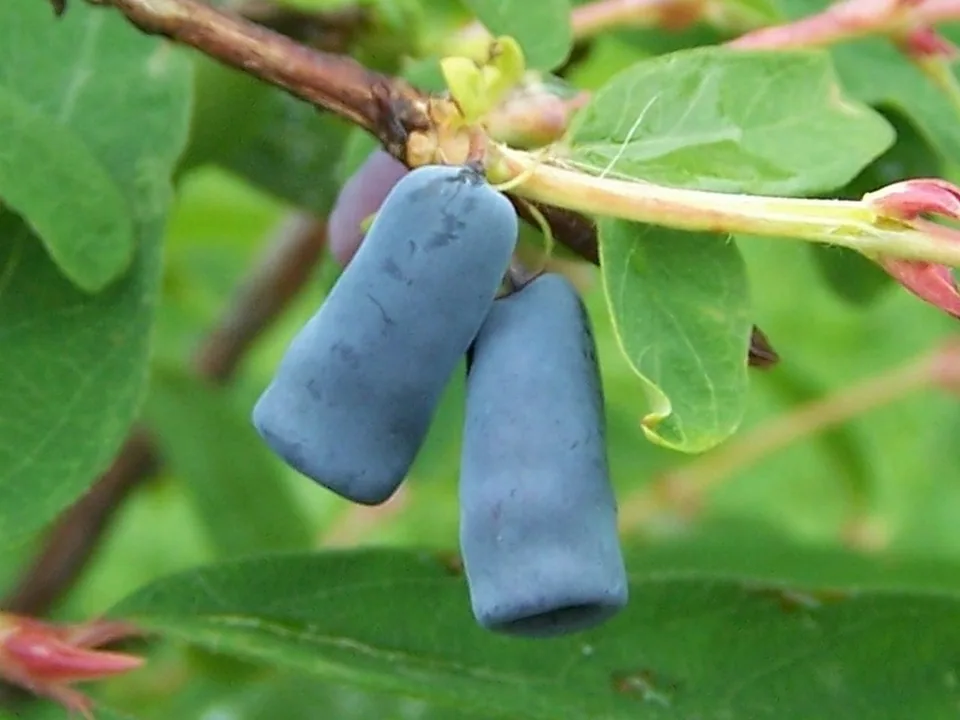
Haskap is a sturdy berry bush native to very cold regions, and it rewards a little patience. Give it sun, a deep watering every 5 to 7 days and a second variety nearby for pollen. From its third year you'll pick blue berries in June, perfect for jams, pies, juice and ice cream.
- Sun
Full sun to partial shade; the most berries come in full sun
What the sources say (3)
Light: Full sun to partial shade; best fruiting in full sun
Haskaps prefer sunny locations with well-drained soils but do well in a variety of situations.
— Haskap in the Garden 1 [1] Grows best in a good moist soil in a sunny position, it does not fruit so well in the shade
— Lonicera caerulea - Useful Temperate Plants [3] Honeyberry shrubs need at least six hours of sun to produce the highest yields, so plant in a full sun location if possible.
— How to Plant and Grow Honeyberries (Haskap) | Gardener’s Path [5] - Water
Water deeply every 5 to 7 days; it can't handle drought, especially in its first 3 years
What the sources say (10)
Watering: Keep soil moist but not overly wet; deep watering every 5 to 7 days depending on soil type
According to Utah State University Extension: Depending on the soil type, deep water the plant every 5 to 7 days. Frequent, shallow watering events discourage deep root development.
— Haskap in the Garden 1 [1] hottest part of the summer (Saskatchewan farmers): Farmers often water once a week during the hottest part of the summer. As a general practice it is best to water a few times thoroughly to promote deep root growth.
— Growing Haskap in Canada [4] According to Gardener's Path: Instead, water deeply once a week, in the absence of sufficient rain.
— How to Plant and Grow Honeyberries (Haskap) | Gardener’s Path [5] Depending on the soil type, deep water the plant every 5 to 7 days. Frequent, shallow watering events discourage deep root development.
— Haskap in the Garden 1 [1] Watering notes: Not drought-tolerant; watering is critical during the first three years of establishment and less critical for established bushes; stop irrigation in fall to encourage dormancy; drip irrigation keeps leaves dry
Ensure that soils remain moist, but not overly wet, particularly during establishment. Haskap naturally grows near water and is not drought-tolerant.
— Haskap in the Garden 1 [1] During the first three years watering is extremely important for tree establishment. Irrigation is less critical for established bushes.
— Growing Haskap in Canada [4] Where irrigation is provided, it should be discontinued in fall to encourage dormancy development.
— Growing Haskap in Canada [4] Drip irrigation is a particularly effective method as it keeps moisture off of the leaves and can be slowly applied, reducing runoff.
— Haskap in the Garden 1 [1] - Cold
Survives winters down to −50 °F (−45.6 °C)
Very hardy · USDA 2 · RHS H7 · Z2
What the sources say (4)
Hardiness, coldest zone: 2 [winter low −45.6 to −40 °C (−50 to −40 °F)]
Plant type: Deciduous fruiting shrub Hardiness (USDA Zone): 2-8 Native to: Asia, Europe, North America
— How to Plant and Grow Honeyberries (Haskap) | Gardener’s Path [5] Hardiness, warmest zone:
According to Gardener's Path: These cold hardy plants can be cultivated in Zones 2 to 8, but Japanese and Russian varieties respond differently in different climates and conditions.
— How to Plant and Grow Honeyberries (Haskap) | Gardener’s Path [5] warmer climates (above zone 6): These plants are native to very cold regions and experience scorching, mildew and pre-mature leaf drop when grown in warmer climates (above zone 6).
— Haskap in the Garden 1 [1] Plant type: Deciduous fruiting shrub Hardiness (USDA Zone): 2-8 Native to: Asia, Europe, North America
— How to Plant and Grow Honeyberries (Haskap) | Gardener’s Path [5] - Spacing
3–4 ft between plants, 6–10 ft between rows
What the sources say (3)
Between plants: 91-122 cm [36–48 in] between plants within the row for most cultivars.
hedge: Spacing: Within-row spacing is recommended at 1 meter if you want the plants to grow into a hedge.
— Growing Haskap in Canada [4] For most cultivars, leaving 3 to 4 feet between plants within the row and 6 to 10 feet between rows is sufficient.
— Haskap in the Garden 1 [1] Between rows: 183-305 cm [72–120 in] between rows for most cultivars.
For most cultivars, leaving 3 to 4 feet between plants within the row and 6 to 10 feet between rows is sufficient.
— Haskap in the Garden 1 [1] - Planting
Plant in fall, the best time, or in spring while the plants are dormant
What the sources say (3)
Planting: Fall (best); spring planting of dormant plants also possible
According to Utah State University Extension: Fall is the best time to plant Haskap; however, spring plantings of dormant plants can be successful.
— Haskap in the Garden 1 [1] seedlings raised from seed: Plant them out into their permanent positions in late spring or early summer, after the last expected frosts.
— Lonicera caerulea - Useful Temperate Plants [3] Fall is the best time to plant Haskap; however, spring plantings of dormant plants can be successful.
— Haskap in the Garden 1 [1] - Feeding
Once a year in spring with a balanced fertilizer; no nitrogen later in the year
What the sources say (4)
How often: Once a year, in spring
One half cup per plant of a general, balanced fertilizer such as a 16-16-16 applied in the spring should be enough to meet the nutrient needs of the plant throughout the growing season.
— Haskap in the Garden 1 [1] Mineral fertilizers: Balanced fertilizer such as 16-16-16, 118 mL per plant in spring
One half cup per plant of a general, balanced fertilizer such as a 16-16-16 applied in the spring should be enough to meet the nutrient needs of the plant throughout the growing season.
— Haskap in the Garden 1 [1] Avoid: Nitrogen fertilizer after spring: late rapid growth makes the plant more susceptible to winter injury
Nitrogen fertilizers are recommended for spring application but discouraged after that time, as rapid growth late in the growing season can make the plant more susceptible to winter injury.
— Haskap in the Garden 1 [1] Subsequent fertilizing should take place only during spring as rapid succulent growth later in the growing season is prone to winter injury.
— Growing Haskap in Canada [4] - Pruning
Late winter or early spring; prune little at first and never more than a quarter a year
What the sources say (5)
When to prune: Late winter while the bushes are dormant, or early spring; pruning is minimal for the first three to four years.
The best time to prune is in late winter, while the bushes are still dormant.
— Haskap in the Garden 1 [1] Pruning should be undertaken in late winter or early spring.
— Growing Haskap in Canada [4] Pruning is minimal for the first three to four years: simply remove any dead, diseased or touching branches.
— Haskap in the Garden 1 [1] Hard pruning: Do not remove more than 25% of the plant in any one year; on established plants, thin out the oldest branches.
Do not prune out more than 25% of the plant in any given year.
— Haskap in the Garden 1 [1] Once the plant is well established and the canopy has filled in, pruning should also include thinning out the oldest branches to keep the canopy open and encourage new growth.
— Haskap in the Garden 1 [1] - Harvest
Early to mid-June, from year 3; pick when the inside of the berry is purple, not green
What the sources say (9)
Harvest: Early to mid-June
Utah: Berries ripen in early to mid- June, usually just before strawberries begin producing.
— Haskap in the Garden 1 [1] Saskatoon: However, it is the 2nd or 3rd week in June when all the berries are purple and have began to have a purple inside.
— Growing Haskap in Canada [4] According to Gardener's Path: Haskaps are usually harvested in late spring to early summer.
— How to Plant and Grow Honeyberries (Haskap) | Gardener’s Path [5] Berries ripen in early to mid- June, usually just before strawberries begin producing.
— Haskap in the Garden 1 [1] How to harvest: Hand-pick each berry or shake the branches over a tarp or sheet; berries are ripe 2 to 3 weeks after turning blue, when the inside is purple rather than green.
Harvest is typically done by hand-picking each berry but with some cultivars, the fruit can be shaken off onto a tarp placed beneath the branches.
— Haskap in the Garden 1 [1] Berries won’t be truly ripe for 2 to 3 weeks after they turn blue.
— Haskaps – Lonicera caerulea — Carrington REC [2] Don’t be too anxious: bite some berries in half, if they are green inside they aren’t ready.
— Growing Haskap in Canada [4] Years to first fruit: 3 years (a few berries may appear earlier; a few kilos per bush after 3–4 years)
You should get berries in the third and following years provided you have planted at least two different, compatible, plants that provide pollen for each other.
— Haskaps – Lonicera caerulea — Carrington REC [2] Bushes often bear a few fruit the year after planting but it will be 3 or 4 years before the bushes are big enough to get a few kilos per bush.
— Growing Haskap in Canada [4] - Pollination
Plant at least two different varieties that bloom at the same time
What the sources say (4)
Fruit set: Self-unfruitful: needs pollen from another variety
Haskaps require cross-pollination with an unrelated cultivar that blooms at the same time.
— Haskap in the Garden 1 [1] What it needs: Plant at least two unrelated, compatible cultivars close together that bloom at the same time, so they provide pollen for each other.
Haskaps require cross-pollination with an unrelated cultivar that blooms at the same time.
— Haskap in the Garden 1 [1] Haskap needs two unrelated varieties in close proximity for good pollination.
— Growing Haskap in Canada [4] You should get berries in the third and following years provided you have planted at least two different, compatible, plants that provide pollen for each other.
— Haskaps – Lonicera caerulea — Carrington REC [2] - Pests
Birds steal the berries, so use netting; watch for powdery mildew
What the sources say (4)
Pests: birds (especially cedar waxwings)
Deer seem to leave the plants alone, but birds can be a significant problem.
— Haskap in the Garden 1 [1] Birds, particularly Cedar Waxwings, love Haskap. For 3 years they ignored our berries but then they wiped out 2 years of crops
— Growing Haskap in Canada [4] Diseases: powdery mildew (Sphaerotheca spp.)
Although it seldom affects the berries, in late summer the fungus powdery mildew (Sphaerotheca spp.) can develop.
— Haskap in the Garden 1 [1] Diseases: The only diseases we have seen is powdery mildew which starts in the heat of July, well after harvest.
— Growing Haskap in Canada [4] - Watch out
It loves cold: in warm climates leaves scorch and drop early; Japanese varieties handle heat better
What the sources say (2)
Heat: Native to very cold regions: in warmer climates (above USDA zone 6) it suffers scorching, mildew and premature leaf drop; Japanese varieties suit areas with intense summer heat.
These plants are native to very cold regions and experience scorching, mildew and pre-mature leaf drop when grown in warmer climates (above zone 6).
— Haskap in the Garden 1 [1] In areas with intense summer heat, the Japanese varieties are better suited for planting.
— Haskap in the Garden 1 [1] - Size
Up to 6 ft tall and 6 ft wide
What the sources say (2)
Mature height: up to 183 cm (6 ft)
They can grow to be 6 feet high and wide and the form varies significantly, from low-growing to upright, depending on the variety.
— Haskap in the Garden 1 [1] Mature width: up to 183 cm (6 ft)
They can grow to be 6 feet high and wide and the form varies significantly, from low-growing to upright, depending on the variety.
— Haskap in the Garden 1 [1] - Propagation
From seed, cuttings or layering
What the sources say (4)
Propagation: Seed, semi-ripe (half-ripe) cuttings, hardwood cuttings of mature wood, layering, tissue culture
Cuttings of half-ripe wood, 7 - 10cm with or without a heel, mid summer in a frame. Good percentage
— Lonicera caerulea - Useful Temperate Plants [3] Cuttings of mature wood of the current season's growth, 15 - 20cm with or without a heel, late autumn in a cold frame. Good percentage
— Lonicera caerulea - Useful Temperate Plants [3] Commercial growers propagate these shrubs asexually, using tissue cultures or cuttings, to produce clones of the parent plants.
— How to Plant and Grow Honeyberries (Haskap) | Gardener’s Path [5] Seed - best sown as soon as it is ripe in a cold frame. Stored seed requires 2 months cold stratification
— Lonicera caerulea - Useful Temperate Plants [3] - Sowing
Sow fresh seed in a cold frame; stored seed needs 2 months of cold first
What the sources say (1)
Sowing: As soon as the seed is ripe, in a cold frame; stored seed needs 2 months of cold stratification
Seed - best sown as soon as it is ripe in a cold frame. Stored seed requires 2 months cold stratification
— Lonicera caerulea - Useful Temperate Plants [3]
Overview
Lonicera caerulea (haskap, honeyberry, blue honeysuckle) is a long-lived, very cold-hardy deciduous shrub grown for its dark blue edible berries. [1] Fruit set requires cross-pollination with an unrelated cultivar that blooms at the same time. [1] It is one of the first fruits of the season, ripening before strawberries. [4]
Deepblue honeysuckle care
How to water Deepblue honeysuckle
Watering
Keep soil moist but not overly wet; deep watering every 5 to 7 days depending on soil type
What each source says
According to Utah State University Extension: Deep water every 5 to 7 days depending on soil type
hottest part of the summer (Saskatchewan farmers): Once a week
According to Gardener's Path: Water deeply once a week in the absence of sufficient rain
What the sources say (4)
According to Utah State University Extension: Depending on the soil type, deep water the plant every 5 to 7 days. Frequent, shallow watering events discourage deep root development.hottest part of the summer (Saskatchewan farmers): Farmers often water once a week during the hottest part of the summer. As a general practice it is best to water a few times thoroughly to promote deep root growth.According to Gardener's Path: Instead, water deeply once a week, in the absence of sufficient rain.Depending on the soil type, deep water the plant every 5 to 7 days. Frequent, shallow watering events discourage deep root development.Watering notes
Not drought-tolerant; watering is critical during the first three years of establishment and less critical for established bushes; stop irrigation in fall to encourage dormancy; drip irrigation keeps leaves dry
What the sources say (4)
Ensure that soils remain moist, but not overly wet, particularly during establishment. Haskap naturally grows near water and is not drought-tolerant.During the first three years watering is extremely important for tree establishment. Irrigation is less critical for established bushes.Where irrigation is provided, it should be discontinued in fall to encourage dormancy development.Drip irrigation is a particularly effective method as it keeps moisture off of the leaves and can be slowly applied, reducing runoff.How much light Deepblue honeysuckle needs
Full sun to partial shade; best fruiting in full sun
What the sources say (3)
Haskaps prefer sunny locations with well-drained soils but do well in a variety of situations.Grows best in a good moist soil in a sunny position, it does not fruit so well in the shadeHoneyberry shrubs need at least six hours of sun to produce the highest yields, so plant in a full sun location if possible.How much cold Deepblue honeysuckle can take
Hardiness, coldest zone
2 [winter low −45.6 to −40 °C (−50 to −40 °F)]
What the sources say (1)
Plant type: Deciduous fruiting shrub
Hardiness (USDA Zone): 2-8
Native to: Asia, Europe, North AmericaHardiness, warmest zone
The sources give different values depending on region, zone or growing conditions.
What each source says
According to Gardener's Path: 2-8 [winter low −45.6 to −6.7 °C (−50 to 20 °F)]
warmer climates (above zone 6): problems above zone 6 [winter low −23.3 to −17.8 °C (−10 to 0 °F)]
What the sources say (3)
According to Gardener's Path: These cold hardy plants can be cultivated in Zones 2 to 8, but Japanese and Russian varieties respond differently in different climates and conditions.warmer climates (above zone 6): These plants are native to very cold regions and experience scorching, mildew and pre-mature leaf drop when grown in warmer climates (above zone 6).Plant type: Deciduous fruiting shrub
Hardiness (USDA Zone): 2-8
Native to: Asia, Europe, North AmericaBest soil for Deepblue honeysuckle
Soil pH, minimum
The sources give different values depending on region, zone or growing conditions.
What each source says
Russian researchers (fonte: University of Saskatchewan): 5.0-7.0
According to Gardener's Path: 5.5-8.0
What the sources say (2)
Russian researchers (fonte: University of Saskatchewan): I have seen Canadian Haskap growing side by side with blueberries which indicate a pH around 5.4. Russian researchers recommend a pH between 5 and 7.According to Gardener's Path: They will grow in clay and sandy loams with a pH level ranging from 5.5 to 8.0.Soil pH, maximum
The sources give different values depending on region, zone or growing conditions.
What each source says
Russian researchers (fonte: University of Saskatchewan): 7.0
University of Saskatchewan field (clay soil): 7.9
native range (fonte: Utah State University Extension): 7.7
North Dakota (Plains): near 8
According to Gardener's Path: 8.0
What the sources say (5)
Russian researchers (fonte: University of Saskatchewan): I have seen Canadian Haskap growing side by side with blueberries which indicate a pH around 5.4. Russian researchers recommend a pH between 5 and 7.University of Saskatchewan field (clay soil): At the University of Saskatchewan the plants are growing on a clay soil with pH 7.9.native range (fonte: Utah State University Extension): Their native range includes calcareous soils with pH levels as high as 7.7, and may tolerate even higher pH levels.North Dakota (Plains): Haskaps can be used just like blueberries but grow well in many soil types, even those near pH 8.According to Gardener's Path: They will grow in clay and sandy loams with a pH level ranging from 5.5 to 8.0.Where to grow Deepblue honeysuckle
The sources give different values depending on region, zone or growing conditions.
What each source says
According to Utah State University Extension: 91.4-121.9 cm (3-4 ft) within the row; 182.9-304.8 cm (6-10 ft) between rows
hedge: 100 cm (1 m)
individual bushes: 130 cm (1.3 m)
According to Gardener's Path: 91.4-243.8 cm (3-8 ft)
What the sources say (5)
According to Utah State University Extension: For most cultivars, leaving 3 to 4 feet between plants within the row and 6 to 10 feet between rows is sufficient.hedge: Spacing: Within-row spacing is recommended at 1 meter if you want the plants to grow into a hedge. At 1.3 meter they would probably remain as individual bushes.individual bushes: Spacing: Within-row spacing is recommended at 1 meter if you want the plants to grow into a hedge. At 1.3 meter they would probably remain as individual bushes.According to Gardener's Path: Three to eight feet apart is generally fine, depending on the variety. Check the tag that comes with your new plant for spacing guidelines.For most cultivars, leaving 3 to 4 feet between plants within the row and 6 to 10 feet between rows is sufficient.How to propagate Deepblue honeysuckle
Seed, semi-ripe (half-ripe) cuttings, hardwood cuttings of mature wood, layering, tissue culture
What the sources say (4)
Cuttings of half-ripe wood, 7 - 10cm with or without a heel, mid summer in a frame. Good percentageCuttings of mature wood of the current season's growth, 15 - 20cm with or without a heel, late autumn in a cold frame. Good percentageCommercial growers propagate these shrubs asexually, using tissue cultures or cuttings, to produce clones of the parent plants.Seed - best sown as soon as it is ripe in a cold frame. Stored seed requires 2 months cold stratificationHow to grow Deepblue honeysuckle
The plant
Family
honeysuckle family
What the sources say (1)
Haskap Plants Haskaps are in the honeysuckle family and are a deciduous, cold hardy shrub that can live up to 30 years.Mature height
up to 183 cm (6 ft)
What the sources say (1)
They can grow to be 6 feet high and wide and the form varies significantly, from low-growing to upright, depending on the variety.Mature width
up to 183 cm (6 ft)
What the sources say (1)
They can grow to be 6 feet high and wide and the form varies significantly, from low-growing to upright, depending on the variety.Years to first fruit
3 years (a few berries may appear earlier; a few kilos per bush after 3–4 years)
What the sources say (2)
You should get berries in the third and following years provided you have planted at least two different, compatible, plants that provide pollen for each other.Bushes often bear a few fruit the year after planting but it will be 3 or 4 years before the bushes are big enough to get a few kilos per bush.Sowing and growth
Row spacing
183–305 cm (6–10 ft)
What the sources say (1)
For most cultivars, leaving 3 to 4 feet between plants within the row and 6 to 10 feet between rows is sufficient.Harvest and storage
How to harvest
Hand-pick each berry or shake the branches over a tarp or sheet; berries are ripe 2 to 3 weeks after turning blue, when the inside is purple rather than green.
What the sources say (3)
Harvest is typically done by hand-picking each berry but with some cultivars, the fruit can be shaken off onto a tarp placed beneath the branches.Berries won’t be truly ripe for 2 to 3 weeks after they turn blue.Don’t be too anxious: bite some berries in half, if they are green inside they aren’t ready.Storage
Berries can be frozen, dried or bottled; cultivars that bleed from the picking scar have a shorter storage life.
Pests and diseases
Pests
birds (especially cedar waxwings)
Diseases
powdery mildew (Sphaerotheca spp.)
What the sources say (2)
Although it seldom affects the berries, in late summer the fungus powdery mildew (Sphaerotheca spp.) can develop.Diseases: The only diseases we have seen is powdery mildew which starts in the heat of July, well after harvest.Fertilizing
When
In spring only
What each source says
at planting: Before planting, according to a soil test
at planting: Fertilizer worked into the soil before planting, after a soil test
What the sources say (4)
at planting: It is recommended to have soil tested in order to add preplant fertilizer according to soil test recommendations.at planting: Soil testing and fertilizer incorporation prior to planting is recommended.Nitrogen fertilizers are recommended for spring application but discouraged after that time, as rapid growth late in the growing season can make the plant more susceptible to winter injury.Subsequent fertilizing should take place only during spring as rapid succulent growth later in the growing season is prone to winter injury.How often
Once a year, in spring
What the sources say (1)
One half cup per plant of a general, balanced fertilizer such as a 16-16-16 applied in the spring should be enough to meet the nutrient needs of the plant throughout the growing season.Natural fertilizers
Organic matter added to the soil, which increases nutrient availability
What the sources say (1)
Additionally, organic matter is highly beneficial to all soil types in Utah and will increase nutrient availability and waterholding capacity in the soil.Mineral fertilizers
Balanced fertilizer such as 16-16-16, 118 mL per plant in spring
What the sources say (1)
One half cup per plant of a general, balanced fertilizer such as a 16-16-16 applied in the spring should be enough to meet the nutrient needs of the plant throughout the growing season.Avoid
Nitrogen fertilizer after spring: late rapid growth makes the plant more susceptible to winter injury
What the sources say (2)
Nitrogen fertilizers are recommended for spring application but discouraged after that time, as rapid growth late in the growing season can make the plant more susceptible to winter injury.Subsequent fertilizing should take place only during spring as rapid succulent growth later in the growing season is prone to winter injury.Spacing
Between plants
91-122 cm [36–48 in] between plants within the row for most cultivars.
What each source says
hedge: 1 m [3.3 ft] within the row
What the sources say (2)
hedge: Spacing: Within-row spacing is recommended at 1 meter if you want the plants to grow into a hedge.For most cultivars, leaving 3 to 4 feet between plants within the row and 6 to 10 feet between rows is sufficient.Between rows
183-305 cm [72–120 in] between rows for most cultivars.
What the sources say (1)
For most cultivars, leaving 3 to 4 feet between plants within the row and 6 to 10 feet between rows is sufficient.Roots
Root system
Root depth follows watering: a few thorough waterings promote deep roots, frequent small waterings give a shallow root system.
Suckers
Does not sucker.
Heat and drought
Heat
Native to very cold regions: in warmer climates (above USDA zone 6) it suffers scorching, mildew and premature leaf drop; Japanese varieties suit areas with intense summer heat.
What the sources say (2)
These plants are native to very cold regions and experience scorching, mildew and pre-mature leaf drop when grown in warmer climates (above zone 6).In areas with intense summer heat, the Japanese varieties are better suited for planting.Drought
Not drought-tolerant: it grows naturally near water; deep water every 5 to 7 days depending on soil type.
Pollination
Fruit set
Self-unfruitful: needs pollen from another variety
What the sources say (1)
Haskaps require cross-pollination with an unrelated cultivar that blooms at the same time.What it needs
Plant at least two unrelated, compatible cultivars close together that bloom at the same time, so they provide pollen for each other.
What the sources say (3)
Haskaps require cross-pollination with an unrelated cultivar that blooms at the same time.Haskap needs two unrelated varieties in close proximity for good pollination.You should get berries in the third and following years provided you have planted at least two different, compatible, plants that provide pollen for each other.Pruning
When to prune
Late winter while the bushes are dormant, or early spring; pruning is minimal for the first three to four years.
What the sources say (3)
The best time to prune is in late winter, while the bushes are still dormant.Pruning should be undertaken in late winter or early spring.Pruning is minimal for the first three to four years: simply remove any dead, diseased or touching branches.Hard pruning
Do not remove more than 25% of the plant in any one year; on established plants, thin out the oldest branches.
What the sources say (2)
Do not prune out more than 25% of the plant in any given year.Once the plant is well established and the canopy has filled in, pruning should also include thinning out the oldest branches to keep the canopy open and encourage new growth.Deepblue honeysuckle pests and problems
Powdery mildew
Symptom: White powdery patches on leaves in mid-summer that later turn brown
What to do: Plant resistant cultivars; prune to increase air circulation
What the sources say (1)
Watch for white powdery patches on the leaves in mid-summer. These patches will eventually turn brown. The best control option for powdery mildew is to plant resistant cultivars.
— Haskap in the Garden 1 [1] Birds
Symptom: Loss of ripening berries to birds
What to do: Cover plants with netting in late May or early June
What the sources say (1)
Placing netting over plants in late May or early June will help reduce crop loss to birds.
— Haskap in the Garden 1 [1] Sunscald on fruit
Symptom: Sunscald on the fruit in high-elevation plantings
What to do: Plant in a site protected from drying summer winds and late afternoon sun
What the sources say (1)
Sunscald on the fruit is an issue for high elevation plantings. Planting in an area protected from drying summer winds and late afternoon sun is recommended
— Haskap in the Garden 1 [1]
Remedies
Each remedy shows what official sources say about it; traditional remedies without an official source are marked as such. Harmful ones are listed so you know to avoid them.
Treating the plant
birds
bird netting Works
If you buy the cheaper 1 inch you will have birds stuck with their heads in the net.
— Growing Haskap in Canada [4] How: Cover the shrubs with bird netting with holes of one-half inch or less, all the way to the ground, secured with stakes or heavy bricks or rocks; place it over the plants in late May or early June.
You will need bird netting to cover your shrubs. Look for a netting with holes that are one-half inch or less in size.
— How to Plant and Grow Honeyberries (Haskap) | Gardener’s Path [5] What the evidence says Placing netting over plants in late May or early June will help reduce crop loss to birds.
— Haskap in the Garden 1 [1]
powdery mildew
pruning for air circulation Works
How: Prune to increase air circulation; planting resistant cultivars is the best control.
The best control option for powdery mildew is to plant resistant cultivars. Pruning to increase air circulation will also help keep disease occurrence low.
— Haskap in the Garden 1 [1] What the evidence says Pruning to increase air circulation will also help keep disease occurrence low.
— Haskap in the Garden 1 [1]
Calendar
As soon as the seed is ripe, in a cold frame; stored seed needs 2 months of cold stratification
What the sources say (1)
Seed - best sown as soon as it is ripe in a cold frame. Stored seed requires 2 months cold stratificationFall (best); spring planting of dormant plants also possible
What each source says
According to Utah State University Extension: Fall (best) or spring with dormant plants
seedlings raised from seed: Late spring or early summer, after the last expected frosts
What the sources say (3)
According to Utah State University Extension: Fall is the best time to plant Haskap; however, spring plantings of dormant plants can be successful.seedlings raised from seed: Plant them out into their permanent positions in late spring or early summer, after the last expected frosts.Fall is the best time to plant Haskap; however, spring plantings of dormant plants can be successful.Early to mid-June
What each source says
Utah: Early to mid-June
Saskatoon: 2nd or 3rd week of June
According to Gardener's Path: Late spring to early summer
What the sources say (4)
Utah: Berries ripen in early to mid- June, usually just before strawberries begin producing.Saskatoon: However, it is the 2nd or 3rd week in June when all the berries are purple and have began to have a purple inside.According to Gardener's Path: Haskaps are usually harvested in late spring to early summer.Berries ripen in early to mid- June, usually just before strawberries begin producing.Late winter while dormant, or early spring
What each source says
According to Utah State University Extension: Late winter, while dormant
According to University of Saskatchewan: Late winter or early spring
According to Gardener's Path: After harvest in the fall, during winter, or early spring
What the sources say (5)
According to Utah State University Extension: The best time to prune is in late winter, while the bushes are still dormant.According to University of Saskatchewan: Pruning should be undertaken in late winter or early spring. You should mainly thin out older branches when the bush gets too dense.According to Gardener's Path: Pruning should be done after harvest in the fall, during the winter, or early spring.The best time to prune is in late winter, while the bushes are still dormant.Pruning should be undertaken in late winter or early spring. You should mainly thin out older branches when the bush gets too dense.Months as given by the sources, which are mostly from the United States (northern hemisphere). In the southern hemisphere they shift by about six months.
Edibility
Reported by the source, quoted verbatim. Do not eat a plant on the basis of this page alone: identification mistakes can be dangerous.
Similar plants
- Alpine honeysuckle Lonicera alpigena
- Dwarf honeysuckle Lonicera xylosteum
- European Honeysuckle Lonicera periclymenum
- Grape Honysuckle Lonicera reticulata
- Honeysuckle Lonicera japonica
- Honeysuckle Lonicera sempervirens
- Italian woodbine Lonicera caprifolium
- Limber Honeysuckle Lonicera dioica
Sources
Every value above is quoted from these documents. Links lead to the original publisher.
- Haskap in the Garden 1 · extension.usu.edu, consulted
- Haskaps – Lonicera caerulea — Carrington REC · ag.ndsu.edu, consulted
- Lonicera caerulea - Useful Temperate Plants · temperate.theferns.info, consulted
- Growing Haskap in Canada · cropsandsoils.extension.wisc.edu, consulted
- How to Plant and Grow Honeyberries (Haskap) | Gardener’s Path · gardenerspath.com, consulted
Written by Emilio Marruso · last checked