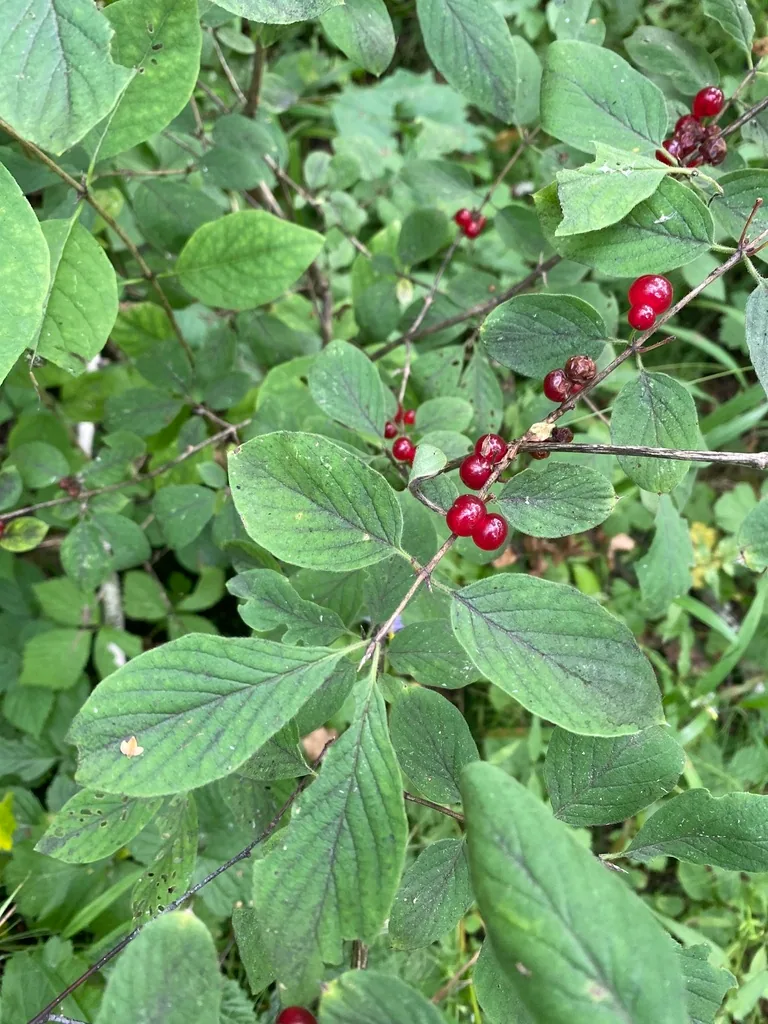
How to Grow and Care for Dwarf honeysuckle
Lonicera xylosteum
Written by Emilio Marruso · last checked
Toxic to: People · Why
At a glance
This easygoing honeysuckle is happy in full sun or partial shade and grows in a wide range of soils, from acidic to alkaline, pH 5.0 to 8.0. It asks for very little: a mulch of compost or leaf mold, and food only if its leaves turn yellow. You can even start new plants from cuttings or seed. Just keep children away from its poisonous berries.
- Sun
Full sun to partial shade
- Soil
Almost any soil, from acidic to alkaline: pH 5.0–8.0
- Feeding
Mulch with compost; feed once in spring only if leaves turn yellow and growth is poor
What the sources say (5)
When: Spring, only if the leaves are yellow and growth is poor
Feed once a year in spring if the leaves are yellow and growth is poor - Apply a general fertiliser,
— [6] How often: Once a year, only when needed
Feed once a year in spring if the leaves are yellow and growth is poor - Apply a general fertiliser,
— [6] Natural fertilizers: Mulch of leaf mould, garden compost or well-rotted manure
Mulch with leaf mould or garden compost to help improve the soil and retain moisture
— [6] or well-rotted manure, to help improve the soil and moisture retention
— [6] Signs of deficiency: Yellow leaves and poor growth
Feed once a year in spring if the leaves are yellow and growth is poor - Apply a general fertiliser,
— [6] - Propagation
Start new plants from cuttings or seed
What the sources say (1)
Propagation: Cuttings; seed
Propagation - by cuttings - by seed
— Plant Database [1] - Safety
The berries are poisonous and irritate the skin and mouth
Overview
Fly honeysuckle is a medium-sized deciduous shrub that grows in full sun to partial shade. [1] It tolerates a wide range of soil pH and is propagated by cuttings or seed. [2][1] Its red berries are described as poisonous and irritating. [5]
This record is incomplete: the sources we read do not cover every field yet.
Not yet covered by our sources: Watering, Hardiness, warmest zone, Pruning
Dwarf honeysuckle care
How to water Dwarf honeysuckle
Not stated in the sources we read.
How much light Dwarf honeysuckle needs
How much cold Dwarf honeysuckle can take
Hardiness, coldest zone
The sources give different values depending on region, zone or growing conditions.
What each source says
According to UConn: 4 [winter low −34.4 to −28.9 °C (−30 to −20 °F)]
According to Cornell: 3b [winter low −37.2 to −34.4 °C (−35 to −30 °F)]
Hardiness, warmest zone
Not stated in the sources we read.
Best soil for Dwarf honeysuckle
Soil pH, minimum
5.0
What the sources say (1)
Can tolerate acid to alkaline soil (pH 5.0 to 8.0)Soil pH, maximum
8.0
What the sources say (1)
Can tolerate acid to alkaline soil (pH 5.0 to 8.0)How to propagate Dwarf honeysuckle
Cuttings; seed
What the sources say (1)
Propagation
- by cuttings
- by seedHow to grow Dwarf honeysuckle
The plant
Family
Caprifoliaceae
What the sources say (1)
Fly Honeysuckle ( Lonicera xylosteum ) is a deciduous shrub belonging to the Caprifoliaceae family.Fertilizing
When
Spring, only if the leaves are yellow and growth is poor
What the sources say (1)
Feed once a year in spring if the leaves are yellow and growth is poor
- Apply a general fertiliser,How often
Once a year, only when needed
What the sources say (1)
Feed once a year in spring if the leaves are yellow and growth is poor
- Apply a general fertiliser,Natural fertilizers
Mulch of leaf mould, garden compost or well-rotted manure
Mineral fertilizers
General-purpose fertilizer
What the sources say (1)
Feed once a year in spring if the leaves are yellow and growth is poor
- Apply a general fertiliser,Signs of deficiency
Yellow leaves and poor growth
What the sources say (1)
Feed once a year in spring if the leaves are yellow and growth is poor
- Apply a general fertiliser,Remedies
Each remedy shows what official sources say about it; traditional remedies without an official source are marked as such. Harmful ones are listed so you know to avoid them.
First aid
First aid: not a substitute for a doctor
berry ingestion
wash hands, wipe out mouth, give a drink Official source, not independently tested
If you have any questions about plants or berries, call the Missouri Poison Center at 1-800-222-1222.
— missouripoisoncenter.org [7] How: For a child who has ingested a berry or part of a plant, wash their hands, wipe out their mouth, and give them something to drink.
If you have a child who has ingested a berry or part of a plant, wash their hands, wipe out their mouth, and give them something to drink.
— missouripoisoncenter.org [7]
Treating the plant
leaf blight
pruning and destroying infected branches Works
How: Prune and destroy infected branches and rake and remove all fallen leaves and fruit.
Pruning and destroying infected branches is helpful as is raking and removing all fallen leaves and fruit.
— portal.ct.gov [8] What the evidence says Pruning and destroying infected branches is helpful as is raking and removing all fallen leaves and fruit.
— portal.ct.gov [8]
powdery mildew
picking off affected leaves Partly works
How: Carefully pick off affected leaves as soon as symptoms are evident and rake and remove fallen leaves.
Disease can be minimized by carefully picking off affected leaves as soon as symptoms are evident and by raking and removing fallen leaves to reduce the amount of overwintering inoculum.
— portal.ct.gov [8] What the evidence says Disease can be minimized by carefully picking off affected leaves as soon as symptoms are evident and by raking and removing fallen leaves to reduce the amount of overwintering inoculum.
— portal.ct.gov [8]
aphids
insecticidal soap spray Works
How: Spray insecticidal soap on the aphids if necessary.
If necessary, sprays of ultrafine horticultural oil, insecticidal soap or malathion, which are among the compounds registered for use against this pest in Connecticut, will control these aphids.
— portal.ct.gov [8] What the evidence says If necessary, sprays of ultrafine horticultural oil, insecticidal soap or malathion, which are among the compounds registered for use against this pest in Connecticut, will control these aphids.
— portal.ct.gov [8] ultrafine horticultural oil spray Works
How: Spray ultrafine horticultural oil on the aphids if necessary.
If necessary, sprays of ultrafine horticultural oil, insecticidal soap or malathion, which are among the compounds registered for use against this pest in Connecticut, will control these aphids.
— portal.ct.gov [8] What the evidence says If necessary, sprays of ultrafine horticultural oil, insecticidal soap or malathion, which are among the compounds registered for use against this pest in Connecticut, will control these aphids.
— portal.ct.gov [8]
snowberry clearwing caterpillars
bacillus thuringiensis spray Official source, not independently tested
How: Spray Bacillus thuringiensis var. kurstaki when the caterpillars are young.
If needed, spray with Bacillus thuringiensis var. kurstaki when the caterpillars are young, or malathion or spinosad
— portal.ct.gov [8]
crown gall
removing infected plants Official source, not independently tested
How: Rogue and remove infected plants to prevent spread to nearby healthy plants.
Roguing and removing infected plants helps to prevent spread of the bacterium to nearby healthy plants.
— portal.ct.gov [8]
Getting rid of it
bush honeysuckle seedlings and small plants
hand removal Not verified
Traditional remedy, not verified by an official source.
How: Hand removal of seedlings or small plants for light infestations, disturbing the soil as little as necessary.
bush honeysuckle thickets
repeated clipping to ground level Not verified
Traditional remedy, not verified by an official source.
Clipping must be repeated at least once yearly because bush honeysuckles that are cut once and left to grow will often form stands that are more dense and productive than they were prior to cutting.
— vtinvasives.org [9] How: Clip to ground level during the growing season, repeating at least once yearly.
Is Dwarf honeysuckle poisonous?
Reported by the source, quoted verbatim. This is not medical or veterinary advice: if a person or an animal may have eaten this plant, contact a poison control centre or a veterinarian.
Calendar
Pruning
Not stated in the sources we read.
Months as given by the sources, which are mostly from the United States (northern hemisphere). In the southern hemisphere they shift by about six months.
Indicative values
Values from a secondary source, not checked word for word like the rest of this page. Use them as a starting point.
- Life cycle
- PerennialIndicative value, adapt it to your climate · Secondary source
- Hours of sun
- 6-8 hoursIndicative value, adapt it to your climate · Secondary source
- Watering
- AverageIndicative value, adapt it to your climate · Secondary source
- Drought tolerant
- yesIndicative value, adapt it to your climate · Secondary source
- Soil
- Humus rich, Well-drainedIndicative value, adapt it to your climate · Secondary source
- Growth rate
- HighIndicative value, adapt it to your climate · Secondary source
- Pruning
- March, April, August, March, April, May, June, July, August, SeptemberIndicative value, adapt it to your climate · Secondary source
- Pests
- Pest resistant, Disease resistant, Deer resistant, Drought resistantIndicative value, adapt it to your climate · Secondary source
Similar plants
- Alpine honeysuckle Lonicera alpigena
- European Honeysuckle Lonicera periclymenum
- Grape Honysuckle Lonicera reticulata
- Honeysuckle Lonicera japonica
- Honeysuckle Lonicera sempervirens
- Italian woodbine Lonicera caprifolium
- Limber Honeysuckle Lonicera dioica
- Lonicera implexa Lonicera implexa
Sources
Every value above is quoted from these documents. Links lead to the original publisher.
- Plant Database · plantdatabase.uconn.edu, consulted
- Woody Plants Database · woodyplants.cals.cornell.edu, consulted
- Lonicera xylosteum - EUFORGEN European forest genetic resources programme · euforgen.org, consulted
- Lonicera xylosteum (fly honeysuckle): Go Botany · gobotany.nativeplanttrust.org, consulted
- Nombre científico: Lonicera xylosteum L. · iealbacetenses.com, consulted
- rhs.org.uk · rhs.org.uk
- missouripoisoncenter.org · missouripoisoncenter.org
- portal.ct.gov · portal.ct.gov
- vtinvasives.org · vtinvasives.org
Written by Emilio Marruso · last checked