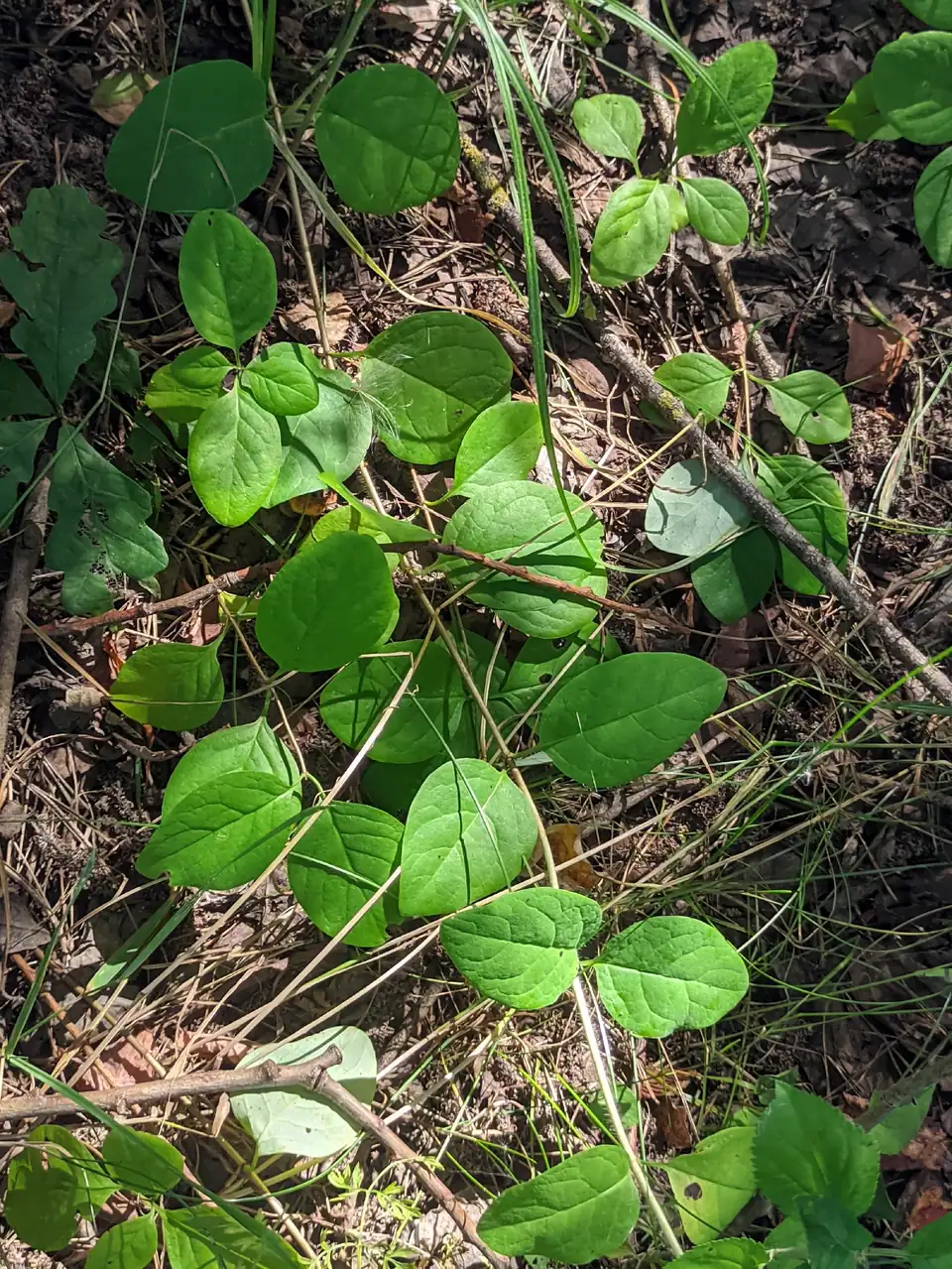
How to Grow and Care for Italian woodbine
Lonicera caprifolium
Written by Emilio Marruso · last checked
At a glance
This honeysuckle grows 15–20 ft tall and fills the garden with heavily perfumed flowers, which can even be steeped as a tea substitute. Give it full sun or at least partial sun, water it well at planting, then only a little in summer. A yearly layer of compost in spring keeps it happy for years.
- Sun
Full sun, or at least partial sun
What the sources say (2)
Light: Full sun, or at least partial sun
locate a spot for planting where they'll get full sun or, at the very least, partial sun exposure.
— Lonicera caprifolium (Perfoliate Honeysuckle) - World of Flowering Plants [4] Light full sun Shade tolerance permanent shade Water moderate
— Italian Honeysuckle (Lonicera caprifolium) — Practical Plants [3] - Water
Water a lot at planting, then only a little in summer; don't overwater
What the sources say (2)
Watering notes: Needs considerable water at planting; only small amounts in summer once established; avoid overwatering
When you first plant your honeysuckle, it will need a considerable amount of water to help it grow.
— Lonicera caprifolium (Perfoliate Honeysuckle) - World of Flowering Plants [4] many people water the plant evenly throughout these stages, which is a definite recipe for overwatering in the summer months.
— Lonicera caprifolium (Perfoliate Honeysuckle) - World of Flowering Plants [4] - Cold
Survives winters down to −20 °F (−28.9 °C)
Very hardy · USDA 5 · RHS H7 · Z5
What the sources say (1)
Hardiness, coldest zone: 5 [winter low −28.9 to −23.3 °C (−20 to −10 °F)]
Shade tolerance permanent shade Water moderate Hardiness Zone 5+
— Italian Honeysuckle (Lonicera caprifolium) — Practical Plants [3] - Planting
Plant in spring, after the last frost, in cool climates
What the sources say (1)
Planting: Spring, after the last frost (cooler climates)
Honeysuckle vines should be planted during the spring in cooler climates because their roots thrive when cool and shaded.
— Lonicera caprifolium (Perfoliate Honeysuckle) - World of Flowering Plants [4] - Feeding
Once a year in spring: compost, well-rotted manure or an all-purpose fertilizer
What the sources say (6)
When: Spring, if feeding at all
Feed once a year in spring if you wish with a general fertiliser,
— [7] How often: Once a year
Feed once a year in spring if you wish with a general fertiliser,
— [7] Natural fertilizers: A yearly mulch of organic matter such as garden compost or well-rotted manure
They will also benefit from a yearly mulch
— [7] Examples include well-rotted garden compost and manure, chipped bark, gravel, grit and slate chippings. of organic matter , such as garden compost
— [7] or well-rotted manure. This will improve the soil and retain moisture, helping them cope during times of drought
— [7] Mineral fertilizers: General-purpose fertilizer
Feed once a year in spring if you wish with a general fertiliser,
— [7] - Harvest
The perfumed flowers can be steeped as a tea substitute
- Pests
Prone to mildew and blackfly
- Size
15–20 ft tall
What the sources say (1)
Mature height: 470-600 cm (4.7-6.0 m)
Plant Height: 4.7-6.0m (10). Subspecies/varieties recognized: None found.
— Lonicera caprifolium | CLIMBERS [1] - Propagation
By layering in spring or fall, by cuttings from late summer to late winter, or by seed
What the sources say (1)
Propagation: Layering (spring or autumn), hardwood cuttings (mid-autumn to late winter), semi-hardwood cuttings (late summer to mid-autumn), seed
Seed - best sown as soon as it is ripe in a cold frame.
— Italian Honeysuckle (Lonicera caprifolium) — Practical Plants [3] - Sowing
Sow seeds as soon as they are ripe, in a cold frame
What the sources say (1)
Sowing: Seed best sown as soon as ripe, in a cold frame
Seed - best sown as soon as it is ripe in a cold frame.
— Italian Honeysuckle (Lonicera caprifolium) — Practical Plants [3]
Overview
Italian honeysuckle is a strong-growing, twining deciduous climber with fragrant creamy-white flowers. [4] It is listed as a tough garden plant that grows in sun or shade, with moderate water needs. [6][3] It can be propagated by seed sown when ripe, by cuttings and by layering. [3]
This record is incomplete: the sources we read do not cover every field yet.
Not yet covered by our sources: Watering, Hardiness, warmest zone, Pruning
Italian woodbine care
How to water Italian woodbine
Watering
Not stated in the sources we read.
Watering notes
Needs considerable water at planting; only small amounts in summer once established; avoid overwatering
What the sources say (2)
When you first plant your honeysuckle, it will need a considerable amount of water to help it grow.many people water the plant evenly throughout these stages, which is a definite recipe for overwatering in the summer months.How much light Italian woodbine needs
Full sun, or at least partial sun
What the sources say (2)
locate a spot for planting where they'll get full sun or, at the very least, partial sun exposure.Light
full sun
Shade tolerance
permanent shade
Water
moderateHow much cold Italian woodbine can take
Hardiness, coldest zone
5 [winter low −28.9 to −23.3 °C (−20 to −10 °F)]
What the sources say (1)
Shade tolerance
permanent shade
Water
moderate
Hardiness
Zone 5+Hardiness, warmest zone
Not stated in the sources we read.
How to propagate Italian woodbine
Layering (spring or autumn), hardwood cuttings (mid-autumn to late winter), semi-hardwood cuttings (late summer to mid-autumn), seed
What the sources say (1)
Seed - best sown as soon as it is ripe in a cold frame.How to grow Italian woodbine
The plant
Life cycle
perennial
What the sources say (1)
This usually estipulate and glabrous or glaucous, perennial woody vine has simple, opposite leaves, which are oval to obovate.Family
Caprifoliaceae
What the sources say (1)
Name: Lonicera caprifolium L.
Family : Caprifoliaceae, the Honeysuckle Family
Common Names : Italian woodbine, Italian honeysuckle, Perfoliate honeysuckle (1, 6).Mature height
470-600 cm (4.7-6.0 m)
What the sources say (1)
Plant Height: 4.7-6.0m (10).
Subspecies/varieties recognized: None found.Fertilizing
When
Spring, if feeding at all
What the sources say (1)
Feed once a year in spring if you wish with a general fertiliser,How often
Once a year
What the sources say (1)
Feed once a year in spring if you wish with a general fertiliser,Natural fertilizers
A yearly mulch of organic matter such as garden compost or well-rotted manure
What the sources say (3)
They will also benefit from a yearly mulchExamples include well-rotted garden compost and manure, chipped bark, gravel, grit and slate chippings.
of organic matter , such as garden compostor well-rotted manure. This will improve the soil and retain moisture, helping them cope during times of droughtMineral fertilizers
General-purpose fertilizer
What the sources say (1)
Feed once a year in spring if you wish with a general fertiliser,Italian woodbine pests and problems
Mildew and blackfly
Symptom: Plants prone to attacks
What to do: Not stated
What the sources say (1)
Plants are prone to attacks by mildew and blackfly [6] .
— Italian Honeysuckle (Lonicera caprifolium) — Practical Plants [3]
Remedies
The sources we checked give no remedies for this plant.
Calendar
Sowing
Seed best sown as soon as ripe, in a cold frame
What the sources say (1)
Seed - best sown as soon as it is ripe in a cold frame.Planting
Spring, after the last frost (cooler climates)
What the sources say (1)
Honeysuckle vines should be planted during the spring in cooler climates because their roots thrive when cool and shaded.Pruning
Not stated in the sources we read.
Months as given by the sources, which are mostly from the United States (northern hemisphere). In the southern hemisphere they shift by about six months.
Edibility
Reported by the source, quoted verbatim. Do not eat a plant on the basis of this page alone: identification mistakes can be dangerous.
Similar plants
- Alpine honeysuckle Lonicera alpigena
- Dwarf honeysuckle Lonicera xylosteum
- European Honeysuckle Lonicera periclymenum
- Grape Honysuckle Lonicera reticulata
- Honeysuckle Lonicera japonica
- Honeysuckle Lonicera sempervirens
- Limber Honeysuckle Lonicera dioica
- Lonicera implexa Lonicera implexa
Sources
Every value above is quoted from these documents. Links lead to the original publisher.
- Lonicera caprifolium | CLIMBERS · climbers.lsa.umich.edu, consulted
- Lonicera caprifolium L. | Plants of the World Online | Kew Science · powo.science.kew.org, consulted
- Italian Honeysuckle (Lonicera caprifolium) — Practical Plants · practicalplants.org, consulted
- Lonicera caprifolium (Perfoliate Honeysuckle) - World of Flowering Plants · worldoffloweringplants.com, consulted
- Lonicera caprifolium - Trees and Shrubs Online · treesandshrubsonline.org, consulted
- Lonicera caprifolium (Italian honeysuckle) - Plantinfo · plantinfo.co.za, consulted
- rhs.org.uk · rhs.org.uk
Written by Emilio Marruso · last checked