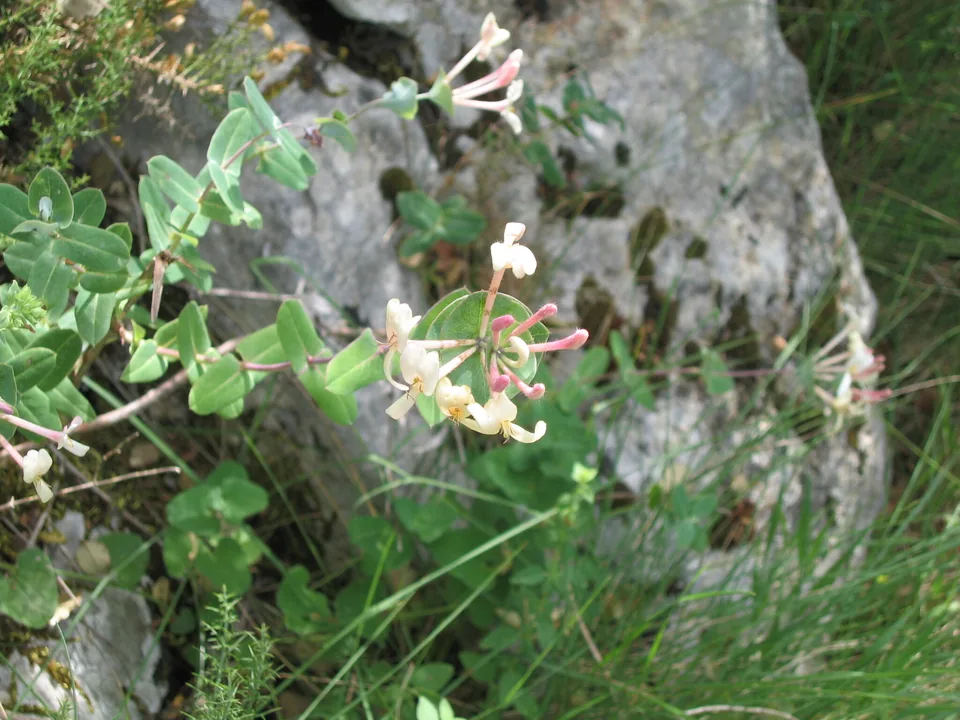
How to Grow and Care for Lonicera implexa
Lonicera implexa
Written by Emilio Marruso · last checked
At a glance
This honeysuckle is a simple, rewarding plant: in full sun it gives you far more flowers than in shade. Water it moderately, letting the soil dry between drinks, and twice a week in summer. It grows happily in a container, needs feeding once a year at most, in spring, and you prune it right after it finishes flowering.
- Sun
Full sun; in partial shade or shade it gives fewer flowers
What the sources say (1)
Light: Full sun (fewer flowers in semi-shade or shade)
Lonicera implexa prefers full sun exposure ; in semi-shade or in shade it will produce fewer flowers. It resists occasional frosts.
— Lonicera implexa or Evergreen Honeysuckle | Care and Growing [4] - Water
Water moderately once the soil dries, twice a week in summer; it handles short dry spells
What the sources say (2)
Watering: Moderate; wait for the substrate to dry; in summer twice a week
Evergreen Honeysuckle resists the drought not too long. Water moderately, waiting for the substrate to dry. In summer water twice a week.
— Lonicera implexa or Evergreen Honeysuckle | Care and Growing [4] Watering notes: Resists drought, though not for long
Evergreen Honeysuckle resists the drought not too long.
— Lonicera implexa or Evergreen Honeysuckle | Care and Growing [4] - Feeding
Once a year in spring, if at all: compost, well-rotted manure or an all-purpose fertilizer
What the sources say (6)
When: Spring, if feeding at all
Feed once a year in spring if you wish with a general fertiliser,
— [7] How often: Once a year
Feed once a year in spring if you wish with a general fertiliser,
— [7] Natural fertilizers: A yearly mulch of organic matter such as garden compost or well-rotted manure
They will also benefit from a yearly mulch
— [7] Examples include well-rotted garden compost and manure, chipped bark, gravel, grit and slate chippings. of organic matter , such as garden compost
— [7] or well-rotted manure. This will improve the soil and retain moisture, helping them cope during times of drought
— [7] Mineral fertilizers: General-purpose fertilizer
Feed once a year in spring if you wish with a general fertiliser,
— [7] - Pruning
Prune after flowering
What the sources say (1)
Pruning: After flowering
Prune after flowering to control growth and maintain a compact appearance.
— Lonicera implexa or Evergreen Honeysuckle | Care and Growing [4] - Propagation
Grow new plants from seeds or semi-woody cuttings
What the sources say (1)
Propagation: Seeds or semi-woody cuttings
Evergreen Honeysuckle propagates from seeds or by semi-woody cuttings.
— Lonicera implexa or Evergreen Honeysuckle | Care and Growing [4] - Containers
Grows in containers too
What the sources say (1)
In containers: Yes
Evergreen Honeysuckle can be grown in pots for terraces and patios.
— Lonicera implexa or Evergreen Honeysuckle | Care and Growing [4]
Overview
Lonicera implexa is an evergreen climbing honeysuckle native to the Mediterranean region. [3] It prefers full sun and well-drained soil and can be grown in pots. [4] One source calls it rather tender and best with the shelter of a west wall, while another says it resists occasional frosts. [3][4]
This record is incomplete: the sources we read do not cover every field yet.
Not yet covered by our sources: Hardiness, coldest zone, Hardiness, warmest zone
Lonicera implexa care
How to water Lonicera implexa
Watering
Moderate; wait for the substrate to dry; in summer twice a week
What the sources say (1)
Evergreen Honeysuckle resists the drought not too long. Water moderately, waiting for the substrate to dry. In summer water twice a week.Watering notes
Resists drought, though not for long
What the sources say (1)
Evergreen Honeysuckle resists the drought not too long.How much light Lonicera implexa needs
Full sun (fewer flowers in semi-shade or shade)
What the sources say (1)
Lonicera implexa prefers full sun exposure ; in semi-shade or in shade it will produce fewer flowers. It resists occasional frosts.How much cold Lonicera implexa can take
Hardiness, coldest zone
Not stated in the sources we read.
Hardiness, warmest zone
Not stated in the sources we read.
Where to grow Lonicera implexa
Yes
What the sources say (1)
Evergreen Honeysuckle can be grown in pots for terraces and patios.How to propagate Lonicera implexa
Seeds or semi-woody cuttings
What the sources say (1)
Evergreen Honeysuckle propagates from seeds or by semi-woody cuttings.How to grow Lonicera implexa
The plant
Family
Caprifoliaceae
What the sources say (1)
Family:
CAPRIFOLIACEAE
Genus:
Lonicera
Catalan common name:Fertilizing
When
Spring, if feeding at all
What the sources say (1)
Feed once a year in spring if you wish with a general fertiliser,How often
Once a year
What the sources say (1)
Feed once a year in spring if you wish with a general fertiliser,Natural fertilizers
A yearly mulch of organic matter such as garden compost or well-rotted manure
What the sources say (3)
They will also benefit from a yearly mulchExamples include well-rotted garden compost and manure, chipped bark, gravel, grit and slate chippings.
of organic matter , such as garden compostor well-rotted manure. This will improve the soil and retain moisture, helping them cope during times of droughtMineral fertilizers
General-purpose fertilizer
What the sources say (1)
Feed once a year in spring if you wish with a general fertiliser,Remedies
The sources we checked give no remedies for this plant.
Calendar
Pruning
After flowering
What the sources say (1)
Prune after flowering to control growth and maintain a compact appearance.Months as given by the sources, which are mostly from the United States (northern hemisphere). In the southern hemisphere they shift by about six months.
Similar plants
- Alpine honeysuckle Lonicera alpigena
- Dwarf honeysuckle Lonicera xylosteum
- European Honeysuckle Lonicera periclymenum
- Grape Honysuckle Lonicera reticulata
- Honeysuckle Lonicera japonica
- Honeysuckle Lonicera sempervirens
- Italian woodbine Lonicera caprifolium
- Limber Honeysuckle Lonicera dioica
Sources
Every value above is quoted from these documents. Links lead to the original publisher.
- Lonicera implexa | Euro+Med-Plantbase · europlusmed.org, consulted
- Lonicera implexa Ait. - Herbari Virtual del Mediterrani Occidental · herbarivirtual.uib.cat, consulted
- Lonicera implexa - Trees and Shrubs Online · treesandshrubsonline.org, consulted
- Lonicera implexa or Evergreen Honeysuckle | Care and Growing · consultaplantas.com, consulted
- Madreselva mediterránea · juntadeandalucia.es, consulted
- TALLER PATIOS: TREPADORAS · jardinbotanicodecordoba.com, consulted
- rhs.org.uk · rhs.org.uk
Written by Emilio Marruso · last checked