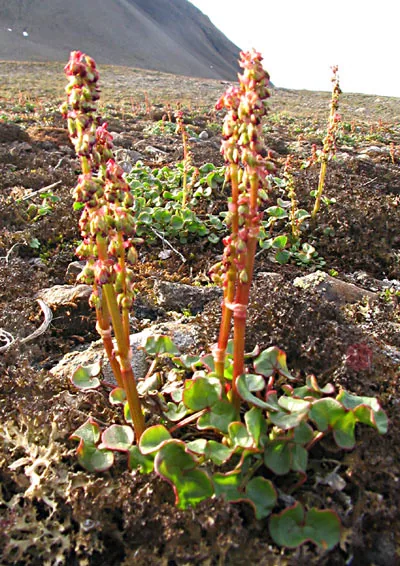
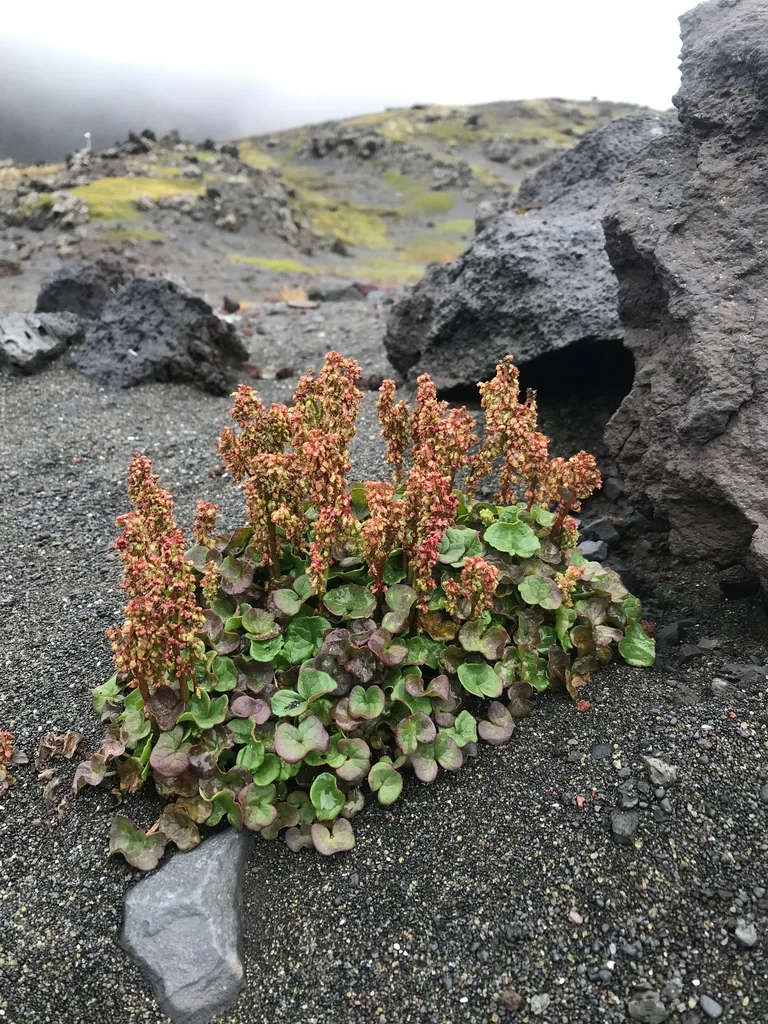

Cómo cultivar y cuidar Alpine mountain-sorrel
Oxyria digyna
Escrito por Emilio Marruso · última revisión
Tóxica para: Personas · Por qué
De un vistazo
La acedera de montaña es una pequeña perenne de hojas ácidas y refrescantes que puedes comer crudas o cocinadas, ideales en ensalada y una gran fuente de vitamina C. Siémbrala en primavera en cajonera fría, o en cuanto la semilla esté madura, y plántala a finales de primavera o principios de verano. Eso sí, no dejes que le falte agua: se marchita enseguida con la sequía.
- Riego
Riego moderado; no dejes que se seque, se marchita enseguida con la sequía
Qué dicen las fuentes (5)
Riego: Moderado
full sun Shade tolerance light shade Water moderate Hardiness Zone 2+
— Mountain Sorrel (Oxyria digyna) — Practical Plants [6] Notas sobre el riego: Intolerante a la sequía; se marchita fácilmente bajo estrés por sequía
Drainage well drained Tolerates Nutritionally Poor Soil No Drought intolerant
— Mountain Sorrel (Oxyria digyna) — Practical Plants [6] This herb is restricted to shady, rocky sites with drifting snow and easily wilts under drought stress.
— Alpine sorrel (Oxyria digyna) | The Marion Ownbey Herbarium | Washington State University [2] Has an intermediate tolerance for shade, a low tolerance for drought and anoxic conditions, and is adapted to coarse to medium soils.
— Plant Propagation Protocol for Oxyria digyna [5] Sequía: Restringido a sitios rocosos y sombreados con nieve a la deriva; se marchita fácilmente bajo estrés por sequía.
This herb is restricted to shady, rocky sites with drifting snow and easily wilts under drought stress.
— Alpine sorrel (Oxyria digyna) | The Marion Ownbey Herbarium | Washington State University [2] - Frío
Aguanta inviernos de hasta −45,6 °C (−50 °F)
Muy rústica · USDA 2 · RHS H7 · Z2
Qué dicen las fuentes (1)
Rusticidad, zona más fría: 2 [mínima invernal de −45,6 a −40 °C (de −50 a −40 °F)]
full sun Shade tolerance light shade Water moderate Hardiness Zone 2+
— Mountain Sorrel (Oxyria digyna) — Practical Plants [6] - Plantación
Plántala a finales de primavera o principios de verano
Qué dicen las fuentes (4)
Plantación: Finales de primavera a principios de verano
Según Practical Plants (PFAF): Prick the seedlings out into individual pots as soon as they are ripe and plant them out into their permanent positions in early summer.
— Mountain Sorrel (Oxyria digyna) — Practical Plants [6] Según University of Washington ESRM 412: Guidelines for Outplanting / Performance on Typical Sites Conetainers planted anywhere from late spring4 to July13
— Plant Propagation Protocol for Oxyria digyna [5] Prick the seedlings out into individual pots as soon as they are ripe and plant them out into their permanent positions in early summer.
— Mountain Sorrel (Oxyria digyna) — Practical Plants [6] Division in the spring. Larger divisions can be planted out direct into their permanent positions.
— Mountain Sorrel (Oxyria digyna) — Practical Plants [6] - Cosecha
Come sus hojas ácidas crudas o cocinadas; muy ricas en ensalada y con mucha vitamina C
- Tamaño
Pequeña: de 5 a 30 cm de alto
Qué dicen las fuentes (1)
Altura adulta: 5-30 cm (5-30 cm)
5-30 cm hoch, aufrecht oder aufsteigend. Grundständige Blätter rundlich oder nierenförmig , vorn oft ausgerandet, breiter als lang, sehr lang gestielt .
— Oxyria digyna (L.) Hill [1] - Multiplicación
Se multiplica por semilla o dividiendo la mata en primavera
Qué dicen las fuentes (3)
Propagación: Semilla; división en primavera
Seed - sow spring in a cold frame and only just cover the seed. The seed germinates within 2 weeks. It can also be sown as soon as it is ripe, when it germinates within a few days.
— Mountain Sorrel (Oxyria digyna) — Practical Plants [6] Division in the spring. Larger divisions can be planted out direct into their permanent positions.
— Mountain Sorrel (Oxyria digyna) — Practical Plants [6] Could use crown division to propagate in spring or once plants are established, 13 or place younger divisions in pots in a cold frame to ensure their establishment before outplanting.
— Plant Propagation Protocol for Oxyria digyna [5] - Siembra
Siembra en primavera en cajonera fría, o en cuanto la semilla esté madura
Qué dicen las fuentes (2)
Siembra: Primavera (semillero en frío), o tan pronto como la semilla esté madura
Seed - sow spring in a cold frame and only just cover the seed. The seed germinates within 2 weeks. It can also be sown as soon as it is ripe, when it germinates within a few days.
— Mountain Sorrel (Oxyria digyna) — Practical Plants [6] Sow in a cold-frame in spring. 4 Ideal temperature for germination is 21 degrees Celsius13.
— Plant Propagation Protocol for Oxyria digyna [5] - Seguridad
Cuidado si tienes artritis, gota o cálculos renales: comerla puede empeorarlos
Resumen
La acedera de montaña es una perenne de la familia de las poligonáceas que crece tanto en zonas alpinas como árticas. [2] Las hojas agrias se comen crudas o cocidas, pero contienen ácido oxálico y deben consumirse con moderación. [6]
Citado en inglés, como en la fuente.
Esta ficha está incompleta: las fuentes consultadas aún no cubren todos los campos.
Aún no cubierto por nuestras fuentes: Distancia de plantación
Cuidados
Riego
Riego
Moderado
Qué dicen las fuentes (1)
full sun
Shade tolerance
light shade
Water
moderate
Hardiness
Zone 2+Notas sobre el riego
Intolerante a la sequía; se marchita fácilmente bajo estrés por sequía
Qué dicen las fuentes (3)
Drainage
well drained
Tolerates Nutritionally Poor Soil
No
Drought
intolerantThis herb is restricted to shady, rocky sites with drifting snow and easily wilts under drought stress.Has an intermediate tolerance for shade, a low tolerance for drought and anoxic conditions, and is adapted to coarse to medium soils.Luz
Las fuentes dan valores distintos según la región, la zona o las condiciones de cultivo.
Lo que dice cada fuente
Según Practical Plants (PFAF): Posición soleada o semisombra
Según University of Washington ESRM 412: Zonas abiertas con poca o ninguna sombra
hábitat silvestre (fuente: WSU Ownbey Herbarium): Lugares sombreados y rocosos
Qué dicen las fuentes (6)
Según Practical Plants (PFAF): Prefers a moist well-drained rocky soil in a sunny position or partial shade [5] . Requires a lime free soil [5] . There is some controversy here since the plant is said to avoid acid soils in the wild[K]Según University of Washington ESRM 412: Can grow successfully in open areas with little to no shade, and often grows beneath bird nests due to the high nitrogen content of the soil.hábitat silvestre (fuente: WSU Ownbey Herbarium): This herb is restricted to shady, rocky sites with drifting snow and easily wilts under drought stress.Prefers a moist well-drained rocky soil in a sunny position or partial shade [5] . Requires a lime free soil [5] . There is some controversy here since the plant is said to avoid acid soils in the wild[K]full sun
Shade tolerance
light shade
Water
moderate
Hardiness
Zone 2+Can grow successfully in open areas with little to no shade, and often grows beneath bird nests due to the high nitrogen content of the soil.Clima y frío
2 [mínima invernal de −45,6 a −40 °C (de −50 a −40 °F)]
Qué dicen las fuentes (1)
full sun
Shade tolerance
light shade
Water
moderate
Hardiness
Zone 2+Dónde cultivarla
No figura en las fuentes consultadas.
Propagación
Semilla; división en primavera
Qué dicen las fuentes (3)
Seed - sow spring in a cold frame and only just cover the seed. The seed germinates within 2 weeks. It can also be sown as soon as it is ripe, when it germinates within a few days.Division in the spring. Larger divisions can be planted out direct into their permanent positions.Could use crown division to propagate in spring or once plants are established, 13 or place younger divisions in pots in a cold frame to ensure their establishment before outplanting.Cultivo
La planta
Ciclo de vida
perenne
Qué dicen las fuentes (1)
Ecology ## Life form Perennial hemicryptophyte ## Habitats ## Habitats © Delarze & al. 2015Familia
Polygonaceae
Qué dicen las fuentes (1)
Alpine sorrel ( Oxyria digyna ) in the buckwheat family (Polygonaceae) is one of over 500 vascular plant species known to occur in both the arctic and alpine zones.Altura adulta
5-30 cm (5-30 cm)
Qué dicen las fuentes (1)
5-30 cm hoch, aufrecht oder aufsteigend. Grundständige Blätter rundlich oder nierenförmig , vorn oft ausgerandet, breiter als lang, sehr lang gestielt .Calor y sequía
Sequía
Restringido a sitios rocosos y sombreados con nieve a la deriva; se marchita fácilmente bajo estrés por sequía.
Qué dicen las fuentes (1)
This herb is restricted to shady, rocky sites with drifting snow and easily wilts under drought stress.Remedios
Las fuentes consultadas no dan remedios para esta planta.
Toxicidad
Según la fuente, citada textualmente. No es un consejo médico ni veterinario: si una persona o un animal pudo haber ingerido esta planta, contacta con un centro de toxicología o con un veterinario.
People with a tendency to rheumatism, arthritis, gout, kidney stones or hyperacidity should take especial caution if including this plant in their diet since it can aggravate their condition
[6]- Partes venenosas
The leaves contain oxalic acid, which gives them their sharp flavour. Perfectly all right in small quantities,
[6]- Principio tóxico
The leaves contain oxalic acid, which gives them their sharp flavour. Perfectly all right in small quantities,
[6]- Síntomas
the leaves should not be eaten in large amounts since oxalic acid can bind up the body's supply of calcium leading to nutritional deficiency.
[6]
Calendario
Primavera (semillero en frío), o tan pronto como la semilla esté madura
Qué dicen las fuentes (2)
Seed - sow spring in a cold frame and only just cover the seed. The seed germinates within 2 weeks. It can also be sown as soon as it is ripe, when it germinates within a few days.Sow in a cold-frame in spring. 4 Ideal temperature for germination is 21 degrees Celsius13.Finales de primavera a principios de verano
Lo que dice cada fuente
Según Practical Plants (PFAF): Principios del verano (plántulas); finales de la primavera o principios del verano (divisiones pequeñas)
Según University of Washington ESRM 412: Finales de la primavera hasta julio
Qué dicen las fuentes (4)
Según Practical Plants (PFAF): Prick the seedlings out into individual pots as soon as they are ripe and plant them out into their permanent positions in early summer.Según University of Washington ESRM 412: Guidelines for Outplanting / Performance on Typical Sites Conetainers planted anywhere from late spring4 to July13Prick the seedlings out into individual pots as soon as they are ripe and plant them out into their permanent positions in early summer.Division in the spring. Larger divisions can be planted out direct into their permanent positions.Principios de abril hasta mediados de mayo
Lo que dice cada fuente
Pendiente norte de Alaska: Principios de abril hasta mediados de mayo
Qué dicen las fuentes (2)
Pendiente norte de Alaska: Habitat: Near creeks or streams, wet areas.
- Best time to harvest: Early April through mid May.Habitat: Near creeks or streams, wet areas.
- Best time to harvest: Early April through mid May.Meses tal como los dan las fuentes, en su mayoría de Estados Unidos (hemisferio norte). En el hemisferio sur se desplazan unos seis meses.
Comestibilidad
Según la fuente, citada textualmente. No comas una planta basándote solo en esta página: los errores de identificación pueden ser peligrosos.
Plantas similares
- Bitter Dock Rumex obtusifolius
- Bloody Dock Rumex sanguineus
- Chinese rhubarb Rheum palmatum
- Más conocida como acederón Rumex patientia
- Ruibarbo Rheum rhabarbarum
- Centipede Plant Muehlenbeckia platyclada
- Coralillo Antigonon leptopus
- Desert Trumpet Eriogonum inflatum
Fuentes
Cada valor anterior se cita de estos documentos. Los enlaces llevan al editor original.
- Oxyria digyna (L.) Hill · infoflora.ch, consultado
- Alpine sorrel (Oxyria digyna) | The Marion Ownbey Herbarium | Washington State University · sbs.wsu.edu, consultado
- Arctic Sorrel - ITEX-AON understanding tundra ecosystem change - Grand Valley State University · gvsu.edu, consultado
- Oxyria digyna - Useful Temperate Plants · temperate.theferns.info, consultado
- Plant Propagation Protocol for Oxyria digyna · courses.washington.edu, consultado
- Mountain Sorrel (Oxyria digyna) — Practical Plants · practicalplants.org, consultado
Escrito por Emilio Marruso · última revisión