
How to Grow and Care for Alpine mountain-sorrel
Oxyria digyna
Written by Emilio Marruso · last checked
Toxic to: People · Why
At a glance
Mountain sorrel is a small perennial with sour, tangy leaves you can eat raw or cooked, a lovely addition to salads and a great source of vitamin C. Sow it in spring in a cold frame, or as soon as the seed is ripe, then plant it out in late spring or early summer. Just keep it watered: it wilts easily when dry.
- Water
Moderate watering; don't let it dry out, it wilts easily in drought
What the sources say (5)
Watering: Moderate
full sun Shade tolerance light shade Water moderate Hardiness Zone 2+
— Mountain Sorrel (Oxyria digyna) — Practical Plants [6] Watering notes: Drought intolerant; wilts easily under drought stress
Drainage well drained Tolerates Nutritionally Poor Soil No Drought intolerant
— Mountain Sorrel (Oxyria digyna) — Practical Plants [6] This herb is restricted to shady, rocky sites with drifting snow and easily wilts under drought stress.
— Alpine sorrel (Oxyria digyna) | The Marion Ownbey Herbarium | Washington State University [2] Has an intermediate tolerance for shade, a low tolerance for drought and anoxic conditions, and is adapted to coarse to medium soils.
— Plant Propagation Protocol for Oxyria digyna [5] Drought: Restricted to shady, rocky sites with drifting snow; wilts easily under drought stress.
This herb is restricted to shady, rocky sites with drifting snow and easily wilts under drought stress.
— Alpine sorrel (Oxyria digyna) | The Marion Ownbey Herbarium | Washington State University [2] - Cold
Survives winters down to −50 °F (−45.6 °C)
Very hardy · USDA 2 · RHS H7 · Z2
What the sources say (1)
Hardiness, coldest zone: 2 [winter low −45.6 to −40 °C (−50 to −40 °F)]
full sun Shade tolerance light shade Water moderate Hardiness Zone 2+
— Mountain Sorrel (Oxyria digyna) — Practical Plants [6] - Planting
Plant out in late spring or early summer
What the sources say (4)
Planting: Late spring to early summer
According to Practical Plants (PFAF): Prick the seedlings out into individual pots as soon as they are ripe and plant them out into their permanent positions in early summer.
— Mountain Sorrel (Oxyria digyna) — Practical Plants [6] According to University of Washington ESRM 412: Guidelines for Outplanting / Performance on Typical Sites Conetainers planted anywhere from late spring4 to July13
— Plant Propagation Protocol for Oxyria digyna [5] Prick the seedlings out into individual pots as soon as they are ripe and plant them out into their permanent positions in early summer.
— Mountain Sorrel (Oxyria digyna) — Practical Plants [6] Division in the spring. Larger divisions can be planted out direct into their permanent positions.
— Mountain Sorrel (Oxyria digyna) — Practical Plants [6] - Harvest
Eat the sour, tangy leaves raw or cooked; great in salads and rich in vitamin C
- Size
Small: 2 to 12 in tall
What the sources say (1)
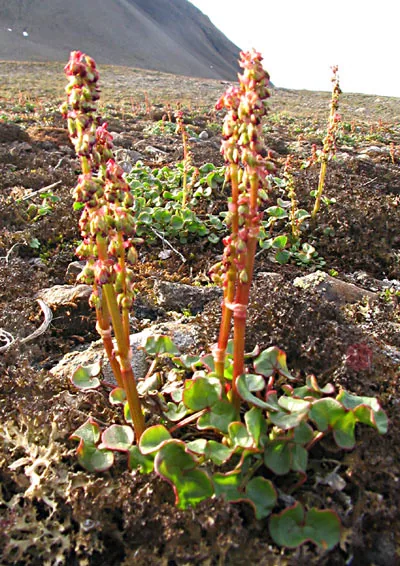
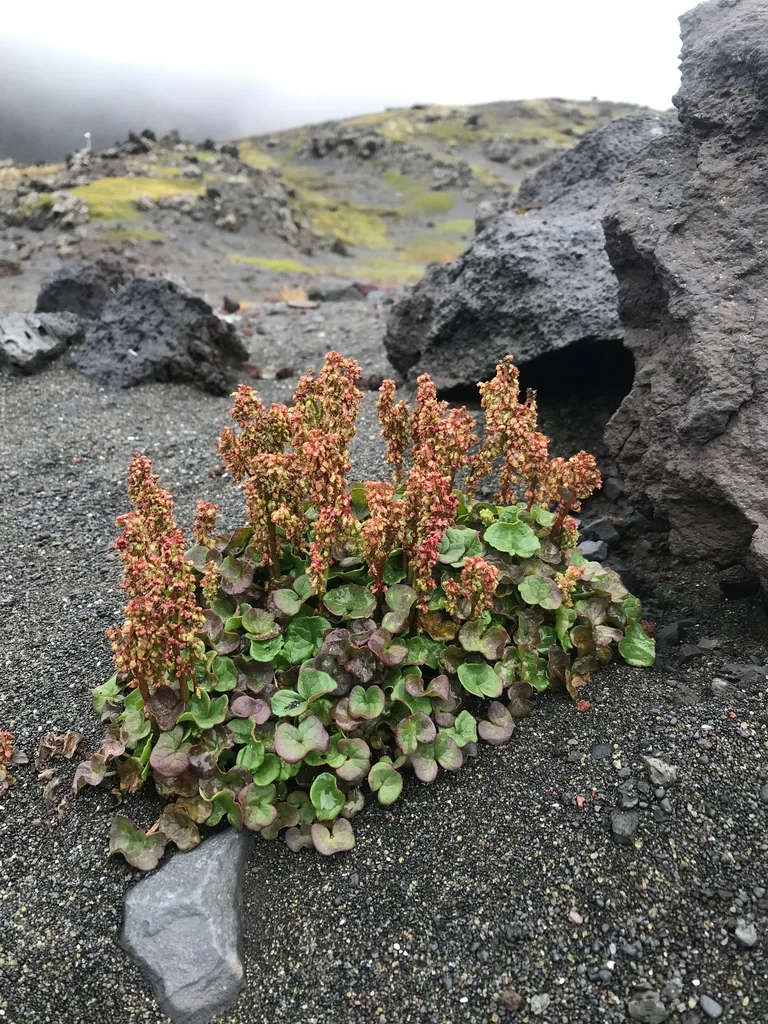
Mature height: 5-30 cm (5-30 cm)
5-30 cm hoch, aufrecht oder aufsteigend. Grundständige Blätter rundlich oder nierenförmig , vorn oft ausgerandet, breiter als lang, sehr lang gestielt .
— Oxyria digyna (L.) Hill [1] - Propagation
Grow it from seed or divide the clumps in spring
What the sources say (3)
Propagation: Seed; division in spring
Seed - sow spring in a cold frame and only just cover the seed. The seed germinates within 2 weeks. It can also be sown as soon as it is ripe, when it germinates within a few days.
— Mountain Sorrel (Oxyria digyna) — Practical Plants [6] Division in the spring. Larger divisions can be planted out direct into their permanent positions.
— Mountain Sorrel (Oxyria digyna) — Practical Plants [6] Could use crown division to propagate in spring or once plants are established, 13 or place younger divisions in pots in a cold frame to ensure their establishment before outplanting.
— Plant Propagation Protocol for Oxyria digyna [5] - Sowing
Sow in spring in a cold frame, or as soon as the seed is ripe
What the sources say (2)
Sowing: Spring (cold frame), or as soon as the seed is ripe
Seed - sow spring in a cold frame and only just cover the seed. The seed germinates within 2 weeks. It can also be sown as soon as it is ripe, when it germinates within a few days.
— Mountain Sorrel (Oxyria digyna) — Practical Plants [6] Sow in a cold-frame in spring. 4 Ideal temperature for germination is 21 degrees Celsius13.
— Plant Propagation Protocol for Oxyria digyna [5] - Safety
Careful if you have arthritis, gout or kidney stones: eating it can make them worse
Overview
Mountain sorrel is a perennial of the buckwheat family that grows in both arctic and alpine zones. [2] The sour leaves are eaten raw or cooked, but they contain oxalic acid and should be eaten in moderation. [6]
This record is incomplete: the sources we read do not cover every field yet.
Not yet covered by our sources: Spacing
Alpine mountain-sorrel care
How to water Alpine mountain-sorrel
Watering
Moderate
What the sources say (1)
full sun
Shade tolerance
light shade
Water
moderate
Hardiness
Zone 2+Watering notes
Drought intolerant; wilts easily under drought stress
What the sources say (3)
Drainage
well drained
Tolerates Nutritionally Poor Soil
No
Drought
intolerantThis herb is restricted to shady, rocky sites with drifting snow and easily wilts under drought stress.Has an intermediate tolerance for shade, a low tolerance for drought and anoxic conditions, and is adapted to coarse to medium soils.How much light Alpine mountain-sorrel needs
The sources give different values depending on region, zone or growing conditions.
What each source says
According to Practical Plants (PFAF): Sunny position or partial shade
According to University of Washington ESRM 412: Open areas with little to no shade
wild habitat (fonte: WSU Ownbey Herbarium): Shady, rocky sites
What the sources say (6)
According to Practical Plants (PFAF): Prefers a moist well-drained rocky soil in a sunny position or partial shade [5] . Requires a lime free soil [5] . There is some controversy here since the plant is said to avoid acid soils in the wild[K]According to University of Washington ESRM 412: Can grow successfully in open areas with little to no shade, and often grows beneath bird nests due to the high nitrogen content of the soil.wild habitat (fonte: WSU Ownbey Herbarium): This herb is restricted to shady, rocky sites with drifting snow and easily wilts under drought stress.Prefers a moist well-drained rocky soil in a sunny position or partial shade [5] . Requires a lime free soil [5] . There is some controversy here since the plant is said to avoid acid soils in the wild[K]full sun
Shade tolerance
light shade
Water
moderate
Hardiness
Zone 2+Can grow successfully in open areas with little to no shade, and often grows beneath bird nests due to the high nitrogen content of the soil.How much cold Alpine mountain-sorrel can take
2 [winter low −45.6 to −40 °C (−50 to −40 °F)]
What the sources say (1)
full sun
Shade tolerance
light shade
Water
moderate
Hardiness
Zone 2+Where to grow Alpine mountain-sorrel
Not stated in the sources we read.
How to propagate Alpine mountain-sorrel
Seed; division in spring
What the sources say (3)
Seed - sow spring in a cold frame and only just cover the seed. The seed germinates within 2 weeks. It can also be sown as soon as it is ripe, when it germinates within a few days.Division in the spring. Larger divisions can be planted out direct into their permanent positions.Could use crown division to propagate in spring or once plants are established, 13 or place younger divisions in pots in a cold frame to ensure their establishment before outplanting.How to grow Alpine mountain-sorrel
The plant
Life cycle
perennial
What the sources say (1)
Ecology ## Life form Perennial hemicryptophyte ## Habitats ## Habitats © Delarze & al. 2015Family
Polygonaceae
What the sources say (1)
Alpine sorrel ( Oxyria digyna ) in the buckwheat family (Polygonaceae) is one of over 500 vascular plant species known to occur in both the arctic and alpine zones.Mature height
5-30 cm (5-30 cm)
What the sources say (1)
5-30 cm hoch, aufrecht oder aufsteigend. Grundständige Blätter rundlich oder nierenförmig , vorn oft ausgerandet, breiter als lang, sehr lang gestielt .Heat and drought
Drought
Restricted to shady, rocky sites with drifting snow; wilts easily under drought stress.
What the sources say (1)
This herb is restricted to shady, rocky sites with drifting snow and easily wilts under drought stress.Remedies
The sources we checked give no remedies for this plant.
Is Alpine mountain-sorrel poisonous?
Reported by the source, quoted verbatim. This is not medical or veterinary advice: if a person or an animal may have eaten this plant, contact a poison control centre or a veterinarian.
People with a tendency to rheumatism, arthritis, gout, kidney stones or hyperacidity should take especial caution if including this plant in their diet since it can aggravate their condition
[6]- Poisonous parts
The leaves contain oxalic acid, which gives them their sharp flavour. Perfectly all right in small quantities,
[6]- Toxic principle
The leaves contain oxalic acid, which gives them their sharp flavour. Perfectly all right in small quantities,
[6]- Symptoms
the leaves should not be eaten in large amounts since oxalic acid can bind up the body's supply of calcium leading to nutritional deficiency.
[6]
Calendar
Spring (cold frame), or as soon as the seed is ripe
What the sources say (2)
Seed - sow spring in a cold frame and only just cover the seed. The seed germinates within 2 weeks. It can also be sown as soon as it is ripe, when it germinates within a few days.Sow in a cold-frame in spring. 4 Ideal temperature for germination is 21 degrees Celsius13.Late spring to early summer
What each source says
According to Practical Plants (PFAF): Early summer (seedlings); late spring or early summer (small divisions)
According to University of Washington ESRM 412: Late spring to July
What the sources say (4)
According to Practical Plants (PFAF): Prick the seedlings out into individual pots as soon as they are ripe and plant them out into their permanent positions in early summer.According to University of Washington ESRM 412: Guidelines for Outplanting / Performance on Typical Sites Conetainers planted anywhere from late spring4 to July13Prick the seedlings out into individual pots as soon as they are ripe and plant them out into their permanent positions in early summer.Division in the spring. Larger divisions can be planted out direct into their permanent positions.Early April through mid May
What each source says
North Slope of Alaska: Early April through mid May
What the sources say (2)
North Slope of Alaska: Habitat: Near creeks or streams, wet areas.
- Best time to harvest: Early April through mid May.Habitat: Near creeks or streams, wet areas.
- Best time to harvest: Early April through mid May.Months as given by the sources, which are mostly from the United States (northern hemisphere). In the southern hemisphere they shift by about six months.
Edibility
Reported by the source, quoted verbatim. Do not eat a plant on the basis of this page alone: identification mistakes can be dangerous.
Similar plants
- Bitter Dock Rumex obtusifolius
- Bloody Dock Rumex sanguineus
- Chinese rhubarb Rheum palmatum
- Patience Dock Rumex patientia
- Rhubarb Rheum rhabarbarum
- Centipede Plant Muehlenbeckia platyclada
- Coral Vine Antigonon leptopus
- Desert Trumpet Eriogonum inflatum
Sources
Every value above is quoted from these documents. Links lead to the original publisher.
- Oxyria digyna (L.) Hill · infoflora.ch, consulted
- Alpine sorrel (Oxyria digyna) | The Marion Ownbey Herbarium | Washington State University · sbs.wsu.edu, consulted
- Arctic Sorrel - ITEX-AON understanding tundra ecosystem change - Grand Valley State University · gvsu.edu, consulted
- Oxyria digyna - Useful Temperate Plants · temperate.theferns.info, consulted
- Plant Propagation Protocol for Oxyria digyna · courses.washington.edu, consulted
- Mountain Sorrel (Oxyria digyna) — Practical Plants · practicalplants.org, consulted
Written by Emilio Marruso · last checked