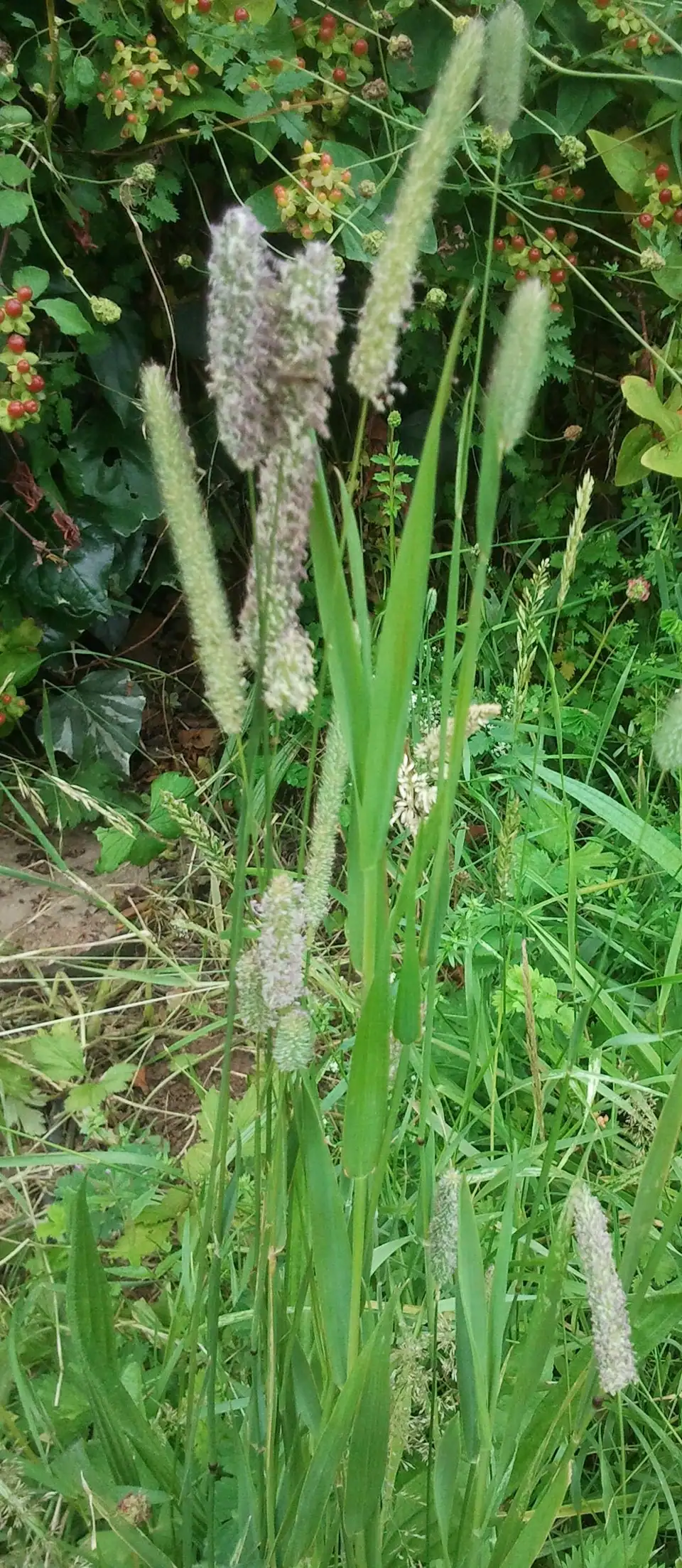

Cómo cultivar y cuidar Timothy
Phleum pratense
Escrito por Emilio Marruso · última revisión
Tóxica para: Personas · Por qué
De un vistazo
La fleo es una gramínea perenne muy trabajadora, sembrada en muchos prados y apreciada como heno y forraje. Dale sol o semisombra y una humedad constante, y siémbrala en primavera o en verano. Córtala para heno antes de que florezca la mitad de las plantas y volverá a estar lista para otro corte en 30 a 40 días.
- Sol
Sol o semisombra
- Riego
Mantén la tierra siempre húmeda; no soporta la sequía ni el calor intenso
Qué dicen las fuentes (3)
Riego: Humedad constante; no tolera la sequía.
Consistent moisture is a must to develop a good stand.
— What Is Timothy Grass - Uses And Benefits Of Timothy Grass | Gardening Know How [3] Timothy grows best in nutrient-rich soils, and is adapted to cool humid climates. It does not tolerate drought conditions. ##
— Ohio Weedguide [2] Notas sobre el riego: No le va bien en calor excesivo ni en condiciones de sequía.
This grass doesn't do well in areas with excessive heat or in drought conditions.
— What Is Timothy Grass - Uses And Benefits Of Timothy Grass | Gardening Know How [3] - Suelo
Tolera pH 4,5–7,8; lo ideal para empezar es pH 6,5–7,0
Qué dicen las fuentes (6)
pH del suelo, mínimo: 4.5
Según Temperate Plants Database (reported tolerance): Timothy grass is reported to tolerate an annual precipitation in the range of 35 to 176cm, an annual temperature range of 4.4 to 18.6°C, and a pH of 4.5 to 7.8
— Phleum pratense - Useful Temperate Plants [5] Ideal para establecer un rodal (Gardening Know How).: Although Timothy grass grows in most soil types, the pH of the soil is important. Ideally, it should be between 6.5 and
— What Is Timothy Grass - Uses And Benefits Of Timothy Grass | Gardening Know How [3] Timothy grass is reported to tolerate an annual precipitation in the range of 35 to 176cm, an annual temperature range of 4.4 to 18.6°C, and a pH of 4.5 to 7.8
— Phleum pratense - Useful Temperate Plants [5] pH del suelo, máximo: 7.8
Según Temperate Plants Database (reported tolerance): Timothy grass is reported to tolerate an annual precipitation in the range of 35 to 176cm, an annual temperature range of 4.4 to 18.6°C, and a pH of 4.5 to 7.8
— Phleum pratense - Useful Temperate Plants [5] Ideal para establecer un rodal (Gardening Know How).: Although Timothy grass grows in most soil types, the pH of the soil is important. Ideally, it should be between 6.5 and
— What Is Timothy Grass - Uses And Benefits Of Timothy Grass | Gardening Know How [3] Timothy grass is reported to tolerate an annual precipitation in the range of 35 to 176cm, an annual temperature range of 4.4 to 18.6°C, and a pH of 4.5 to 7.8
— Phleum pratense - Useful Temperate Plants [5] - Plantación
Planta en verano las plántulas criadas en maceta
Qué dicen las fuentes (1)
Plantación: Verano (plántulas cultivadas en macetas)
When large enough to handle, prick the seedlings out into individual pots and plant out in the summer.
— Phleum pratense - Useful Temperate Plants [5] - Cosecha
Córtala para heno antes de que florezca la mitad; vuelve a estar lista 30–40 días después
Qué dicen las fuentes (1)
Cosecha: Henificación: antes de que más de la mitad de las plantas hayan formado flores; lista de nuevo 30 a 40 días después de la primera cosecha
Harvest hay before more than half the plants have formed flowers.
— What Is Timothy Grass - Uses And Benefits Of Timothy Grass | Gardening Know How [3] - Atención
Su mucho polen molesta a los alérgicos: siégala a menudo para que no florezca
- Multiplicación
Por semilla o dividiendo las matas en primavera
- Siembra
Siembra en primavera o verano; las tardías, al menos 6 semanas antes de la primera helada de otoño
Qué dicen las fuentes (3)
Siembra: Primavera o verano; cultivos tardíos al menos seis semanas antes de la primera helada de otoño.
Timothy grass is generally sown in spring or summer.
— What Is Timothy Grass - Uses And Benefits Of Timothy Grass | Gardening Know How [3] The best time to plant late crops is six weeks or more prior to the first
— What Is Timothy Grass - Uses And Benefits Of Timothy Grass | Gardening Know How [3] Seed - sow spring in situ, only just covering the
— Phleum pratense - Useful Temperate Plants [5] - Seguridad
No se conoce toxicidad, pero su polen puede causar fiebre del heno y dermatitis
Resumen
Phleum pratense (timothy) es una hierba perenne de estación fría, que forma matas, nativa de Europa y ampliamente cultivada para heno y pastoreo. [7][2] Crece a pleno sol o en semisombra, necesita humedad constante y no tolera la sequía. [4][3][2] En América del Norte ha escapado del cultivo y produce grandes cantidades de polen que causan fiebre del heno. [4][7]
Citado en inglés, como en la fuente.
Esta ficha está incompleta: las fuentes consultadas aún no cubren todos los campos.
Aún no cubierto por nuestras fuentes: Rusticidad, zona más fría, Rusticidad, zona más cálida
Cuidados
Riego
Riego
Humedad constante; no tolera la sequía.
Qué dicen las fuentes (2)
Consistent moisture is a must to develop a good stand.Timothy grows best in nutrient-rich soils, and is adapted to cool humid climates. It does not tolerate drought conditions.
##Notas sobre el riego
No le va bien en calor excesivo ni en condiciones de sequía.
Qué dicen las fuentes (1)
This grass doesn't do well in areas with excessive heat or in drought conditions.Luz
Clima y frío
Rusticidad, zona más fría
No figura en las fuentes consultadas.
Rusticidad, zona más cálida
No figura en las fuentes consultadas.
Suelo
pH del suelo, mínimo
4.5
Lo que dice cada fuente
Según Temperate Plants Database (reported tolerance): 4.5
Ideal para establecer un rodal (Gardening Know How).: 6.5
Qué dicen las fuentes (3)
Según Temperate Plants Database (reported tolerance): Timothy grass is reported to tolerate an annual precipitation in the range of 35 to 176cm, an annual temperature range of 4.4 to 18.6°C, and a pH of 4.5 to 7.8Ideal para establecer un rodal (Gardening Know How).: Although Timothy grass grows in most soil types, the pH of the soil is important. Ideally, it should be between 6.5 andTimothy grass is reported to tolerate an annual precipitation in the range of 35 to 176cm, an annual temperature range of 4.4 to 18.6°C, and a pH of 4.5 to 7.8pH del suelo, máximo
7.8
Lo que dice cada fuente
Según Temperate Plants Database (reported tolerance): 7.8
Ideal para establecer un rodal (Gardening Know How).: 7.0
Qué dicen las fuentes (3)
Según Temperate Plants Database (reported tolerance): Timothy grass is reported to tolerate an annual precipitation in the range of 35 to 176cm, an annual temperature range of 4.4 to 18.6°C, and a pH of 4.5 to 7.8Ideal para establecer un rodal (Gardening Know How).: Although Timothy grass grows in most soil types, the pH of the soil is important. Ideally, it should be between 6.5 andTimothy grass is reported to tolerate an annual precipitation in the range of 35 to 176cm, an annual temperature range of 4.4 to 18.6°C, and a pH of 4.5 to 7.8Propagación
Cultivo
La planta
Ciclo de vida
perenne
Qué dicen las fuentes (1)
Timothy is an erect, clump-forming perennial grass, characterized by its dense, cylindrical, spike-like flower heads and swollen, bulb-like stem bases.Familia
Poaceae
Qué dicen las fuentes (1)
Family:
Grass Family (Poaceae)
## Other Names:
cat's tail, herd grass, herd's grass, meadow catAbonado
Cuándo
Las fuentes dan valores distintos según la región, la zona o las condiciones de cultivo.
Lo que dice cada fuente
producción en campo (heno y pastoreo): Al sembrar, según un análisis del suelo; nitrógeno dos semanas después de la germinación
producción en campo (heno y pastoreo), sin leguminosa: Nitrógeno adicional después de cada corte
Qué dicen las fuentes (2)
producción en campo (heno y pastoreo): Preferably apply the nitrogen two weeks after germination for better nutrient use.producción en campo (heno y pastoreo), sin leguminosa: Without legume, apply an additional 50 pounds of nitrogen per acre after each cut.Frecuencia
Las fuentes dan valores distintos según la región, la zona o las condiciones de cultivo.
Lo que dice cada fuente
producción en campo (heno y pastoreo), sin leguminosa: Después de cada corte
Qué dicen las fuentes (1)
producción en campo (heno y pastoreo), sin leguminosa: Without legume, apply an additional 50 pounds of nitrogen per acre after each cut.Abonos naturales
Las fuentes dan valores distintos según la región, la zona o las condiciones de cultivo.
Lo que dice cada fuente
producción en campo (heno y pastoreo): Estiércol como fuente de nitrógeno
Qué dicen las fuentes (1)
producción en campo (heno y pastoreo): Like most cool- season grasses, it responds well to nitrogen as fertilizer or manure.Abonos minerales
Las fuentes dan valores distintos según la región, la zona o las condiciones de cultivo.
Lo que dice cada fuente
producción de campo (heno y pasto), al sembrar sin análisis de suelo: 22.4-56.0 kg [49,4–123,5 lb]/ha de nitrógeno, 11.2-56.0 kg [24,7–123,5 lb]/ha de fosfato (P2O5) y 22.4-78.5 kg [49,4–173 lb]/ha de potasa (K2O); sin nitrógeno cuando se siembra con una leguminosa
producción en campo (heno y pastoreo), sin leguminosa: 56.0 kg [123,5 lb]/ha de nitrógeno después de cada corte
Qué dicen las fuentes (2)
producción de campo (heno y pasto), al sembrar sin análisis de suelo: the recommended nutrient rates are 20 to 50 pounds of nitrogen, 10 to 50 pounds of phosphate (P2O5), and 20 to 70 pounds of potash (K2O) per acre. If timothy is seeded with a legume, no nitrogen is needed.producción en campo (heno y pastoreo), sin leguminosa: Without legume, apply an additional 50 pounds of nitrogen per acre after each cut.Evitar
Las fuentes dan valores distintos según la región, la zona o las condiciones de cultivo.
Lo que dice cada fuente
producción en campo (heno y pastoreo): Más de 224 kg [493,8 lb]/ha de nitrógeno al año, lo que reduce las reservas de energía y la persistencia
ensayos de investigación de campo en el noreste de EE. UU. (heno): Altas dosis de nitrógeno combinadas con cosecha temprana del cultivo de primavera
Qué dicen las fuentes (2)
producción en campo (heno y pastoreo): However, high nitrogen applications, over 200 pounds of nitrogen per acre per year, can reduce the storage of energy reserves and reduce persistence.ensayos de investigación de campo en el noreste de EE. UU. (heno): Ultra-early harvest for maximum quality, plus high nitrogen fertiliza- tion for maximum yield, may prove disastrous to stand survival in an unfavorable season.Signos de exceso
Las fuentes dan valores distintos según la región, la zona o las condiciones de cultivo.
Lo que dice cada fuente
ensayos de investigación de campo en el noreste de EE. UU. (heno), 336-504 kg/ha de nitrógeno: Acame y raleo de los rodales
Qué dicen las fuentes (1)
ensayos de investigación de campo en el noreste de EE. UU. (heno), 336-504 kg/ha de nitrógeno: Increasing the rate of nitrogen from 100-150 pounds per acre to 300-450 pounds per acre increased dry matter production an average of 25 per cent over the three-year period, but it also increased lodging and thinning of stands.Problemas
Fiebre del heno y alergia al polen
Síntoma: Las grandes cantidades de polen durante un largo período de floración molestan a quienes sufren alergias
Qué hacer: Mantenla a raya con cortes o siegas regulares para que no florezca; en los bordes, arranca la hierba incluyendo las bases bulbosas del tallo
Qué dicen las fuentes (2)
It generates large amounts of pollen and is a bane for allergy sufferers during its long flowering period. There are
— Phleum pratense (Timothy): Minnesota Wildflowers [4] If you suffer from hay fever, keep Timothy grass in check with regular cutting or mowing
— What is Timothy Grass? | BBC Gardeners World Magazine [6]
Remedios
Las fuentes consultadas no dan remedios para esta planta.
Toxicidad
Según la fuente, citada textualmente. No es un consejo médico ni veterinario: si una persona o un animal pudo haber ingerido esta planta, contacta con un centro de toxicología o con un veterinario.
None known. Pollen can cause dermatitis and hayfever. ##
[2]
Calendario
Siembra
Primavera o verano; cultivos tardíos al menos seis semanas antes de la primera helada de otoño.
Qué dicen las fuentes (3)
Timothy grass is generally sown in spring or summer.The best time to plant late crops is six weeks or more prior to the firstSeed - sow spring in situ, only just covering thePlantación
Verano (plántulas cultivadas en macetas)
Qué dicen las fuentes (1)
When large enough to handle, prick the seedlings out into individual pots and plant out in the summer.Cosecha
Henificación: antes de que más de la mitad de las plantas hayan formado flores; lista de nuevo 30 a 40 días después de la primera cosecha
Qué dicen las fuentes (1)
Harvest hay before more than half the plants have formed flowers.Meses tal como los dan las fuentes, en su mayoría de Estados Unidos (hemisferio norte). En el hemisferio sur se desplazan unos seis meses.
Comestibilidad
Según la fuente, citada textualmente. No comas una planta basándote solo en esta página: los errores de identificación pueden ser peligrosos.
Timothy is planted widely in pastures and is an important hay and forage species nationally.
[7]
Plantas similares
- African lovegrass Eragrostis curvula
- Autumn Moor Grass Sesleria autumnalis
- Bambú Phyllostachys aurea
- Beaked Panicgrass Coleataenia anceps
- Bigtop Lovegrass Eragrostis hirsuta
- Blue Fescue Festuca glauca
- Hierba de páramo azul Sesleria caerulea
- Bluestem Anatherum ternarium
Fuentes
Cada valor anterior se cita de estos documentos. Los enlaces llevan al editor original.
- Timothy | Illinois Grasses | Illinois Extension | Illinois · extension.illinois.edu, consultado
- Ohio Weedguide · weedguide.cfaes.osu.edu, consultado
- What Is Timothy Grass - Uses And Benefits Of Timothy Grass | Gardening Know How · gardeningknowhow.com, consultado
- Phleum pratense (Timothy): Minnesota Wildflowers · minnesotawildflowers.info, consultado
- Phleum pratense - Useful Temperate Plants · temperate.theferns.info, consultado
- What is Timothy Grass? | BBC Gardeners World Magazine · gardenersworld.com, consultado
- Timothy | Missouri Department of Conservation · mdc.mo.gov, consultado
- extension.umaine.edu · extension.umaine.edu
- extension.wvu.edu · extension.wvu.edu
Escrito por Emilio Marruso · última revisión