
How to Grow and Care for Timothy
Phleum pratense
Written by Emilio Marruso · last checked
Toxic to: People · Why
At a glance
Timothy is a hardworking perennial grass, planted widely in pastures and prized as hay and forage. Give it sun or part shade and steady moisture, and sow it in spring or summer. Cut it for hay before half the plants flower, and it grows back for another cutting in 30 to 40 days.
- Sun
Sun to part shade
What the sources say (2)
- Water
Keep the soil evenly moist; it does not like drought or strong heat
What the sources say (3)
Watering: Consistent moisture; not drought tolerant
Consistent moisture is a must to develop a good stand.
— What Is Timothy Grass - Uses And Benefits Of Timothy Grass | Gardening Know How [3] Timothy grows best in nutrient-rich soils, and is adapted to cool humid climates. It does not tolerate drought conditions. ##
— Ohio Weedguide [2] Watering notes: Does not do well in excessive heat or in drought conditions
This grass doesn't do well in areas with excessive heat or in drought conditions.
— What Is Timothy Grass - Uses And Benefits Of Timothy Grass | Gardening Know How [3] - Soil
Tolerates pH 4.5–7.8; pH 6.5–7.0 is best for a new stand
What the sources say (6)
Soil pH, minimum: 4.5
According to Temperate Plants Database (reported tolerance): Timothy grass is reported to tolerate an annual precipitation in the range of 35 to 176cm, an annual temperature range of 4.4 to 18.6°C, and a pH of 4.5 to 7.8
— Phleum pratense - Useful Temperate Plants [5] Ideal for establishing a stand (Gardening Know How): Although Timothy grass grows in most soil types, the pH of the soil is important. Ideally, it should be between 6.5 and
— What Is Timothy Grass - Uses And Benefits Of Timothy Grass | Gardening Know How [3] Timothy grass is reported to tolerate an annual precipitation in the range of 35 to 176cm, an annual temperature range of 4.4 to 18.6°C, and a pH of 4.5 to 7.8
— Phleum pratense - Useful Temperate Plants [5] Soil pH, maximum: 7.8
According to Temperate Plants Database (reported tolerance): Timothy grass is reported to tolerate an annual precipitation in the range of 35 to 176cm, an annual temperature range of 4.4 to 18.6°C, and a pH of 4.5 to 7.8
— Phleum pratense - Useful Temperate Plants [5] Ideal for establishing a stand (Gardening Know How): Although Timothy grass grows in most soil types, the pH of the soil is important. Ideally, it should be between 6.5 and
— What Is Timothy Grass - Uses And Benefits Of Timothy Grass | Gardening Know How [3] Timothy grass is reported to tolerate an annual precipitation in the range of 35 to 176cm, an annual temperature range of 4.4 to 18.6°C, and a pH of 4.5 to 7.8
— Phleum pratense - Useful Temperate Plants [5] - Planting
Plant out seedlings raised in pots in summer
What the sources say (1)
Planting: Summer (seedlings raised in pots)
When large enough to handle, prick the seedlings out into individual pots and plant out in the summer.
— Phleum pratense - Useful Temperate Plants [5] - Harvest
Cut for hay before half the plants flower; ready again 30–40 days later
What the sources say (1)
Harvest: Hay: before more than half the plants have formed flowers; ready again 30 to 40 days after the first harvest
Harvest hay before more than half the plants have formed flowers.
— What Is Timothy Grass - Uses And Benefits Of Timothy Grass | Gardening Know How [3] - Watch out
Lots of pollen bothers allergy sufferers: mow regularly so it doesn't flower
- Propagation
Grow from seed or divide clumps in spring
- Sowing
Sow in spring or summer; late sowings at least 6 weeks before the first fall frost
What the sources say (3)
Sowing: Spring or summer; late crops at least six weeks before the first fall frost
Timothy grass is generally sown in spring or summer.
— What Is Timothy Grass - Uses And Benefits Of Timothy Grass | Gardening Know How [3] The best time to plant late crops is six weeks or more prior to the first
— What Is Timothy Grass - Uses And Benefits Of Timothy Grass | Gardening Know How [3] Seed - sow spring in situ, only just covering the
— Phleum pratense - Useful Temperate Plants [5] - Safety
Not known to be toxic, but its pollen can cause hay fever and skin rashes
Overview
Phleum pratense (timothy) is a cool-season, clump-forming perennial grass native to Europe and widely grown for hay and pasture. [7][2] It grows in sun or part shade, needs consistent moisture and does not tolerate drought. [4][3][2] In North America it has escaped cultivation and produces large amounts of pollen that cause hay fever. [4][7]
This record is incomplete: the sources we read do not cover every field yet.
Not yet covered by our sources: Hardiness, coldest zone, Hardiness, warmest zone
Timothy care
How to water Timothy
Watering
Consistent moisture; not drought tolerant
What the sources say (2)
Consistent moisture is a must to develop a good stand.Timothy grows best in nutrient-rich soils, and is adapted to cool humid climates. It does not tolerate drought conditions.
##Watering notes
Does not do well in excessive heat or in drought conditions
What the sources say (1)
This grass doesn't do well in areas with excessive heat or in drought conditions.How much light Timothy needs
How much cold Timothy can take
Hardiness, coldest zone
Not stated in the sources we read.
Hardiness, warmest zone
Not stated in the sources we read.
Best soil for Timothy
Soil pH, minimum
4.5
What each source says
According to Temperate Plants Database (reported tolerance): 4.5
Ideal for establishing a stand (Gardening Know How): 6.5
What the sources say (3)
According to Temperate Plants Database (reported tolerance): Timothy grass is reported to tolerate an annual precipitation in the range of 35 to 176cm, an annual temperature range of 4.4 to 18.6°C, and a pH of 4.5 to 7.8Ideal for establishing a stand (Gardening Know How): Although Timothy grass grows in most soil types, the pH of the soil is important. Ideally, it should be between 6.5 andTimothy grass is reported to tolerate an annual precipitation in the range of 35 to 176cm, an annual temperature range of 4.4 to 18.6°C, and a pH of 4.5 to 7.8Soil pH, maximum
7.8
What each source says
According to Temperate Plants Database (reported tolerance): 7.8
Ideal for establishing a stand (Gardening Know How): 7.0
What the sources say (3)
According to Temperate Plants Database (reported tolerance): Timothy grass is reported to tolerate an annual precipitation in the range of 35 to 176cm, an annual temperature range of 4.4 to 18.6°C, and a pH of 4.5 to 7.8Ideal for establishing a stand (Gardening Know How): Although Timothy grass grows in most soil types, the pH of the soil is important. Ideally, it should be between 6.5 andTimothy grass is reported to tolerate an annual precipitation in the range of 35 to 176cm, an annual temperature range of 4.4 to 18.6°C, and a pH of 4.5 to 7.8How to propagate Timothy
How to grow Timothy
The plant
Life cycle
perennial
What the sources say (1)
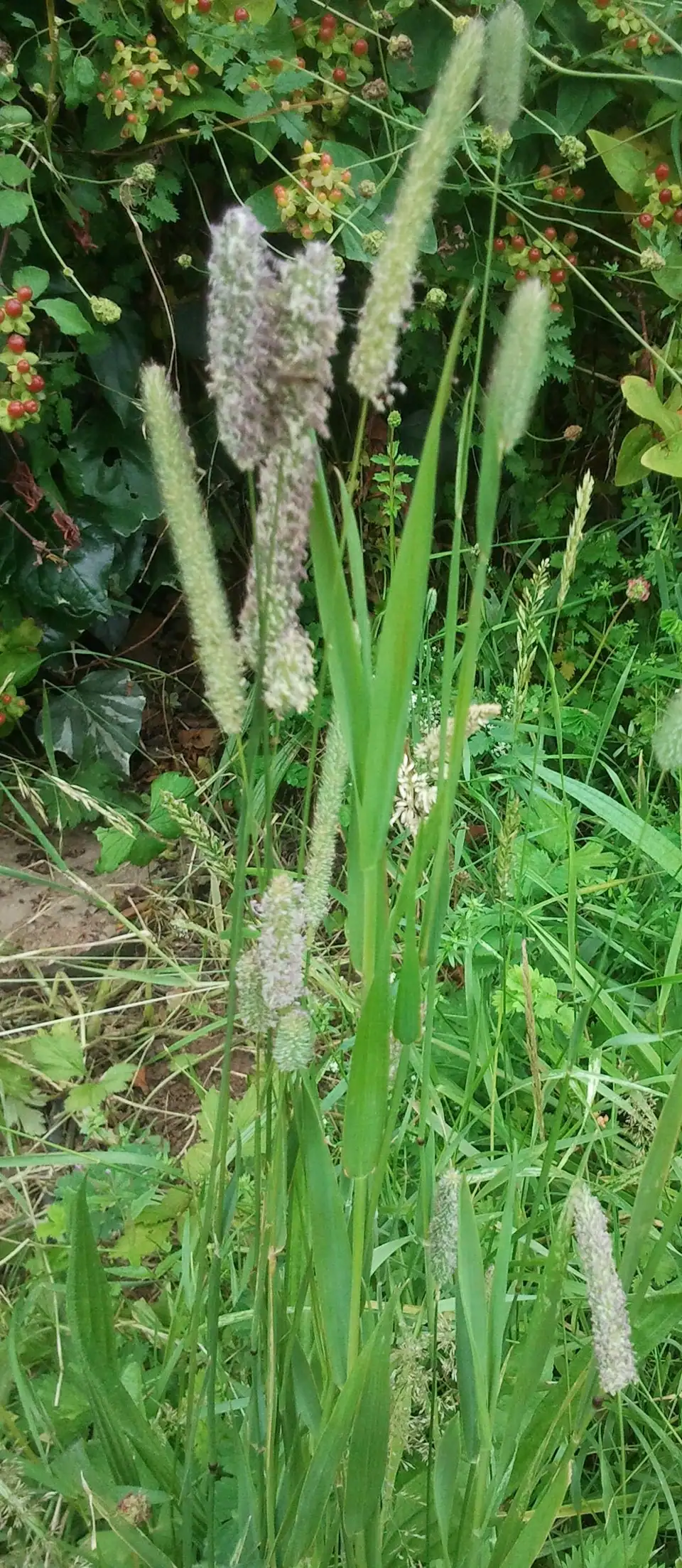
Timothy is an erect, clump-forming perennial grass, characterized by its dense, cylindrical, spike-like flower heads and swollen, bulb-like stem bases.Family
Poaceae
What the sources say (1)
Family:
Grass Family (Poaceae)
## Other Names:
cat's tail, herd grass, herd's grass, meadow catFertilizing
When
The sources give different values depending on region, zone or growing conditions.
What each source says
field production (hay and pasture): At seeding, based on a soil test; nitrogen two weeks after germination
field production (hay and pasture), without a legume: Additional nitrogen after each cut
What the sources say (2)
field production (hay and pasture): Preferably apply the nitrogen two weeks after germination for better nutrient use.field production (hay and pasture), without a legume: Without legume, apply an additional 50 pounds of nitrogen per acre after each cut.How often
The sources give different values depending on region, zone or growing conditions.
What each source says
field production (hay and pasture), without a legume: After each cut
What the sources say (1)
field production (hay and pasture), without a legume: Without legume, apply an additional 50 pounds of nitrogen per acre after each cut.Natural fertilizers
The sources give different values depending on region, zone or growing conditions.
What each source says
field production (hay and pasture): Manure as a nitrogen source
What the sources say (1)
field production (hay and pasture): Like most cool- season grasses, it responds well to nitrogen as fertilizer or manure.Mineral fertilizers
The sources give different values depending on region, zone or growing conditions.
What each source says
field production (hay and pasture), at seeding without a soil test: 22.4-56.0 kg [49.4–123.5 lb]/ha nitrogen, 11.2-56.0 kg [24.7–123.5 lb]/ha phosphate (P2O5) and 22.4-78.5 kg [49.4–173 lb]/ha potash (K2O); no nitrogen when seeded with a legume
field production (hay and pasture), without a legume: 56.0 kg [123.5 lb]/ha nitrogen after each cut
What the sources say (2)
field production (hay and pasture), at seeding without a soil test: the recommended nutrient rates are 20 to 50 pounds of nitrogen, 10 to 50 pounds of phosphate (P2O5), and 20 to 70 pounds of potash (K2O) per acre. If timothy is seeded with a legume, no nitrogen is needed.field production (hay and pasture), without a legume: Without legume, apply an additional 50 pounds of nitrogen per acre after each cut.Avoid
The sources give different values depending on region, zone or growing conditions.
What each source says
field production (hay and pasture): More than 224 kg [493.8 lb]/ha of nitrogen per year, which reduces energy reserves and persistence
field research trials in the Northeastern USA (hay): High nitrogen rates combined with early harvest of the spring crop
What the sources say (2)
field production (hay and pasture): However, high nitrogen applications, over 200 pounds of nitrogen per acre per year, can reduce the storage of energy reserves and reduce persistence.field research trials in the Northeastern USA (hay): Ultra-early harvest for maximum quality, plus high nitrogen fertiliza- tion for maximum yield, may prove disastrous to stand survival in an unfavorable season.Signs of excess
The sources give different values depending on region, zone or growing conditions.
What each source says
field research trials in the Northeastern USA (hay), 336-504 kg/ha nitrogen: Lodging and thinning of stands
What the sources say (1)
field research trials in the Northeastern USA (hay), 336-504 kg/ha nitrogen: Increasing the rate of nitrogen from 100-150 pounds per acre to 300-450 pounds per acre increased dry matter production an average of 25 per cent over the three-year period, but it also increased lodging and thinning of stands.Timothy pests and problems
Hay fever and pollen allergy
Symptom: Large amounts of pollen over a long flowering period trouble allergy sufferers
What to do: Keep it in check with regular cutting or mowing so it does not flower; in borders dig out the grass including the bulb-like stem bases
What the sources say (2)
It generates large amounts of pollen and is a bane for allergy sufferers during its long flowering period. There are
— Phleum pratense (Timothy): Minnesota Wildflowers [4] If you suffer from hay fever, keep Timothy grass in check with regular cutting or mowing
— What is Timothy Grass? | BBC Gardeners World Magazine [6]
Remedies
The sources we checked give no remedies for this plant.
Is Timothy poisonous?
Reported by the source, quoted verbatim. This is not medical or veterinary advice: if a person or an animal may have eaten this plant, contact a poison control centre or a veterinarian.
None known. Pollen can cause dermatitis and hayfever. ##
[2]
Calendar
Sowing
Spring or summer; late crops at least six weeks before the first fall frost
What the sources say (3)
Timothy grass is generally sown in spring or summer.The best time to plant late crops is six weeks or more prior to the firstSeed - sow spring in situ, only just covering thePlanting
Summer (seedlings raised in pots)
What the sources say (1)
When large enough to handle, prick the seedlings out into individual pots and plant out in the summer.Harvest
Hay: before more than half the plants have formed flowers; ready again 30 to 40 days after the first harvest
What the sources say (1)
Harvest hay before more than half the plants have formed flowers.Months as given by the sources, which are mostly from the United States (northern hemisphere). In the southern hemisphere they shift by about six months.
Edibility
Reported by the source, quoted verbatim. Do not eat a plant on the basis of this page alone: identification mistakes can be dangerous.
Timothy is planted widely in pastures and is an important hay and forage species nationally.
[7]
Similar plants
- African lovegrass Eragrostis curvula
- Autumn Moor Grass Sesleria autumnalis
- Bamboo Phyllostachys aurea
- Beaked Panicgrass Coleataenia anceps
- Bigtop Lovegrass Eragrostis hirsuta
- Blue Fescue Festuca glauca
- Blue Moor Grass Sesleria caerulea
- Bluestem Anatherum ternarium
Sources
Every value above is quoted from these documents. Links lead to the original publisher.
- Timothy | Illinois Grasses | Illinois Extension | Illinois · extension.illinois.edu, consulted
- Ohio Weedguide · weedguide.cfaes.osu.edu, consulted
- What Is Timothy Grass - Uses And Benefits Of Timothy Grass | Gardening Know How · gardeningknowhow.com, consulted
- Phleum pratense (Timothy): Minnesota Wildflowers · minnesotawildflowers.info, consulted
- Phleum pratense - Useful Temperate Plants · temperate.theferns.info, consulted
- What is Timothy Grass? | BBC Gardeners World Magazine · gardenersworld.com, consulted
- Timothy | Missouri Department of Conservation · mdc.mo.gov, consulted
- extension.umaine.edu · extension.umaine.edu
- extension.wvu.edu · extension.wvu.edu
Written by Emilio Marruso · last checked