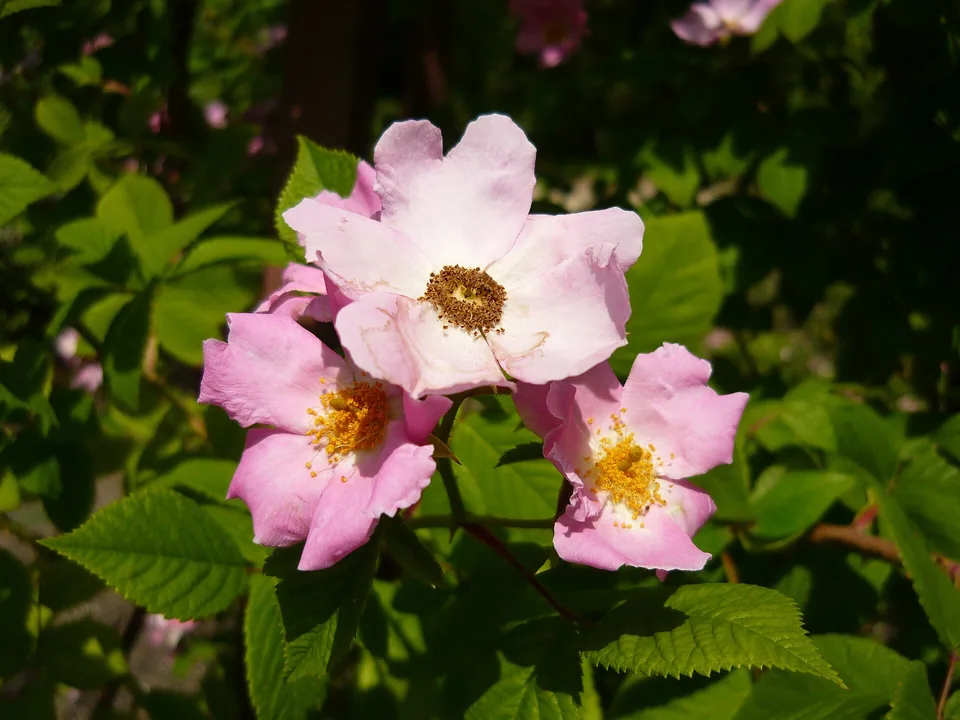


Cómo cultivar y cuidar Climbing Prairie Rose
Rosa setigera
Escrito por Emilio Marruso · última revisión
De un vistazo
Este rosal es un arbusto generoso y agradecido: alcanza de 0,9 a 4,6 m de alto y de 1,8 a 3 m de ancho, y resiste las enfermedades mejor que la mayoría de los rosales híbridos. Dale sol pleno y una tierra húmeda que drene bien, abónalo una vez al año en primavera y pódalo a finales de invierno o principios de primavera.
- Sol
Sol pleno; en semisombra florece menos y enferma más
Qué dicen las fuentes (1)
Luz: Pleno sol
It prefers full sun, moist, and well-drained soils. It is intolerant of standing water and drought conditions. If grown in partial shade, there is decreased flower production
— Rosa setigera (Climbing Prairie Rose, Climbing Rose, Climbing Wild Rose, Prairie Rose) | North Carolina Extension Gardener Plant Toolbox [1] - Riego
Mantén la tierra húmeda: no le gusta ni la sequía ni el agua encharcada
Qué dicen las fuentes (1)
Notas sobre el riego: Prefiere suelos húmedos y bien drenados; es intolerante al agua estancada y a las condiciones de sequía
It prefers full sun, moist, and well-drained soils. It is intolerant of standing water and drought conditions.
— Rosa setigera (Climbing Prairie Rose, Climbing Rose, Climbing Wild Rose, Prairie Rose) | North Carolina Extension Gardener Plant Toolbox [1] - Frío
Aguanta inviernos de hasta −34,4 °C (−30 °F)
Muy rústica · USDA 4a · RHS H7 · Z4
Qué dicen las fuentes (2)
Rusticidad, zona más fría: 4a [mínima invernal de −34,4 a −31,7 °C (de −30 a −25 °F)]
USDA Plant Hardiness Zone: 4a, 4b, 5a, 5b, 6a, 6b, 7a, 7b, 8a, 8b
— Rosa setigera (Climbing Prairie Rose, Climbing Rose, Climbing Wild Rose, Prairie Rose) | North Carolina Extension Gardener Plant Toolbox [1] Rusticidad, zona más cálida: 8b [mínima invernal de −9,4 a −6,7 °C (de 15 a 20 °F)]
USDA Plant Hardiness Zone: 4a, 4b, 5a, 5b, 6a, 6b, 7a, 7b, 8a, 8b
— Rosa setigera (Climbing Prairie Rose, Climbing Rose, Climbing Wild Rose, Prairie Rose) | North Carolina Extension Gardener Plant Toolbox [1] - Suelo
Tierra húmeda que drene bien
Qué dicen las fuentes (1)
Notas sobre el riego: Prefiere suelos húmedos y bien drenados; es intolerante al agua estancada y a las condiciones de sequía
It prefers full sun, moist, and well-drained soils. It is intolerant of standing water and drought conditions.
— Rosa setigera (Climbing Prairie Rose, Climbing Rose, Climbing Wild Rose, Prairie Rose) | North Carolina Extension Gardener Plant Toolbox [1] - Abonado
Una vez al año a principios de primavera, 120–240 ml de abono universal; para a finales de verano
Qué dicen las fuentes (7)
Cuándo: A principios de la primavera, antes de que comience el crecimiento
como alternativa, en otoño: Roses can be fall fertilized after the plants have gone dormant. Applying fertilizer at this time will not encourage growth but will be available as the plants start to grow in the spring.
— [3] If you decide to fertilize, the best time to fertilize roses is in the early spring before growth starts to appear.
— [4] For species roses, a spring application of general-purpose fertilizer is usually adequate for the season.
— [3] Frecuencia: Una vez al año, en primavera
For species roses, a spring application of general-purpose fertilizer is usually adequate for the season.
— [3] Abonos minerales: Fertilizante de uso general como 10-10-10 o 12-12-12, 119 a 237 mL por planta
For species roses, a spring application of general-purpose fertilizer is usually adequate for the season. General-purpose fertilizers such as 10-10-10 or 12-12-12 are used at about one-half to one cup per plant.
— [3] Evitar: Fertilizante con alto contenido de nitrógeno a finales del verano; deja de fertilizar a finales del verano cuando las plantas entran en letargo
Be careful not to fertilize your roses with high nitrogen formulas late in the summer (end of August/September).
— [4] You can fertilize every four to six weeks during the growing season, but stop fertilization in late summer (late August or early September) as the roses begin to go dormant.
— [5] - Poda
Poda a finales de invierno o principios de primavera
Qué dicen las fuentes (1)
Poda: Finales del invierno y principios de la primavera
If pruning is required, it is best done in late winter and early spring. The plant reproduces by seeds
— Rosa setigera (Climbing Prairie Rose, Climbing Rose, Climbing Wild Rose, Prairie Rose) | North Carolina Extension Gardener Plant Toolbox [1] - Plagas
Pulgón, araña roja, mancha negra, roya y oídio; más resistente que la mayoría de rosales híbridos
Qué dicen las fuentes (2)
Plagas: escarabajos pulga, pulgones, cochinillas, moscas de sierra, barrenadores, mosquitas del rosal, chicharritas, arañitas rojas, trips
The plant is susceptible to flea beetles, aphids, scale, sawflies, borers, rose midges, leafhoppers, spider mites, and thrips.
— Rosa setigera (Climbing Prairie Rose, Climbing Rose, Climbing Wild Rose, Prairie Rose) | North Carolina Extension Gardener Plant Toolbox [1] Enfermedades: roya, mancha negra, roseta de la rosa, mildiu polvoriento
Roses are typically susceptible to rust, black spot, rose rosette, and powdery mildew.
— Rosa setigera (Climbing Prairie Rose, Climbing Rose, Climbing Wild Rose, Prairie Rose) | North Carolina Extension Gardener Plant Toolbox [1] - Tamaño
De 0,9 a 4,6 m de alto y de 1,8 a 3 m de ancho
Qué dicen las fuentes (2)
Altura adulta: 91.44-457.2 cm (3 pies - 15 pies)
Dimensions: Height: 3 ft. 0 in. - 15 ft. 0 in. Width: 6 ft. 0 in. - 10 ft. 0 in.
— Rosa setigera (Climbing Prairie Rose, Climbing Rose, Climbing Wild Rose, Prairie Rose) | North Carolina Extension Gardener Plant Toolbox [1] Anchura adulta: 182.88-304.8 cm (6 pies - 10 pies)
Dimensions: Height: 3 ft. 0 in. - 15 ft. 0 in. Width: 6 ft. 0 in. - 10 ft. 0 in.
— Rosa setigera (Climbing Prairie Rose, Climbing Rose, Climbing Wild Rose, Prairie Rose) | North Carolina Extension Gardener Plant Toolbox [1] - Multiplicación
Por semilla, esquejes, hijuelos o injerto
Qué dicen las fuentes (2)
Propagación: Semilla, retoños de los tallos, esquejes, injerto
The plant reproduces by seeds or by suckering of the stems. Propagated by cuttings and grafting.
— Rosa setigera (Climbing Prairie Rose, Climbing Rose, Climbing Wild Rose, Prairie Rose) | North Carolina Extension Gardener Plant Toolbox [1] Recommended Propagation Strategy: Grafting Seed Stem Cutting
— Rosa setigera (Climbing Prairie Rose, Climbing Rose, Climbing Wild Rose, Prairie Rose) | North Carolina Extension Gardener Plant Toolbox [1]
Resumen
La rosa de pradera trepadora es un arbusto caducifolio de tamaño mediano, nativo del sureste de Canadá y de las regiones central y oriental de los Estados Unidos. [1] Prefiere pleno sol y suelos húmedos y bien drenados, y es intolerante al agua estancada y a la sequía. [1]
Citado en inglés, como en la fuente.
Esta ficha está incompleta: las fuentes consultadas aún no cubren todos los campos.
Aún no cubierto por nuestras fuentes: Riego
Cuidados
Riego
Riego
No figura en las fuentes consultadas.
Notas sobre el riego
Prefiere suelos húmedos y bien drenados; es intolerante al agua estancada y a las condiciones de sequía
Qué dicen las fuentes (1)
It prefers full sun, moist, and well-drained soils. It is intolerant of standing water and drought conditions.Luz
Pleno sol
Qué dicen las fuentes (1)
It prefers full sun, moist, and well-drained soils. It is intolerant of standing water and drought conditions. If grown in partial shade, there is decreased flower productionClima y frío
Rusticidad, zona más fría
4a [mínima invernal de −34,4 a −31,7 °C (de −30 a −25 °F)]
Qué dicen las fuentes (1)
USDA Plant Hardiness Zone:
4a, 4b, 5a, 5b, 6a, 6b, 7a, 7b, 8a, 8bRusticidad, zona más cálida
8b [mínima invernal de −9,4 a −6,7 °C (de 15 a 20 °F)]
Qué dicen las fuentes (1)
USDA Plant Hardiness Zone:
4a, 4b, 5a, 5b, 6a, 6b, 7a, 7b, 8a, 8bPropagación
Semilla, retoños de los tallos, esquejes, injerto
Qué dicen las fuentes (2)
The plant reproduces by seeds or by suckering of the stems. Propagated by cuttings and grafting.Recommended Propagation Strategy:
Grafting
Seed
Stem CuttingCultivo
La planta
Familia
Rosáceas
Qué dicen las fuentes (1)
The climbing prairie rose is a medium-sized deciduous shrub in the rose family (Rosaceae) native to southeast Canada and the central and eastern United States.Altura adulta
91.44-457.2 cm (3 pies - 15 pies)
Qué dicen las fuentes (1)
Dimensions:
Height: 3 ft. 0 in. - 15 ft. 0 in.
Width: 6 ft. 0 in. - 10 ft. 0 in.Anchura adulta
182.88-304.8 cm (6 pies - 10 pies)
Qué dicen las fuentes (1)
Dimensions:
Height: 3 ft. 0 in. - 15 ft. 0 in.
Width: 6 ft. 0 in. - 10 ft. 0 in.Plagas y enfermedades
Plagas
escarabajos pulga, pulgones, cochinillas, moscas de sierra, barrenadores, mosquitas del rosal, chicharritas, arañitas rojas, trips
Qué dicen las fuentes (1)
The plant is susceptible to flea beetles, aphids, scale, sawflies, borers, rose midges, leafhoppers, spider mites, and thrips.Enfermedades
roya, mancha negra, roseta de la rosa, mildiu polvoriento
Qué dicen las fuentes (1)
Roses are typically susceptible to rust, black spot, rose rosette, and powdery mildew.Abonado
Cuándo
A principios de la primavera, antes de que comience el crecimiento
Lo que dice cada fuente
como alternativa, en otoño: Después de que las plantas hayan entrado en letargo; los nutrientes están disponibles cuando el crecimiento se reanuda en primavera
Qué dicen las fuentes (3)
como alternativa, en otoño: Roses can be fall fertilized after the plants have gone dormant. Applying fertilizer at this time will not encourage growth but will be available as the plants start to grow in the spring.If you decide to fertilize, the best time to fertilize roses is in the early spring before growth starts to appear.For species roses, a spring application of general-purpose fertilizer is usually adequate for the season.Frecuencia
Una vez al año, en primavera
Qué dicen las fuentes (1)
For species roses, a spring application of general-purpose fertilizer is usually adequate for the season.Abonos minerales
Fertilizante de uso general como 10-10-10 o 12-12-12, 119 a 237 mL por planta
Qué dicen las fuentes (1)
For species roses, a spring application of general-purpose fertilizer is usually adequate for the season. General-purpose fertilizers such as 10-10-10 or 12-12-12 are used at about one-half to one cup per plant.Evitar
Fertilizante con alto contenido de nitrógeno a finales del verano; deja de fertilizar a finales del verano cuando las plantas entran en letargo
Qué dicen las fuentes (2)
Be careful not to fertilize your roses with high nitrogen formulas late in the summer (end of August/September).You can fertilize every four to six weeks during the growing season, but stop fertilization in late summer (late August or early September) as the roses begin to go dormant.Problemas
Plagas y enfermedades
Síntoma: Susceptible a escarabajos pulga, pulgones, cochinillas, moscas de sierra, barrenadores, mosquitos de la rosa, saltahojas, arañitas rojas y trips; las rosas son típicamente susceptibles a la roya, la mancha negra, la roseta de la rosa y el mildiu polvoriento
Qué hacer: Esta especie es más resistente a las enfermedades naturales que la mayoría de las rosas híbridas
Qué dicen las fuentes (1)
The plant is susceptible to flea beetles, aphids, scale, sawflies, borers, rose midges, leafhoppers, spider mites, and thrips. This species of rose is more resistant to natural diseases than most hybrid roses.
— Rosa setigera (Climbing Prairie Rose, Climbing Rose, Climbing Wild Rose, Prairie Rose) | North Carolina Extension Gardener Plant Toolbox [1] Reducción de la floración en la sombra
Síntoma: Disminución de la producción de flores y mayor riesgo de enfermedades en semisombra
Qué hacer: Cultiva a pleno sol
Qué dicen las fuentes (1)
If grown in partial shade, there is decreased flower production and an increased risk of disease. If pruning is required
— Rosa setigera (Climbing Prairie Rose, Climbing Rose, Climbing Wild Rose, Prairie Rose) | North Carolina Extension Gardener Plant Toolbox [1]
Remedios
Cada remedio indica qué dicen las fuentes oficiales; los remedios tradicionales sin fuente oficial aparecen marcados. Los perjudiciales están para que sepas evitarlos.
Cuidar la planta
pulgones
chorro fuerte de agua Funciona
Cómo: rocía las hojas desde arriba y desde abajo con un chorro firme, repite según sea necesario enfocándote en el crecimiento nuevo
Blast with water first. Use a firm jet from a hose — aim directly at the undersides of leaves and along stems.
— nature-and-garden.com [6] Qué dicen las pruebas Spray a strong stream of water at leaves, stems, and flowers of infected plants to remove feeding insects.
— solvepestproblems.oregonstate.edu [7] spray de jabón insecticida Fuente oficial, sin prueba independiente
Cómo: rocía sobre los pulgones, repite tres veces con intervalos de 5 a 7 días
Roses can also be sprayed with insecticidal soap to control aphids. Insecticidal soap must be sprayed onto the aphids to be effective.
— hgic.clemson.edu [8] spray casero de jabón líquido No demostrado
There aren’t standard safety instructions for homemade insect killers. You could harm yourself, desired plants, or the environment.
— solvepestproblems.oregonstate.edu [7] Cómo: 5 ml de jabón líquido puro (no jabón para lavar platos con aditivos) por litro de agua, repetido después de cuatro días
Mix 5ml of pure liquid soap (not washing-up liquid with additives) per litre of water. Spray every part of the plant, focusing on new growth.
— nature-and-garden.com [6] Qué dicen las pruebas Homemade mixtures with oil, soap, or other ingredients are not recommended for use as an insect killer (insecticide).
— solvepestproblems.oregonstate.edu [7]
ácaros araña
chorro fuerte de agua Funciona
Cómo: Rocía las superficies inferiores de las hojas y repite según sea necesario
A strong spray of water is a non-chemical control option that removes eggs, larvae (six-legged immature stage), nymphs (eight-legged immature mites), and adult mites.
— hgic.clemson.edu [8] Qué dicen las pruebas A strong spray of water is a non-chemical control option that removes eggs, larvae (six-legged immature stage), nymphs (eight-legged immature mites), and adult mites.
— hgic.clemson.edu [8] spray de jabón insecticida Funciona
Foliar injury from soaps and oils may occur on plants under drought stress. Water the plants well before spraying.
— hgic.clemson.edu [8] Cómo: una buena cobertura es fundamental; vuelve a aplicar según sea necesario
Insecticidal soaps and horticultural oils are effective control options for spider mites
— hgic.clemson.edu [8] Qué dicen las pruebas Insecticidal soaps and horticultural oils are effective control options for spider mites
— hgic.clemson.edu [8]
escarabajos japoneses
recogiendo a mano en agua jabonosa Fuente oficial, sin prueba independiente
Cómo: Recoge los escarabajos a mano y sumérgelos en agua jabonosa
They can be handpicked and destroyed by dropping them into soapy water.
— hgic.clemson.edu [8]
babosas del rosal
Recoge a mano o rocía con agua Fuente oficial, sin prueba independiente
Cómo: recógelos a mano o retíralos rociando con agua; una vez desprendidos no pueden volver a subir a la planta
Rose slugs can be controlled by handpicking. They can also be removed by spraying with water.
— hgic.clemson.edu [8]
mancha negra
rociado con bicarbonato de sodio Funciona en parte
If you repeatedly spray leaves with bicarbonate, though, it will eventually reach the soil below, where it can accumulate and lead to slower plant growth.
— depts.washington.edu [9] Cómo: 1 cucharadita de bicarbonato en un cuarto de galón de agua, rociado sobre las plantas infectadas; prueba primero en una zona pequeña
Make a solution of 1 teaspoon baking soda in a quart of water, and spray the infected plants well.
— depts.washington.edu [9] Qué dicen las pruebas Baking soda (sodium bicarbonate) is non-toxic, readily available, and very inexpensive. It can be effective against powdery mildew and somewhat useful against black spot.
— depts.washington.edu [9]
mildiu polvoriento
rociado con bicarbonato de sodio Funciona en parte
If you repeatedly spray leaves with bicarbonate, though, it will eventually reach the soil below, where it can accumulate and lead to slower plant growth.
— depts.washington.edu [9] Cómo: 1 cucharadita de bicarbonato en un cuarto de galón de agua, rociado sobre las plantas
Make a solution of 1 teaspoon baking soda in a quart of water, and spray the infected plants well.
— depts.washington.edu [9] Qué dicen las pruebas Baking soda (sodium bicarbonate) is non-toxic, readily available, and very inexpensive. It can be effective against powdery mildew and somewhat useful against black spot.
— depts.washington.edu [9]
Calendario
Poda
Finales del invierno y principios de la primavera
Qué dicen las fuentes (1)
If pruning is required, it is best done in late winter and early spring. The plant reproduces by seedsMeses tal como los dan las fuentes, en su mayoría de Estados Unidos (hemisferio norte). En el hemisferio sur se desplazan unos seis meses.
Valores orientativos
Valores de una fuente secundaria, no comprobados palabra por palabra como el resto de esta página. Úselos como punto de partida.
- Ciclo de vida
- PerenneValor orientativo, adáptalo a tu clima · Fuente secundaria
- Horas de sol
- 6-8 horasValor orientativo, adáptalo a tu clima · Fuente secundaria
- Riego
- FrecuenteValor orientativo, adáptalo a tu clima · Fuente secundaria
- Suelo
- Arenoso Limoso ArcillosoValor orientativo, adáptalo a tu clima · Fuente secundaria
- pH del suelo
- 6-7Valor orientativo, adáptalo a tu clima · Fuente secundaria
- Nivel de cuidado
- MedioValor orientativo, adáptalo a tu clima · Fuente secundaria
- Crecimiento
- AltaValor orientativo, adáptalo a tu clima · Fuente secundaria
Plantas similares
- Apple rose Rosa villosa
- Burnet Rose Rosa spinosissima
- Carolina Rose Rosa carolina
- Rosal de los cheroqui Rosa laevigata
- Rosal silvestre Rosa canina
- Lady Banks Rosa banksiae
- Rosal de Wichura Rosa lucieae
- Rosa almizcleña Rosa moschata
Fuentes
Cada valor anterior se cita de estos documentos. Los enlaces llevan al editor original.
- Rosa setigera (Climbing Prairie Rose, Climbing Rose, Climbing Wild Rose, Prairie Rose) | North Carolina Extension Gardener Plant Toolbox · plants.ces.ncsu.edu, consultado
- Climbing Prairie Rose - Rosa setigera | North Carolina Extension Gardener Plant Toolbox · plants.ces.ncsu.edu, consultado
- extension.illinois.edu · extension.illinois.edu
- ask.extension.org · ask.extension.org
- extension.oregonstate.edu · extension.oregonstate.edu
- nature-and-garden.com · nature-and-garden.com
- solvepestproblems.oregonstate.edu · solvepestproblems.oregonstate.edu
- hgic.clemson.edu · hgic.clemson.edu
- depts.washington.edu · depts.washington.edu
Escrito por Emilio Marruso · última revisión