
Cómo cultivar y cuidar Thimbleberry
Rubus parviflorus
Escrito por Emilio Marruso · última revisión
De un vistazo
Este arbusto agradecido crece a pleno sol, en semisombra o incluso en sombra total, y acepta suelos de secos a húmedos. Da frutos rojos y ácidos que puedes comer frescos o convertir en mermelada, y en primavera sus brotes tiernos se comen pelados, crudos o cocinados. Crece deprisa, así que una buena poda anual lo mantiene a raya.
- Sol
Sol pleno, semisombra o sombra total
Qué dicen las fuentes (2)
Luz: Pleno sol, semisombra o sombra completa
Light Requirements: Full Sun, Part Shade, Full Shade Water Requirements: Dry, Moist
— Thimbleberry • East Multnomah Soil and Water Conservation District [6] Easily grown in a good well-drained loamy soil in sun or semi-shade
— Rubus parviflorus - Useful Temperate Plants [5] - Riego
Aguanta de seco a húmedo; en suelo franco o franco-arcilloso, mantén la humedad suficiente
Qué dicen las fuentes (2)
Riego: Condiciones de secas a húmedas; humedad adecuada del suelo en marga o marga arcillosa
Light Requirements: Full Sun, Part Shade, Full Shade Water Requirements: Dry, Moist
— Thimbleberry • East Multnomah Soil and Water Conservation District [6] Adequate soil moisture on loam or clay-loam, nitrogen demanding.
— Plant Data Sheet [1] - Plantación
Planta las plántulas a finales de primavera del año siguiente; las puntas acodadas, en otoño
Qué dicen las fuentes (4)
Plantación: Finales de primavera del año siguiente (plántulas de semilla); otoño (acodos de punta)
plántulas de semilla: Plant them out into their permanent positions in late spring of the following year.
— Rubus parviflorus - Useful Temperate Plants [5] acodos de punta: Tip layering in July. Plant out in autumn.
— Rubus parviflorus - Useful Temperate Plants [5] Plant them out into their permanent positions in late spring of the following year.
— Rubus parviflorus - Useful Temperate Plants [5] Tip layering in July. Plant out in autumn.
— Rubus parviflorus - Useful Temperate Plants [5] - Poda
Corta las cañas que dieron fruto tras la cosecha; a finales de invierno quita las dañadas y aclara
Qué dicen las fuentes (4)
Poda: Inmediatamente después de cosechar la fruta (retira las cañas que ya dieron fruto); a fines del invierno (retira las cañas dañadas por el invierno y aclara)
cañas que ya dieron fruto: (1) Remove canes that have fruited immediately after fruit is harvested, leaving the new vegetative (non-fruiting) canes to overwinter.
— Rubus parviflorus - Useful Temperate Plants [5] cañas dañadas por el invierno, aclareo: (2) In late winter, remove any canes damaged by winter and thin the remaining canes as needed, leaving only healthy, well-spaced canes
— Rubus parviflorus - Useful Temperate Plants [5] (1) Remove canes that have fruited immediately after fruit is harvested, leaving the new vegetative (non-fruiting) canes to overwinter.
— Rubus parviflorus - Useful Temperate Plants [5] (2) In late winter, remove any canes damaged by winter and thin the remaining canes as needed, leaving only healthy, well-spaced canes
— Rubus parviflorus - Useful Temperate Plants [5] - Cosecha
Frutos rojos ácidos, frescos o en mermelada; brotes tiernos pelados en primavera, crudos o cocinados
Qué dicen las fuentes (4)
Cosecha: Brotes jóvenes: primavera, cuando emergen; semilla: finales de agosto, cuando el fruto está rojo brillante
brotes jóvenes: The shoots are harvested as they emerge in the spring, and whilst they are still young and tender
— Rubus parviflorus - Useful Temperate Plants [5] recolección de semillas: Seed was collected late August when fruit bright red and easily pulled from hypantheum disk.
— Plant Propagation Protocol for Rubus parviflorus Nutt. [2] The shoots are harvested as they emerge in the spring, and whilst they are still young and tender
— Rubus parviflorus - Useful Temperate Plants [5] Seed was collected late August when fruit bright red and easily pulled from hypantheum disk.
— Plant Propagation Protocol for Rubus parviflorus Nutt. [2] - Atención
Se extiende rápido por estolones; una poda fuerte cada año lo mantiene a raya
- Tamaño
Suele llegar hasta 1,8 m de alto
Qué dicen las fuentes (1)
Altura adulta: comúnmente hasta 183 cm (6 pies)
Form: An erect, spindly shrub that commonly grows to 6 feet tall, often forms thickets.
— Virginia Tech Dendrology Fact Sheet [3] - Multiplicación
Por semillas estratificadas, esquejes de tallo, trozos de rizoma, acodo de punta o división
Qué dicen las fuentes (2)
Resumen
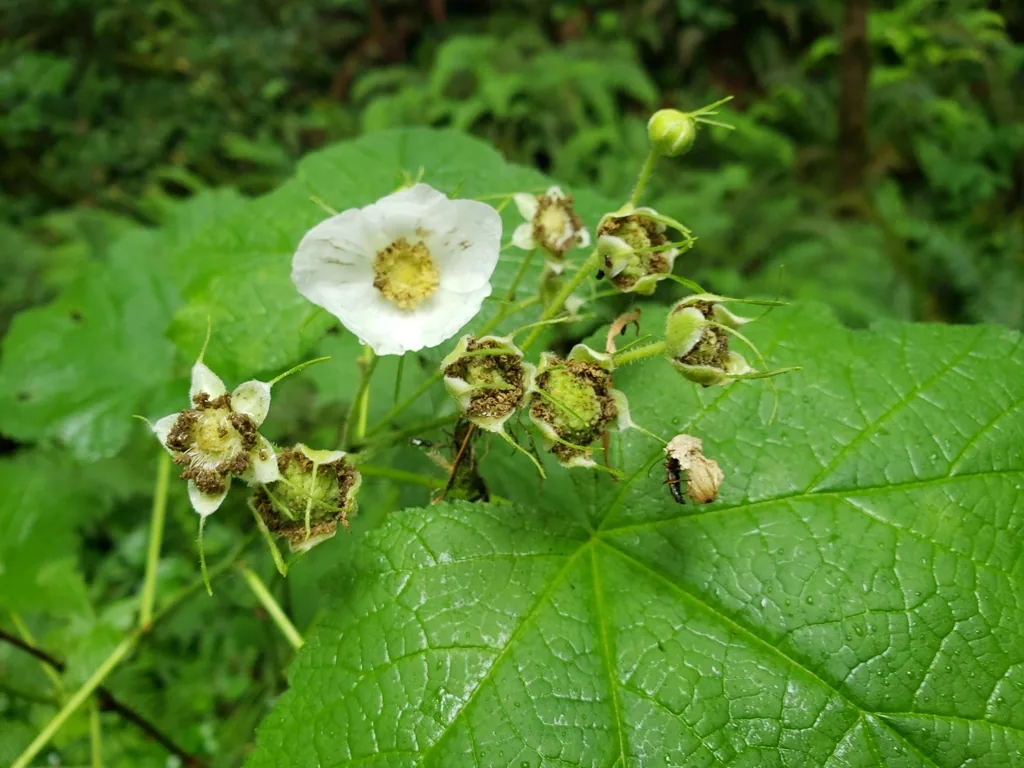
La frambuesa thimbleberry es un arbusto caducifolio denso, extendido y sin espinas, con hojas grandes y velludas, flores blancas y frutos rojos comestibles. [6] Se extiende por rizomas formando matorrales y resiste la poda anual intensa. [5][6] Es nativa desde Alaska hasta California y hasta el norte de México. [1]
Citado en inglés, como en la fuente.
Esta ficha está incompleta: las fuentes consultadas aún no cubren todos los campos.
Aún no cubierto por nuestras fuentes: Distancia de plantación
Cuidados
Riego
Condiciones de secas a húmedas; humedad adecuada del suelo en marga o marga arcillosa
Luz
Pleno sol, semisombra o sombra completa
Qué dicen las fuentes (2)
Light Requirements: Full Sun, Part Shade, Full Shade
Water Requirements: Dry, MoistEasily grown in a good well-drained loamy soil in sun or semi-shadeDónde cultivarla
No figura en las fuentes consultadas.
Propagación
Semilla (estratificada), esquejes de tallo, fragmentos de rizoma latente, acodo de punta, división
Cultivo
La planta
Familia
Rosáceas
Qué dicen las fuentes (1)
thimbleberry Rosaceae Rubus
parviflorus Nutt.
symbol: RUPA
Leaf: Simple, alternate, deciduous, largeAltura adulta
comúnmente hasta 183 cm (6 pies)
Qué dicen las fuentes (1)
Form: An erect, spindly shrub that commonly grows to 6 feet tall, often forms thickets.Problemas
Crecimiento vigoroso y extendido
Síntoma: Crece muy grande muy rápido y se extiende por estolones
Qué hacer: Resiste la poda anual intensa para mantenerla bajo control
Qué dicen las fuentes (1)
In favorable conditions, this shrub can grow very large very fast, and will try to spread by runners once established.
— Thimbleberry • East Multnomah Soil and Water Conservation District [6]
Remedios
Cada remedio indica qué dicen las fuentes oficiales; los remedios tradicionales sin fuente oficial aparecen marcados. Los perjudiciales están para que sepas evitarlos.
Cómo eliminarla
moras silvestres, incluida la mora de frambuesa
arrancando plantas jóvenes a mano Funciona
Pulling plants when the soil is dry and hard usually will break off the stems, leaving roots that will vigorously resprout.
— ipm.ucanr.edu [8] Cómo: Es más fácil eliminar las plantas a principios de primavera o a fines de otoño cuando el suelo está húmedo y las raíces pueden desprenderse.
Small infestations can be removed by hand-pulling or mechanical grubbing.
— ipm.ucanr.edu [8] Qué dicen las pruebas The most effective way to remove blackberries is by hand-pulling young plants when the soil is moist.
— ipm.ucanr.edu [8]
Calendario
Siembra
Las fuentes dan valores distintos según la región, la zona o las condiciones de cultivo.
Lo que dice cada fuente
Según University of Washington: Febrero
Según Useful Temperate Plants: Principios de otoño, en un marco frío
Qué dicen las fuentes (2)
Según University of Washington: Store damp in refrigerator over winter, sow in February-low
humidity for longer storage periods.Según Useful Temperate Plants: Seed - requires stratification, is best sown in early autumn in a cold frame.Plantación
Finales de primavera del año siguiente (plántulas de semilla); otoño (acodos de punta)
Lo que dice cada fuente
plántulas de semilla: Finales de primavera del año siguiente
acodos de punta: Otoño
Qué dicen las fuentes (4)
plántulas de semilla: Plant them out into their permanent positions in late spring of the following year.acodos de punta: Tip layering in July. Plant out in autumn.Plant them out into their permanent positions in late spring of the following year.Tip layering in July. Plant out in autumn.Cosecha
Brotes jóvenes: primavera, cuando emergen; semilla: finales de agosto, cuando el fruto está rojo brillante
Lo que dice cada fuente
brotes jóvenes: Primavera, cuando emergen
recolección de semillas: Finales de agosto
Qué dicen las fuentes (4)
brotes jóvenes: The shoots are harvested as they emerge in the spring, and whilst they are still young and tenderrecolección de semillas: Seed was collected late August when fruit bright red and easily pulled from hypantheum disk.The shoots are harvested as they emerge in the spring, and whilst they are still young and tenderSeed was collected late August when fruit bright red and easily pulled from hypantheum disk.Poda
Inmediatamente después de cosechar la fruta (retira las cañas que ya dieron fruto); a fines del invierno (retira las cañas dañadas por el invierno y aclara)
Lo que dice cada fuente
cañas que ya dieron fruto: Inmediatamente después de cosechar la fruta
cañas dañadas por el invierno, aclareo: Finales del invierno
Qué dicen las fuentes (4)
cañas que ya dieron fruto: (1) Remove canes that have fruited immediately after fruit is harvested, leaving the new vegetative (non-fruiting) canes to overwinter.cañas dañadas por el invierno, aclareo: (2) In late winter, remove any canes damaged by winter and thin the remaining canes as needed, leaving only healthy, well-spaced canes(1) Remove canes that have fruited immediately after fruit is harvested, leaving the new vegetative (non-fruiting) canes to overwinter.(2) In late winter, remove any canes damaged by winter and thin the remaining canes as needed, leaving only healthy, well-spaced canesMeses tal como los dan las fuentes, en su mayoría de Estados Unidos (hemisferio norte). En el hemisferio sur se desplazan unos seis meses.
Comestibilidad
Según la fuente, citada textualmente. No comas una planta basándote solo en esta página: los errores de identificación pueden ser peligrosos.
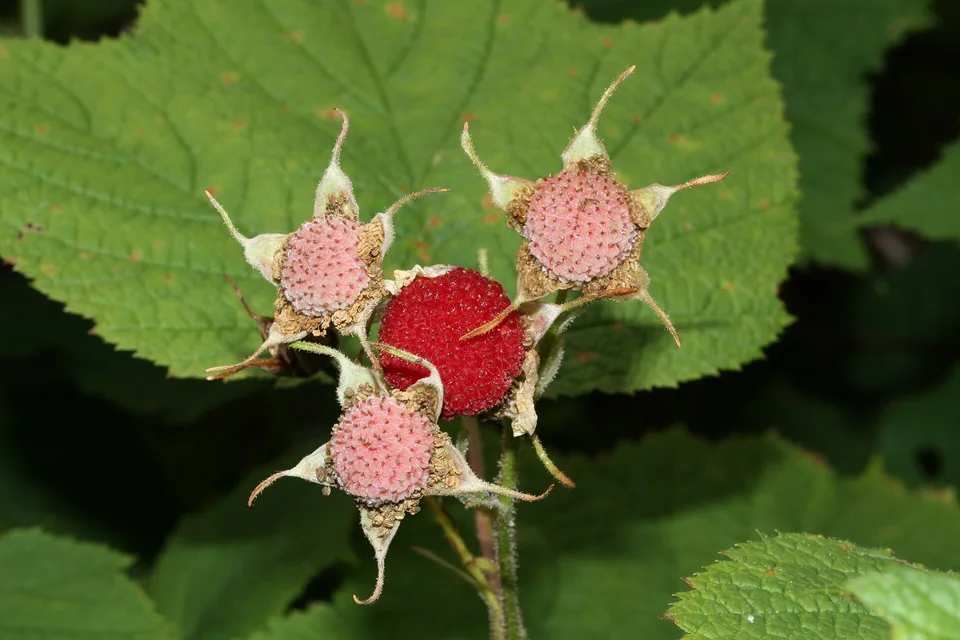
Red raspberries (aggregate of drupelets) in the shape of a flattened dome, sparse, long hairs; edible, but taste varies.
[3]These berries are tart and may be eaten raw, or cooked and made into jam or jelly and other food items such as pemmican or fruit leather.
[4]Young shoots - peeled and eaten cooked or raw
[5]
Valores orientativos
Valores de una fuente secundaria, no comprobados palabra por palabra como el resto de esta página. Úselos como punto de partida.
- Ciclo de vida
- PerenneValor orientativo, adáptalo a tu clima · Fuente secundaria
- Horas de sol
- 5-6 horasValor orientativo, adáptalo a tu clima · Fuente secundaria
- Resiste la sequía
- SíValor orientativo, adáptalo a tu clima · Fuente secundaria
- Suelo
- Arenoso FrancoValor orientativo, adáptalo a tu clima · Fuente secundaria
- pH del suelo
- 5.5-7.5Valor orientativo, adáptalo a tu clima · Fuente secundaria
- Zonas de rusticidad USDA
- 3-10 [mínima invernal de −40 a 4,4 °C (de −40 a 40 °F)]Valor orientativo, adáptalo a tu clima · Fuente secundaria
- Nivel de cuidado
- MedioValor orientativo, adáptalo a tu clima · Fuente secundaria
- Crecimiento
- ModeradoValor orientativo, adáptalo a tu clima · Fuente secundaria
- Plagas
- Agallas, insectos perforadores del tallo, resistente a plagas, resistente a enfermedadesValor orientativo, adáptalo a tu clima · Fuente secundaria
Plantas similares
- Blackberry Rubus allegheniensis
- Blackberry Rubus bifrons
- Blackberry Rubus canadensis
- Blackberry Rubus cuneifolius
- Blackberry Rubus laciniatus
- Blackberry Rubus pascuus
- Blackberry Rubus pensilvanicus
- Creeping Raspberry Rubus rolfei
Fuentes
Cada valor anterior se cita de estos documentos. Los enlaces llevan al editor original.
- Plant Data Sheet · depts.washington.edu, consultado
- Plant Propagation Protocol for Rubus parviflorus Nutt. · courses.washington.edu, consultado
- Virginia Tech Dendrology Fact Sheet · dendro.cnre.vt.edu, consultado
- Thimbleberry · fs.usda.gov, consultado
- Rubus parviflorus - Useful Temperate Plants · temperate.theferns.info, consultado
- Thimbleberry • East Multnomah Soil and Water Conservation District · emswcd.org, consultado
- Rubus parviflorus Nutt. | Plants of the World Online | Kew Science · powo.science.kew.org, consultado
- ipm.ucanr.edu · ipm.ucanr.edu
Escrito por Emilio Marruso · última revisión