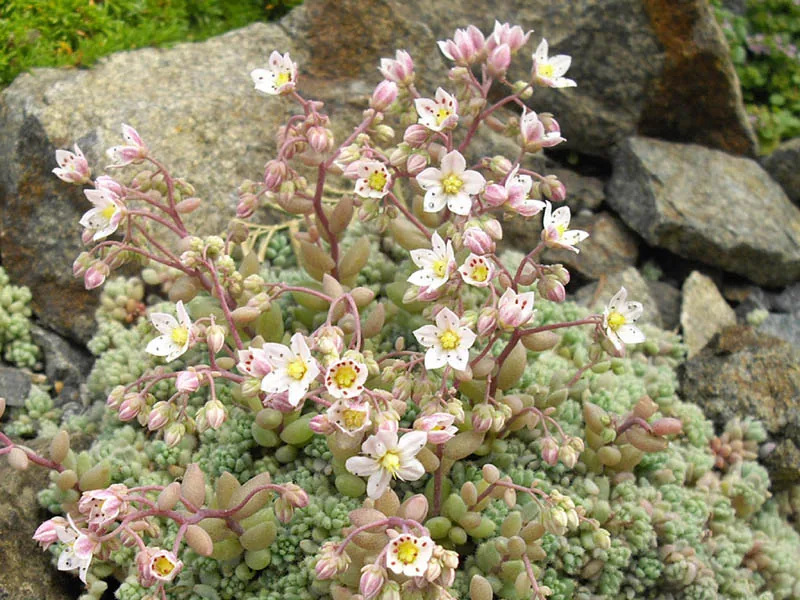

Cómo cultivar y cuidar Thick-leaf stonecrop
Sedum dasyphyllum
Escrito por Emilio Marruso · última revisión
Tóxica para: Animales, Personas · Por qué
De un vistazo
Esta pequeña planta perenne mide solo 2–15 cm de alto y adora el sol pleno, aunque tolera algo de sombra. Crece feliz en maceta e incluso en interior, y puedes sacar plantas nuevas de un simple esqueje de hoja o de tallo. No te pases con el riego, sobre todo en invierno: el exceso de agua la pudre.
- Sol
Sol pleno, al menos 6 horas al día; tolera algo de sombra
Qué dicen las fuentes (2)
Luz: Pleno sol (al menos seis horas diarias); tolera algo de sombra
Sedum dasyphyllum grows best in locations where it can enjoy the full sun for at least six hours daily, but it will tolerate some shade.
— Sedum dasyphyllum (Corsican Stonecrop) - World of Succulents [1] It need full sun to light shade and tolerates shade, but a sunny spot is nicest
— Sedum dasyphyllum [2] - Riego
No la riegues en exceso; en invierno, solo lo justo para que no se arrugue
Qué dicen las fuentes (2)
Notas sobre el riego: En invierno, riega solo lo justo para evitar que la planta se marchite
During the winter, water the plant just enough to keep it from shriveling.
— Sedum dasyphyllum (Corsican Stonecrop) - World of Succulents [1] During the winter months, plants are watered very little.
— Sedum dasyphyllum [2] - Suelo
Suelo con buen drenaje, para que no se pudra
- Plantación
Planta las plántulas en verano o a principios del verano siguiente
Qué dicen las fuentes (1)
Plantación: Plántulas: durante el verano, o a principios del verano del año siguiente
it is possible to plant them out during the summer, otherwise keep them in a cold-frame or greenhouse for their first winter and plant them out in early summer of the following year
— Sedum dasyphyllum - Useful Temperate Plants [3] - Poda
Poda a principios de primavera
Qué dicen las fuentes (1)
Poda: Principios de primavera
you can neaten it up in early spring by removing any dead, damaged or stretched-out stems.
— Grow a Miniature Mat of Chubby Succulents - Sedum dasyphyllum - Cactus & Succulents [4] - Plagas
Cochinilla algodonosa y pulgón; el exceso de agua trae podredumbre y hongos del suelo
- Tamaño
Solo 2–15 cm de alto
Qué dicen las fuentes (1)
Altura adulta: 2-15 cm [0,8–5,9 in]
Habit: Small perennial herbaceous plant developing in dense, succulent, tufted cushions, 2–15 cm tall.
— Sedum dasyphyllum L. – Giardino della Flora Appenninica [5] - Multiplicación
Por esquejes de hoja o de tallo, por división o por semilla
Qué dicen las fuentes (2)
Propagación: Esquejes de hoja o tallo; división; semilla
Sedum dasyphyllum can be propagated easily by taking leaf or stem cuttings during the growing season or by sowing seeds in spring or summer.
— Sedum dasyphyllum (Corsican Stonecrop) - World of Succulents [1] division of old plant can be made in spring and late summer; cuttings in summer.
— Sedum dasyphyllum [2] - Siembra
Siembra en primavera o en verano
Qué dicen las fuentes (2)
Siembra: Primavera o verano.
Según Plants For A Future (theferns.info): Seed - surface sow in spring in well-drained soil in a sunny position in a greenhouse.
— Sedum dasyphyllum - Useful Temperate Plants [3] Sedum dasyphyllum can be propagated easily by taking leaf or stem cuttings during the growing season or by sowing seeds in spring or summer.
— Sedum dasyphyllum (Corsican Stonecrop) - World of Succulents [1] - Maceta
Crece en maceta y también en interior
Qué dicen las fuentes (2)
En maceta: Sí
Sedum dasyphyllum is a cold-hardy ground cover that adds color and life to your outdoor space throughout the year. It is also easy to grow in containers.
— Sedum dasyphyllum (Corsican Stonecrop) - World of Succulents [1] En interior: Sí
Place the plant near a sunny window or use artificial lights when growing indoors.
— Sedum dasyphyllum (Corsican Stonecrop) - World of Succulents [1] - Seguridad
Puede ser algo tóxica para mascotas y niños; la savia puede irritar la piel
Resumen
Sedum dasyphyllum es una suculenta que forma matas, con tallos cortos y muy ramificados. [1] Crece mejor a pleno sol y no tolera el suelo encharcado. [1] Se propaga por esquejes de hoja o tallo, división o semilla. [1][2]
Citado en inglés, como en la fuente.
Esta ficha está incompleta: las fuentes consultadas aún no cubren todos los campos.
Aún no cubierto por nuestras fuentes: Rusticidad, zona más fría
Cuidados
Riego
Riego
Las fuentes no coinciden:
Water thoroughly once per week in spring through fall, allowing the soil to dry out completely between waterings.
[4]
Qué dicen las fuentes (2)
From spring through fall, water thoroughly and wait for the soil to dry out before watering again.During the growing season, the plants are watered and allowed to dry slightly before watering again.Notas sobre el riego
En invierno, riega solo lo justo para evitar que la planta se marchite
Luz
Pleno sol (al menos seis horas diarias); tolera algo de sombra
Qué dicen las fuentes (2)
Sedum dasyphyllum grows best in locations where it can enjoy the full sun for at least six hours daily, but it will tolerate some shade.It need full sun to light shade and tolerates shade, but a sunny spot is nicestClima y frío
Rusticidad, zona más fría
No figura en las fuentes consultadas.
Rusticidad, zona más cálida
9b [mínima invernal de −3,9 a −1,1 °C (de 25 a 30 °F)]
Qué dicen las fuentes (1)
USDA Plant Hardiness Zones 4a to 9b, with average minimum winter temperatures ranging from -30°F to 30°F (-34.4°C to -1.1°C).Dónde cultivarla
En interior
Sí
Qué dicen las fuentes (1)
Place the plant near a sunny window or use artificial lights when growing indoors.En maceta
Sí
Qué dicen las fuentes (1)
Sedum dasyphyllum is a cold-hardy ground cover that adds color and life to your outdoor space throughout the year. It is also easy to grow in containers.Propagación
Esquejes de hoja o tallo; división; semilla
Qué dicen las fuentes (2)
Sedum dasyphyllum can be propagated easily by taking leaf or stem cuttings during the growing season or by sowing seeds in spring or summer.division of old plant can be made in spring and late summer; cuttings in summer.Cultivo
La planta
Ciclo de vida
perenne
Qué dicen las fuentes (1)
Habit: Small perennial herbaceous plant developing in dense, succulent, tufted cushions, 2–15 cm tall.Altura adulta
2-15 cm [0,8–5,9 in]
Qué dicen las fuentes (1)
Habit: Small perennial herbaceous plant developing in dense, succulent, tufted cushions, 2–15 cm tall.Problemas
Podredumbre, hongo del suelo, cochinillas y pulgones
Síntoma: Riego excesivo que provoca pudrición, hongos en el suelo o plagas como cochinillas o pulgones
Qué hacer: Riego adecuado y suelo con buen drenaje; recorta las zonas blandas o empapadas si aparece pudrición; jabón insecticida o aceite de neem para las plagas
Qué dicen las fuentes (2)
Sedum dasyphyllum is quite resilient, but may experience issues with overwatering leading to rot, soil fungus or pests like mealybugs or aphids.
— Grow a Miniature Mat of Chubby Succulents - Sedum dasyphyllum - Cactus & Succulents [4] Check for any soggy or mushy patches and trim those away if rot occurs. Use insecticidal soap or neem oil for any pest infestations.
— Grow a Miniature Mat of Chubby Succulents - Sedum dasyphyllum - Cactus & Succulents [4]
Remedios
Cada remedio indica qué dicen las fuentes oficiales; los remedios tradicionales sin fuente oficial aparecen marcados. Los perjudiciales están para que sepas evitarlos.
Cuidar la planta
cochinillas harinosas y pulgones
jabón insecticida o aceite de neem No verificado
Remedio tradicional, no verificado por una fuente oficial.
Cómo: Usa jabón insecticida o aceite de neem para cualquier infestación de plagas.
pudrición de la raíz
recorta las zonas empapadas o blandas No verificado
Remedio tradicional, no verificado por una fuente oficial.
Cómo: Revisa si hay zonas empapadas o blandas y recorta esas partes si aparece podredumbre.
Venenosa para los animales
Según la fuente, citada textualmente. No es un consejo médico ni veterinario: si una persona o un animal pudo haber ingerido esta planta, contacta con un centro de toxicología o con un veterinario.
Animales
Sedum dasyphyllum is not listed as toxic for people, but it can be mildly toxic to pets and children.
[1]La fuente señala el riesgo para este animal pero no explica por qué.
Personas
Calendario
Siembra
Primavera o verano.
Lo que dice cada fuente
Según Plants For A Future (theferns.info): Primavera
Qué dicen las fuentes (2)
Según Plants For A Future (theferns.info): Seed - surface sow in spring in well-drained soil in a sunny position in a greenhouse.Sedum dasyphyllum can be propagated easily by taking leaf or stem cuttings during the growing season or by sowing seeds in spring or summer.Plantación
Plántulas: durante el verano, o a principios del verano del año siguiente
Qué dicen las fuentes (1)
it is possible to plant them out during the summer, otherwise keep them in a cold-frame or greenhouse for their first winter and plant them out in early summer of the following yearPoda
Principios de primavera
Qué dicen las fuentes (1)
you can neaten it up in early spring by removing any dead, damaged or stretched-out stems.Meses tal como los dan las fuentes, en su mayoría de Estados Unidos (hemisferio norte). En el hemisferio sur se desplazan unos seis meses.
Plantas similares
- Carpet Sedum Sedum lineare
- Pampajarito Sedum acre
- Uña de gato Sedum album
- Stonecrop Sedum ternatum
- Stringy Stonecrop Sedum sarmentosum
- Broadleaf stonecrop Sedum spathulifolium
- Sedum caeruleum Sedum caeruleum
- Sedum palmeri Sedum palmeri
Fuentes
Cada valor anterior se cita de estos documentos. Los enlaces llevan al editor original.
- Sedum dasyphyllum (Corsican Stonecrop) - World of Succulents · worldofsucculents.com, consultado
- Sedum dasyphyllum · llifle.com, consultado
- Sedum dasyphyllum - Useful Temperate Plants · temperate.theferns.info, consultado
- Grow a Miniature Mat of Chubby Succulents - Sedum dasyphyllum - Cactus & Succulents · cactus-succulents.com, consultado
- Sedum dasyphyllum L. – Giardino della Flora Appenninica · giardinocapracotta.unimol.it, consultado
Escrito por Emilio Marruso · última revisión