
How to Grow and Care for Thick-leaf stonecrop
Sedum dasyphyllum
Written by Emilio Marruso · last checked
Toxic to: Animals, People · Why
At a glance
This tiny perennial stays just 1–6 inches tall and loves full sun, though it puts up with some shade. It grows happily in containers and even indoors, and you can start new plants from a single leaf or stem cutting. Go easy on the water, especially in winter: too much leads to rot.
- Sun
Full sun, at least 6 hours a day; tolerates some shade
What the sources say (2)
Light: Full sun (at least six hours daily); tolerates some shade
Sedum dasyphyllum grows best in locations where it can enjoy the full sun for at least six hours daily, but it will tolerate some shade.
— Sedum dasyphyllum (Corsican Stonecrop) - World of Succulents [1] It need full sun to light shade and tolerates shade, but a sunny spot is nicest
— Sedum dasyphyllum [2] - Water
Don't overwater; in winter give just enough to keep it from shriveling
What the sources say (2)
Watering notes: In winter water only just enough to keep the plant from shriveling
During the winter, water the plant just enough to keep it from shriveling.
— Sedum dasyphyllum (Corsican Stonecrop) - World of Succulents [1] During the winter months, plants are watered very little.
— Sedum dasyphyllum [2] - Soil
Well-draining soil, so the plant doesn't rot
- Planting
Plant out seedlings in summer, or in early summer of the next year
What the sources say (1)
Planting: Seedlings: during the summer, or early summer of the following year
it is possible to plant them out during the summer, otherwise keep them in a cold-frame or greenhouse for their first winter and plant them out in early summer of the following year
— Sedum dasyphyllum - Useful Temperate Plants [3] - Pruning
Prune in early spring
What the sources say (1)
Pruning: Early spring
you can neaten it up in early spring by removing any dead, damaged or stretched-out stems.
— Grow a Miniature Mat of Chubby Succulents - Sedum dasyphyllum - Cactus & Succulents [4] - Pests
Mealybugs and aphids; too much water brings rot and soil fungus
- Size
Just 1–6 inches tall
What the sources say (1)
Mature height: 2-15 cm [0.8–5.9 in]
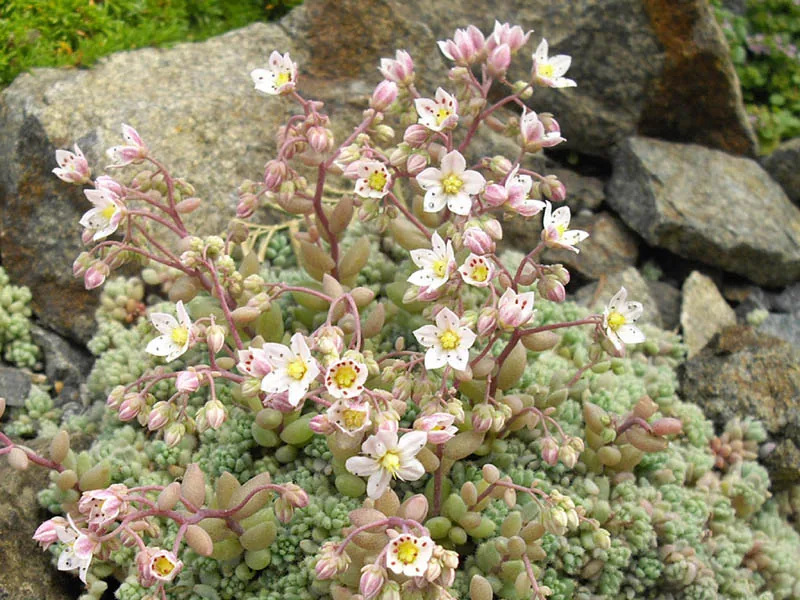
Habit: Small perennial herbaceous plant developing in dense, succulent, tufted cushions, 2–15 cm tall.
— Sedum dasyphyllum L. – Giardino della Flora Appenninica [5] - Propagation
From leaf or stem cuttings, by division or from seed
What the sources say (2)
Propagation: Leaf or stem cuttings; division; seed
Sedum dasyphyllum can be propagated easily by taking leaf or stem cuttings during the growing season or by sowing seeds in spring or summer.
— Sedum dasyphyllum (Corsican Stonecrop) - World of Succulents [1] division of old plant can be made in spring and late summer; cuttings in summer.
— Sedum dasyphyllum [2] - Sowing
Sow in spring or summer
What the sources say (2)
Sowing: Spring or summer
According to Plants For A Future (theferns.info): Seed - surface sow in spring in well-drained soil in a sunny position in a greenhouse.
— Sedum dasyphyllum - Useful Temperate Plants [3] Sedum dasyphyllum can be propagated easily by taking leaf or stem cuttings during the growing season or by sowing seeds in spring or summer.
— Sedum dasyphyllum (Corsican Stonecrop) - World of Succulents [1] - Containers
Grows in containers and indoors too
What the sources say (2)
In containers: Yes
Sedum dasyphyllum is a cold-hardy ground cover that adds color and life to your outdoor space throughout the year. It is also easy to grow in containers.
— Sedum dasyphyllum (Corsican Stonecrop) - World of Succulents [1] Indoors: Yes
Place the plant near a sunny window or use artificial lights when growing indoors.
— Sedum dasyphyllum (Corsican Stonecrop) - World of Succulents [1] - Safety
Can be mildly toxic to pets and children; the sap can irritate skin
Overview
Sedum dasyphyllum is a mat-forming succulent with short, highly branched stems. [1] It grows best in full sun and does not tolerate waterlogged soil. [1] It is propagated by leaf or stem cuttings, division or seed. [1][2]
This record is incomplete: the sources we read do not cover every field yet.
Not yet covered by our sources: Hardiness, coldest zone
Thick-leaf stonecrop care
How to water Thick-leaf stonecrop
Watering
The sources disagree:
Water thoroughly once per week in spring through fall, allowing the soil to dry out completely between waterings.
[4]
What the sources say (2)
From spring through fall, water thoroughly and wait for the soil to dry out before watering again.During the growing season, the plants are watered and allowed to dry slightly before watering again.Watering notes
In winter water only just enough to keep the plant from shriveling
How much light Thick-leaf stonecrop needs
Full sun (at least six hours daily); tolerates some shade
What the sources say (2)
Sedum dasyphyllum grows best in locations where it can enjoy the full sun for at least six hours daily, but it will tolerate some shade.It need full sun to light shade and tolerates shade, but a sunny spot is nicestHow much cold Thick-leaf stonecrop can take
Hardiness, coldest zone
Not stated in the sources we read.
Hardiness, warmest zone
9b [winter low −3.9 to −1.1 °C (25 to 30 °F)]
What the sources say (1)
USDA Plant Hardiness Zones 4a to 9b, with average minimum winter temperatures ranging from -30°F to 30°F (-34.4°C to -1.1°C).Where to grow Thick-leaf stonecrop
Indoors
Yes
What the sources say (1)
Place the plant near a sunny window or use artificial lights when growing indoors.In containers
Yes
What the sources say (1)
Sedum dasyphyllum is a cold-hardy ground cover that adds color and life to your outdoor space throughout the year. It is also easy to grow in containers.How to propagate Thick-leaf stonecrop
Leaf or stem cuttings; division; seed
What the sources say (2)
Sedum dasyphyllum can be propagated easily by taking leaf or stem cuttings during the growing season or by sowing seeds in spring or summer.division of old plant can be made in spring and late summer; cuttings in summer.How to grow Thick-leaf stonecrop
The plant
Life cycle
perennial
What the sources say (1)
Habit: Small perennial herbaceous plant developing in dense, succulent, tufted cushions, 2–15 cm tall.Mature height
2-15 cm [0.8–5.9 in]
What the sources say (1)
Habit: Small perennial herbaceous plant developing in dense, succulent, tufted cushions, 2–15 cm tall.Thick-leaf stonecrop pests and problems
Rot, soil fungus, mealybugs and aphids
Symptom: Overwatering leading to rot, soil fungus, or pests such as mealybugs or aphids
What to do: Proper watering and well-draining soil; trim soggy or mushy patches away if rot occurs; insecticidal soap or neem oil for pests
What the sources say (2)
Sedum dasyphyllum is quite resilient, but may experience issues with overwatering leading to rot, soil fungus or pests like mealybugs or aphids.
— Grow a Miniature Mat of Chubby Succulents - Sedum dasyphyllum - Cactus & Succulents [4] Check for any soggy or mushy patches and trim those away if rot occurs. Use insecticidal soap or neem oil for any pest infestations.
— Grow a Miniature Mat of Chubby Succulents - Sedum dasyphyllum - Cactus & Succulents [4]
Remedies
Each remedy shows what official sources say about it; traditional remedies without an official source are marked as such. Harmful ones are listed so you know to avoid them.
Treating the plant
mealybugs and aphids
insecticidal soap or neem oil Not verified
Traditional remedy, not verified by an official source.
How: Use insecticidal soap or neem oil for any pest infestations.
root rot
trim away soggy or mushy patches Not verified
Traditional remedy, not verified by an official source.
How: Check for any soggy or mushy patches and trim those away if rot occurs.
Is Thick-leaf stonecrop toxic to pets?
Reported by the source, quoted verbatim. This is not medical or veterinary advice: if a person or an animal may have eaten this plant, contact a poison control centre or a veterinarian.
Animals
Sedum dasyphyllum is not listed as toxic for people, but it can be mildly toxic to pets and children.
[1]The source flags the risk for this animal but does not explain why.
People
Calendar
Sowing
Spring or summer
What each source says
According to Plants For A Future (theferns.info): Spring
What the sources say (2)
According to Plants For A Future (theferns.info): Seed - surface sow in spring in well-drained soil in a sunny position in a greenhouse.Sedum dasyphyllum can be propagated easily by taking leaf or stem cuttings during the growing season or by sowing seeds in spring or summer.Planting
Seedlings: during the summer, or early summer of the following year
What the sources say (1)
it is possible to plant them out during the summer, otherwise keep them in a cold-frame or greenhouse for their first winter and plant them out in early summer of the following yearPruning
Early spring
What the sources say (1)
you can neaten it up in early spring by removing any dead, damaged or stretched-out stems.Months as given by the sources, which are mostly from the United States (northern hemisphere). In the southern hemisphere they shift by about six months.
Similar plants
- Carpet Sedum Sedum lineare
- Moss Stonecrop Sedum acre
- Stonecrop Sedum album
- Stonecrop Sedum ternatum
- Stringy Stonecrop Sedum sarmentosum
- Broadleaf stonecrop Sedum spathulifolium
- Sedum caeruleum Sedum caeruleum
- Sedum palmeri Sedum palmeri
Sources
Every value above is quoted from these documents. Links lead to the original publisher.
- Sedum dasyphyllum (Corsican Stonecrop) - World of Succulents · worldofsucculents.com, consulted
- Sedum dasyphyllum · llifle.com, consulted
- Sedum dasyphyllum - Useful Temperate Plants · temperate.theferns.info, consulted
- Grow a Miniature Mat of Chubby Succulents - Sedum dasyphyllum - Cactus & Succulents · cactus-succulents.com, consulted
- Sedum dasyphyllum L. – Giardino della Flora Appenninica · giardinocapracotta.unimol.it, consulted
Written by Emilio Marruso · last checked