
How to Grow and Care for Stringy Stonecrop
Sedum sarmentosum
Written by Emilio Marruso · last checked
At a glance
This easy perennial grows in full sun to partial shade, and its stems root so readily that a single cutting soon spreads into a green carpet. Once settled, it shrugs off drought, as long as the soil drains well. As a bonus, its young leaves and stems are edible, raw or cooked, just like a fresh vegetable.
- Sun
Full sun to partial shade
What the sources say (2)
Light: Full sun to partial shade
Plant in the full sun, some partial shade is tolerated but too much shade and the plant will struggle.
— Sedum sarmentosum (Gold Moss, Gold Moss Sedum, Gold Moss Stonecrop, Graveyard Moss, Star Sedum, Stringy Stonecrop, Trailing Stonecrop) | North Carolina Extension Gardener Plant Toolbox [1] Plant stringy sedum groundcover in full sun or partial shade, as long as the plant receives at least six hours of sunlight per day.
— Is Stringy Stonecrop Invasive – Growing Spreading Stringy Stonecrop Plants | Gardening Know How [5] - Water
Keep moist the first few weeks; then water regularly, letting the soil dry out between waterings
What the sources say (4)
Watering notes: Keep the soil moist for a few weeks until established; it rots in soggy soil, so drainage is essential
Keep the soil moist for a few weeks, or until stringy stonecrop is established.
— Is Stringy Stonecrop Invasive – Growing Spreading Stringy Stonecrop Plants | Gardening Know How [5] Like most succulents , it doesn’t like wet feet and is likely to rot in soggy soil.
— Is Stringy Stonecrop Invasive – Growing Spreading Stringy Stonecrop Plants | Gardening Know How [5] Water moderately until established, then quite drought tolerant.
— Carpet Sedum – Port St. Lucie Botanical Gardens [6] Drought: Drought tolerant once established, but needs regular watering; let the soil dry out between waterings.
They are drought tolerant once established but do need regular watering, just be sure to let the soil dry out between waterings.
— Sedum sarmentosum (Gold Moss, Gold Moss Sedum, Gold Moss Stonecrop, Graveyard Moss, Star Sedum, Stringy Stonecrop, Trailing Stonecrop) | North Carolina Extension Gardener Plant Toolbox [1] - Soil
Soil must drain well: it rots in soggy ground, so mix in sand or grit
What the sources say (3)
Watering notes: Keep the soil moist for a few weeks until established; it rots in soggy soil, so drainage is essential
Keep the soil moist for a few weeks, or until stringy stonecrop is established.
— Is Stringy Stonecrop Invasive – Growing Spreading Stringy Stonecrop Plants | Gardening Know How [5] Like most succulents , it doesn’t like wet feet and is likely to rot in soggy soil.
— Is Stringy Stonecrop Invasive – Growing Spreading Stringy Stonecrop Plants | Gardening Know How [5] Water moderately until established, then quite drought tolerant.
— Carpet Sedum – Port St. Lucie Botanical Gardens [6] - Spacing
8 in between plants
What the sources say (1)
Spacing: 20.3 cm (8 in)
Plant preferably in spring about 8 inches apart in full to part sun.
— Carpet Sedum – Port St. Lucie Botanical Gardens [6] - Planting
Plant in spring
What the sources say (1)
Planting: Spring
Plant preferably in spring about 8 inches apart in full to part sun.
— Carpet Sedum – Port St. Lucie Botanical Gardens [6] - Pruning
Trim it back to keep it from running over nearby plants
- Harvest
Young leaves and stems are edible, raw or cooked like a vegetable
- Watch out
Spreads very fast and can take over other plants; its shallow roots pull up easily
- Propagation
Very easy from stem cuttings; leaf cuttings, seed and division work too
What the sources say (4)
Propagation: Stem cuttings, leaf cuttings, seed, division
The branches take root at the nodes so it is very easy to propagate by stem cuttings. They also propagate by leaf cutting or seed.
— Sedum sarmentosum (Gold Moss, Gold Moss Sedum, Gold Moss Stonecrop, Graveyard Moss, Star Sedum, Stringy Stonecrop, Trailing Stonecrop) | North Carolina Extension Gardener Plant Toolbox [1] Prefers well-drained soils. Easily propagated by stem cuttings, leaf cuttings and divisions.
— NParks | Sedum sarmentosum [3] Cuttings: Stems root at the nodes, so it is very easy to propagate by stem cuttings; leaf cuttings also work.
The branches take root at the nodes so it is very easy to propagate by stem cuttings.
— Sedum sarmentosum (Gold Moss, Gold Moss Sedum, Gold Moss Stonecrop, Graveyard Moss, Star Sedum, Stringy Stonecrop, Trailing Stonecrop) | North Carolina Extension Gardener Plant Toolbox [1] They also propagate by leaf cutting or seed.
— Sedum sarmentosum (Gold Moss, Gold Moss Sedum, Gold Moss Stonecrop, Graveyard Moss, Star Sedum, Stringy Stonecrop, Trailing Stonecrop) | North Carolina Extension Gardener Plant Toolbox [1] - Sowing
Sow in spring in a greenhouse, on top of the soil without covering
What the sources say (1)
Sowing: Spring (surface sow in a greenhouse)
Seed - surface sow in spring in well-drained soil in a sunny position in a greenhouse.
— Sedum sarmentosum - Useful Temperate Plants [4] - Containers
Grows in containers too
What the sources say (2)
In containers: Yes
It also does well in containers with a cactus or succulent potting soil.
— Sedum sarmentosum (Gold Moss, Gold Moss Sedum, Gold Moss Stonecrop, Graveyard Moss, Star Sedum, Stringy Stonecrop, Trailing Stonecrop) | North Carolina Extension Gardener Plant Toolbox [1] Suitable for containers with good drainage. Root network is shallow, so a deep pot is not required.
— Carpet Sedum – Port St. Lucie Botanical Gardens [6]
Overview
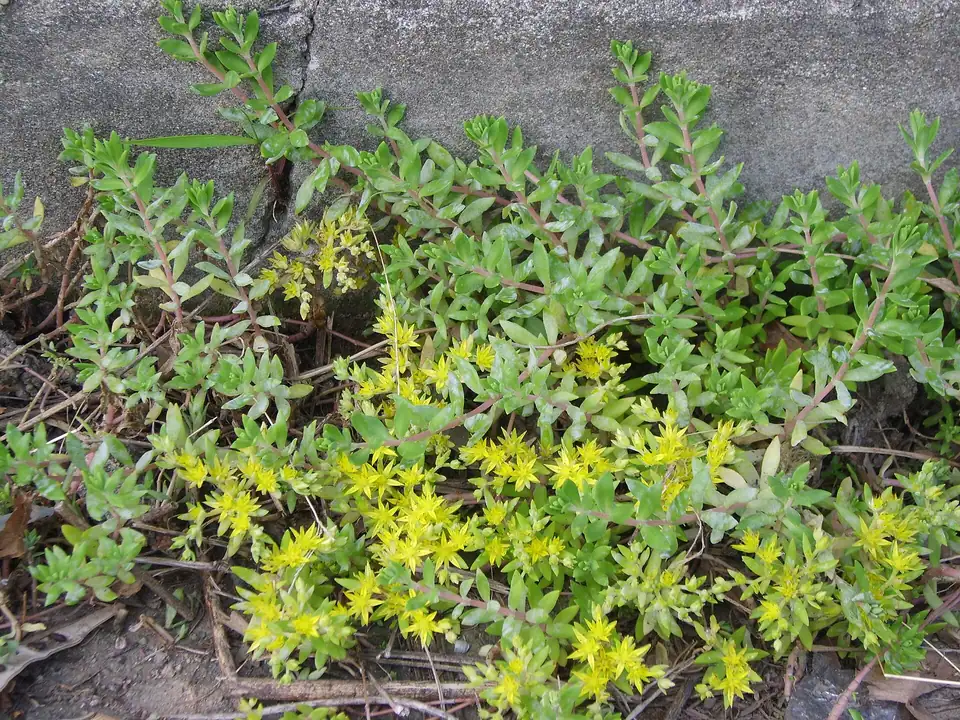
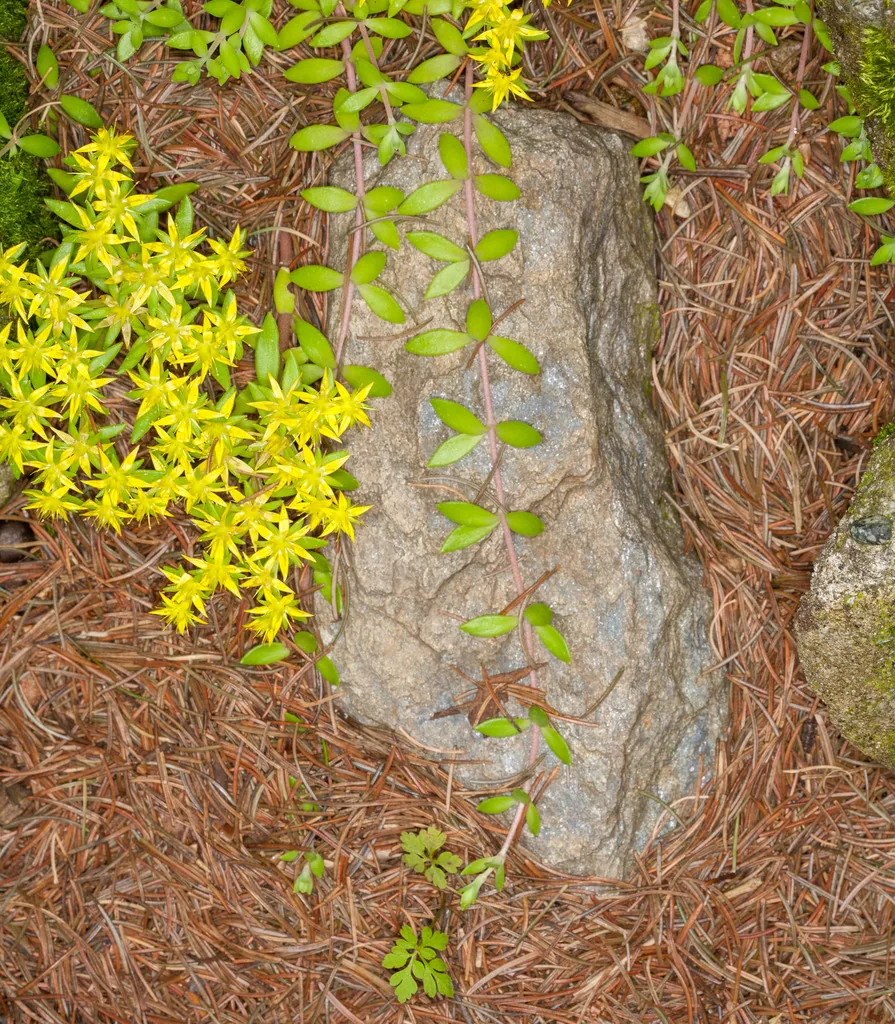
Sedum sarmentosum is a mat-forming succulent perennial groundcover with yellow-green leaves and stems that root at the nodes. [1] It needs well-drained, sandy or rocky soil and is drought tolerant once established. [1] It spreads quickly and can overtake neighbouring plants; its young leaves and stems are eaten as a vegetable in East Asia. [1][4]
This record is incomplete: the sources we read do not cover every field yet.
Not yet covered by our sources: Pruning
Stringy Stonecrop care
How to water Stringy Stonecrop
Watering
The sources give different values depending on region, zone or growing conditions.
What each source says
According to NC State Extension: Regular watering, letting the soil dry out between waterings
According to Gardening Know How: Occasional irrigation during hot, dry weather
What the sources say (3)
According to NC State Extension: They are drought tolerant once established but do need regular watering, just be sure to let the soil dry out between waterings.According to Gardening Know How: Thereafter, this groundcover is drought-tolerant, but benefits from occasional irrigation during hot, dry weather.They are drought tolerant once established but do need regular watering, just be sure to let the soil dry out between waterings.Watering notes
Keep the soil moist for a few weeks until established; it rots in soggy soil, so drainage is essential
What the sources say (3)
Keep the soil moist for a few weeks, or until stringy stonecrop is established.Like most succulents , it doesn’t like wet feet and is likely to rot in soggy soil.Water moderately until established, then quite drought tolerant.How much light Stringy Stonecrop needs
Full sun to partial shade
What the sources say (2)
Plant in the full sun, some partial shade is tolerated but too much shade and the plant will struggle.Plant stringy sedum groundcover in full sun or partial shade, as long as the plant receives at least six hours of sunlight per day.How much cold Stringy Stonecrop can take
Hardiness, coldest zone
The sources give different values depending on region, zone or growing conditions.
What each source says
According to NC State Extension: 3a [winter low −40 to −37.2 °C (−40 to −35 °F)]
According to Gardening Know How: 4 [winter low −34.4 to −28.9 °C (−30 to −20 °F)]
According to Port St. Lucie Botanical Gardens: 3 [winter low −40 to −34.4 °C (−40 to −30 °F)]
What the sources say (3)
According to NC State Extension: USDA Plant Hardiness Zone:
3a, 3b, 4a, 4b, 5a, 5b, 6a, 6b, 7a, 7b, 8a, 8b, 9a, 9bAccording to Gardening Know How: Stingy stonecrop is suitable for growing in USDA plant hardiness zones 4 through 9 .According to Port St. Lucie Botanical Gardens: Zone: USDA 3-9
- Light Needs: Full sun- part shade.Hardiness, warmest zone
9b [winter low −3.9 to −1.1 °C (25 to 30 °F)]
What each source says
According to NC State Extension: 9b [winter low −3.9 to −1.1 °C (25 to 30 °F)]
According to Gardening Know How: 9 [winter low −6.7 to −1.1 °C (20 to 30 °F)]
According to Port St. Lucie Botanical Gardens: 9 [winter low −6.7 to −1.1 °C (20 to 30 °F)]
What the sources say (4)
According to NC State Extension: USDA Plant Hardiness Zone:
3a, 3b, 4a, 4b, 5a, 5b, 6a, 6b, 7a, 7b, 8a, 8b, 9a, 9bAccording to Gardening Know How: Stingy stonecrop is suitable for growing in USDA plant hardiness zones 4 through 9 .According to Port St. Lucie Botanical Gardens: Zone: USDA 3-9
- Light Needs: Full sun- part shade.USDA Plant Hardiness Zone:
3a, 3b, 4a, 4b, 5a, 5b, 6a, 6b, 7a, 7b, 8a, 8b, 9a, 9bWhere to grow Stringy Stonecrop
In containers
Yes
What the sources say (2)
It also does well in containers with a cactus or succulent potting soil.Suitable for containers with good drainage. Root network is shallow, so a deep pot is not required.Spacing
20.3 cm (8 in)
What the sources say (1)
Plant preferably in spring about 8 inches apart in full to part sun.How to propagate Stringy Stonecrop
Stem cuttings, leaf cuttings, seed, division
What the sources say (2)
The branches take root at the nodes so it is very easy to propagate by stem cuttings. They also propagate by leaf cutting or seed.Prefers well-drained soils. Easily propagated by stem cuttings, leaf cuttings and divisions.How to grow Stringy Stonecrop
The plant
Life cycle
perennial
What the sources say (1)
Stringy Stonecrop is a mat-forming perennial groundcover that has creeping bright yellow-green leaves with branches reaching a width of about 10 inches.Family
Crassulaceae
What the sources say (1)
Genus: Sedum Species: sarmentosum Family: Crassulaceae Life Cycle: PerennialMature height
Propagation
Cuttings
Stems root at the nodes, so it is very easy to propagate by stem cuttings; leaf cuttings also work.
What the sources say (2)
The branches take root at the nodes so it is very easy to propagate by stem cuttings.They also propagate by leaf cutting or seed.Heat and drought
Drought
Drought tolerant once established, but needs regular watering; let the soil dry out between waterings.
What the sources say (1)
They are drought tolerant once established but do need regular watering, just be sure to let the soil dry out between waterings.Stringy Stonecrop pests and problems
Aggressive spread
Symptom: Spreads very quickly and may overtake surrounding plants
What to do: Prune to keep it from running over nearby plants; it roots shallowly and is easy to pull up
What the sources say (2)
Easily propagated by stem cuttings, leaf cuttings and divisions. Prune to prevent plant from running over other nearby plants.
— NParks | Sedum sarmentosum [3] It roots shallowly so it is easy to pull it up where you do not want it to grow.
— Sedum sarmentosum (Gold Moss, Gold Moss Sedum, Gold Moss Stonecrop, Graveyard Moss, Star Sedum, Stringy Stonecrop, Trailing Stonecrop) | North Carolina Extension Gardener Plant Toolbox [1] Rot in wet soil
Symptom: Rots in soggy soil
What to do: Dig in sand or grit to improve drainage
What the sources say (1)
Like most succulents , it doesn’t like wet feet and is likely to rot in soggy soil. Dig in a generous amount of sand or grit to improve drainage.
— Is Stringy Stonecrop Invasive – Growing Spreading Stringy Stonecrop Plants | Gardening Know How [5]
Remedies
Each remedy shows what official sources say about it; traditional remedies without an official source are marked as such. Harmful ones are listed so you know to avoid them.
Treating the plant
rot
sand or grit dug into the soil Not verified
Traditional remedy, not verified by an official source.
How: It is likely to rot in soggy soil: dig in a generous amount of sand or grit to improve drainage.
Getting rid of it
aggressive spread
pull up by hand Works
How: It roots shallowly, so it is easy to pull it up where it is not wanted.
This plant can grow quite quickly and overpower young seedlings of other plants so be careful where you plant it. It roots shallowly so it is easy to pull it up where you do not want it to grow.
— Sedum sarmentosum (Gold Moss, Gold Moss Sedum, Gold Moss Stonecrop, Graveyard Moss, Star Sedum, Stringy Stonecrop, Trailing Stonecrop) | North Carolina Extension Gardener Plant Toolbox [1] What the evidence says It roots shallowly so it is easy to pull it up where you do not want it to grow.
— Sedum sarmentosum (Gold Moss, Gold Moss Sedum, Gold Moss Stonecrop, Graveyard Moss, Star Sedum, Stringy Stonecrop, Trailing Stonecrop) | North Carolina Extension Gardener Plant Toolbox [1]
Calendar
Sowing
Spring (surface sow in a greenhouse)
What the sources say (1)
Seed - surface sow in spring in well-drained soil in a sunny position in a greenhouse.Planting
Spring
What the sources say (1)
Plant preferably in spring about 8 inches apart in full to part sun.Pruning
Not stated in the sources we read.
Months as given by the sources, which are mostly from the United States (northern hemisphere). In the southern hemisphere they shift by about six months.
Edibility
Reported by the source, quoted verbatim. Do not eat a plant on the basis of this page alone: identification mistakes can be dangerous.
Similar plants
- Carpet Sedum Sedum lineare
- Moss Stonecrop Sedum acre
- Stonecrop Sedum album
- Stonecrop Sedum ternatum
- Thick-leaf stonecrop Sedum dasyphyllum
- Broadleaf stonecrop Sedum spathulifolium
- Sedum caeruleum Sedum caeruleum
- Sedum palmeri Sedum palmeri
Sources
Every value above is quoted from these documents. Links lead to the original publisher.
- Sedum sarmentosum (Gold Moss, Gold Moss Sedum, Gold Moss Stonecrop, Graveyard Moss, Star Sedum, Stringy Stonecrop, Trailing Stonecrop) | North Carolina Extension Gardener Plant Toolbox · plants.ces.ncsu.edu, consulted
- Sedum sarmentosum Bunge · infoflora.ch, consulted
- NParks | Sedum sarmentosum · nparks.gov.sg, consulted
- Sedum sarmentosum - Useful Temperate Plants · temperate.theferns.info, consulted
- Is Stringy Stonecrop Invasive – Growing Spreading Stringy Stonecrop Plants | Gardening Know How · gardeningknowhow.com, consulted
- Carpet Sedum – Port St. Lucie Botanical Gardens · pslbg.org, consulted
Written by Emilio Marruso · last checked