
How to Grow and Care for Broadleaf stonecrop
Sedum spathulifolium
Written by Emilio Marruso · last checked
Toxic to: People · Why
At a glance
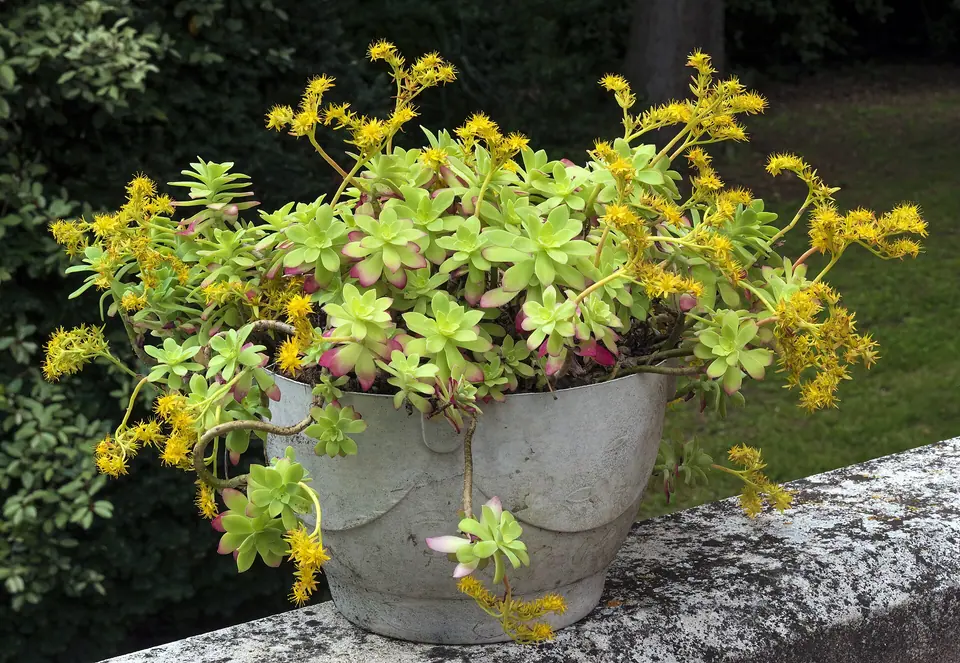
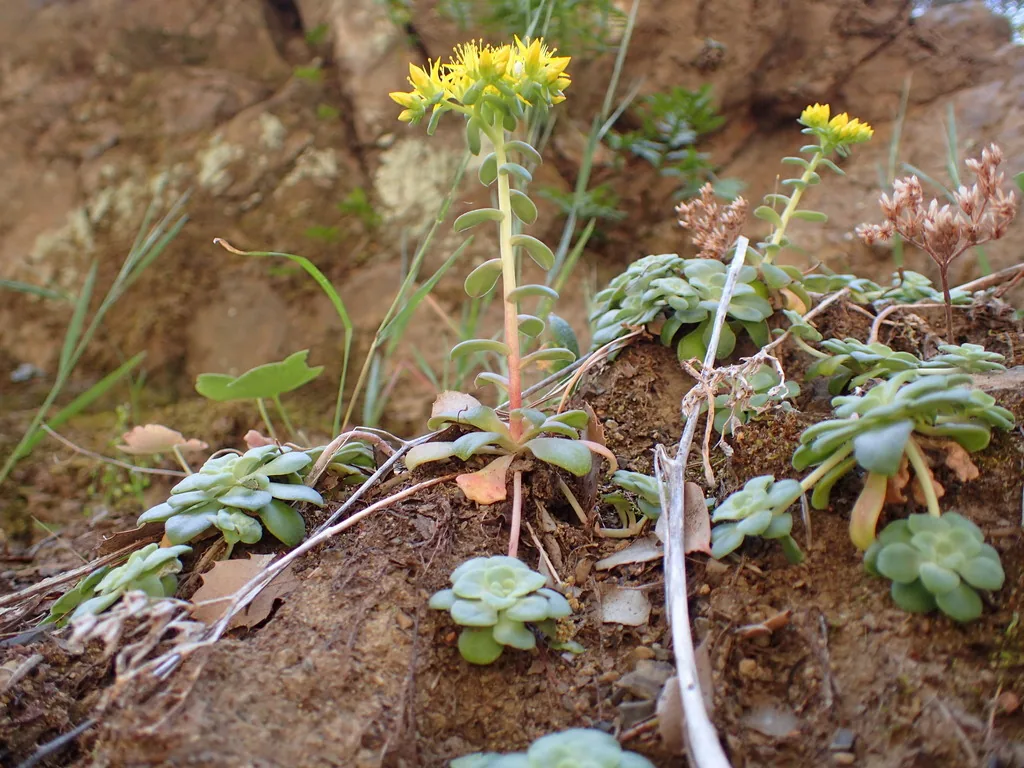
This easygoing sedum loves a sunny spot and is happy where other plants go thirsty, since it suits sites that get too little water. Making more is child's play: push a stem cutting into the ground, and the stems even root on their own wherever they touch the soil. It's a cheerful, low-fuss choice for dry, sunny corners.
- Sun
Give it a sunny spot
What the sources say (1)
Light: Sunny position
but prefers a fertile well-drained soil in a sunny position
— Sedum spathulifolium - Useful Temperate Plants [1] - Water
Needs little water: fine in spots that stay dry
What the sources say (1)
Watering: Suited to sites that receive too little water
They are ideal for that part of your yard that receives too much sun or too little water to support the growth of other plants.
— Sedum spathulifolium (Broadleaf Stonecrop) - World of Succulents [5] - Cold
Survives winters down to −40 °F (−40 °C)
Very hardy · USDA 3a · RHS H7 · Z3
What the sources say (2)
Hardiness, coldest zone: 3a [winter low −40 to −37.2 °C (−40 to −35 °F)]
Hardiness: USDA hardiness zone 3a to 9b: from -40°F (-40°C) to 30°F (1.1°C).
— Sedum spathulifolium (Broadleaf Stonecrop) - World of Succulents [5] Hardiness, warmest zone: 9b [winter low −3.9 to −1.1 °C (25 to 30 °F)]
Hardiness: USDA hardiness zone 3a to 9b: from -40°F (-40°C) to 30°F (1.1°C).
— Sedum spathulifolium (Broadleaf Stonecrop) - World of Succulents [5] - Harvest
Gathered from the wild as food in some places, but eating a lot can upset the stomach
- Propagation
Push a stem cutting into the ground; stems root wherever they touch the soil
What the sources say (2)
Propagation: Stem cuttings pushed into the ground; stems root where they touch the soil
You can break off one of the stems for taller varieties and push it into the ground where you want to grow it.
— Sedum spathulifolium (Broadleaf Stonecrop) - World of Succulents [5] The plant will send out roots from wherever the stem touches the ground and the root itself.
— Sedum spathulifolium (Broadleaf Stonecrop) - World of Succulents [5] - Safety
Eaten in large amounts, it can cause an upset stomach
Overview
Broadleaf stonecrop is an evergreen, mat-forming perennial up to 5 cm [2 in] tall, native to western North America. [1] It prefers well-drained soil in a sunny position and can be grown as an ornamental ground cover. [1]
This record is incomplete: the sources we read do not cover every field yet.
Not yet covered by our sources: Pruning
Broadleaf stonecrop care
Measurements in square brackets are our conversion into the other unit system; the quoted text is unchanged.
How to water Broadleaf stonecrop
Suited to sites that receive too little water
What the sources say (1)
They are ideal for that part of your yard that receives too much sun or too little water to support the growth of other plants.How much light Broadleaf stonecrop needs
Sunny position
What the sources say (1)
but prefers a fertile well-drained soil in a sunny positionHow much cold Broadleaf stonecrop can take
Hardiness, coldest zone
3a [winter low −40 to −37.2 °C (−40 to −35 °F)]
What the sources say (1)
Hardiness: USDA hardiness zone 3a to 9b: from -40°F (-40°C) to 30°F (1.1°C).Hardiness, warmest zone
9b [winter low −3.9 to −1.1 °C (25 to 30 °F)]
What the sources say (1)
Hardiness: USDA hardiness zone 3a to 9b: from -40°F (-40°C) to 30°F (1.1°C).How to propagate Broadleaf stonecrop
Stem cuttings pushed into the ground; stems root where they touch the soil
What the sources say (2)
You can break off one of the stems for taller varieties and push it into the ground where you want to grow it.The plant will send out roots from wherever the stem touches the ground and the root itself.Remedies
The sources we checked give no remedies for this plant.
Is Broadleaf stonecrop poisonous?
Reported by the source, quoted verbatim. This is not medical or veterinary advice: if a person or an animal may have eaten this plant, contact a poison control centre or a veterinarian.
Calendar
Pruning
Not stated in the sources we read.
Months as given by the sources, which are mostly from the United States (northern hemisphere). In the southern hemisphere they shift by about six months.
Edibility
Reported by the source, quoted verbatim. Do not eat a plant on the basis of this page alone: identification mistakes can be dangerous.
The plant is harvested from the wild for local use as a food and a medicine.
[1]
Indicative values
Values from a secondary source, not checked word for word like the rest of this page. Use them as a starting point.
- Life cycle
- PerennialIndicative value, adapt it to your climate · Secondary source
- Mature height
- 10-15 cm [3.9–5.9 in]Indicative value, adapt it to your climate · Secondary source
- Soil
- Sandy, Loamy, RockyIndicative value, adapt it to your climate · Secondary source
- Soil pH
- 6-7.5Indicative value, adapt it to your climate · Secondary source
- Care level
- LowIndicative value, adapt it to your climate · Secondary source
- Growth rate
- LowIndicative value, adapt it to your climate · Secondary source
- Pruning
- March, April, March, AprilIndicative value, adapt it to your climate · Secondary source
Similar plants
- Carpet Sedum Sedum lineare
- Moss Stonecrop Sedum acre
- Sedum caeruleum Sedum caeruleum
- Sedum palmeri Sedum palmeri
- Stonecrop Sedum album
- Stonecrop Sedum ternatum
- Stringy Stonecrop Sedum sarmentosum
- Thick-leaf stonecrop Sedum dasyphyllum
Sources
Every value above is quoted from these documents. Links lead to the original publisher.
- Sedum spathulifolium - Useful Temperate Plants · temperate.theferns.info, consulted
- Sedum spathulifolium - Calflora · calflora.org, consulted
- Sedum spathulifolium · llifle.com, consulted
- Species Summary · a100.gov.bc.ca, consulted
- Sedum spathulifolium (Broadleaf Stonecrop) - World of Succulents · worldofsucculents.com, consulted
Written by Emilio Marruso · last checked