
Cómo cultivar y cuidar Pasto de San Agustín
Stenotaphrum secundatum
Escrito por Emilio Marruso · última revisión
De un vistazo
La hierba de San Agustín es un césped perenne que adora el calor y aun así tolera algo de sombra, creciendo feliz desde el sol pleno hasta la semisombra. Se planta con tepes, tacos o estolones, y se extiende mientras está en pleno crecimiento. Solo tienes que regar cuando las hojas se pliegan o se vuelven gris azulado, y disfrutar de una alfombra verde y frondosa.
- Sol
Sol pleno o semisombra; tolera bien la sombra
Qué dicen las fuentes (3)
Luz: Pleno sol a semisombra; tolera la sombra
Typically grown in full sun, it will tolerate full shade and semi-shaded locations.
— Stenotaphrum secundatum (St. Augustinegrass, St. Augustine Grass) | North Carolina Extension Gardener Plant Toolbox [1] Light: St. Augustinegrass performs best in full sun but can tolerate moderate shade.
—  [4] Full sun (6 or more hours of direct sunlight a day) Partial Shade
— Stenotaphrum secundatum (St. Augustinegrass, St. Augustine Grass) | North Carolina Extension Gardener Plant Toolbox [1] - Riego
Cuando las hojas se pliegan, se marchitan o se vuelven gris azulado, riega con 1–2 cm de agua
Qué dicen las fuentes (5)
Riego: Riega según sea necesario cuando las láminas de las hojas se doblen, marchiten o tornen azul grisáceo; aplica 1.3-1.9 cm (1/2-3/4 pulgadas) por aplicación
Según UF/IFAS Extension: Apply ½–¾ inch of water per application. This applies water to roughly the top 8 inches of soil where the majority of the roots are.
— ENH5 [2] Según Alabama Cooperative Extension System: Irrigate once the first signs of drought stress or wilt are observed. Apply roughly 1⁄2 inch of water and avoid watering faster than it can soak into the ground.
— St. Augustinegrass Lawns - Alabama Cooperative Extension System [6] Irrigation is needed when leaf blades begin to fold up, wilt, or turn a blue-gray color, or when footprints remain visible after walking on the grass
— ENH5 [2] Apply ½–¾ inch of water per application. This applies water to roughly the top 8 inches of soil where the majority of the roots are.
— ENH5 [2] Irrigate once the first signs of drought stress or wilt are observed. Apply roughly 1⁄2 inch of water and avoid watering faster than it can soak into the ground.
— St. Augustinegrass Lawns - Alabama Cooperative Extension System [6] - Frío
Aguanta inviernos de hasta −17,8 °C (0 °F)
Rústica en inviernos muy fríos · USDA 7a · RHS H6 · Z7
Qué dicen las fuentes (2)
Rusticidad, zona más fría: 7a [mínima invernal de −17,8 a −15 °C (de 0 a 5 °F)]
USDA Plant Hardiness Zone: 7a, 7b, 8a, 8b, 9a, 9b, 10a, 10b, 11a, 11b, 12a, 12b
— Stenotaphrum secundatum (St. Augustinegrass, St. Augustine Grass) | North Carolina Extension Gardener Plant Toolbox [1] Rusticidad, zona más cálida: 12b [mínima invernal de 12,8 a 15,6 °C (de 55 a 60 °F)]
USDA Plant Hardiness Zone: 7a, 7b, 8a, 8b, 9a, 9b, 10a, 10b, 11a, 11b, 12a, 12b
— Stenotaphrum secundatum (St. Augustinegrass, St. Augustine Grass) | North Carolina Extension Gardener Plant Toolbox [1] - Distancia
Tacos a 15–61 cm entre sí; estolones en hileras separadas 15–30 cm
Qué dicen las fuentes (7)
Distancia de plantación: Plugs separados 15.2-61.0 cm (6-24 pulgadas)
Según UF/IFAS Extension (plugs): Spacing of plugs varies from 6 to 24 inches. The closer spacing provides coverage more quickly and reduces weed intrusion.
— ENH5 [2] Según Alabama Cooperative Extension System (plugs): Space plugs 6 to 12 inches apart in 6-to-12-inch–wide rows. The closer together the plugs are placed, the faster the turfgrass will grow in.
— St. Augustinegrass Lawns - Alabama Cooperative Extension System [6] Según LSU AgCenter (plugs): Plugs: Purchase or create plugs from sod and plant each piece about 1 foot apart.
—  [4] Según UF/IFAS Extension (sprigs, furrows): Sprigs contain nodes on stolons, which are planted end-to-end in furrows 6–12 inches apart.
— ENH5 [2] Spacing of plugs varies from 6 to 24 inches. The closer spacing provides coverage more quickly and reduces weed intrusion.
— ENH5 [2] Entre hileras: Los esquejes se plantan en hileras (surcos) separadas entre 15 y 30 cm [6–12 in].
Sprigs contain nodes on stolons, which are planted end-to-end in furrows 6–12 inches apart.
— ENH5 [2] Plant the sprigs in rows that are 6 to 12 inches apart.
— St. Augustinegrass Lawns - Alabama Cooperative Extension System [6] - Plantación
Planta mientras el césped está en pleno crecimiento
Qué dicen las fuentes (5)
Plantación: Durante el crecimiento activo: mayo-agosto (Alabama); finales de otoño, invierno o primavera (sur de Florida)
Alabama: The best time to plant St. Augustinegrass is during its active growth period, normally between May and August.
— St. Augustinegrass Lawns - Alabama Cooperative Extension System [6] sur de Florida: In south Florida, the optimal time for establishment is late fall, winter, or spring.
— ENH5 [2] centro y norte de Florida: In central and north Florida, try to avoid establishment during cold winter or hot, dry summer months.
— ENH5 [2] The best time to plant St. Augustinegrass is during its active growth period, normally between May and August.
— St. Augustinegrass Lawns - Alabama Cooperative Extension System [6] In south Florida, the optimal time for establishment is late fall, winter, or spring.
— ENH5 [2] - Abonado
Abona de 2 a 6 veces al año, de la primavera a principios de otoño; en césped nuevo espera 30–60 días
Qué dicen las fuentes (14)
Cuándo: Durante el crecimiento activo, desde el reverdecimiento de primavera hasta el verano y hasta principios de otoño; no demasiado temprano en primavera ni después de que el crecimiento se haya ralentizado
sur de Florida: Depending on geographical location, fertilizer should be applied to St. Augustinegrass in 2–6 applications from spring green-up through fall (or year-round in south Florida).
— ENH5 [2] Luisiana: Fertilize with up to 3 pounds of nitrogen per 1,000 square feet per year. Fertilizer should be applied from midspring to midsummer.
—  [4] Depending on geographical location, fertilizer should be applied to St. Augustinegrass in 2–6 applications from spring green-up through fall (or year-round in south Florida).
— ENH5 [2] Fertilize using 4 lbs. nitrogen/1000 sq. ft. per year during the period of active growth (March - October).
— [7] Do not apply too early in the growing season, particularly in north Florida, because late-season frosts may damage the grass and the root system will not be fully grown in at this time to assimilate the nutrients.
— ENH5 [2] Likewise, do not fertilize too late in the year after growth has subsided.
— ENH5 [2] Frecuencia: De 2 a 6 aplicaciones al año, según el clima
césped de bajo mantenimiento: (1) apply 1 pound of nitrogen per 1,000 square feet once in May and once in July or (2) apply 1⁄2 pound of nitrogen per 1,000 square feet once per month in May, June, July, and August.
— St. Augustinegrass Lawns - Alabama Cooperative Extension System [6] fertilidad máxima: To reach this annual rate, apply 1 pound of nitrogen per 1,000 square feet once per month in April, May, July, and August.
— St. Augustinegrass Lawns - Alabama Cooperative Extension System [6] Depending on geographical location, fertilizer should be applied to St. Augustinegrass in 2–6 applications from spring green-up through fall (or year-round in south Florida).
— ENH5 [2] Evitar: Dosis altas de nitrógeno de liberación rápida o aplicarlo sobre césped mojado (quema la hierba); fertilizar demasiado temprano en primavera o después de que el crecimiento se haya ralentizado; exceso de nitrógeno, que favorece la enfermedad de la mancha grande
céspedes nuevos: A newly planted lawn should not be fertilized until 30–60 days after planting.
— ENH5 [2] Augustinegrass lawns; however, these fast-release nitrogen fertilizers will burn turfgrass if applied too heavily or if applied to wet turf.
— St. Augustinegrass Lawns - Alabama Cooperative Extension System [6] Do not apply too early in the growing season, particularly in north Florida, because late-season frosts may damage the grass and the root system will not be fully grown in at this time to assimilate the nutrients.
— ENH5 [2] Likewise, do not fertilize too late in the year after growth has subsided.
— ENH5 [2] Large patch occurs in warm, humid weather and is encouraged by excessive nitrogen.
— ENH5 [2] - Plagas
Chinches del césped, orugas y grillotopos; mancha gris de la hoja y mancha parda
Qué dicen las fuentes (5)
Plagas: chinche sureña, gusanos de la red, orugas del ejército, gusanos del césped, grillos topo, gusanos blancos, nematodos
The major insect pest of St. Augustinegrass is the southern chinch bug (Blissus insularis Barber), which can cause considerable damage if not treated.
— ENH5 [2] Other insect pests, including webworms, armyworms, grass loopers, and mole crickets can damage St. Augustinegrass.
— ENH5 [2] White grubs are another pest of St. Augustinegrass. These can be found by lifting the grass to a depth of about 2 inches.
— ENH5 [2] Nematodes Several types of nematodes infest St. Augustinegrass lawns.
— ENH5 [2] Enfermedades: mancha foliar gris, parche grande, pudrición radical por take-all
Some cultivars are also susceptible to diseases, such as gray leaf spot (Pyricularia grisea), large patch (Rhizoctonia solani), and take-all root rot (Gaeumannomyces graminis var. graminis).
— ENH5 [2] - Atención
Un fieltro de más de 2 cm debilita el césped: escarifica de finales de mayo a agosto
- Multiplicación
Se planta con tepes, tacos o estolones; rara vez con semilla
Qué dicen las fuentes (3)
Propagación: Vegetativo: césped, tapones o esquejes (estolones); raramente semilla
St. Augustinegrass is established by vegetative propagation only, which includes sod, plugs, or sprigs.
— ENH5 [2] It is sold as sod or plugs and is rarely propagated by seed.
— Stenotaphrum secundatum (St. Augustinegrass, St. Augustine Grass) | North Carolina Extension Gardener Plant Toolbox [1] Se reproduce por semilla, pero una vez establecida su expansión se lleva a cabo por vía vegetativa a partir de sus largos y vigorosos estolones
— Atlas de las Plantas Alóctonas Invasoras en España [3]
Resumen
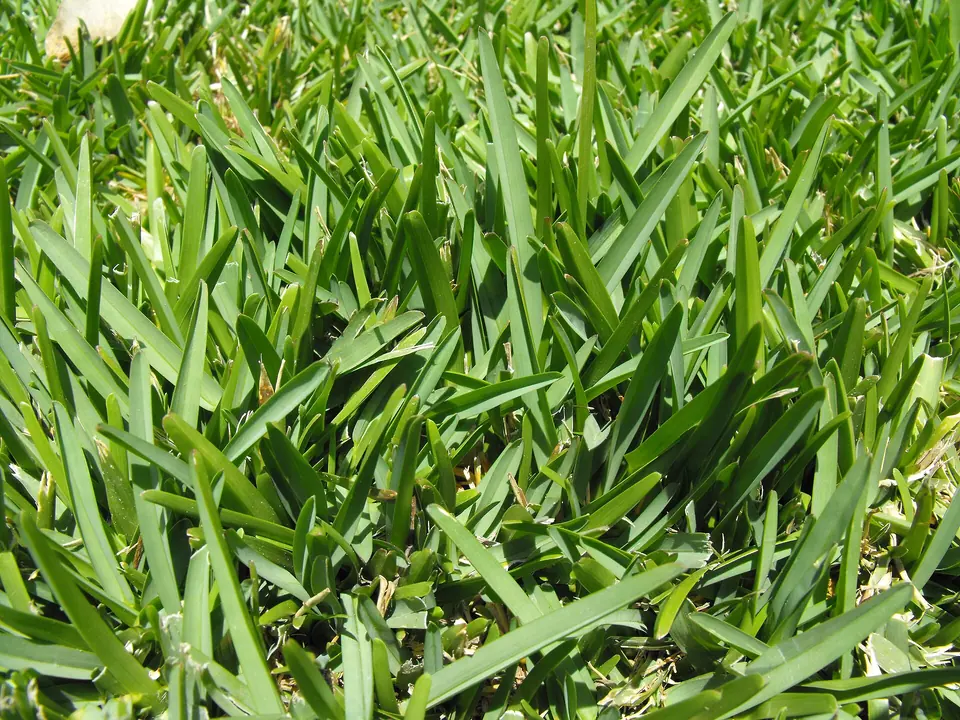
El pasto San Agustín es un césped perenne de estación cálida de textura gruesa, adaptado a regiones cálidas y húmedas, y es el más tolerante a la sombra entre los céspedes de estación cálida. [6][1] Tiene poca tolerancia al frío y poca tolerancia al desgaste, y la chinche sureña es su principal plaga insectil. [5][6] En España está catalogada como planta exótica invasora muy difícil de erradicar una vez establecida, porque cualquier fragmento de estolón o rizoma puede volver a crecer. [3]
Citado en inglés, como en la fuente.
Esta ficha está incompleta: las fuentes consultadas aún no cubren todos los campos.
Aún no cubierto por nuestras fuentes: Poda
Cuidados
Riego
Riego
Riega según sea necesario cuando las láminas de las hojas se doblen, marchiten o tornen azul grisáceo; aplica 1.3-1.9 cm (1/2-3/4 pulgadas) por aplicación
Lo que dice cada fuente
Según UF/IFAS Extension: 1.3-1.9 cm (1/2-3/4 pulgadas) por aplicación, según sea necesario
Según Alabama Cooperative Extension System: 1.3 cm (1/2 pulgada) a los primeros signos de estrés por sequía o marchitez
Qué dicen las fuentes (5)
Según UF/IFAS Extension: Apply ½–¾ inch of water per application. This applies water to roughly the top 8 inches of soil where the majority of the roots are.Según Alabama Cooperative Extension System: Irrigate once the first signs of drought stress or wilt are observed. Apply roughly 1⁄2 inch of water and avoid watering faster than it can soak into the ground.Irrigation is needed when leaf blades begin to fold up, wilt, or turn a blue-gray color, or when footprints remain visible after walking on the grassApply ½–¾ inch of water per application. This applies water to roughly the top 8 inches of soil where the majority of the roots are.Irrigate once the first signs of drought stress or wilt are observed. Apply roughly 1⁄2 inch of water and avoid watering faster than it can soak into the ground.Notas sobre el riego
Las fuentes no coinciden:
Qué dicen las fuentes (4)
Multiple, short (5–10 minutes) irrigations throughout the course of the day for 7–10 days following planting helps the grass establish without drying out.For the next 7–10 days, irrigate once a day to apply ¼–½ inch of water. After this, frequency should be reduced to 2–3 times weeklyWater or irrigate early in the morning while dew is still on the lawn. Irrigating or watering during the night or evening hours can increase disease problems.Its drought tolerance is low, it will lose its color under dry conditions.Luz
Pleno sol a semisombra; tolera la sombra
Qué dicen las fuentes (3)
Typically grown in full sun, it will tolerate full shade and semi-shaded locations.Light: St. Augustinegrass performs best in full sun but can tolerate moderate shade.Full sun (6 or more hours of direct sunlight a day)
Partial ShadeClima y frío
Rusticidad, zona más fría
7a [mínima invernal de −17,8 a −15 °C (de 0 a 5 °F)]
Qué dicen las fuentes (1)
USDA Plant Hardiness Zone:
7a, 7b, 8a, 8b, 9a, 9b, 10a, 10b, 11a, 11b, 12a, 12bRusticidad, zona más cálida
12b [mínima invernal de 12,8 a 15,6 °C (de 55 a 60 °F)]
Qué dicen las fuentes (1)
USDA Plant Hardiness Zone:
7a, 7b, 8a, 8b, 9a, 9b, 10a, 10b, 11a, 11b, 12a, 12bDónde cultivarla
Plugs separados 15.2-61.0 cm (6-24 pulgadas)
Lo que dice cada fuente
Según UF/IFAS Extension (plugs): 15.2-61.0 cm (6-24 pulgadas)
Según Alabama Cooperative Extension System (plugs): 15.2-30.5 cm (6-12 pulgadas)
Según LSU AgCenter (plugs): 30.5 cm (1 pie)
Según UF/IFAS Extension (sprigs, furrows): 15.2-30.5 cm (6-12 pulgadas) entre surcos
Qué dicen las fuentes (5)
Según UF/IFAS Extension (plugs): Spacing of plugs varies from 6 to 24 inches. The closer spacing provides coverage more quickly and reduces weed intrusion.Según Alabama Cooperative Extension System (plugs): Space plugs 6 to 12 inches apart in 6-to-12-inch–wide rows. The closer together the plugs are placed, the faster the turfgrass will grow in.Según LSU AgCenter (plugs): Plugs: Purchase or create plugs from sod and plant each piece about 1 foot apart.Según UF/IFAS Extension (sprigs, furrows): Sprigs contain nodes on stolons, which are planted end-to-end in furrows 6–12 inches apart.Spacing of plugs varies from 6 to 24 inches. The closer spacing provides coverage more quickly and reduces weed intrusion.Propagación
Vegetativo: césped, tapones o esquejes (estolones); raramente semilla
Qué dicen las fuentes (3)
St. Augustinegrass is established by vegetative propagation only, which includes sod, plugs, or sprigs.It is sold as sod or plugs and is rarely propagated by seed.Se reproduce por semilla, pero una vez establecida su expansión se lleva a cabo por vía vegetativa a partir de sus largos y vigorosos estolonesCultivo
La planta
Ciclo de vida
perenne
Qué dicen las fuentes (1)
Uses (Ethnobotany):
Lawns, forage
Life Cycle:
Perennial
Country Or Region Of Origin:Familia
Poaceae
Qué dicen las fuentes (1)
Genus:
Stenotaphrum
Species:
secundatum
Family:
Poaceae
Uses (Ethnobotany):
Lawns, foragePlagas y enfermedades
Plagas
chinche sureña, gusanos de la red, orugas del ejército, gusanos del césped, grillos topo, gusanos blancos, nematodos
Qué dicen las fuentes (4)
The major insect pest of St. Augustinegrass is the southern chinch bug (Blissus insularis Barber), which can cause considerable damage if not treated.Other insect pests, including webworms, armyworms, grass loopers, and mole crickets can damage St. Augustinegrass.White grubs are another pest of St. Augustinegrass. These can be found by lifting the grass to a depth of about 2 inches.Nematodes Several types of nematodes infest St. Augustinegrass lawns.Enfermedades
mancha foliar gris, parche grande, pudrición radical por take-all
Qué dicen las fuentes (1)
Some cultivars are also susceptible to diseases, such as gray leaf spot (Pyricularia grisea), large patch (Rhizoctonia solani), and take-all root rot (Gaeumannomyces graminis var. graminis).Abonado
Cuándo
Durante el crecimiento activo, desde el reverdecimiento de primavera hasta el verano y hasta principios de otoño; no demasiado temprano en primavera ni después de que el crecimiento se haya ralentizado
Lo que dice cada fuente
sur de Florida: Todo el año, ya que el crecimiento es durante todo el año
Luisiana: Desde mediados de primavera hasta mediados de verano
Qué dicen las fuentes (6)
sur de Florida: Depending on geographical location, fertilizer should be applied to St. Augustinegrass in 2–6 applications from spring green-up through fall (or year-round in south Florida).Luisiana: Fertilize with up to 3 pounds of nitrogen per 1,000 square feet per year. Fertilizer should be applied from midspring to midsummer.Depending on geographical location, fertilizer should be applied to St. Augustinegrass in 2–6 applications from spring green-up through fall (or year-round in south Florida).Fertilize using 4 lbs. nitrogen/1000 sq. ft. per year during the period
of active growth (March - October).Do not apply too early in the growing season, particularly in north Florida, because late-season frosts may damage the grass and the root system will not be fully grown in at this time to assimilate the nutrients.Likewise, do not fertilize too late in the year after growth has subsided.Frecuencia
De 2 a 6 aplicaciones al año, según el clima
Lo que dice cada fuente
césped de bajo mantenimiento: Dos veces al año (mayo y julio), o mensualmente de mayo a agosto
fertilidad máxima: Mensualmente en abril, mayo, julio y agosto
Qué dicen las fuentes (3)
césped de bajo mantenimiento: (1) apply 1 pound of nitrogen per 1,000 square feet once in May and once in July or (2) apply 1⁄2 pound of nitrogen per 1,000 square feet once per month in May, June, July, and August.fertilidad máxima: To reach this annual rate, apply 1 pound of nitrogen per 1,000 square feet once per month in April, May, July, and August.Depending on geographical location, fertilizer should be applied to St. Augustinegrass in 2–6 applications from spring green-up through fall (or year-round in south Florida).Abonos naturales
Estiércol, como fuente de nitrógeno de liberación lenta
Qué dicen las fuentes (1)
Slow-release nitrogen sources include sulfur-coated urea (SCU), polymer-coated urea (PCU), isobutylidine diurea (IBDU), urea formaldehyde (UF), methylene urea (MU), and natural organics such as manure.Abonos minerales
Fertilizante nitrogenado, no más de 4.88 g de nitrógeno por m² por aplicación; un fertilizante completo como 16-4-8 solo si un análisis de suelo indica fósforo o potasio
Lo que dice cada fuente
California: 19.5 g de nitrógeno por m² por año, durante el crecimiento activo
Florida: Norte 9.76-19.5, centro 9.76-24.4, sur 19.5-29.3 g de nitrógeno por m² por año
Luisiana: Hasta 14.6 g de nitrógeno por m² por año
Arkansas: Nunca más de 14.6 g de nitrógeno por m² al año
para la resistencia invernal: Potasio a 4.88 g/m² en septiembre
Qué dicen las fuentes (7)
California: Fertilize using 4 lbs. nitrogen/1000 sq. ft. per year during the period
of active growth (March - October).Florida: Location1 N fertility guideline(lbs N/1000 sq ft/year) North Florida 2–4 Central Florida 2–5 South Florida 4–6Luisiana: Fertilize with up to 3 pounds of nitrogen per 1,000 square feet per year. Fertilizer should be applied from midspring to midsummer.Arkansas: It should never receive more
than 3 pounds of nitrogen per thousand
square feet in one year.para la resistencia invernal: For improved winter hardiness, make one application of potassium in September at 1 pound of potassium per 1,000 square feet.If a soil test recommends applying P and/or K, a complete fertilizer may be used (e.g., 16-4-8); otherwise, P and K should be absent in the fertilizer used.To avoid burning the turf, do not apply more than 1 pound of actual nitrogen per 1,000 square feet per fertilizer application.Microelementos
Hierro, frecuentemente necesario como suplemento (sulfato de hierro o hierro quelado, también como pulverización foliar); hierro o manganeso en suelos de pH alto
Qué dicen las fuentes (3)
Fertilize using 4 lbs. nitrogen/1000 sq. ft. per year during the period
of active growth (March - October).
- Iron is frequently needed as a fertilizer supplement.On high-pH (> 7.0) soils or where high-pH water is applied, yellow leaf blades may be an indication of iron or manganese deficiency. Application of soluble or chelated sources of these micronutrients can provide a green-up in these cases.Foliar iron fertilizers, such as iron sulfate or chelated iron solutions, and nitrogen fertilizers applied according to UF/IFAS guidelines help alleviate iron deficiencies.Evitar
Dosis altas de nitrógeno de liberación rápida o aplicarlo sobre césped mojado (quema la hierba); fertilizar demasiado temprano en primavera o después de que el crecimiento se haya ralentizado; exceso de nitrógeno, que favorece la enfermedad de la mancha grande
Lo que dice cada fuente
céspedes nuevos: No fertilizar hasta 30-60 días después de la siembra
Qué dicen las fuentes (5)
céspedes nuevos: A newly planted lawn should not be fertilized until 30–60 days after planting.Augustinegrass lawns; however, these fast-release nitrogen fertilizers will burn turfgrass if applied too heavily or if applied to wet turf.Do not apply too early in the growing season, particularly in north Florida, because late-season frosts may damage the grass and the root system will not be fully grown in at this time to assimilate the nutrients.Likewise, do not fertilize too late in the year after growth has subsided.Large patch occurs in warm, humid weather and is encouraged by excessive nitrogen.Signos de carencia
Hojas amarillentas: en suelos de pH alto por deficiencia de hierro o manganeso; la deficiencia de nitrógeno también amarillea el césped
Qué dicen las fuentes (2)
On high-pH (> 7.0) soils or where high-pH water is applied, yellow leaf blades may be an indication of iron or manganese deficiency. Application of soluble or chelated sources of these micronutrients can provide a green-up in these cases.While both iron and nitrogen deficiencies result in turfgrass yellowing, they are distinctly different deficiencies in plants.Signos de exceso
Acumulación excesiva de paja y más problemas de plagas y enfermedades (mancha grande, mancha gris de la hoja); el nitrógeno de liberación rápida en exceso quema el césped
Qué dicen las fuentes (3)
Too much fertilization can cause excessive thatch accumulation and other pest problems.If large patch or gray leaf spot diseases are a continuous problem, excessive watering and nitrogen fertilization may be responsible.Augustinegrass lawns; however, these fast-release nitrogen fertilizers will burn turfgrass if applied too heavily or if applied to wet turf.Distancias
Entre plantas
Las fuentes dan valores distintos según la región, la zona o las condiciones de cultivo.
Lo que dice cada fuente
plantones, Florida (EE. UU.): Plantones a 15-61 cm [6–24 in] de distancia; un espaciado más cercano cubre más rápido
tapones, Alabama (EE. UU.): Plantones a 15-30 cm [6–12 in] de distancia en filas de 15-30 cm [6–12 in] de ancho
tapones, Luisiana (EE. UU.): Coloca los tapones a 30 cm [12 in] de distancia
Qué dicen las fuentes (3)
plantones, Florida (EE. UU.): Sod also can be made into plugs by cutting it into small squares. Spacing of plugs varies from 6 to 24 inches.tapones, Alabama (EE. UU.): Space plugs 6 to 12 inches apart in 6-to-12-inch–wide rows.tapones, Luisiana (EE. UU.): Plugs: Purchase or create plugs from sod and plant each piece about 1 foot apart.Entre hileras
Los esquejes se plantan en hileras (surcos) separadas entre 15 y 30 cm [6–12 in].
Calor y sequía
Calor
Tolerante al calor.
Lo que dice cada fuente
cultivar 'Raleigh': Se amarillea y crece con menos vigor durante el pico de calor del verano
Qué dicen las fuentes (2)
cultivar 'Raleigh': During peak summertime heat, 'Raleigh' has been noted to yellow and grow less aggressively than it does at cooler temperatures.This plant is heat tolerant and mildly drought tolerant. There are several cultivars of this plant available.Problemas
Chinche de los pastos
Síntoma: Daño considerable al césped
Qué hacer: Insectos o variedades nuevas resistentes
Qué dicen las fuentes (2)
The major insect pest of St. Augustinegrass is the southern chinch bug (Blissus insularis Barber), which can cause considerable damage if not treated.
— ENH5 [2] This insect can be controlled with chemicals (insecticides) or, the better option, by planting a newer variety of St. Augustinegrass that has genetic resistance to the pest.
— St. Augustinegrass Lawns - Alabama Cooperative Extension System [6] Parche grande y mancha gris de la hoja
Síntoma: Enfermedades fúngicas del césped
Qué hacer: Buen mantenimiento; fungicidas para brotes importantes; evita el riego excesivo y el exceso de nitrógeno
Qué dicen las fuentes (2)
St. Augustinegrass lawns are susceptible to several plant diseases, the most common of which are large patch and gray leaf spot.
— St. Augustinegrass Lawns - Alabama Cooperative Extension System [6] If large patch or gray leaf spot diseases are a continuous problem, excessive watering and nitrogen fertilization may be responsible.
— ENH5 [2] Nematodos
Síntoma: El césped se vuelve amarillo y ralo, especialmente en periodos calurosos y secos
Qué hacer: Mantén el césped sano: riego semanal en sequía, fertilidad adecuada, altura de corte correcta
Qué dicen las fuentes (1)
Nematodes cause the lawn to turn yellow in color and become thin, especially during hot, dry periods.
— St. Augustinegrass Lawns - Alabama Cooperative Extension System [6] Fieltro (thatch)
Síntoma: Una capa de más de 3/4 de pulgada aumenta el estrés por sequía o los daños del invierno
Qué hacer: Elimina el fieltro mecánicamente desde finales de mayo hasta agosto
Qué dicen las fuentes (1)
If the thatch layer is thicker than 3⁄4 inch, mechanically dethatch the lawn in the spring, any time from late May through August.
— St. Augustinegrass Lawns - Alabama Cooperative Extension System [6]
Remedios
Cada remedio indica qué dicen las fuentes oficiales; los remedios tradicionales sin fuente oficial aparecen marcados. Los perjudiciales están para que sepas evitarlos.
Cuidar la planta
chinche sureña
reducción de paja y fertilizante Funciona en parte
Cómo: Reduce el fieltro y minimiza el uso de fertilizante; evita un riego deficiente, un corte demasiado bajo y un exceso de nitrógeno.
Always incorporate non-chemical options like reducing thatch and minimizing fertilizer use. Encouraging beneficial insects will also help you manage the pest problem.
— gardeningsolutions.ifas.ufl.edu [9] Qué dicen las pruebas Always incorporate non-chemical options like reducing thatch and minimizing fertilizer use. Encouraging beneficial insects will also help you manage the pest problem.
— gardeningsolutions.ifas.ufl.edu [9] fomentando insectos benéficos Funciona en parte
Cómo: Fomenta insectos benéficos como los chinches de ojos grandes, que se alimentan de las chinches; aprende a distinguirlos de la plaga.
Big-eyed bugs could be easily confused with a chinch bug, except “big-eyes” eat chinch bugs for breakfast!
— gardeningsolutions.ifas.ufl.edu [9] Qué dicen las pruebas Encouraging beneficial insects will also help you manage the pest problem.
— gardeningsolutions.ifas.ufl.edu [9]
parche grande
reducción del riego y del nitrógeno Fuente oficial, sin prueba independiente
Cómo: Si la mancha grande o la mancha gris de la hoja son un problema continuo, el riego excesivo y la fertilización con nitrógeno pueden ser los responsables.
If large patch or gray leaf spot diseases are a continuous problem, excessive watering and nitrogen fertilization may be responsible.
— ENH5 [2]
Cómo eliminarla
hierba de césped no deseada
eliminación manual con una pala de jardín No verificado
Remedio tradicional, no verificado por una fuente oficial.
Cómo: Usa una pala de jardín, una pala de punta cuadrada con hoja plana, para cortar un borde recto a través del césped y retirarlo; la hierba de San Agustín y las raíces se pueden sacar con bastante limpieza.
excavación y eliminación de las plantas No verificado
Remedio tradicional, no verificado por una fuente oficial.
Cómo: Excava las plantas; retira las semillas y deséchalas en el contenedor de residuos verdes o en el vertedero si es posible.
cortadora de césped No verificado
Remedio tradicional, no verificado por una fuente oficial.
Cómo: Alquila una cortadora de césped para cortar y levantar el césped con precisión, sin usar productos químicos.
solarización con plástico transparente No verificado
Remedio tradicional, no verificado por una fuente oficial.
Cómo: Cubre el césped en crecimiento con plástico transparente durante al menos seis semanas bajo el sol de verano, para que el césped se sobrecaliente.
seguimiento y replantación de cobertura vegetal densa No verificado
Remedio tradicional, no verificado por una fuente oficial.
Cómo: Haz seguimiento de las zonas tratadas 3 veces al año; después de 2-3 tratamientos, favorece la regeneración nativa o replanta para establecer una cobertura densa del suelo y minimizar la reinvasión.
Calendario
Plantación
Durante el crecimiento activo: mayo-agosto (Alabama); finales de otoño, invierno o primavera (sur de Florida)
Lo que dice cada fuente
Alabama: mayo-agosto
sur de Florida: finales de otoño, invierno o primavera
centro y norte de Florida: Evita los meses fríos de invierno y los meses calurosos y secos de verano
Qué dicen las fuentes (5)
Alabama: The best time to plant St. Augustinegrass is during its active growth period, normally between May and August.sur de Florida: In south Florida, the optimal time for establishment is late fall, winter, or spring.centro y norte de Florida: In central and north Florida, try to avoid establishment during cold winter or hot, dry summer months.The best time to plant St. Augustinegrass is during its active growth period, normally between May and August.In south Florida, the optimal time for establishment is late fall, winter, or spring.Poda
No figura en las fuentes consultadas.
Meses tal como los dan las fuentes, en su mayoría de Estados Unidos (hemisferio norte). En el hemisferio sur se desplazan unos seis meses.
Plantas similares
- African lovegrass Eragrostis curvula
- Aristida purpurea Aristida purpurea
- Autumn Moor Grass Sesleria autumnalis
- Bambú Phyllostachys aurea
- Beaked Panicgrass Coleataenia anceps
- Grama común Cynodon dactylon
- Big Bluestem Andropogon gerardi
- Bigtop Lovegrass Eragrostis hirsuta
Fuentes
Cada valor anterior se cita de estos documentos. Los enlaces llevan al editor original.
- Stenotaphrum secundatum (St. Augustinegrass, St. Augustine Grass) | North Carolina Extension Gardener Plant Toolbox · plants.ces.ncsu.edu, consultado
- ENH5 · edis.ifas.ufl.edu, consultado
- Atlas de las Plantas Alóctonas Invasoras en España · miteco.gob.es, consultado
-  · lsuagcenter.com, consultado
- St. Augustinegrass - TurfFiles | NC State Extension · turffiles.ncsu.edu, consultado
- St. Augustinegrass Lawns - Alabama Cooperative Extension System · aces.edu, consultado
- ipm.ucanr.edu · ipm.ucanr.edu
- uaex.uada.edu · uaex.uada.edu
- gardeningsolutions.ifas.ufl.edu · gardeningsolutions.ifas.ufl.edu
Escrito por Emilio Marruso · última revisión