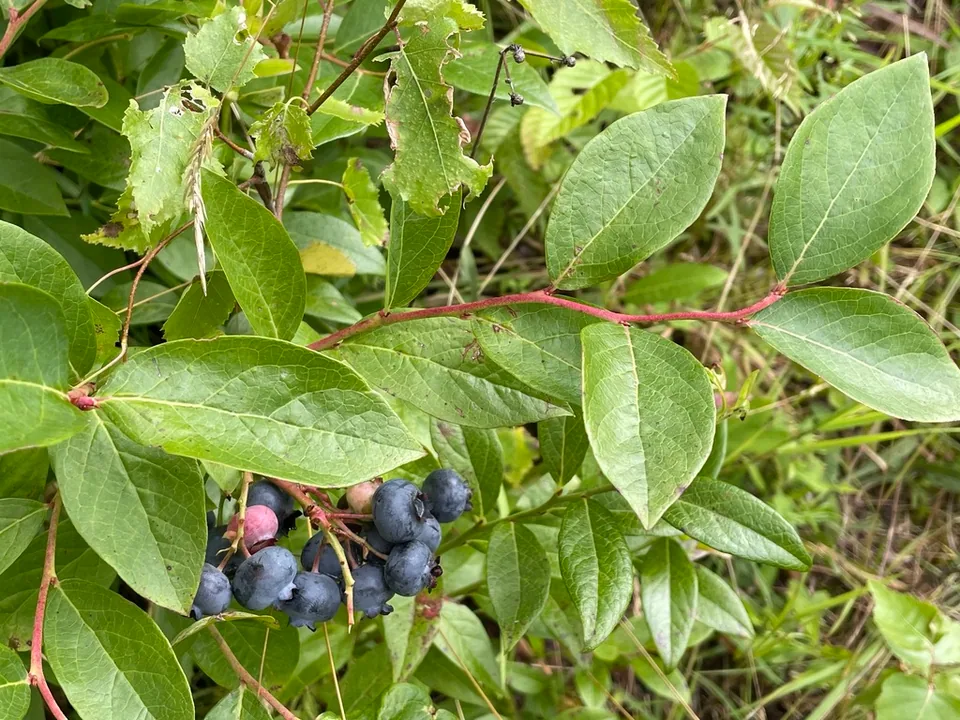
Cómo cultivar y cuidar Arándano
Vaccinium corymbosum
Escrito por Emilio Marruso · última revisión
De un vistazo
Los arándanos son un regalo a largo plazo: dales suelo ácido, pH 4,5–5,5, sol y al menos 2,5 cm de agua a la semana, y a los 3 años empiezan a dar fruto. De junio a mediados de septiembre podrás recoger bayas para comer frescas o en tartas, magdalenas y tortitas. Planta dos variedades que florezcan a la vez y tendrás bayas más grandes.
- Sol
Sol pleno o semisombra
Qué dicen las fuentes (3)
Luz: Pleno sol a semisombra
Florida: Plant your blueberries in an area that gets at least 4-5 hours of full sun and is at least 20 feet away from buildings.
— Blueberries – Gardening Solutions [5] Blueberries grow and fruit best in full sun (a minimum of 8 hours per day in summer) but can tolerate some shade.
— Growing Blueberries in a Home Garden | University of Maryland Extension [2] Full sun (6 or more hours of direct sunlight a day)
— Vaccinium corymbosum (Highbush Blueberry, Rabbit-eye Blueberry, Rabbiteye Blueberry, Smooth Highbush Blueberry) | North Carolina Extension Gardener Plant Toolbox [1] - Riego
Al menos 2,5 cm a la semana, constante mientras se forman los frutos; mejor goteo que aspersión
Qué dicen las fuentes (5)
Riego: Al menos 1 pulgada [2,5 cm] de agua por semana de lluvia o riego, con humedad constante especialmente durante el desarrollo y maduración de los frutos
Se planta en un montículo o caballón en arcilla pesada o suelo húmedo (Clemson): however, with this method of planting, water thoroughly two to three times per week during dry spells in the summer and early fall.
— Blueberry | Home & Garden Information Center [4] Blueberries require at least 1 inch of water per week from rainfall or irrigation, with consistent moisture especially critical during fruit development and ripening.
— Growing Blueberries in the Mid-Atlantic (FS-2025-0766) | University of Maryland Extension [3] important to water blueberry plants during dry periods
— Growing Blueberries in a Home Garden | University of Maryland Extension [2] Notas sobre el riego: Se prefiere el riego por goteo o por goteo lento sobre el riego por aspersión; riega profundamente antes del clima frío si la humedad del suelo es baja
Water deeply before cold weather sets in if the soil moisture is low.
— Growing Blueberries in a Home Garden | University of Maryland Extension [2] Trickle irrigation is recommended as the primary system for blueberry production in the Mid-Atlantic.
— Growing Blueberries in the Mid-Atlantic (FS-2025-0766) | University of Maryland Extension [3] - Frío
Aguanta inviernos de hasta −40 °C (−40 °F)
Muy rústica · USDA 3a · RHS H7 · Z3
Qué dicen las fuentes (4)
Rusticidad, zona más fría: 3a [mínima invernal de −40 a −37,2 °C (de −40 a −35 °F)]
3a, 3b, 4a, 4b, 5a, 5b, 6a, 6b, 7a, 7b, 8a, 8b
— Vaccinium corymbosum (Highbush Blueberry, Rabbit-eye Blueberry, Rabbiteye Blueberry, Smooth Highbush Blueberry) | North Carolina Extension Gardener Plant Toolbox [1] Rusticidad, zona más cálida: 8b [mínima invernal de −9,4 a −6,7 °C (de 15 a 20 °F)]
Según NC State Extension: USDA Plant Hardiness Zone: 3a, 3b, 4a, 4b, 5a, 5b, 6a, 6b, 7a, 7b, 8a, 8b
— Vaccinium corymbosum (Highbush Blueberry, Rabbit-eye Blueberry, Rabbiteye Blueberry, Smooth Highbush Blueberry) | North Carolina Extension Gardener Plant Toolbox [1] Cultivar enano de contenedor Peach Sorbet: It grows well in USDA zones 5 to 10 and is semi-evergreen.
— Blueberry | Home & Garden Information Center [4] 3a, 3b, 4a, 4b, 5a, 5b, 6a, 6b, 7a, 7b, 8a, 8b
— Vaccinium corymbosum (Highbush Blueberry, Rabbit-eye Blueberry, Rabbiteye Blueberry, Smooth Highbush Blueberry) | North Carolina Extension Gardener Plant Toolbox [1] - Suelo
Suelo ácido, pH 4,5–5,5; añade turba o corteza de pino compostada antes de plantar
Qué dicen las fuentes (8)
pH del suelo, mínimo: 4.5
Según University of Maryland Extension: Acidity (soil pH): Blueberry is an “acid-loving” plant requiring a soil pH in the 4.5-5.5 range.
— Growing Blueberries in a Home Garden | University of Maryland Extension [2] Según UF/IFAS Gardening Solutions: You should test your soil to make sure it is between a pH of 4 and 5.5.
— Blueberries – Gardening Solutions [5] Suelos altos en manganeso (Piedmont): When growing blueberries on these soils, keep the pH above 5.0 to avoid problems with manganese toxicity.
— Blueberry | Home & Garden Information Center [4] requiring a soil pH in the 4.5-5.5 range
— Growing Blueberries in a Home Garden | University of Maryland Extension [2] pH del suelo, máximo: 5.5
requiring a soil pH in the 4.5-5.5 range
— Growing Blueberries in a Home Garden | University of Maryland Extension [2] Abonos naturales: Materia orgánica ácida antes de plantar: turba, corteza de pino compostada, agujas de pino o aserrín de madera blanda podrido; los fertilizantes orgánicos pueden sustituir a los sintéticos
Organic materials such as peat moss, composted pine bark or rotted softwood sawdust should be incorporated in soils of less than 2 percent organic matter prior to planting to greatly improve blueberry plant survival and growth.
— Blueberry | Home & Garden Information Center [4] The ideal organic amendment for growing blueberries is pine bark mulch, pine fines or pine needles.
— Growing Blueberries in the Mid-Atlantic (FS-2025-0766) | University of Maryland Extension [3] Fertilizers formulated for “acid-loving” plants are also suitable. Organic fertilizers can be substituted.
— Growing Blueberries in a Home Garden | University of Maryland Extension [2] - Distancia
1,2–1,5 m entre plantas, 1,8–2,4 m entre hileras
Qué dicen las fuentes (8)
Entre plantas: 1.22-1.52 m [4–5 ft] entre plantas en la hilera.
Reino Unido: Plant blueberries so the soil is only just covering the roots, and space them 1-2m (3¼–6½ft) apart, depending on the variety’s ultimate size.
— [6] highbush sureño, en hileras: Spacing: Southern highbush – 4 to 5 feet in the row and 8 to 10 feet between rows.
— Blueberry | Home & Garden Information Center [4] highbush sureño, seto: For a hedgerow effect, plant southern highbushes three feet apart, or five feet apart for rabbiteye.
— Blueberries – Gardening Solutions [5] plantaciones comerciales: Blueberry plantings are usually established in rows having a within row spacing of 4-6 ft, and between row spacing of 10 to 12 feet.
— Growing Blueberries in the Mid-Atlantic (FS-2025-0766) | University of Maryland Extension [3] Spacing: If grown in rows, plan for 4-5 feet between each blueberry in a row and 6-8 feet between rows.
— Growing Blueberries in a Home Garden | University of Maryland Extension [2] Entre hileras: 1.83-2.44 m [6–8 ft] entre hileras en el huerto familiar.
highbush sureño: Spacing: Southern highbush – 4 to 5 feet in the row and 8 to 10 feet between rows.
— Blueberry | Home & Garden Information Center [4] plantaciones comerciales: Blueberry plantings are usually established in rows having a within row spacing of 4-6 ft, and between row spacing of 10 to 12 feet.
— Growing Blueberries in the Mid-Atlantic (FS-2025-0766) | University of Maryland Extension [3] Spacing: If grown in rows, plan for 4-5 feet between each blueberry in a row and 6-8 feet between rows.
— Growing Blueberries in a Home Garden | University of Maryland Extension [2] - Plantación
Plantas a raíz desnuda a finales de invierno; en maceta, en otoño
Qué dicen las fuentes (5)
Plantación: Finales de invierno (febrero-marzo) para plantas de raíz desnuda; otoño (noviembre-diciembre) para plantas en maceta
Plantas de raíz desnuda (fonte: Clemson HGIC): Two-year-old bare-root nursery plants 1 to 3 feet tall are transplanted in late winter or early spring.
— Blueberry | Home & Garden Information Center [4] Plantas en maceta (fuente: Clemson HGIC): Potted plants can be transplanted in the fall.
— Blueberry | Home & Garden Information Center [4] Florida: Blueberries are best planted during the winter before spring growth begins.
— Blueberries – Gardening Solutions [5] Late winter (February-March) as soon as the soil can be worked is best for bare-root plants; fall (November-December) planting has been successful on sandy soils with bare-root plants and in other areas with potted plants.
— Blueberry | Home & Garden Information Center [4] Blueberries are best planted during the winter before spring growth begins.
— Blueberries – Gardening Solutions [5] - Abonado
Varios abonados ligeros desde la primavera; evita abonos con nitratos como el nitrato amónico
Qué dicen las fuentes (13)
Frecuencia: Varias aplicaciones ligeras por temporada en lugar de una sola dosis fuerte
segundo año: In the second year, apply 2 ounces of 21-0-0 (ammonium sulfate) per plant during bloom, and the same amount again 3 weeks later.
— Growing Blueberries in a Home Garden | University of Maryland Extension [2] plantas en producción: For more vigorous growth, sidedress with a quarter-cup of ammonium sulfate at six-week intervals, but stop fertilizing after July 1.
— Blueberry | Home & Garden Information Center [4] en Florida: This fertilizer should be spread in an even circle around the plant no further than two feet out. Repeat this application in April, June, August and October.
— Blueberries – Gardening Solutions [5] Frequent, light fertilization works best for blueberries since they are shallow-rooted and sensitive to overfertilization.
— Blueberries – Gardening Solutions [5] During the plant’s second year, apply a split application of N in two equal parts within planted rows.
— Growing Blueberries in the Mid-Atlantic (FS-2025-0766) | University of Maryland Extension [3] Cuándo: Desde la primavera, cuando comienza el nuevo crecimiento, en o justo después de la floración
Bearing Plants: When growth begins in the spring, apply 1 cup of a complete fertilizer, such as an Azalea fertilizer within a circle 3 feet from each plant.
— Blueberry | Home & Garden Information Center [4] In the second year, apply 2 ounces of 21-0-0 (ammonium sulfate) per plant during bloom, and the same amount again 3 weeks later.
— Growing Blueberries in a Home Garden | University of Maryland Extension [2] Use ammonium sulfate or urea at 10 lb. N per acre just after bloom followed by a second application 6 weeks later
— Growing Blueberries in the Mid-Atlantic (FS-2025-0766) | University of Maryland Extension [3] Evitar: Exceso de fertilizante; fertilizantes de nitrato como el nitrato de amonio; cloruro de potasio (usa sulfato de potasio); sulfato de aluminio
Use Caution: Blueberries are easily damaged by excess fertilizer. Apply the recommended amount and allow 4 inches of rain or an equivalent amount of irrigation between applications.
— Blueberry | Home & Garden Information Center [4] Avoid fertilizers containing high percentages of nitrates. If potassium is needed, apply it as potassium sulfate rather than potassium chloride.
— Growing Blueberries in a Home Garden | University of Maryland Extension [2] Use either ammonium sulfate or urea to fertilize, but not ammonium nitrate.
— Growing Blueberries in the Mid-Atlantic (FS-2025-0766) | University of Maryland Extension [3] Blueberries are sensitive to chloride injury, so products that supply potassium as potassium sulfate (K₂SO₄) are preferred.
— Growing Blueberries in the Mid-Atlantic (FS-2025-0766) | University of Maryland Extension [3] Do not use aluminum sulfate because blueberries are sensitive to excess aluminum.
— Growing Blueberries in a Home Garden | University of Maryland Extension [2] - Poda
Poda a finales de invierno; en plantas adultas quita 1 de cada 6 ramas, las más viejas
Qué dicen las fuentes (5)
Cuándo podar: A fines de invierno, mientras está en reposo (noviembre a marzo, idealmente fines de febrero o principios de marzo, cuando los brotes de fruta son distinguibles); poca poda en los primeros dos años.
Prune during the dormant season; late winter is most desirable, especially in the mountains.
— Blueberry | Home & Garden Information Center [4] After that, prune at any time from November to March, but ideally in late February or early March when the fruit buds can easily be distinguished from leaf buds.
— [6] Pruning is rarely needed in the first two years after planting – just remove any crossing or damaged branches if necessary.
— [6] Poda drástica: Las plantas descuidadas con cañas muy viejas pueden rejuvenecerse eliminando toda la madera vieja; en plantas maduras sanas, elimina una caña de cada seis, eligiendo la más vieja.
Neglected plants with very old canes can be rejuvenated by removing all of the old wood.
— Growing Blueberries in a Home Garden | University of Maryland Extension [2] When pruning healthy mature plants, take out one of every six canes, selecting the oldest for removal.
— Growing Blueberries in the Mid-Atlantic (FS-2025-0766) | University of Maryland Extension [3] - Cosecha
De junio a mediados de septiembre; recoge las bayas bien azules que se sueltan con facilidad
Qué dicen las fuentes (5)
Cosecha: De junio a mediados de septiembre, según la variedad
Harvest begins in June for early-ripening varieties and may continue through mid-September with late-ripening varieties.
— Growing Blueberries in a Home Garden | University of Maryland Extension [2] Cómo cosechar: Recoge cuando las bayas estén completamente azules (se vuelven azules de 3 a 6 días antes de alcanzar su dulzura máxima); las bayas con un tinte rojizo en el extremo del tallo están inmaduras; las bayas maduras se desprenden fácilmente del tallo; los arándanos no maduran después de recogerlos; cosecha por la mañana después de que el rocío se haya evaporado; recoge aproximadamente una vez por semana durante la temporada
Berries turn blue 3 to 6 days before they attain maximum sweetness and flavor (depending on weather and cultivar).
— Growing Blueberries in a Home Garden | University of Maryland Extension [2] Blueberries do not ripen after picking. Do not pick berries with a reddish tinge at the stem end because they are under-ripe. Berries ready to be picked will detach easily from the pedicel
— Growing Blueberries in a Home Garden | University of Maryland Extension [2] If possible, harvest berries in the morning after the dew has evaporated. Berries picked in the afternoon will contain field heat, which will reduce storage life.
— Growing Blueberries in a Home Garden | University of Maryland Extension [2] During the harvest season, berries will need to be picked once a week.
— Growing Blueberries in the Mid-Atlantic (FS-2025-0766) | University of Maryland Extension [3] - Polinización
Una planta sola da fruto; dos variedades que florecen a la vez dan bayas más grandes
Qué dicen las fuentes (3)
Qué necesita: Una sola planta puede dar fruto. Si plantas dos o más cultivares que florezcan al mismo tiempo, obtendrás bayas más grandes y cosechas más abundantes.
Although blueberries are self-fertile, planting multiple cultivars that bloom at the same time will lead to larger berries and a higher yield.
— Vaccinium corymbosum (Highbush Blueberry, Rabbit-eye Blueberry, Rabbiteye Blueberry, Smooth Highbush Blueberry) | North Carolina Extension Gardener Plant Toolbox [1] Most blueberries are partially self-fertile, so you only need one plant to produce a crop.
— [6] Cuajado: Parcialmente autofértil
Most blueberries are partially self-fertile, so you only need one plant to produce a crop.
— [6] - Plagas
Los pájaros se comen las bayas: protégelas con red; vigila la mosca de alas manchadas y el momificado
Qué dicen las fuentes (8)
Plagas: pájaros, ciervos, mosca de alas manchadas, mosca del arándano, gusano del arándano, barrenador del tallo Oberea, escarabajos japoneses, orugas de cuello amarillo
Insects, Diseases, and Other Plant Problems: Spotted wing drosophila may attack the fruit. Potential but infrequent disease problems include stem blight, root rot, anthracnose, cane cankers, mildew, and botrytis.
— Vaccinium corymbosum (Highbush Blueberry, Rabbit-eye Blueberry, Rabbiteye Blueberry, Smooth Highbush Blueberry) | North Carolina Extension Gardener Plant Toolbox [1] Birds relish the fruit, so cover shrubs with netting as the fruit ripens. Deer frequently damage these plants.
— Vaccinium corymbosum (Highbush Blueberry, Rabbit-eye Blueberry, Rabbiteye Blueberry, Smooth Highbush Blueberry) | North Carolina Extension Gardener Plant Toolbox [1] The primary insect problems are cranberry fruitworm (which ties berry clusters together with silk), Oberea stem borer (the larva bores down the stem resulting in stem death), Japanese beetles, and yellownecked caterpillars.
— Blueberry | Home & Garden Information Center [4] Although other pests, such as blueberry maggot, have been reported in large blueberry plantings, this particular pest has never been a serious problem in Maryland.
— Growing Blueberries in the Mid-Atlantic (FS-2025-0766) | University of Maryland Extension [3] Enfermedades: tizón del tallo, pudrición de raíces, antracnosis, cancros de caña, mildiu, botritis (moho gris), momia de la baya, manchas foliares fúngicas, pudriciones del fruto, tizón de la flor
Insects, Diseases, and Other Plant Problems: Spotted wing drosophila may attack the fruit. Potential but infrequent disease problems include stem blight, root rot, anthracnose, cane cankers, mildew, and botrytis.
— Vaccinium corymbosum (Highbush Blueberry, Rabbit-eye Blueberry, Rabbiteye Blueberry, Smooth Highbush Blueberry) | North Carolina Extension Gardener Plant Toolbox [1] Mummy berry is a fungal disease that causes the berries to shrivel and drop.
— Vaccinium corymbosum (Highbush Blueberry, Rabbit-eye Blueberry, Rabbiteye Blueberry, Smooth Highbush Blueberry) | North Carolina Extension Gardener Plant Toolbox [1] Blueberries may be troubled by fungal leaf spots, fruit rots, root rot and gray mold.
— Blueberry | Home & Garden Information Center [4] However, blueberry plants are susceptible to root rot, flower blight (gray mold), stem blight, and a few pests.
— Blueberries – Gardening Solutions [5] - Atención
Raíces superficiales: no la plantes demasiado hondo
Qué dicen las fuentes (3)
Sistema radicular: Sistema radicular superficial y fibroso con pocos pelos radiculares; si las raíces se colocan demasiado profundas, causan problemas.
Blueberry plants are perennial woody shrubs with multiple stems (canes) and a shallow, fibrous root system.
— Growing Blueberries in a Home Garden | University of Maryland Extension [2] Blueberry plants have few root hairs (structures that help with absorbing moisture), making them susceptible to drought injury.
— Growing Blueberries in a Home Garden | University of Maryland Extension [2] Blueberry is a shallow-rooted plant, and putting the roots too deeply in the soil will cause problems.
— Growing Blueberries in the Mid-Atlantic (FS-2025-0766) | University of Maryland Extension [3] - Tamaño
1,8–3 m de ancho
Qué dicen las fuentes (1)
Anchura adulta: 183-305 cm (6-10 pies)
Height: 6 ft. 0 in. - 12 ft. 0 in. Width: 6 ft. 0 in. - 10 ft. 0 in.
— Vaccinium corymbosum (Highbush Blueberry, Rabbit-eye Blueberry, Rabbiteye Blueberry, Smooth Highbush Blueberry) | North Carolina Extension Gardener Plant Toolbox [1] - Multiplicación
Por semilla o por esquejes a finales de primavera o en verano
Qué dicen las fuentes (2)
Propagación: Semilla; esqueje de tallo
Life Cycle: Perennial Recommended Propagation Strategy: Seed Stem Cutting
— Vaccinium corymbosum (Highbush Blueberry, Rabbit-eye Blueberry, Rabbiteye Blueberry, Smooth Highbush Blueberry) | North Carolina Extension Gardener Plant Toolbox [1] Esquejes: Esquejes de madera blanda a fines de primavera o principios de verano, o esquejes semimaduros en verano.
New blueberry plants can be grown from soft-wood cuttings taken in late spring or early summer, or semi-ripe cuttings taken in summer.
— [6] - Maceta
Crece también en maceta
Qué dicen las fuentes (2)
Resumen
El arándano alto es un arbusto caducifolio de múltiples tallos que se cultiva por su fruta comestible y su color otoñal. [1] Requiere suelo ácido, bien drenado, suelto y con alto contenido de materia orgánica. [4] La fruta madura desde junio hasta mediados de septiembre según la variedad. [2]
Citado en inglés, como en la fuente.
Cuidados
Las medidas entre corchetes son nuestra conversión al otro sistema de unidades; el texto citado no cambia.
Riego
Riego
Al menos 1 pulgada [2,5 cm] de agua por semana de lluvia o riego, con humedad constante especialmente durante el desarrollo y maduración de los frutos
Lo que dice cada fuente
Se planta en un montículo o caballón en arcilla pesada o suelo húmedo (Clemson): Riega abundantemente dos o tres veces por semana durante los períodos secos en verano y principios de otoño
Qué dicen las fuentes (3)
Se planta en un montículo o caballón en arcilla pesada o suelo húmedo (Clemson): however, with this method of planting, water thoroughly two to three times per week during dry spells in the summer and early fall.Blueberries require at least 1 inch of water per week from rainfall or irrigation, with consistent moisture especially critical during fruit development and ripening.important to water blueberry plants during dry periodsNotas sobre el riego
Se prefiere el riego por goteo o por goteo lento sobre el riego por aspersión; riega profundamente antes del clima frío si la humedad del suelo es baja
Qué dicen las fuentes (2)
Water deeply before cold weather sets in if the soil moisture is low.Trickle irrigation is recommended as the primary system for blueberry production in the Mid-Atlantic.Luz
Pleno sol a semisombra
Lo que dice cada fuente
Florida: Al menos 4-5 horas de pleno sol
Qué dicen las fuentes (3)
Florida: Plant your blueberries in an area that gets at least 4-5 hours of full sun and is at least 20 feet away from buildings.Blueberries grow and fruit best in full sun (a minimum of 8 hours per day in summer) but can tolerate some shade.Full sun (6 or more hours of direct sunlight a day)Clima y frío
Rusticidad, zona más fría
3a [mínima invernal de −40 a −37,2 °C (de −40 a −35 °F)]
Qué dicen las fuentes (1)
3a, 3b, 4a, 4b, 5a, 5b, 6a, 6b, 7a, 7b, 8a, 8bRusticidad, zona más cálida
8b [mínima invernal de −9,4 a −6,7 °C (de 15 a 20 °F)]
Lo que dice cada fuente
Según NC State Extension: 8b [mínima invernal de −9,4 a −6,7 °C (de 15 a 20 °F)]
Cultivar enano de contenedor Peach Sorbet: 10 [mínima invernal de −1,1 a 4,4 °C (de 30 a 40 °F)]
Qué dicen las fuentes (3)
Según NC State Extension: USDA Plant Hardiness Zone:
3a, 3b, 4a, 4b, 5a, 5b, 6a, 6b, 7a, 7b, 8a, 8bCultivar enano de contenedor Peach Sorbet: It grows well in USDA zones 5 to 10 and is semi-evergreen.3a, 3b, 4a, 4b, 5a, 5b, 6a, 6b, 7a, 7b, 8a, 8bSuelo
pH del suelo, mínimo
4.5
Lo que dice cada fuente
Según University of Maryland Extension: 4.5
Según UF/IFAS Gardening Solutions: 4.0
Suelos altos en manganeso (Piedmont): 5.0
Qué dicen las fuentes (4)
Según University of Maryland Extension: Acidity (soil pH): Blueberry is an “acid-loving” plant requiring a soil pH in the 4.5-5.5 range.Según UF/IFAS Gardening Solutions: You should test your soil to make sure it is between a pH of 4 and 5.5.Suelos altos en manganeso (Piedmont): When growing blueberries on these soils, keep the pH above 5.0 to avoid problems with manganese toxicity.requiring a soil pH in the 4.5-5.5 rangepH del suelo, máximo
5.5
Qué dicen las fuentes (1)
requiring a soil pH in the 4.5-5.5 rangeDónde cultivarla
En maceta
Sí
Qué dicen las fuentes (2)
There are many compact cultivars for container blueberry growingYou can also plant your blueberries in containers using specially formulated blueberry soil mixes.Distancia de plantación
Las fuentes dan valores distintos según la región, la zona o las condiciones de cultivo.
Lo que dice cada fuente
Según University of Maryland Extension (grown in rows): 122-152 cm (4-5 pies) entre plantas en una fila; 183-244 cm (6-8 pies) entre filas
Highbush sureño, seto: 91.4 cm (3 pies) de separación
Rabbiteye, seto: 152.4 cm (5 pies) de separación
Qué dicen las fuentes (4)
Según University of Maryland Extension (grown in rows): Spacing: If grown in rows, plan for 4-5 feet between each blueberry in a row and 6-8 feet between rows.Highbush sureño, seto: For a hedgerow effect, plant southern highbushes three feet apart, or five feet apart for rabbiteye.Rabbiteye, seto: For a hedgerow effect, plant southern highbushes three feet apart, or five feet apart for rabbiteye.If grown in rows, plan for 4-5 feet between each blueberry in a row and 6-8 feet between rows.Propagación
Semilla; esqueje de tallo
Qué dicen las fuentes (1)
Life Cycle:
Perennial
Recommended Propagation Strategy:
Seed
Stem CuttingCultivo
La planta
Ciclo de vida
perenne
Qué dicen las fuentes (1)
Blueberry plants are perennial woody shrubs with multiple stems (canes) and a shallow, fibrous root system.Familia
Ericaceae
Qué dicen las fuentes (1)
Highbush blueberry is in the heath (Ericaceae) family and is native to eastern North America.Altura adulta
Anchura adulta
183-305 cm (6-10 pies)
Qué dicen las fuentes (1)
Height: 6 ft. 0 in. - 12 ft. 0 in. Width: 6 ft. 0 in. - 10 ft. 0 in.Años hasta el primer fruto
3 (flores eliminadas en los primeros dos años; una cosecha pequeña en el tercer año)
Qué dicen las fuentes (1)
After two growing seasons, leave some flower buds on vigorous shoots to produce a small crop in the third year.Siembra y crecimiento
Distancia entre hileras
Las fuentes no coinciden:
If grown in rows, plan for 4-5 feet between each blueberry in a row and 6-8 feet between rows.
[2]Blueberry plantings are usually established in rows having a within row spacing of 4-6 ft, and between row spacing of 10 to 12 feet.
[3]Spacing: Southern highbush – 4 to 5 feet in the row and 8 to 10 feet between rows. Rabbiteye – 6 feet in the row and 10 to 12 feet between rows.
[4]
Cosecha y conservación
Cómo cosechar
Recoge cuando las bayas estén completamente azules (se vuelven azules de 3 a 6 días antes de alcanzar su dulzura máxima); las bayas con un tinte rojizo en el extremo del tallo están inmaduras; las bayas maduras se desprenden fácilmente del tallo; los arándanos no maduran después de recogerlos; cosecha por la mañana después de que el rocío se haya evaporado; recoge aproximadamente una vez por semana durante la temporada
Qué dicen las fuentes (4)
Berries turn blue 3 to 6 days before they attain maximum sweetness and flavor (depending on weather and cultivar).Blueberries do not ripen after picking. Do not pick berries with a reddish tinge at the stem end because they are under-ripe. Berries ready to be picked will detach easily from the pedicelIf possible, harvest berries in the morning after the dew has evaporated. Berries picked in the afternoon will contain field heat, which will reduce storage life.During the harvest season, berries will need to be picked once a week.Conservación
Almacena a 0 °C (32 °F) y 95% de humedad; cubre las bayas en contenedores con celofán para evitar que se arruguen por la pérdida de humedad
Qué dicen las fuentes (1)
Store harvested berries at 32° F and 95-percent humidity. Cover berries in containers with cellophane to prevent shriveling caused by moisture loss.Plagas y enfermedades
Plagas
pájaros, ciervos, mosca de alas manchadas, mosca del arándano, gusano del arándano, barrenador del tallo Oberea, escarabajos japoneses, orugas de cuello amarillo
Qué dicen las fuentes (4)
Insects, Diseases, and Other Plant Problems: Spotted wing drosophila may attack the fruit. Potential but infrequent disease problems include stem blight, root rot, anthracnose, cane cankers, mildew, and botrytis.Birds relish the fruit, so cover shrubs with netting as the fruit ripens. Deer frequently damage these plants.The primary insect problems are cranberry fruitworm (which ties berry clusters together with silk), Oberea stem borer (the larva bores down the stem resulting in stem death), Japanese beetles, and yellownecked caterpillars.Although other pests, such as blueberry maggot, have been reported in large blueberry plantings, this particular pest has never been a serious problem in Maryland.Enfermedades
tizón del tallo, pudrición de raíces, antracnosis, cancros de caña, mildiu, botritis (moho gris), momia de la baya, manchas foliares fúngicas, pudriciones del fruto, tizón de la flor
Qué dicen las fuentes (4)
Insects, Diseases, and Other Plant Problems: Spotted wing drosophila may attack the fruit. Potential but infrequent disease problems include stem blight, root rot, anthracnose, cane cankers, mildew, and botrytis.Mummy berry is a fungal disease that causes the berries to shrivel and drop.Blueberries may be troubled by fungal leaf spots, fruit rots, root rot and gray mold.However, blueberry plants are susceptible to root rot, flower blight (gray mold), stem blight, and a few pests.Abonado
Cuándo
Desde la primavera, cuando comienza el nuevo crecimiento, en o justo después de la floración
Qué dicen las fuentes (3)
Bearing Plants: When growth begins in the spring, apply 1 cup of a complete fertilizer, such as an Azalea fertilizer within a circle 3 feet from each plant.In the second year, apply 2 ounces of 21-0-0 (ammonium sulfate) per plant during bloom, and the same amount again 3 weeks later.Use ammonium sulfate or urea at 10 lb. N per acre just after bloom followed by a second application 6 weeks laterFrecuencia
Varias aplicaciones ligeras por temporada en lugar de una sola dosis fuerte
Lo que dice cada fuente
segundo año: Dos aplicaciones: durante la floración y tres semanas después
plantas en producción: En primavera cuando comienza el crecimiento, luego abonos laterales cada seis semanas hasta el 1 de julio
en Florida: Cuatro veces al año: abril, junio, agosto y octubre
Qué dicen las fuentes (5)
segundo año: In the second year, apply 2 ounces of 21-0-0 (ammonium sulfate) per plant during bloom, and the same amount again 3 weeks later.plantas en producción: For more vigorous growth, sidedress with a quarter-cup of ammonium sulfate at six-week intervals, but stop fertilizing after July 1.en Florida: This fertilizer should be spread in an even circle around the plant no further than two feet out. Repeat this application in April, June, August and October.Frequent, light fertilization works best for blueberries since they are shallow-rooted and sensitive to overfertilization.During the plant’s second year, apply a split application of N in two equal parts within planted rows.Abonos naturales
Materia orgánica ácida antes de plantar: turba, corteza de pino compostada, agujas de pino o aserrín de madera blanda podrido; los fertilizantes orgánicos pueden sustituir a los sintéticos
Qué dicen las fuentes (3)
Organic materials such as peat moss, composted pine bark or rotted softwood sawdust should be incorporated in soils of less than 2 percent organic matter prior to planting to greatly improve blueberry plant survival and growth.The ideal organic amendment for growing blueberries is pine bark mulch, pine fines or pine needles.Fertilizers formulated for “acid-loving” plants are also suitable. Organic fertilizers can be substituted.Abonos minerales
Nitrógeno en forma de amonio: sulfato de amonio (21-0-0), o urea donde el pH del suelo sea 5 o menor; fertilizantes tipo azalea como 10-5-4, 10-8-8 u 11-7-7
Lo que dice cada fuente
segundo año: 56.6 g de sulfato de amonio (21-0-0) por planta durante la floración y la misma cantidad tres semanas después
sexto año en adelante: 226.4 g por planta al año en total, después de aumentar la dosis en 28.3 g al año a partir del tercer año
plantas en producción: 237 mL de un fertilizante completo tipo azalea dentro de un círculo de 91.4 cm [36 in] cuando comienza el crecimiento en primavera; abonos laterales de 59.3 mL de sulfato de amonio cada seis semanas hasta el 1 de julio
Qué dicen las fuentes (6)
segundo año: In the second year, apply 2 ounces of 21-0-0 (ammonium sulfate) per plant during bloom, and the same amount again 3 weeks later.sexto año en adelante: Third-year and older plants can have their fertilizer dose increased by 1 ounce per year each year until the sixth year. Then, use 8 ounces total per plant each succeeding year.plantas en producción: When growth begins in the spring, apply 1 cup of a complete fertilizer, such as an Azalea fertilizer within a circle 3 feet from each plant. For more vigorous growth, sidedress with a quarter-cup of ammonium sulfate at six-week intervalsBlueberry plants prefer the ammonium form of nitrogen (N) to the nitrate form. 21-0-0 (ammonium sulfate) is an excellent synthetic fertilizer for blueberries.Generally, it’s best to use urea when your soil pH is at or below 5 and ammonium sulfate if your soil pH is above 5 because ammonium sulfate lowers soil pH.Wait until the first leaves have reached full size, then apply 1 tablespoon of a special azalea fertilizer (such as a 10-5-4, 10-8-8 or 11-7-7) within a circle 12 inches away from each plant.Microelementos
Hierro: se vuelve no disponible cuando el pH del suelo es demasiado alto; acidifica con azufre o sulfato de hierro, que también corrige el amarillamiento
Qué dicen las fuentes (2)
If the soil pH is too high, sulfur or iron sulfate can be incorporated into the soil to acidify it so that iron will be more available to plant roots.Lowering pH: If the soil pH is slightly high in an established planting based on soil test results, sidedress with ammonium sulfate, and apply iron sulfate if needed to correct the yellowing of foliage.Evitar
Exceso de fertilizante; fertilizantes de nitrato como el nitrato de amonio; cloruro de potasio (usa sulfato de potasio); sulfato de aluminio
Qué dicen las fuentes (5)
Use Caution: Blueberries are easily damaged by excess fertilizer. Apply the recommended amount and allow 4 inches of rain or an equivalent amount of irrigation between applications.Avoid fertilizers containing high percentages of nitrates. If potassium is needed, apply it as potassium sulfate rather than potassium chloride.Use either ammonium sulfate or urea to fertilize, but not ammonium nitrate.Blueberries are sensitive to chloride injury, so products that supply potassium as potassium sulfate (K₂SO₄) are preferred.Do not use aluminum sulfate because blueberries are sensitive to excess aluminum.Signos de carencia
Clorosis férrica: las hojas se ven verde pálido a amarillas con las nervaduras verdes, señal de que el pH del suelo es demasiado alto; las plantas quedan atrofiadas y crecen lentamente
Qué dicen las fuentes (2)
Iron chlorosis: Leaves turn pale green to yellow with leaf veins remaining green. Symptoms develop because iron is not available to the plantIf blueberries are planted into soil with a pH higher than 5.5, they will be stunted and grow slowly. Additionally, you will begin to see symptoms of nutrient deficiency in the plants, such as interveinal chlorosisDistancias
Entre plantas
1.22-1.52 m [4–5 ft] entre plantas en la hilera.
Lo que dice cada fuente
Reino Unido: 1-2 m [3,3–6,6 ft], según el tamaño final de la variedad
highbush sureño, en hileras: 1.22-1.52 m [4–5 ft] en la hilera
highbush sureño, seto: 91.4 cm [36 in]
plantaciones comerciales: 1.22-1.83 m [4–6 ft] dentro de la hilera
Qué dicen las fuentes (5)
Reino Unido: Plant blueberries so the soil is only just covering the roots, and space them 1-2m (3¼–6½ft) apart, depending on the variety’s ultimate size.highbush sureño, en hileras: Spacing: Southern highbush – 4 to 5 feet in the row and 8 to 10 feet between rows.highbush sureño, seto: For a hedgerow effect, plant southern highbushes three feet apart, or five feet apart for rabbiteye.plantaciones comerciales: Blueberry plantings are usually established in rows having a within row spacing of 4-6 ft, and between row spacing of 10 to 12 feet.Spacing: If grown in rows, plan for 4-5 feet between each blueberry in a row and 6-8 feet between rows.Entre hileras
1.83-2.44 m [6–8 ft] entre hileras en el huerto familiar.
Lo que dice cada fuente
highbush sureño: 2.44-3.05 m [8–10 ft]
plantaciones comerciales: 3.05-3.66 m [10–12 ft]
Qué dicen las fuentes (3)
highbush sureño: Spacing: Southern highbush – 4 to 5 feet in the row and 8 to 10 feet between rows.plantaciones comerciales: Blueberry plantings are usually established in rows having a within row spacing of 4-6 ft, and between row spacing of 10 to 12 feet.Spacing: If grown in rows, plan for 4-5 feet between each blueberry in a row and 6-8 feet between rows.Raíces
Sistema radicular
Sistema radicular superficial y fibroso con pocos pelos radiculares; si las raíces se colocan demasiado profundas, causan problemas.
Qué dicen las fuentes (3)
Blueberry plants are perennial woody shrubs with multiple stems (canes) and a shallow, fibrous root system.Blueberry plants have few root hairs (structures that help with absorbing moisture), making them susceptible to drought injury.Blueberry is a shallow-rooted plant, and putting the roots too deeply in the soil will cause problems.Propagación
Esquejes
Esquejes de madera blanda a fines de primavera o principios de verano, o esquejes semimaduros en verano.
Qué dicen las fuentes (1)
New blueberry plants can be grown from soft-wood cuttings taken in late spring or early summer, or semi-ripe cuttings taken in summer.Tras la cosecha
Conservación
0 °C [32 °F] y 95% de humedad relativa; las bayas cosechadas por la tarde llevan calor de campo, lo que acorta la vida de almacenamiento.
Qué dicen las fuentes (2)
Store harvested berries at 32° F and 95-percent humidity.Berries picked in the afternoon will contain field heat, which will reduce storage life.Calor y sequía
Calor
El riego por aspersión ayuda a refrescar las plantas y las bayas en temperaturas extremadamente altas; las altas temperaturas de verano pueden volver las hojas rojo-púrpura durante la temporada de crecimiento, y la clorosis por hierro que aparece en verano puede significar que el suelo está demasiado caliente para estas plantas de raíces superficiales.
Lo que dice cada fuente
highbush sureño: Mayor tolerancia a las altas temperaturas de verano
Qué dicen las fuentes (4)
highbush sureño: Southern highbush cultivars, in addition to lower chilling requirements, also have greater tolerance to high summer temperatures, somewhat greater drought tolerance and develop superior fruit quality under Southern growing conditions.Overhead irrigation can help to cool plants and berries during extremely high temperatures.Stressors like transplant shock, drought, very cold spring weather, and high summer temperatures can also cause this color change during the growing season.When the symptoms develop during the summer, soil temperatures for these shallow-rooted plants may be too high.Sequía
Susceptible a daños por sequía (pocos pelos radiculares): riega bien después de la plantación y en períodos secos durante el primer año; una vez establecida en suelo rico en materia orgánica, riego adicional principalmente en períodos secos prolongados mientras se forman los frutos.
Qué dicen las fuentes (3)
Blueberry plants have few root hairs (structures that help with absorbing moisture), making them susceptible to drought injury.Blueberries should be watered well straight after planting and during any dry spells in their first year.Once established in soil with good organic matter content, they are only likely to require additional watering during prolonged dry spells, especially when the fruits are forming.Polinización
Cuajado
Parcialmente autofértil
Qué dicen las fuentes (1)
Most blueberries are partially self-fertile, so you only need one plant to produce a crop.Qué necesita
Una sola planta puede dar fruto. Si plantas dos o más cultivares que florezcan al mismo tiempo, obtendrás bayas más grandes y cosechas más abundantes.
Qué dicen las fuentes (2)
Although blueberries are self-fertile, planting multiple cultivars that bloom at the same time will lead to larger berries and a higher yield.Most blueberries are partially self-fertile, so you only need one plant to produce a crop.Lo transportan
Insectos
Qué dicen las fuentes (1)
Native bees, like carpenter bees and bumblebees, are more effective blueberry pollinators than honey bees.Polinizadores
abejas carpinteras, abejorros, abejas melíferas
Qué dicen las fuentes (1)
Native bees, like carpenter bees and bumblebees, are more effective blueberry pollinators than honey bees.Poda
Madera que florece
Florece en madera vieja (el crecimiento del año anterior)
Qué dicen las fuentes (2)
Fruits are produced on wood grown the previous season, and the largest berries are produced on moderately vigorous woodSince blueberries are produced from buds on 1-year-old wood, pruning should be severe enough to encourage the production of vigorous new growth each year.Cuándo podar
A fines de invierno, mientras está en reposo (noviembre a marzo, idealmente fines de febrero o principios de marzo, cuando los brotes de fruta son distinguibles); poca poda en los primeros dos años.
Qué dicen las fuentes (3)
Prune during the dormant season; late winter is most desirable, especially in the mountains.After that, prune at any time from November to March, but ideally in late February or early March when the fruit buds can easily be distinguished from leaf buds.Pruning is rarely needed in the first two years after planting – just remove any crossing or damaged branches if necessary.Poda drástica
Las plantas descuidadas con cañas muy viejas pueden rejuvenecerse eliminando toda la madera vieja; en plantas maduras sanas, elimina una caña de cada seis, eligiendo la más vieja.
Qué dicen las fuentes (2)
Neglected plants with very old canes can be rejuvenated by removing all of the old wood.When pruning healthy mature plants, take out one of every six canes, selecting the oldest for removal.Despunte
Recorta los brotes excesivamente largos y flexibles para estimular la ramificación lateral y engrosarlos.
Qué dicen las fuentes (1)
Tip back excessively long and limber shoots to stimulate lateral branching and to thicken the shoots.Frío invernal
Horas de frío
100–1000 horas entre 0 y 7,2 °C [32–45 °F]
Lo que dice cada fuente
cultivo «Blueberry»: 100–1000 horas
cultivo «Blueberry»: 150–700 horas
Qué dicen las fuentes (6)
cultivo «Blueberry»: Blueberry Chill hours: 100 to 1,000 Blueberries perform best in acidic soil.cultivo «Blueberry»: Fruit Crop Chilling Hours Required Apples 200–1,000 Blackberry 200–600 Blueberry 150–700Blueberry Chill hours: 100 to 1,000 Blueberries perform best in acidic soil.Fruit Crop Chilling Hours Required Apples 200–1,000 Blackberry 200–600 Blueberry 150–700Chill hours are accumulated from November through February when temperatures are between 32° and 45°F.Different models exist to estimate chilling. One model defines a chill hour as each hour below 45°F starting on October 1.Problemas
Clorosis férrica
Síntoma: Las hojas se vuelven verde pálido a amarillo con las nervaduras de las hojas permaneciendo verdes.
Qué hacer: Se puede incorporar azufre o sulfato de hierro al suelo para acidificarlo cuando el pH es demasiado alto.
Qué dicen las fuentes (2)
Iron chlorosis: Leaves turn pale green to yellow with leaf veins remaining green.
— Growing Blueberries in a Home Garden | University of Maryland Extension [2] If the soil pH is too high, sulfur or iron sulfate can be incorporated into the soil to acidify it so that iron will be more available to plant roots.
— Growing Blueberries in a Home Garden | University of Maryland Extension [2] Alimentar a las aves
Síntoma: Las aves devoran grandes cantidades de fruta cuando las bayas comienzan a tomar color.
Qué hacer: La red antipájaros es la forma más eficaz de evitar que las aves se alimenten.
Qué dicen las fuentes (2)
The greatest pest problem for blueberries is feeding birds.
— Growing Blueberries in the Mid-Atlantic (FS-2025-0766) | University of Maryland Extension [3] bird netting is the most effective way to prevent birds from feeding
— Growing Blueberries in the Mid-Atlantic (FS-2025-0766) | University of Maryland Extension [3] Mosca del vinagre de alas manchadas
Síntoma: Las larvas se alimentan de la fruta y las bayas se arrugan y colapsan por dentro.
Qué hacer: Los rociados insecticidas son el control principal; una red de 80 gramos (tamaño de malla 1.0 x 0.6 mm) excluyó la plaga en las pruebas.
Qué dicen las fuentes (2)
Spotted wing drosophila (SWD) is a new invasive fruit fly that lays eggs inside of the blueberry fruit.
— Growing Blueberries in the Mid-Atlantic (FS-2025-0766) | University of Maryland Extension [3] The researchers found that 80-gram netting (mesh size 1.0 x 0.6 mm) effectively and repeatedly excluded SWD over multiple seasons of trials
— Growing Blueberries in the Mid-Atlantic (FS-2025-0766) | University of Maryland Extension [3] Baya momificada
Síntoma: Una enfermedad fúngica que hace que las bayas se arruguen y caigan.
Qué hacer: Usa aspersiones de fungicida desde la floración y mantén buenas prácticas de saneamiento, como la eliminación rápida de frutas maduras o enfermas y partes enfermas.
Qué dicen las fuentes (2)
Mummy berry is a fungal disease that causes the berries to shrivel and drop.
— Vaccinium corymbosum (Highbush Blueberry, Rabbit-eye Blueberry, Rabbiteye Blueberry, Smooth Highbush Blueberry) | North Carolina Extension Gardener Plant Toolbox [1] To prevent mummy berry disease, use fungicide sprays from bloom and maintain good sanitation practices
— Growing Blueberries in the Mid-Atlantic (FS-2025-0766) | University of Maryland Extension [3]
Remedios
Cada remedio indica qué dicen las fuentes oficiales; los remedios tradicionales sin fuente oficial aparecen marcados. Los perjudiciales están para que sepas evitarlos.
Cuidar la planta
escarabajo japonés
Recoge a mano en agua jabonosa. Fuente oficial, sin prueba independiente
Cómo: los escarabajos adultos se pueden recoger a mano de las plantas y destruir colocándolos en agua jabonosa
adult beetles can be hand picked from plants and destroyed by placing in soapy water
— plantvillage.psu.edu [9]
escarabajo pulga
spray de aceite de neem Perjudicial
Despite these being biological pesticides, it is important to read the directions on the label and wear safety equipment.
— extension.illinois.edu [11] Cómo: aplicación de aceites como el aceite de neem, un método de control efectivo para cultivadores orgánicos según la fuente
application on diamotecoeus earth or oils such as neem oil are effective control methods for organic growers
— plantvillage.psu.edu [9] Qué dicen las pruebas The use of crop oils or Neem oil products is not recommended. Oil-based sprays cause an increase in leaf spots by damaging the protective waxes on the leaf surface that normally block fungal penetration.
— content.ces.ncsu.edu [10]
pulgones
spray de jabón insecticida Funciona
Cómo: el jabón insecticida se puede usar para plagas de cuerpo blando como los pulgones
Insecticidal soap can be used for soft-bodied pests such as aphids
— almanac.com [12] Qué dicen las pruebas For example, insecticidal soap is a safe, effective organic insecticide with minimal environmental impact.
— extension.psu.edu [13] chorro de agua fuerte No verificado
Remedio tradicional, no verificado por una fuente oficial.
Cómo: usa un chorro fuerte de agua para eliminar plagas pequeñas como pulgones o ácaros
Calendario
Finales de invierno (febrero-marzo) para plantas de raíz desnuda; otoño (noviembre-diciembre) para plantas en maceta
Lo que dice cada fuente
Plantas de raíz desnuda (fonte: Clemson HGIC): A fines del invierno o principios de la primavera
Plantas en maceta (fuente: Clemson HGIC): Otoño
Florida: Invierno antes de que comience el crecimiento de primavera; las plantas cultivadas en contenedor pueden plantarse en otras épocas del año con riego adecuado
Qué dicen las fuentes (5)
Plantas de raíz desnuda (fonte: Clemson HGIC): Two-year-old bare-root nursery plants 1 to 3 feet tall are transplanted in late winter or early spring.Plantas en maceta (fuente: Clemson HGIC): Potted plants can be transplanted in the fall.Florida: Blueberries are best planted during the winter before spring growth begins.Late winter (February-March) as soon as the soil can be worked is best for bare-root plants; fall (November-December) planting has been successful on sandy soils with bare-root plants and in other areas with potted plants.Blueberries are best planted during the winter before spring growth begins.De junio a mediados de septiembre, según la variedad
Qué dicen las fuentes (1)
Harvest begins in June for early-ripening varieties and may continue through mid-September with late-ripening varieties.Finales de invierno (febrero o marzo); las plantas maduras también inmediatamente después de la cosecha
Qué dicen las fuentes (3)
In February or March, remove weak, spindly shoots and those that are growing low on the plant near the ground.The third year after planting you can prune in the late winter to remove dead wood and maintain the shape of the shrub.After harvest, remove about a quarter to one third of the canopy by cutting back from the top of the plant.Meses tal como los dan las fuentes, en su mayoría de Estados Unidos (hemisferio norte). En el hemisferio sur se desplazan unos seis meses.
Comestibilidad
Según la fuente, citada textualmente. No comas una planta basándote solo en esta página: los errores de identificación pueden ser peligrosos.
Valores orientativos
Valores de una fuente secundaria, no comprobados palabra por palabra como el resto de esta página. Úselos como punto de partida.
- Horas de sol
- 6-8 horasValor orientativo, adáptalo a tu clima · Fuente secundaria
- Suelo
- Arenoso Franco Húmico PedregosoValor orientativo, adáptalo a tu clima · Fuente secundaria
- Crecimiento
- AltaValor orientativo, adáptalo a tu clima · Fuente secundaria
Plantas similares
- Arándano Vaccinium myrtillus
- Black Highbush Blueberry Vaccinium fuscatum
- Arándano rojo grande Vaccinium macrocarpon
- Creeping Blueberry Vaccinium crassifolium
- Deerberry Vaccinium stamineum
- Elliott's Blueberry Vaccinium elliottii
- Highbush Blueberry Vaccinium formosum
- Japanese Blueberries Vaccinium oldhamii
Fuentes
Cada valor anterior se cita de estos documentos. Los enlaces llevan al editor original.
- Vaccinium corymbosum (Highbush Blueberry, Rabbit-eye Blueberry, Rabbiteye Blueberry, Smooth Highbush Blueberry) | North Carolina Extension Gardener Plant Toolbox · plants.ces.ncsu.edu, consultado
- Growing Blueberries in a Home Garden | University of Maryland Extension · extension.umd.edu, consultado
- Growing Blueberries in the Mid-Atlantic (FS-2025-0766) | University of Maryland Extension · extension.umd.edu, consultado
- Blueberry | Home & Garden Information Center · hgic.clemson.edu, consultado
- Blueberries – Gardening Solutions · gardeningsolutions.ifas.ufl.edu, consultado
- rhs.org.uk · rhs.org.uk
- escholarship.org · escholarship.org
- extension.msstate.edu · extension.msstate.edu
- plantvillage.psu.edu · plantvillage.psu.edu
- content.ces.ncsu.edu · content.ces.ncsu.edu
- extension.illinois.edu · extension.illinois.edu
- almanac.com · almanac.com
- extension.psu.edu · extension.psu.edu
Escrito por Emilio Marruso · última revisión