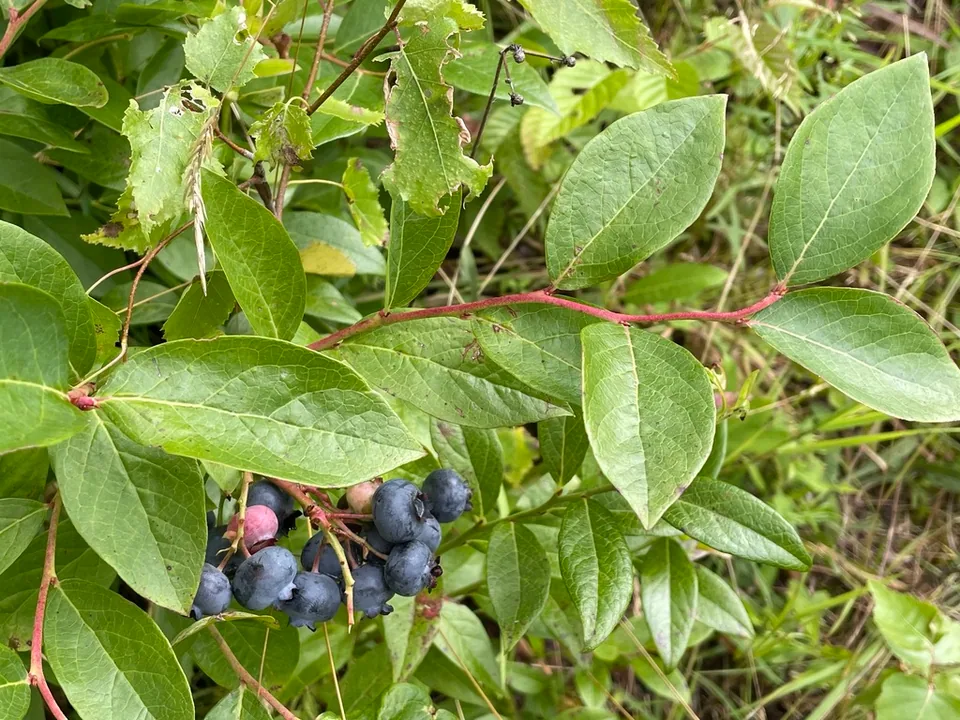
How to Grow and Care for Highbush blueberry
Vaccinium corymbosum
Written by Emilio Marruso · last checked
At a glance
Blueberries are a long-term treat: give them acidic soil, pH 4.5–5.5, sun and at least 1 inch of water a week, and after 3 years they start to crop. From June through mid-September you can pick berries to eat fresh or bake into pies, muffins and pancakes. Plant two varieties that bloom together for bigger berries.
- Sun
Full sun to partial shade
What the sources say (3)
Light: Full sun to partial shade
Florida: Plant your blueberries in an area that gets at least 4-5 hours of full sun and is at least 20 feet away from buildings.
— Blueberries – Gardening Solutions [5] Blueberries grow and fruit best in full sun (a minimum of 8 hours per day in summer) but can tolerate some shade.
— Growing Blueberries in a Home Garden | University of Maryland Extension [2] Full sun (6 or more hours of direct sunlight a day)
— Vaccinium corymbosum (Highbush Blueberry, Rabbit-eye Blueberry, Rabbiteye Blueberry, Smooth Highbush Blueberry) | North Carolina Extension Gardener Plant Toolbox [1] - Water
At least 1 inch a week, steady while berries form; drip watering beats sprinklers
What the sources say (5)
Watering: At least 1 inch [2.5 cm] of water per week from rainfall or irrigation, with consistent moisture especially during fruit development and ripening
Planted on a mound or ridge in heavy clay or wet soil (Clemson): however, with this method of planting, water thoroughly two to three times per week during dry spells in the summer and early fall.
— Blueberry | Home & Garden Information Center [4] Blueberries require at least 1 inch of water per week from rainfall or irrigation, with consistent moisture especially critical during fruit development and ripening.
— Growing Blueberries in the Mid-Atlantic (FS-2025-0766) | University of Maryland Extension [3] important to water blueberry plants during dry periods
— Growing Blueberries in a Home Garden | University of Maryland Extension [2] Watering notes: Drip or trickle irrigation preferred over overhead irrigation; water deeply before cold weather if soil moisture is low
Water deeply before cold weather sets in if the soil moisture is low.
— Growing Blueberries in a Home Garden | University of Maryland Extension [2] Trickle irrigation is recommended as the primary system for blueberry production in the Mid-Atlantic.
— Growing Blueberries in the Mid-Atlantic (FS-2025-0766) | University of Maryland Extension [3] - Cold
Survives winters down to −40 °F (−40 °C)
Very hardy · USDA 3a · RHS H7 · Z3
What the sources say (4)
Hardiness, coldest zone: 3a [winter low −40 to −37.2 °C (−40 to −35 °F)]
3a, 3b, 4a, 4b, 5a, 5b, 6a, 6b, 7a, 7b, 8a, 8b
— Vaccinium corymbosum (Highbush Blueberry, Rabbit-eye Blueberry, Rabbiteye Blueberry, Smooth Highbush Blueberry) | North Carolina Extension Gardener Plant Toolbox [1] Hardiness, warmest zone: 8b [winter low −9.4 to −6.7 °C (15 to 20 °F)]
According to NC State Extension: USDA Plant Hardiness Zone: 3a, 3b, 4a, 4b, 5a, 5b, 6a, 6b, 7a, 7b, 8a, 8b
— Vaccinium corymbosum (Highbush Blueberry, Rabbit-eye Blueberry, Rabbiteye Blueberry, Smooth Highbush Blueberry) | North Carolina Extension Gardener Plant Toolbox [1] Dwarf container cultivar Peach Sorbet: It grows well in USDA zones 5 to 10 and is semi-evergreen.
— Blueberry | Home & Garden Information Center [4] 3a, 3b, 4a, 4b, 5a, 5b, 6a, 6b, 7a, 7b, 8a, 8b
— Vaccinium corymbosum (Highbush Blueberry, Rabbit-eye Blueberry, Rabbiteye Blueberry, Smooth Highbush Blueberry) | North Carolina Extension Gardener Plant Toolbox [1] - Soil
Acidic soil, pH 4.5–5.5; mix in peat moss or composted pine bark before planting
What the sources say (8)
Soil pH, minimum: 4.5
According to University of Maryland Extension: Acidity (soil pH): Blueberry is an “acid-loving” plant requiring a soil pH in the 4.5-5.5 range.
— Growing Blueberries in a Home Garden | University of Maryland Extension [2] According to UF/IFAS Gardening Solutions: You should test your soil to make sure it is between a pH of 4 and 5.5.
— Blueberries – Gardening Solutions [5] Soils high in manganese (Piedmont): When growing blueberries on these soils, keep the pH above 5.0 to avoid problems with manganese toxicity.
— Blueberry | Home & Garden Information Center [4] requiring a soil pH in the 4.5-5.5 range
— Growing Blueberries in a Home Garden | University of Maryland Extension [2] Soil pH, maximum: 5.5
requiring a soil pH in the 4.5-5.5 range
— Growing Blueberries in a Home Garden | University of Maryland Extension [2] Natural fertilizers: Acidic organic matter before planting: peat moss, composted pine bark, pine needles or rotted softwood sawdust; organic fertilizers can replace synthetic ones
Organic materials such as peat moss, composted pine bark or rotted softwood sawdust should be incorporated in soils of less than 2 percent organic matter prior to planting to greatly improve blueberry plant survival and growth.
— Blueberry | Home & Garden Information Center [4] The ideal organic amendment for growing blueberries is pine bark mulch, pine fines or pine needles.
— Growing Blueberries in the Mid-Atlantic (FS-2025-0766) | University of Maryland Extension [3] Fertilizers formulated for “acid-loving” plants are also suitable. Organic fertilizers can be substituted.
— Growing Blueberries in a Home Garden | University of Maryland Extension [2] - Spacing
4–5 ft between plants, 6–8 ft between rows
What the sources say (8)
Between plants: 1.22-1.52 m [4–5 ft] between plants in the row.
United Kingdom: Plant blueberries so the soil is only just covering the roots, and space them 1-2m (3¼–6½ft) apart, depending on the variety’s ultimate size.
— [6] southern highbush, in rows: Spacing: Southern highbush – 4 to 5 feet in the row and 8 to 10 feet between rows.
— Blueberry | Home & Garden Information Center [4] southern highbush, hedgerow: For a hedgerow effect, plant southern highbushes three feet apart, or five feet apart for rabbiteye.
— Blueberries – Gardening Solutions [5] commercial plantings: Blueberry plantings are usually established in rows having a within row spacing of 4-6 ft, and between row spacing of 10 to 12 feet.
— Growing Blueberries in the Mid-Atlantic (FS-2025-0766) | University of Maryland Extension [3] Spacing: If grown in rows, plan for 4-5 feet between each blueberry in a row and 6-8 feet between rows.
— Growing Blueberries in a Home Garden | University of Maryland Extension [2] Between rows: 1.83-2.44 m [6–8 ft] between rows in the home garden.
southern highbush: Spacing: Southern highbush – 4 to 5 feet in the row and 8 to 10 feet between rows.
— Blueberry | Home & Garden Information Center [4] commercial plantings: Blueberry plantings are usually established in rows having a within row spacing of 4-6 ft, and between row spacing of 10 to 12 feet.
— Growing Blueberries in the Mid-Atlantic (FS-2025-0766) | University of Maryland Extension [3] Spacing: If grown in rows, plan for 4-5 feet between each blueberry in a row and 6-8 feet between rows.
— Growing Blueberries in a Home Garden | University of Maryland Extension [2] - Planting
Bare-root plants in late winter; potted plants in fall
What the sources say (5)
Planting: Late winter (February-March) for bare-root plants; fall (November-December) for potted plants
Bare-root plants (fonte: Clemson HGIC): Two-year-old bare-root nursery plants 1 to 3 feet tall are transplanted in late winter or early spring.
— Blueberry | Home & Garden Information Center [4] Potted plants (fonte: Clemson HGIC): Potted plants can be transplanted in the fall.
— Blueberry | Home & Garden Information Center [4] Florida: Blueberries are best planted during the winter before spring growth begins.
— Blueberries – Gardening Solutions [5] Late winter (February-March) as soon as the soil can be worked is best for bare-root plants; fall (November-December) planting has been successful on sandy soils with bare-root plants and in other areas with potted plants.
— Blueberry | Home & Garden Information Center [4] Blueberries are best planted during the winter before spring growth begins.
— Blueberries – Gardening Solutions [5] - Feeding
Several light feedings from spring; skip nitrate fertilizers such as ammonium nitrate
What the sources say (13)
How often: Several light applications per season rather than one heavy dose
second year: In the second year, apply 2 ounces of 21-0-0 (ammonium sulfate) per plant during bloom, and the same amount again 3 weeks later.
— Growing Blueberries in a Home Garden | University of Maryland Extension [2] bearing plants: For more vigorous growth, sidedress with a quarter-cup of ammonium sulfate at six-week intervals, but stop fertilizing after July 1.
— Blueberry | Home & Garden Information Center [4] in Florida: This fertilizer should be spread in an even circle around the plant no further than two feet out. Repeat this application in April, June, August and October.
— Blueberries – Gardening Solutions [5] Frequent, light fertilization works best for blueberries since they are shallow-rooted and sensitive to overfertilization.
— Blueberries – Gardening Solutions [5] During the plant’s second year, apply a split application of N in two equal parts within planted rows.
— Growing Blueberries in the Mid-Atlantic (FS-2025-0766) | University of Maryland Extension [3] When: Starting in spring, when new growth begins, at or just after bloom
Bearing Plants: When growth begins in the spring, apply 1 cup of a complete fertilizer, such as an Azalea fertilizer within a circle 3 feet from each plant.
— Blueberry | Home & Garden Information Center [4] In the second year, apply 2 ounces of 21-0-0 (ammonium sulfate) per plant during bloom, and the same amount again 3 weeks later.
— Growing Blueberries in a Home Garden | University of Maryland Extension [2] Use ammonium sulfate or urea at 10 lb. N per acre just after bloom followed by a second application 6 weeks later
— Growing Blueberries in the Mid-Atlantic (FS-2025-0766) | University of Maryland Extension [3] Avoid: Excess fertilizer; nitrate fertilizers such as ammonium nitrate; potassium chloride (use potassium sulfate); aluminum sulfate
Use Caution: Blueberries are easily damaged by excess fertilizer. Apply the recommended amount and allow 4 inches of rain or an equivalent amount of irrigation between applications.
— Blueberry | Home & Garden Information Center [4] Avoid fertilizers containing high percentages of nitrates. If potassium is needed, apply it as potassium sulfate rather than potassium chloride.
— Growing Blueberries in a Home Garden | University of Maryland Extension [2] Use either ammonium sulfate or urea to fertilize, but not ammonium nitrate.
— Growing Blueberries in the Mid-Atlantic (FS-2025-0766) | University of Maryland Extension [3] Blueberries are sensitive to chloride injury, so products that supply potassium as potassium sulfate (K₂SO₄) are preferred.
— Growing Blueberries in the Mid-Atlantic (FS-2025-0766) | University of Maryland Extension [3] Do not use aluminum sulfate because blueberries are sensitive to excess aluminum.
— Growing Blueberries in a Home Garden | University of Maryland Extension [2] - Pruning
Prune in late winter; on mature plants remove 1 cane in 6, the oldest
What the sources say (5)
When to prune: In late winter, while dormant (November to March, ideally late February or early March, when fruit buds are distinguishable); little pruning in the first two years.
Prune during the dormant season; late winter is most desirable, especially in the mountains.
— Blueberry | Home & Garden Information Center [4] After that, prune at any time from November to March, but ideally in late February or early March when the fruit buds can easily be distinguished from leaf buds.
— [6] Pruning is rarely needed in the first two years after planting – just remove any crossing or damaged branches if necessary.
— [6] Hard pruning: Neglected plants with very old canes can be rejuvenated by removing all the old wood; on healthy mature plants remove one cane in six, choosing the oldest.
Neglected plants with very old canes can be rejuvenated by removing all of the old wood.
— Growing Blueberries in a Home Garden | University of Maryland Extension [2] When pruning healthy mature plants, take out one of every six canes, selecting the oldest for removal.
— Growing Blueberries in the Mid-Atlantic (FS-2025-0766) | University of Maryland Extension [3] - Harvest
June to mid-September; pick fully blue berries that come off easily
What the sources say (5)
Harvest: June through mid-September, depending on variety
Harvest begins in June for early-ripening varieties and may continue through mid-September with late-ripening varieties.
— Growing Blueberries in a Home Garden | University of Maryland Extension [2] How to harvest: Pick when berries are fully blue (they turn blue 3-6 days before maximum sweetness); berries with a reddish tinge at the stem end are under-ripe; ripe berries detach easily from the stem; blueberries do not ripen after picking; harvest in the morning after the dew has evaporated; pick about once a week during the season
Berries turn blue 3 to 6 days before they attain maximum sweetness and flavor (depending on weather and cultivar).
— Growing Blueberries in a Home Garden | University of Maryland Extension [2] Blueberries do not ripen after picking. Do not pick berries with a reddish tinge at the stem end because they are under-ripe. Berries ready to be picked will detach easily from the pedicel
— Growing Blueberries in a Home Garden | University of Maryland Extension [2] If possible, harvest berries in the morning after the dew has evaporated. Berries picked in the afternoon will contain field heat, which will reduce storage life.
— Growing Blueberries in a Home Garden | University of Maryland Extension [2] During the harvest season, berries will need to be picked once a week.
— Growing Blueberries in the Mid-Atlantic (FS-2025-0766) | University of Maryland Extension [3] - Pollination
One plant can fruit; two varieties blooming together give bigger berries
What the sources say (3)
What it needs: One plant can crop; planting two or more cultivars that bloom at the same time gives larger berries and higher yields.
Although blueberries are self-fertile, planting multiple cultivars that bloom at the same time will lead to larger berries and a higher yield.
— Vaccinium corymbosum (Highbush Blueberry, Rabbit-eye Blueberry, Rabbiteye Blueberry, Smooth Highbush Blueberry) | North Carolina Extension Gardener Plant Toolbox [1] Most blueberries are partially self-fertile, so you only need one plant to produce a crop.
— [6] Fruit set: Partly self-fertile
Most blueberries are partially self-fertile, so you only need one plant to produce a crop.
— [6] - Pests
Birds eat the berries, so use netting; watch for spotted wing drosophila and mummy berry
What the sources say (8)
Pests: birds, deer, spotted wing drosophila, blueberry maggot, cranberry fruitworm, Oberea stem borer, Japanese beetles, yellownecked caterpillars
Insects, Diseases, and Other Plant Problems: Spotted wing drosophila may attack the fruit. Potential but infrequent disease problems include stem blight, root rot, anthracnose, cane cankers, mildew, and botrytis.
— Vaccinium corymbosum (Highbush Blueberry, Rabbit-eye Blueberry, Rabbiteye Blueberry, Smooth Highbush Blueberry) | North Carolina Extension Gardener Plant Toolbox [1] Birds relish the fruit, so cover shrubs with netting as the fruit ripens. Deer frequently damage these plants.
— Vaccinium corymbosum (Highbush Blueberry, Rabbit-eye Blueberry, Rabbiteye Blueberry, Smooth Highbush Blueberry) | North Carolina Extension Gardener Plant Toolbox [1] The primary insect problems are cranberry fruitworm (which ties berry clusters together with silk), Oberea stem borer (the larva bores down the stem resulting in stem death), Japanese beetles, and yellownecked caterpillars.
— Blueberry | Home & Garden Information Center [4] Although other pests, such as blueberry maggot, have been reported in large blueberry plantings, this particular pest has never been a serious problem in Maryland.
— Growing Blueberries in the Mid-Atlantic (FS-2025-0766) | University of Maryland Extension [3] Diseases: stem blight, root rot, anthracnose, cane cankers, mildew, botrytis (gray mold), mummy berry, fungal leaf spots, fruit rots, flower blight
Insects, Diseases, and Other Plant Problems: Spotted wing drosophila may attack the fruit. Potential but infrequent disease problems include stem blight, root rot, anthracnose, cane cankers, mildew, and botrytis.
— Vaccinium corymbosum (Highbush Blueberry, Rabbit-eye Blueberry, Rabbiteye Blueberry, Smooth Highbush Blueberry) | North Carolina Extension Gardener Plant Toolbox [1] Mummy berry is a fungal disease that causes the berries to shrivel and drop.
— Vaccinium corymbosum (Highbush Blueberry, Rabbit-eye Blueberry, Rabbiteye Blueberry, Smooth Highbush Blueberry) | North Carolina Extension Gardener Plant Toolbox [1] Blueberries may be troubled by fungal leaf spots, fruit rots, root rot and gray mold.
— Blueberry | Home & Garden Information Center [4] However, blueberry plants are susceptible to root rot, flower blight (gray mold), stem blight, and a few pests.
— Blueberries – Gardening Solutions [5] - Watch out
Shallow roots: don't plant it too deep
What the sources say (3)
Root system: Shallow, fibrous root system with few root hairs; roots set too deep cause problems.
Blueberry plants are perennial woody shrubs with multiple stems (canes) and a shallow, fibrous root system.
— Growing Blueberries in a Home Garden | University of Maryland Extension [2] Blueberry plants have few root hairs (structures that help with absorbing moisture), making them susceptible to drought injury.
— Growing Blueberries in a Home Garden | University of Maryland Extension [2] Blueberry is a shallow-rooted plant, and putting the roots too deeply in the soil will cause problems.
— Growing Blueberries in the Mid-Atlantic (FS-2025-0766) | University of Maryland Extension [3] - Size
6–10 ft wide
What the sources say (1)
Mature width: 183-305 cm (6-10 ft)
Height: 6 ft. 0 in. - 12 ft. 0 in. Width: 6 ft. 0 in. - 10 ft. 0 in.
— Vaccinium corymbosum (Highbush Blueberry, Rabbit-eye Blueberry, Rabbiteye Blueberry, Smooth Highbush Blueberry) | North Carolina Extension Gardener Plant Toolbox [1] - Propagation
From seed, or from cuttings in late spring or summer
What the sources say (2)
Propagation: Seed; stem cutting
Life Cycle: Perennial Recommended Propagation Strategy: Seed Stem Cutting
— Vaccinium corymbosum (Highbush Blueberry, Rabbit-eye Blueberry, Rabbiteye Blueberry, Smooth Highbush Blueberry) | North Carolina Extension Gardener Plant Toolbox [1] Cuttings: Softwood cuttings in late spring or early summer, or semi-ripe cuttings in summer.
New blueberry plants can be grown from soft-wood cuttings taken in late spring or early summer, or semi-ripe cuttings taken in summer.
— [6] - Containers
Grows in containers too
What the sources say (2)
Overview
Highbush blueberry is a deciduous, multi-stemmed shrub grown for its edible fruit and fall color. [1] It requires acid, well-drained soil that is loose and high in organic matter. [4] Fruit ripens from June to mid-September depending on the variety. [2]
Highbush blueberry care
Measurements in square brackets are our conversion into the other unit system; the quoted text is unchanged.
How to water Highbush blueberry
Watering
At least 1 inch [2.5 cm] of water per week from rainfall or irrigation, with consistent moisture especially during fruit development and ripening
What each source says
Planted on a mound or ridge in heavy clay or wet soil (Clemson): Water thoroughly two to three times per week during dry spells in the summer and early fall
What the sources say (3)
Planted on a mound or ridge in heavy clay or wet soil (Clemson): however, with this method of planting, water thoroughly two to three times per week during dry spells in the summer and early fall.Blueberries require at least 1 inch of water per week from rainfall or irrigation, with consistent moisture especially critical during fruit development and ripening.important to water blueberry plants during dry periodsWatering notes
Drip or trickle irrigation preferred over overhead irrigation; water deeply before cold weather if soil moisture is low
What the sources say (2)
Water deeply before cold weather sets in if the soil moisture is low.Trickle irrigation is recommended as the primary system for blueberry production in the Mid-Atlantic.How much light Highbush blueberry needs
Full sun to partial shade
What each source says
Florida: At least 4-5 hours of full sun
What the sources say (3)
Florida: Plant your blueberries in an area that gets at least 4-5 hours of full sun and is at least 20 feet away from buildings.Blueberries grow and fruit best in full sun (a minimum of 8 hours per day in summer) but can tolerate some shade.Full sun (6 or more hours of direct sunlight a day)How much cold Highbush blueberry can take
Hardiness, coldest zone
3a [winter low −40 to −37.2 °C (−40 to −35 °F)]
What the sources say (1)
3a, 3b, 4a, 4b, 5a, 5b, 6a, 6b, 7a, 7b, 8a, 8bHardiness, warmest zone
8b [winter low −9.4 to −6.7 °C (15 to 20 °F)]
What each source says
According to NC State Extension: 8b [winter low −9.4 to −6.7 °C (15 to 20 °F)]
Dwarf container cultivar Peach Sorbet: 10 [winter low −1.1 to 4.4 °C (30 to 40 °F)]
What the sources say (3)
According to NC State Extension: USDA Plant Hardiness Zone:
3a, 3b, 4a, 4b, 5a, 5b, 6a, 6b, 7a, 7b, 8a, 8bDwarf container cultivar Peach Sorbet: It grows well in USDA zones 5 to 10 and is semi-evergreen.3a, 3b, 4a, 4b, 5a, 5b, 6a, 6b, 7a, 7b, 8a, 8bBest soil for Highbush blueberry
Soil pH, minimum
4.5
What each source says
According to University of Maryland Extension: 4.5
According to UF/IFAS Gardening Solutions: 4.0
Soils high in manganese (Piedmont): 5.0
What the sources say (4)
According to University of Maryland Extension: Acidity (soil pH): Blueberry is an “acid-loving” plant requiring a soil pH in the 4.5-5.5 range.According to UF/IFAS Gardening Solutions: You should test your soil to make sure it is between a pH of 4 and 5.5.Soils high in manganese (Piedmont): When growing blueberries on these soils, keep the pH above 5.0 to avoid problems with manganese toxicity.requiring a soil pH in the 4.5-5.5 rangeSoil pH, maximum
5.5
What the sources say (1)
requiring a soil pH in the 4.5-5.5 rangeWhere to grow Highbush blueberry
In containers
Yes
What the sources say (2)
There are many compact cultivars for container blueberry growingYou can also plant your blueberries in containers using specially formulated blueberry soil mixes.Spacing
The sources give different values depending on region, zone or growing conditions.
What each source says
According to University of Maryland Extension (grown in rows): 122-152 cm (4-5 ft) between plants in a row; 183-244 cm (6-8 ft) between rows
Southern highbush, hedgerow: 91.4 cm (3 ft) apart
Rabbiteye, hedgerow: 152.4 cm (5 ft) apart
What the sources say (4)
According to University of Maryland Extension (grown in rows): Spacing: If grown in rows, plan for 4-5 feet between each blueberry in a row and 6-8 feet between rows.Southern highbush, hedgerow: For a hedgerow effect, plant southern highbushes three feet apart, or five feet apart for rabbiteye.Rabbiteye, hedgerow: For a hedgerow effect, plant southern highbushes three feet apart, or five feet apart for rabbiteye.If grown in rows, plan for 4-5 feet between each blueberry in a row and 6-8 feet between rows.How to propagate Highbush blueberry
Seed; stem cutting
What the sources say (1)
Life Cycle:
Perennial
Recommended Propagation Strategy:
Seed
Stem CuttingHow to grow Highbush blueberry
The plant
Life cycle
perennial
What the sources say (1)
Blueberry plants are perennial woody shrubs with multiple stems (canes) and a shallow, fibrous root system.Family
Ericaceae
What the sources say (1)
Highbush blueberry is in the heath (Ericaceae) family and is native to eastern North America.Mature height
Mature width
183-305 cm (6-10 ft)
What the sources say (1)
Height: 6 ft. 0 in. - 12 ft. 0 in. Width: 6 ft. 0 in. - 10 ft. 0 in.Years to first fruit
3 (flowers removed in the first two years; a small crop in the third year)
What the sources say (1)
After two growing seasons, leave some flower buds on vigorous shoots to produce a small crop in the third year.Sowing and growth
Row spacing
The sources disagree:
If grown in rows, plan for 4-5 feet between each blueberry in a row and 6-8 feet between rows.
[2]Blueberry plantings are usually established in rows having a within row spacing of 4-6 ft, and between row spacing of 10 to 12 feet.
[3]Spacing: Southern highbush – 4 to 5 feet in the row and 8 to 10 feet between rows. Rabbiteye – 6 feet in the row and 10 to 12 feet between rows.
[4]
Harvest and storage
How to harvest
Pick when berries are fully blue (they turn blue 3-6 days before maximum sweetness); berries with a reddish tinge at the stem end are under-ripe; ripe berries detach easily from the stem; blueberries do not ripen after picking; harvest in the morning after the dew has evaporated; pick about once a week during the season
What the sources say (4)
Berries turn blue 3 to 6 days before they attain maximum sweetness and flavor (depending on weather and cultivar).Blueberries do not ripen after picking. Do not pick berries with a reddish tinge at the stem end because they are under-ripe. Berries ready to be picked will detach easily from the pedicelIf possible, harvest berries in the morning after the dew has evaporated. Berries picked in the afternoon will contain field heat, which will reduce storage life.During the harvest season, berries will need to be picked once a week.Storage
Store at 0 °C (32 °F) and 95% humidity; cover berries in containers with cellophane to prevent shriveling from moisture loss
What the sources say (1)
Store harvested berries at 32° F and 95-percent humidity. Cover berries in containers with cellophane to prevent shriveling caused by moisture loss.Pests and diseases
Pests
birds, deer, spotted wing drosophila, blueberry maggot, cranberry fruitworm, Oberea stem borer, Japanese beetles, yellownecked caterpillars
What the sources say (4)
Insects, Diseases, and Other Plant Problems: Spotted wing drosophila may attack the fruit. Potential but infrequent disease problems include stem blight, root rot, anthracnose, cane cankers, mildew, and botrytis.Birds relish the fruit, so cover shrubs with netting as the fruit ripens. Deer frequently damage these plants.The primary insect problems are cranberry fruitworm (which ties berry clusters together with silk), Oberea stem borer (the larva bores down the stem resulting in stem death), Japanese beetles, and yellownecked caterpillars.Although other pests, such as blueberry maggot, have been reported in large blueberry plantings, this particular pest has never been a serious problem in Maryland.Diseases
stem blight, root rot, anthracnose, cane cankers, mildew, botrytis (gray mold), mummy berry, fungal leaf spots, fruit rots, flower blight
What the sources say (4)
Insects, Diseases, and Other Plant Problems: Spotted wing drosophila may attack the fruit. Potential but infrequent disease problems include stem blight, root rot, anthracnose, cane cankers, mildew, and botrytis.Mummy berry is a fungal disease that causes the berries to shrivel and drop.Blueberries may be troubled by fungal leaf spots, fruit rots, root rot and gray mold.However, blueberry plants are susceptible to root rot, flower blight (gray mold), stem blight, and a few pests.Fertilizing
When
Starting in spring, when new growth begins, at or just after bloom
What the sources say (3)
Bearing Plants: When growth begins in the spring, apply 1 cup of a complete fertilizer, such as an Azalea fertilizer within a circle 3 feet from each plant.In the second year, apply 2 ounces of 21-0-0 (ammonium sulfate) per plant during bloom, and the same amount again 3 weeks later.Use ammonium sulfate or urea at 10 lb. N per acre just after bloom followed by a second application 6 weeks laterHow often
Several light applications per season rather than one heavy dose
What each source says
second year: Two applications: during bloom and three weeks later
bearing plants: In spring when growth begins, then side-dressings every six weeks until July 1
in Florida: Four times a year: April, June, August and October
What the sources say (5)
second year: In the second year, apply 2 ounces of 21-0-0 (ammonium sulfate) per plant during bloom, and the same amount again 3 weeks later.bearing plants: For more vigorous growth, sidedress with a quarter-cup of ammonium sulfate at six-week intervals, but stop fertilizing after July 1.in Florida: This fertilizer should be spread in an even circle around the plant no further than two feet out. Repeat this application in April, June, August and October.Frequent, light fertilization works best for blueberries since they are shallow-rooted and sensitive to overfertilization.During the plant’s second year, apply a split application of N in two equal parts within planted rows.Natural fertilizers
Acidic organic matter before planting: peat moss, composted pine bark, pine needles or rotted softwood sawdust; organic fertilizers can replace synthetic ones
What the sources say (3)
Organic materials such as peat moss, composted pine bark or rotted softwood sawdust should be incorporated in soils of less than 2 percent organic matter prior to planting to greatly improve blueberry plant survival and growth.The ideal organic amendment for growing blueberries is pine bark mulch, pine fines or pine needles.Fertilizers formulated for “acid-loving” plants are also suitable. Organic fertilizers can be substituted.Mineral fertilizers
Ammonium-form nitrogen: ammonium sulfate (21-0-0), or urea where soil pH is 5 or lower; azalea-type fertilizers such as 10-5-4, 10-8-8 or 11-7-7
What each source says
second year: 56.6 g of ammonium sulfate (21-0-0) per plant during bloom and the same amount three weeks later
sixth year and older: 226.4 g per plant per year in total, after raising the dose by 28.3 g a year from the third year
bearing plants: 237 mL of a complete azalea-type fertilizer within a 91.4 cm [36 in] circle when growth begins in spring; side-dressings of 59.3 mL of ammonium sulfate every six weeks until July 1
What the sources say (6)
second year: In the second year, apply 2 ounces of 21-0-0 (ammonium sulfate) per plant during bloom, and the same amount again 3 weeks later.sixth year and older: Third-year and older plants can have their fertilizer dose increased by 1 ounce per year each year until the sixth year. Then, use 8 ounces total per plant each succeeding year.bearing plants: When growth begins in the spring, apply 1 cup of a complete fertilizer, such as an Azalea fertilizer within a circle 3 feet from each plant. For more vigorous growth, sidedress with a quarter-cup of ammonium sulfate at six-week intervalsBlueberry plants prefer the ammonium form of nitrogen (N) to the nitrate form. 21-0-0 (ammonium sulfate) is an excellent synthetic fertilizer for blueberries.Generally, it’s best to use urea when your soil pH is at or below 5 and ammonium sulfate if your soil pH is above 5 because ammonium sulfate lowers soil pH.Wait until the first leaves have reached full size, then apply 1 tablespoon of a special azalea fertilizer (such as a 10-5-4, 10-8-8 or 11-7-7) within a circle 12 inches away from each plant.Micronutrients
Iron: it becomes unavailable when soil pH is too high; acidify with sulfur or iron sulfate, which also corrects the yellowing
What the sources say (2)
If the soil pH is too high, sulfur or iron sulfate can be incorporated into the soil to acidify it so that iron will be more available to plant roots.Lowering pH: If the soil pH is slightly high in an established planting based on soil test results, sidedress with ammonium sulfate, and apply iron sulfate if needed to correct the yellowing of foliage.Avoid
Excess fertilizer; nitrate fertilizers such as ammonium nitrate; potassium chloride (use potassium sulfate); aluminum sulfate
What the sources say (5)
Use Caution: Blueberries are easily damaged by excess fertilizer. Apply the recommended amount and allow 4 inches of rain or an equivalent amount of irrigation between applications.Avoid fertilizers containing high percentages of nitrates. If potassium is needed, apply it as potassium sulfate rather than potassium chloride.Use either ammonium sulfate or urea to fertilize, but not ammonium nitrate.Blueberries are sensitive to chloride injury, so products that supply potassium as potassium sulfate (K₂SO₄) are preferred.Do not use aluminum sulfate because blueberries are sensitive to excess aluminum.Signs of deficiency
Iron chlorosis: leaves pale green to yellow with the veins staying green, a sign that soil pH is too high; plants stunted and slow to grow
What the sources say (2)
Iron chlorosis: Leaves turn pale green to yellow with leaf veins remaining green. Symptoms develop because iron is not available to the plantIf blueberries are planted into soil with a pH higher than 5.5, they will be stunted and grow slowly. Additionally, you will begin to see symptoms of nutrient deficiency in the plants, such as interveinal chlorosisSpacing
Between plants
1.22-1.52 m [4–5 ft] between plants in the row.
What each source says
United Kingdom: 1-2 m [3.3–6.6 ft], depending on the variety's ultimate size
southern highbush, in rows: 1.22-1.52 m [4–5 ft] in the row
southern highbush, hedgerow: 91.4 cm [36 in]
commercial plantings: 1.22-1.83 m [4–6 ft] within the row
What the sources say (5)
United Kingdom: Plant blueberries so the soil is only just covering the roots, and space them 1-2m (3¼–6½ft) apart, depending on the variety’s ultimate size.southern highbush, in rows: Spacing: Southern highbush – 4 to 5 feet in the row and 8 to 10 feet between rows.southern highbush, hedgerow: For a hedgerow effect, plant southern highbushes three feet apart, or five feet apart for rabbiteye.commercial plantings: Blueberry plantings are usually established in rows having a within row spacing of 4-6 ft, and between row spacing of 10 to 12 feet.Spacing: If grown in rows, plan for 4-5 feet between each blueberry in a row and 6-8 feet between rows.Between rows
1.83-2.44 m [6–8 ft] between rows in the home garden.
What each source says
southern highbush: 2.44-3.05 m [8–10 ft]
commercial plantings: 3.05-3.66 m [10–12 ft]
What the sources say (3)
southern highbush: Spacing: Southern highbush – 4 to 5 feet in the row and 8 to 10 feet between rows.commercial plantings: Blueberry plantings are usually established in rows having a within row spacing of 4-6 ft, and between row spacing of 10 to 12 feet.Spacing: If grown in rows, plan for 4-5 feet between each blueberry in a row and 6-8 feet between rows.Roots
Root system
Shallow, fibrous root system with few root hairs; roots set too deep cause problems.
What the sources say (3)
Blueberry plants are perennial woody shrubs with multiple stems (canes) and a shallow, fibrous root system.Blueberry plants have few root hairs (structures that help with absorbing moisture), making them susceptible to drought injury.Blueberry is a shallow-rooted plant, and putting the roots too deeply in the soil will cause problems.Propagation
Cuttings
Softwood cuttings in late spring or early summer, or semi-ripe cuttings in summer.
What the sources say (1)
New blueberry plants can be grown from soft-wood cuttings taken in late spring or early summer, or semi-ripe cuttings taken in summer.After harvest
Storage
0 °C [32 °F] and 95% relative humidity; berries picked in the afternoon carry field heat, which shortens storage life.
What the sources say (2)
Store harvested berries at 32° F and 95-percent humidity.Berries picked in the afternoon will contain field heat, which will reduce storage life.Heat and drought
Heat
Overhead irrigation helps cool plants and berries in extremely high temperatures; high summer temperatures can turn leaves red-purple during the growing season, and iron chlorosis appearing in summer can mean the soil is too hot for these shallow-rooted plants.
What each source says
southern highbush: Greater tolerance to high summer temperatures
What the sources say (4)
southern highbush: Southern highbush cultivars, in addition to lower chilling requirements, also have greater tolerance to high summer temperatures, somewhat greater drought tolerance and develop superior fruit quality under Southern growing conditions.Overhead irrigation can help to cool plants and berries during extremely high temperatures.Stressors like transplant shock, drought, very cold spring weather, and high summer temperatures can also cause this color change during the growing season.When the symptoms develop during the summer, soil temperatures for these shallow-rooted plants may be too high.Drought
Susceptible to drought injury (few root hairs): water well after planting and in dry spells in the first year; once established in soil rich in organic matter, extra water mainly in prolonged dry spells while fruits form.
What the sources say (3)
Blueberry plants have few root hairs (structures that help with absorbing moisture), making them susceptible to drought injury.Blueberries should be watered well straight after planting and during any dry spells in their first year.Once established in soil with good organic matter content, they are only likely to require additional watering during prolonged dry spells, especially when the fruits are forming.Pollination
Fruit set
Partly self-fertile
What the sources say (1)
Most blueberries are partially self-fertile, so you only need one plant to produce a crop.What it needs
One plant can crop; planting two or more cultivars that bloom at the same time gives larger berries and higher yields.
What the sources say (2)
Although blueberries are self-fertile, planting multiple cultivars that bloom at the same time will lead to larger berries and a higher yield.Most blueberries are partially self-fertile, so you only need one plant to produce a crop.Carried by
Insects
What the sources say (1)
Native bees, like carpenter bees and bumblebees, are more effective blueberry pollinators than honey bees.Pollinators
carpenter bees, bumblebees, honey bees
What the sources say (1)
Native bees, like carpenter bees and bumblebees, are more effective blueberry pollinators than honey bees.Pruning
Flowering wood
Flowers on old wood (last year's growth)
What the sources say (2)
Fruits are produced on wood grown the previous season, and the largest berries are produced on moderately vigorous woodSince blueberries are produced from buds on 1-year-old wood, pruning should be severe enough to encourage the production of vigorous new growth each year.When to prune
In late winter, while dormant (November to March, ideally late February or early March, when fruit buds are distinguishable); little pruning in the first two years.
What the sources say (3)
Prune during the dormant season; late winter is most desirable, especially in the mountains.After that, prune at any time from November to March, but ideally in late February or early March when the fruit buds can easily be distinguished from leaf buds.Pruning is rarely needed in the first two years after planting – just remove any crossing or damaged branches if necessary.Hard pruning
Neglected plants with very old canes can be rejuvenated by removing all the old wood; on healthy mature plants remove one cane in six, choosing the oldest.
What the sources say (2)
Neglected plants with very old canes can be rejuvenated by removing all of the old wood.When pruning healthy mature plants, take out one of every six canes, selecting the oldest for removal.Pinching
Tip back excessively long, limber shoots to stimulate lateral branching and thicken them.
What the sources say (1)
Tip back excessively long and limber shoots to stimulate lateral branching and to thicken the shoots.Winter chill
Chill hours
100–1000 hours between 0 and 7.2 °C [32–45 °F]
What each source says
coltura «Blueberry»: 100–1000 hours
coltura «Blueberry»: 150–700 hours
What the sources say (6)
coltura «Blueberry»: Blueberry Chill hours: 100 to 1,000 Blueberries perform best in acidic soil.coltura «Blueberry»: Fruit Crop Chilling Hours Required Apples 200–1,000 Blackberry 200–600 Blueberry 150–700Blueberry Chill hours: 100 to 1,000 Blueberries perform best in acidic soil.Fruit Crop Chilling Hours Required Apples 200–1,000 Blackberry 200–600 Blueberry 150–700Chill hours are accumulated from November through February when temperatures are between 32° and 45°F.Different models exist to estimate chilling. One model defines a chill hour as each hour below 45°F starting on October 1.Highbush blueberry pests and problems
Iron chlorosis
Symptom: Leaves turn pale green to yellow with leaf veins remaining green.
What to do: Sulfur or iron sulfate can be incorporated into the soil to acidify it when pH is too high.
What the sources say (2)
Iron chlorosis: Leaves turn pale green to yellow with leaf veins remaining green.
— Growing Blueberries in a Home Garden | University of Maryland Extension [2] If the soil pH is too high, sulfur or iron sulfate can be incorporated into the soil to acidify it so that iron will be more available to plant roots.
— Growing Blueberries in a Home Garden | University of Maryland Extension [2] Feeding birds
Symptom: Birds devour large quantities of fruit as the berries begin to color.
What to do: Bird netting is the most effective way to prevent birds from feeding.
What the sources say (2)
The greatest pest problem for blueberries is feeding birds.
— Growing Blueberries in the Mid-Atlantic (FS-2025-0766) | University of Maryland Extension [3] bird netting is the most effective way to prevent birds from feeding
— Growing Blueberries in the Mid-Atlantic (FS-2025-0766) | University of Maryland Extension [3] Spotted wing drosophila
Symptom: Larvae feed on the fruit and berries shrivel and collapse on the inside.
What to do: Insecticidal sprays are the primary control; 80-gram netting (mesh size 1.0 x 0.6 mm) excluded the pest in trials.
What the sources say (2)
Spotted wing drosophila (SWD) is a new invasive fruit fly that lays eggs inside of the blueberry fruit.
— Growing Blueberries in the Mid-Atlantic (FS-2025-0766) | University of Maryland Extension [3] The researchers found that 80-gram netting (mesh size 1.0 x 0.6 mm) effectively and repeatedly excluded SWD over multiple seasons of trials
— Growing Blueberries in the Mid-Atlantic (FS-2025-0766) | University of Maryland Extension [3] Mummy berry
Symptom: A fungal disease that causes the berries to shrivel and drop.
What to do: Use fungicide sprays from bloom and maintain good sanitation practices such as prompt removal of ripe or diseased fruit and wood.
What the sources say (2)
Mummy berry is a fungal disease that causes the berries to shrivel and drop.
— Vaccinium corymbosum (Highbush Blueberry, Rabbit-eye Blueberry, Rabbiteye Blueberry, Smooth Highbush Blueberry) | North Carolina Extension Gardener Plant Toolbox [1] To prevent mummy berry disease, use fungicide sprays from bloom and maintain good sanitation practices
— Growing Blueberries in the Mid-Atlantic (FS-2025-0766) | University of Maryland Extension [3]
Remedies
Each remedy shows what official sources say about it; traditional remedies without an official source are marked as such. Harmful ones are listed so you know to avoid them.
Treating the plant
japanese beetle
hand picking into soapy water Official source, not independently tested
How: adult beetles can be hand picked from plants and destroyed by placing in soapy water
adult beetles can be hand picked from plants and destroyed by placing in soapy water
— plantvillage.psu.edu [9]
flea beetle
neem oil spray Harmful
Despite these being biological pesticides, it is important to read the directions on the label and wear safety equipment.
— extension.illinois.edu [11] How: application of oils such as neem oil, an effective control method for organic growers according to the source
application on diamotecoeus earth or oils such as neem oil are effective control methods for organic growers
— plantvillage.psu.edu [9] What the evidence says The use of crop oils or Neem oil products is not recommended. Oil-based sprays cause an increase in leaf spots by damaging the protective waxes on the leaf surface that normally block fungal penetration.
— content.ces.ncsu.edu [10]
aphids
insecticidal soap spray Works
How: insecticidal soap can be used for soft-bodied pests such as aphids
Insecticidal soap can be used for soft-bodied pests such as aphids
— almanac.com [12] What the evidence says For example, insecticidal soap is a safe, effective organic insecticide with minimal environmental impact.
— extension.psu.edu [13] strong water spray Not verified
Traditional remedy, not verified by an official source.
How: use a strong spray of water to knock off small pests like aphids or mites
Calendar
Late winter (February-March) for bare-root plants; fall (November-December) for potted plants
What each source says
Bare-root plants (fonte: Clemson HGIC): Late winter or early spring
Potted plants (fonte: Clemson HGIC): Fall
Florida: Winter before spring growth begins; container-grown plants may be planted at other times of the year with proper irrigation
What the sources say (5)
Bare-root plants (fonte: Clemson HGIC): Two-year-old bare-root nursery plants 1 to 3 feet tall are transplanted in late winter or early spring.Potted plants (fonte: Clemson HGIC): Potted plants can be transplanted in the fall.Florida: Blueberries are best planted during the winter before spring growth begins.Late winter (February-March) as soon as the soil can be worked is best for bare-root plants; fall (November-December) planting has been successful on sandy soils with bare-root plants and in other areas with potted plants.Blueberries are best planted during the winter before spring growth begins.June through mid-September, depending on variety
What the sources say (1)
Harvest begins in June for early-ripening varieties and may continue through mid-September with late-ripening varieties.Late winter (February or March); mature plants also immediately after harvest
What the sources say (3)
In February or March, remove weak, spindly shoots and those that are growing low on the plant near the ground.The third year after planting you can prune in the late winter to remove dead wood and maintain the shape of the shrub.After harvest, remove about a quarter to one third of the canopy by cutting back from the top of the plant.Months as given by the sources, which are mostly from the United States (northern hemisphere). In the southern hemisphere they shift by about six months.
Edibility
Reported by the source, quoted verbatim. Do not eat a plant on the basis of this page alone: identification mistakes can be dangerous.
Indicative values
Values from a secondary source, not checked word for word like the rest of this page. Use them as a starting point.
- Hours of sun
- 6-8 hoursIndicative value, adapt it to your climate · Secondary source
- Soil
- Sandy Loamy Humus RockyIndicative value, adapt it to your climate · Secondary source
- Growth rate
- HighIndicative value, adapt it to your climate · Secondary source
Similar plants
- Bilberry Vaccinium myrtillus
- Black Highbush Blueberry Vaccinium fuscatum
- Cranberry Vaccinium macrocarpon
- Creeping Blueberry Vaccinium crassifolium
- Deerberry Vaccinium stamineum
- Elliott's Blueberry Vaccinium elliottii
- Highbush Blueberry Vaccinium formosum
- Japanese Blueberries Vaccinium oldhamii
Sources
Every value above is quoted from these documents. Links lead to the original publisher.
- Vaccinium corymbosum (Highbush Blueberry, Rabbit-eye Blueberry, Rabbiteye Blueberry, Smooth Highbush Blueberry) | North Carolina Extension Gardener Plant Toolbox · plants.ces.ncsu.edu, consulted
- Growing Blueberries in a Home Garden | University of Maryland Extension · extension.umd.edu, consulted
- Growing Blueberries in the Mid-Atlantic (FS-2025-0766) | University of Maryland Extension · extension.umd.edu, consulted
- Blueberry | Home & Garden Information Center · hgic.clemson.edu, consulted
- Blueberries – Gardening Solutions · gardeningsolutions.ifas.ufl.edu, consulted
- rhs.org.uk · rhs.org.uk
- escholarship.org · escholarship.org
- extension.msstate.edu · extension.msstate.edu
- plantvillage.psu.edu · plantvillage.psu.edu
- content.ces.ncsu.edu · content.ces.ncsu.edu
- extension.illinois.edu · extension.illinois.edu
- almanac.com · almanac.com
- extension.psu.edu · extension.psu.edu
Written by Emilio Marruso · last checked