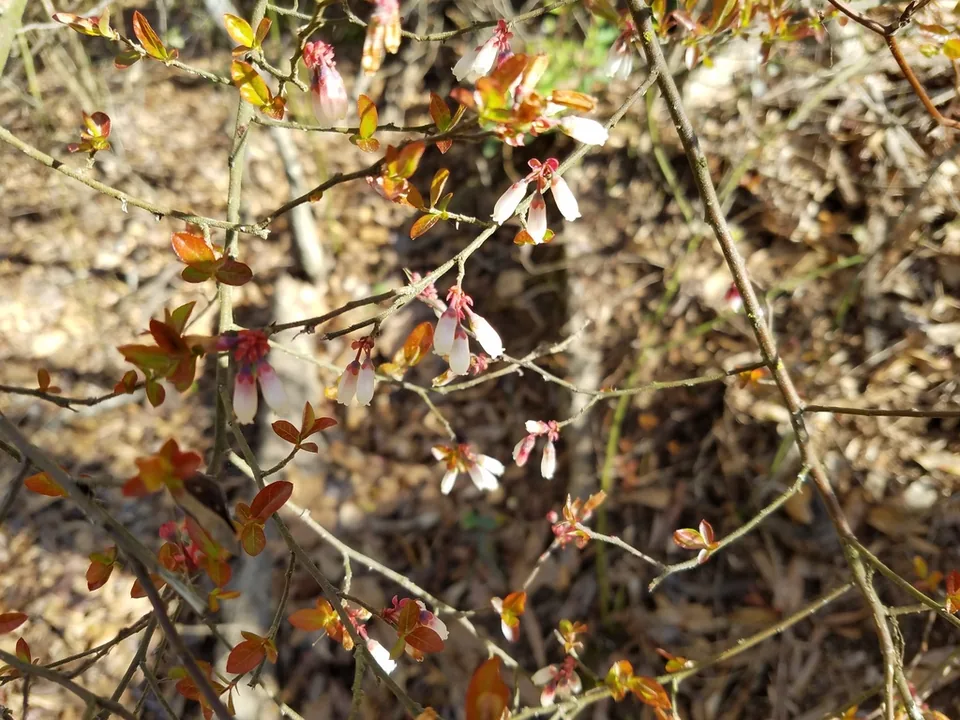
How to Grow and Care for Elliott's Blueberry
Vaccinium elliottii
Written by Emilio Marruso · last checked
At a glance
Elliott's blueberry is a woody shrub with berries you can eat fresh or cooked, ready in summer, from May to June. It tolerates heat and drought, grows in full sun or partial shade, and gives the most fruit in full sun. Give it acidic soil with no lime, and be ready to share a few berries with the birds.
- Sun
Full sun to partial shade; full sun gives more fruit
What the sources say (2)
Light: Full sun to partial shade; full sun leads to more fruiting
Plant in the full sun to partial shade in acidic soils.
— Vaccinium elliottii (Elliott's Blueberry, High Bush Blueberry, Mayberry) | North Carolina Extension Gardener Plant Toolbox [1] full sun will lead to more fruiting
— Vaccinium elliottii (Elliott's Blueberry, High Bush Blueberry, Mayberry) | North Carolina Extension Gardener Plant Toolbox [1] - Water
Tolerates heat and drought
What the sources say (1)
Watering notes: Heat and drought tolerant
Particularly Resistant To (Insects/Diseases/Other Problems): Heat and drought tolerant.
— Vaccinium elliottii (Elliott's Blueberry, High Bush Blueberry, Mayberry) | North Carolina Extension Gardener Plant Toolbox [1] - Cold
Survives winters down to −20 °F (−28.9 °C)
Very hardy · USDA 5a · RHS H7 · Z5
What the sources say (2)
Hardiness, coldest zone: 5a [winter low −28.9 to −26.1 °C (−20 to −15 °F)]
5a, 5b, 6a, 6b, 7a, 7b, 8a, 8b, 9a, 9b
— Vaccinium elliottii (Elliott's Blueberry, High Bush Blueberry, Mayberry) | North Carolina Extension Gardener Plant Toolbox [1] Hardiness, warmest zone: 9b [winter low −3.9 to −1.1 °C (25 to 30 °F)]
5a, 5b, 6a, 6b, 7a, 7b, 8a, 8b, 9a, 9b
— Vaccinium elliottii (Elliott's Blueberry, High Bush Blueberry, Mayberry) | North Carolina Extension Gardener Plant Toolbox [1] - Soil
Acidic soil, pH 6.0 or lower; lime turns the leaves yellow
What the sources say (1)
Soil pH, maximum: 6.0
Soil pH: Acid (<6.0) Soil Drainage: Good Drainage Moist
— Vaccinium elliottii (Elliott's Blueberry, High Bush Blueberry, Mayberry) | North Carolina Extension Gardener Plant Toolbox [1] - Planting
Plant in late spring or early summer
What the sources say (1)
Planting: Late spring or early summer
Let the seedlings spend their first winter under these conditions then plant outdoors in late spring or early summer.
— Vaccinium elliottii (Elliott's Blueberry, High Bush Blueberry, Mayberry) | North Carolina Extension Gardener Plant Toolbox [1] - Pruning
Prune after the fruit ripens
What the sources say (1)
Pruning: After the fruit ripens
prune after the fruit ripens so plants do not become too tall the following year
— Vaccinium elliottii (Elliott's Blueberry, High Bush Blueberry, Mayberry) | North Carolina Extension Gardener Plant Toolbox [1] - Harvest
Pick in summer, May to June; eat the berries fresh or cooked
What the sources say (2)
Harvest: Summer (fruit displays from May to June)
Display/Harvest Time: Summer Fruit Type: Berry
— Vaccinium elliottii (Elliott's Blueberry, High Bush Blueberry, Mayberry) | North Carolina Extension Gardener Plant Toolbox [1] The fruit displays from May to June.
— Vaccinium elliottii (Elliott's Blueberry, High Bush Blueberry, Mayberry) | North Carolina Extension Gardener Plant Toolbox [1] - Pests
Fruit flies and fruit worms; sometimes mildew, gray mold, root rot and stem blight
What the sources say (2)
Pests: blueberry maggot, cherry fruit worm, spotted wing drosophila
The fruits can be affected by the blueberry maggot, cherry fruit worm and the spotted wing drosophila.
— Vaccinium elliottii (Elliott's Blueberry, High Bush Blueberry, Mayberry) | North Carolina Extension Gardener Plant Toolbox [1] Diseases: stem blight, root rot, cane cankers, mildew, botrytis
Occasional diseases affecting this plant include stem blight, root rot, cane cankers, mildew and botrytis.
— Vaccinium elliottii (Elliott's Blueberry, High Bush Blueberry, Mayberry) | North Carolina Extension Gardener Plant Toolbox [1] - Watch out
Birds love the berries and can leave you fewer to pick
- Size
4–6 ft tall and 4–6 ft wide
What the sources say (2)
Mature height: 122-183 cm (4-6 ft)
Dimensions: Height: 4 ft. 0 in. - 6 ft. 0 in. Width: 4 ft. 0 in. - 6 ft. 0 in.
— Vaccinium elliottii (Elliott's Blueberry, High Bush Blueberry, Mayberry) | North Carolina Extension Gardener Plant Toolbox [1] Mature width: 122-183 cm (4-6 ft)
Dimensions: Height: 4 ft. 0 in. - 6 ft. 0 in. Width: 4 ft. 0 in. - 6 ft. 0 in.
— Vaccinium elliottii (Elliott's Blueberry, High Bush Blueberry, Mayberry) | North Carolina Extension Gardener Plant Toolbox [1] - Propagation
From cuttings, layering, division or seed
What the sources say (1)
Propagation: Division; layering; seed; stem cutting
Recommended Propagation Strategy: Division Layering Seed Stem Cutting
— Vaccinium elliottii (Elliott's Blueberry, High Bush Blueberry, Mayberry) | North Carolina Extension Gardener Plant Toolbox [1]
Overview
Elliott's blueberry is an edible deciduous shrub of the heath family found in the coastal plains of North Carolina. [1] It is planted in full sun to partial shade in acidic soils, avoiding soils where lime is present. [1] Pruning after the fruit ripens keeps plants from becoming too tall the following year. [1]
This record is incomplete: the sources we read do not cover every field yet.
Not yet covered by our sources: Watering, Spacing
Elliott's Blueberry care
How to water Elliott's Blueberry
Watering
Not stated in the sources we read.
Watering notes
Heat and drought tolerant
What the sources say (1)
Particularly Resistant To (Insects/Diseases/Other Problems): Heat and drought tolerant.How much light Elliott's Blueberry needs
Full sun to partial shade; full sun leads to more fruiting
What the sources say (2)
Plant in the full sun to partial shade in acidic soils.full sun will lead to more fruitingHow much cold Elliott's Blueberry can take
Hardiness, coldest zone
5a [winter low −28.9 to −26.1 °C (−20 to −15 °F)]
What the sources say (1)
5a, 5b, 6a, 6b, 7a, 7b, 8a, 8b, 9a, 9bHardiness, warmest zone
9b [winter low −3.9 to −1.1 °C (25 to 30 °F)]
What the sources say (1)
5a, 5b, 6a, 6b, 7a, 7b, 8a, 8b, 9a, 9bBest soil for Elliott's Blueberry
6.0
What the sources say (1)
Soil pH: Acid (<6.0) Soil Drainage: Good Drainage MoistWhere to grow Elliott's Blueberry
Not stated in the sources we read.
How to propagate Elliott's Blueberry
Division; layering; seed; stem cutting
What the sources say (1)
Recommended Propagation Strategy: Division Layering Seed Stem CuttingHow to grow Elliott's Blueberry
The plant
Life cycle
woody
What the sources say (1)
Genus:
Vaccinium
Species:
elliottii
Family:
Ericaceae
Life Cycle:
Woody
Recommended Propagation Strategy:
Division
Layering
Seed
Stem CuttingFamily
Ericaceae
What the sources say (1)
Genus:
Vaccinium
Species:
elliottii
Family:
Ericaceae
Life Cycle:
Woody
Recommended Propagation Strategy:
Division
Layering
Seed
Stem CuttingMature height
122-183 cm (4-6 ft)
What the sources say (1)
Dimensions:
Height: 4 ft. 0 in. - 6 ft. 0 in.
Width: 4 ft. 0 in. - 6 ft. 0 in.Mature width
122-183 cm (4-6 ft)
What the sources say (1)
Dimensions:
Height: 4 ft. 0 in. - 6 ft. 0 in.
Width: 4 ft. 0 in. - 6 ft. 0 in.Pests and diseases
Pests
blueberry maggot, cherry fruit worm, spotted wing drosophila
What the sources say (1)
The fruits can be affected by the blueberry maggot, cherry fruit worm and the spotted wing drosophila.Diseases
stem blight, root rot, cane cankers, mildew, botrytis
What the sources say (1)
Occasional diseases affecting this plant include stem blight, root rot, cane cankers, mildew and botrytis.Elliott's Blueberry pests and problems
Chlorosis in lime soils
Symptom: Lime in the soil causes leaves to become chlorotic, leading to yellowing.
What to do: Plant in acidic soils and avoid soils where lime is present.
What the sources say (2)
Chlorosis can occur in lime soils.
— Vaccinium elliottii (Elliott's Blueberry, High Bush Blueberry, Mayberry) | North Carolina Extension Gardener Plant Toolbox [1] Avoid soils where lime is present.
— Vaccinium elliottii (Elliott's Blueberry, High Bush Blueberry, Mayberry) | North Carolina Extension Gardener Plant Toolbox [1] Diseases and fruit pests
Symptom: Occasional diseases include stem blight, root rot, cane cankers, mildew and botrytis; fruits can be affected by blueberry maggot, cherry fruit worm and spotted wing drosophila.
What the sources say (2)
Occasional diseases affecting this plant include stem blight, root rot, cane cankers, mildew and botrytis.
— Vaccinium elliottii (Elliott's Blueberry, High Bush Blueberry, Mayberry) | North Carolina Extension Gardener Plant Toolbox [1] The fruits can be affected by the blueberry maggot, cherry fruit worm and the spotted wing drosophila.
— Vaccinium elliottii (Elliott's Blueberry, High Bush Blueberry, Mayberry) | North Carolina Extension Gardener Plant Toolbox [1] Birds eating the fruit
Symptom: Birds will eat the fruit, limiting collection for human consumption.
What the sources say (1)
Birds will eat the fruit, limiting collection for human consumption.
— Vaccinium elliottii (Elliott's Blueberry, High Bush Blueberry, Mayberry) | North Carolina Extension Gardener Plant Toolbox [1]
Remedies
Each remedy shows what official sources say about it; traditional remedies without an official source are marked as such. Harmful ones are listed so you know to avoid them.
Treating the plant
stem blight
pruning to remove infected stems Works
How: Prune infected stems any time they are observed, cutting well below the infected area until no brown tissue shows in the cut end; remove the prunings well away and burn or shred them.
Pruning to remove infected stems is the best method of reducing disease in established fields.
— content.ces.ncsu.edu [5] What the evidence says Pruning to remove infected stems is the best method of reducing disease in established fields.
— content.ces.ncsu.edu [5]
botrytis
cleaning up plant debris and mummified fruit Works
How: Clean up plant debris, including mummified fruit, and destroy or discard (do not compost) the diseased material.
Clean up plant debris, including mummified fruit. Destroy or discard (do not compost) diseased materials.
— hortsense.cahnrs.wsu.edu [6] What the evidence says Clean up plant debris, including mummified fruit. Destroy or discard (do not compost) diseased materials.
— hortsense.cahnrs.wsu.edu [6]
Calendar
Late spring or early summer
What the sources say (1)
Let the seedlings spend their first winter under these conditions then plant outdoors in late spring or early summer.Summer (fruit displays from May to June)
What the sources say (2)
Display/Harvest Time: Summer Fruit Type: BerryThe fruit displays from May to June.After the fruit ripens
What the sources say (1)
prune after the fruit ripens so plants do not become too tall the following yearMonths as given by the sources, which are mostly from the United States (northern hemisphere). In the southern hemisphere they shift by about six months.
Edibility
Reported by the source, quoted verbatim. Do not eat a plant on the basis of this page alone: identification mistakes can be dangerous.
Fruits are highly edible fresh or cooked.
[1]
Similar plants
- Bilberry Vaccinium myrtillus
- Black Highbush Blueberry Vaccinium fuscatum
- Cranberry Vaccinium macrocarpon
- Creeping Blueberry Vaccinium crassifolium
- Deerberry Vaccinium stamineum
- Highbush blueberry Vaccinium corymbosum
- Highbush Blueberry Vaccinium formosum
- Japanese Blueberries Vaccinium oldhamii
Sources
Every value above is quoted from these documents. Links lead to the original publisher.
- Vaccinium elliottii (Elliott's Blueberry, High Bush Blueberry, Mayberry) | North Carolina Extension Gardener Plant Toolbox · plants.ces.ncsu.edu, consulted
- Vaccinium (Bilberries, Blueberries, Blueberry, Cranberries, Huckleberries) | North Carolina Extension Gardener Plant Toolbox · plants.ces.ncsu.edu, consulted
- Cranberries - Vaccinium | North Carolina Extension Gardener Plant Toolbox · plants.ces.ncsu.edu, consulted
- Huckleberries - Vaccinium | North Carolina Extension Gardener Plant Toolbox · plants.ces.ncsu.edu, consulted
- content.ces.ncsu.edu · content.ces.ncsu.edu
- hortsense.cahnrs.wsu.edu · hortsense.cahnrs.wsu.edu
- ask.extension.org · ask.extension.org
Written by Emilio Marruso · last checked